whats stake trump
| |

What’s at stake for Trump in Israel’s deadlocked election?

WASHINGTON, USA – With Israel’s election yielding no clear winner, President Donald Trump could face prolonged uncertainty over who will lead Washington’s closest Middle East ally as he confronts challenges from Iran and Gaza across the region.

Prime Minister Benjamin Netanyahu’s right-wing bloc secured the most seats in Israel’s parliament but still lost its parliamentary majority on Tuesday, October 27, despite Trump having endorsed him against a rival alliance of parties led by hawkish former military chief Gadi Eisenkot.

While Netanyahu seemed in a stronger position, neither side was projected to have an outright path to form a new government after Israel’s first election since the Hamas-led attacks of October 7, 2023, and the ensuing wars in Gaza, Lebanon and Iran.

Must Read

Netanyahu set to remain caretaker after inconclusive Israeli election


Netanyahu set to remain caretaker after inconclusive Israeli election

The stage appeared to be set for a period of painstaking coalition bargaining – or possibly another election – while Netanyahu remains in power in a caretaker capacity.

The outcome will have implications for US-Israeli relations, which have been dominated by the joint fight against Iran, stalled Gaza peace efforts and signs of eroding US public support for Israel.

The uncertainty comes at a sensitive moment for Trump, when he and Netanyahu have threatened to join in another round of attacks against Iran.

“Israeli politics can be messy,” said Aaron David Miller, a former Middle East adviser in Democratic and Republican administrations. From the US perspective, he said, “it would be good to get some clarity, but that’s easier said than done.”

Which outcome would Trump prefer?

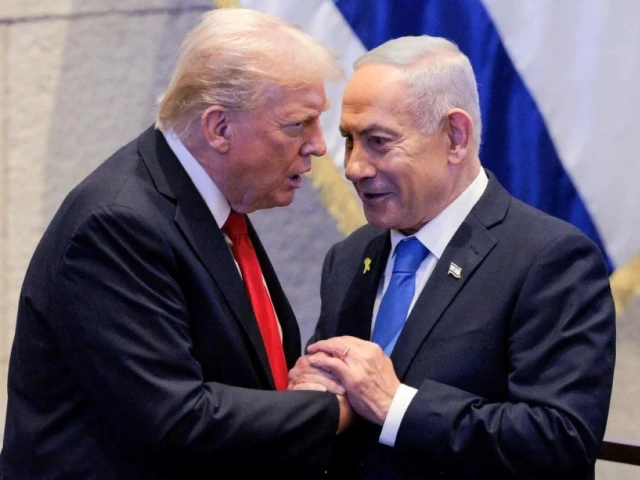
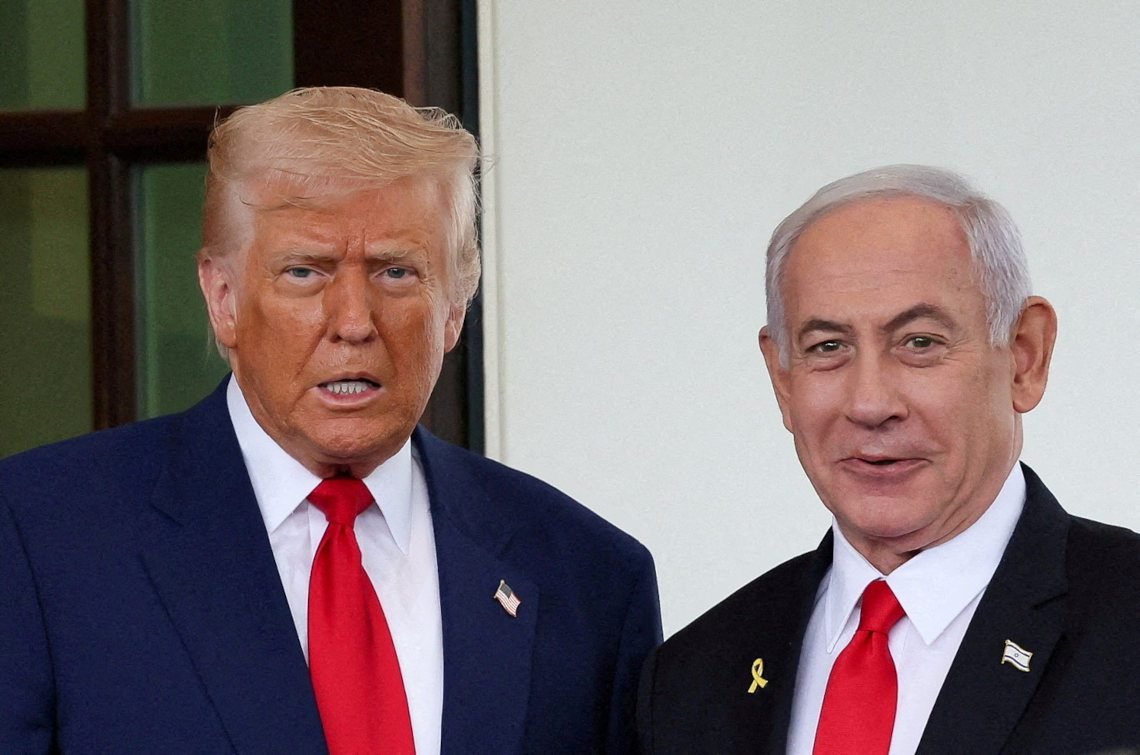
Netanyahu – a consummate political survivor who has had a close but sometimes turbulent relationship with Trump dating back decades – may have survived again. He is the longest-serving Israeli prime minister and the only one the US president has ever worked with.

Eisenkot, who projected an image as a ⁠political outsider and security-minded former general during the campaign, has seen his governing chances dimmed but not extinguished. He is not known to have ever met Trump.

Some analysts say creation of a broad unity government keeping Netanyahu in power might serve Trump’s interest in a politically stable Israeli partner. But neither side has shown a willingness to take that path.

Asked whether he was going to get involved in an effort to form a Netanyahu-led unity government, Trump told Axios on Wednesday he hadn’t thought about it, adding: “I will take a look.”

What does the election mean for the war with Iran?

Topping the list is how Trump might engage with Israel in the war against Iran, which has rocked the Middle East. The eight-month-old conflict has disrupted global energy supplies, pushed up US gasoline prices and driven down his approval ratings, imperiling his Republicans’ control of Congress in the November 3 midterm elections.

Trump, in his October 18 endorsement, insisted he wanted Netanyahu to remain in power to help him soon “finish the job” against Iran. The president said overnight that Netanyahu, who outperformed pre-election polls, had done “very well” and that his backing had boosted the Israeli leader.

Trump has repeatedly signaled that the US and Israel could restart attacks on Iran after the midterms, with some critics, including in Israel, suggesting Netanyahu might see it as a way to bolster his political standing as caretaker prime minister.

Jonathan Panikoff, a former deputy US national intelligence officer on the Middle East, said any future Israeli leadership would likely be on the same page as Trump if he decides to escalate from the current stalemate with Israel’s regional arch-foe.

“It’s hard to imagine any real daylight between them on that point,” said Panikoff, now at the Atlantic Council think tank in Washington.

Where Netanyahu and many Israelis have sometimes differed with Trump is when he has offered concessions in now-stalled negotiations with the Islamic Republic.

What are the implications for Gaza peace efforts?

No matter how Israel’s next government shapes up, there is little reason to believe there will be any sweeping shift in tough policies toward the Palestinians.

This doesn’t bode well for breaking the diplomatic deadlock between Israel and Hamas and fully implementing Trump’s Gaza peace plan following the war there. Israel, in response to the militants’ deadly cross-border attack, leveled much of the enclave and killed tens of thousands of Palestinians.

Administration officials have privately expressed frustration over what they see as intransigence by Netanyahu, who has insisted that Hamas must first disarm.

Eisenkot, who lost a son and two nephews in the Gaza war, stressed his military credentials while positioning himself as a centrist domestically during the election campaign. He has vowed to break with Netanyahu’s far-right coalition allies, but not with the hawkish approach to security that has become more entrenched since the 2023 Hamas attack. – Rappler.com

Similar Posts

  • | | | |

    US and Iran agree to extend 60-day ceasefire

    ISLAMABAD: The United States and Iran have agreed in principle to extend their 60-day ceasefire, according to a Turkish news agency report citing Pakistani government sources. The report said both Washington and Tehran had informed mediators of their willingness to prolong the truce. The two sides are also exchanging messages to determine the length of the proposed extension, according to the report. The current ceasefire is due to expire on August 17. Mediators have been informed that both countries are prepared to continue the pause in hostilities. According to international media reports, the United States and Iran signed a 14-point memorandum of understanding on June 17. The agreement established a 60-day period for maintaining the ceasefire and completing negotiations aimed at bringing a permanent end to the conflict. The memorandum also included arrangements for keeping the Strait of Hormuz open to commercial shipping during the ceasefire. However, disagreements over the interpretation of several provisions have continued to create tensions between Washington and Tehran. Both sides have repeatedly accused each other of violating the terms or spirit of the understanding. The proposed extension could provide additional time for diplomatic efforts and negotiations aimed at addressing the outstanding issues between the two countries. Mediators are expected to remain engaged as Washington and Tehran work to settle the duration and other details of the extended ceasefire.

  • |

    West Bank village mourns lost harvest as violence halts annual fig festival

    The Palestinian village of Tel in the northern occupied West Bank should have been celebrating one of its busiest and most cherished times of the year. Residents had spent weeks preparing for the annual fig harvest and a festival expected to attract visitors from across the region. Instead, the village has been left grieving after a deadly confrontation forced organizers to cancel the event and replaced the festive atmosphere with mourning. The violence erupted after an attack involving Israeli settlers last week. The clashes that followed resulted in the deaths of four Palestinians and two Israeli settlers, leaving the community in shock. Black flags now hang where festival decorations were meant to be displayed, while many orchards remain out of reach because of an increased Israeli military presence and ongoing restrictions in the area. Tel village council head Walid Zaidan said the tragedy has deeply affected the community of around 7,000 people. According to him, the village has lost its usual energy and sense of joy after the deaths of four young residents in a single day. He said the emotional impact is visible throughout the village, where families continue to cope with grief and uncertainty. Zaidan said residents had not been seeking confrontation but were trying to protect their homes after repeated attacks by Israeli settlers. He recalled an earlier incident in which the home of a local resident, Sohaib Ramadan, was set on fire. The family managed to escape only moments before the house was completely destroyed. He said many villagers feared another similar attack and went out to defend their neighborhood when violence broke out again. The damage has extended beyond the loss of life. Zaidan said Israeli bulldozers entered farmland and cleared large sections of agricultural land. Initial estimates suggest that around 2,000 dunams, or roughly 500 acres, have been affected. Local officials have been unable to inspect the full extent of the destruction because access to the area remains restricted by Israeli forces and settlers. Residents also claim that a new settlement outpost is being established on the land. At the same time, Israeli forces have carried out arrests and questioned dozens of Palestinians in the village, adding to growing tensions. For the people of Tel, farming is more than an economic activity. Fig trees, olive groves and prickly pear plants have long been central to the village’s identity and way of life. Tel is known throughout the occupied West Bank for producing several varieties of figs, drawing visitors each harvest season to buy fresh fruit and locally made products. Plans for a three day festival featuring figs, dairy products, cheeses and other local goods were abandoned after the violence. Farmers who own nearby livestock and poultry farms have also struggled to reach their animals because roads remain blocked, raising concerns about the welfare of their livestock. Local resident Omar Ishtayeh said the village has depended on agriculture for generations, but increasing restrictions and repeated settler attacks have made farming more difficult. He said orchards that once represented prosperity now reflect the hardships facing local families. With the fig season already underway, many farmers fear the fruit will spoil before they are able to safely return to their land. Palestinian officials argue that the events in Tel are part of a wider rise in settler violence across the occupied West Bank. According to the Palestinian Colonisation and Wall Resistance Commission, thousands of attacks targeting Palestinians and their property were recorded during the first half of 2026. These incidents included assaults on civilians, arson attacks, damage to farmland, restrictions on access to agricultural areas and the expansion of settlement outposts. The United Nations considers Israeli settlements in the occupied Palestinian territories illegal under international law. Palestinians say the continued expansion of settlements is reducing hopes for the creation of an independent Palestinian state and making everyday life increasingly difficult for communities that rely on their land for survival.

  • |

    US and Asian chip stocks fall after report of Chinese semiconductor breakthrough

    Shares of major semiconductor companies dropped sharply on Monday after a report suggested that a Chinese firm has made significant progress in developing advanced chipmaking equipment. The news raised concerns among investors that China could reduce its reliance on foreign technology and strengthen its position in the global semiconductor industry. The market reaction followed a report by The Information, which said Shanghai Yuliangsheng is producing immersion deep ultraviolet lithography machines. These machines use ultraviolet light to carve extremely small circuits onto silicon wafers, a key step in manufacturing modern computer chips. Neither Shanghai Yuliangsheng nor related companies SiCarrier and Huawei responded immediately to requests for comment. However, the report was enough to unsettle investors, who fear that China’s progress in chip manufacturing could reshape competition in the technology sector. If the reported breakthrough proves successful, China could reduce its dependence on Dutch company ASML, the world’s leading supplier of advanced lithography equipment. ASML’s exports are subject to strict restrictions, limiting China’s access to some of the most advanced chipmaking technology. Developing its own DUV lithography machines would allow China to expand domestic chip production and accelerate the development of more powerful processors. Industry analysts believe this could help Chinese technology companies narrow the gap with leading American semiconductor manufacturers. The development is also seen as important for China’s artificial intelligence industry. Improved access to advanced chips would strengthen the country’s AI capabilities and help Chinese companies compete more closely with leading US firms developing cutting edge AI models. The report triggered heavy selling across the US technology sector. Shares of AMD fell by as much as eight percent during trading, while Nvidia dropped nearly five percent. Micron Technology also lost around five percent, and Intel declined about 3.7 percent as investors reassessed the competitive outlook for the semiconductor industry. The decline spread quickly to Asian markets on Tuesday. South Korea’s stock market suffered steep losses as concerns over the future of the AI industry combined with the reported Chinese breakthrough. The Kospi index plunged more than 10 percent to its lowest level since April. Major South Korean chipmakers were among the hardest hit. Shares of SK hynix and Samsung Electronics each fell by around 12 percent as investors worried that stronger competition from China could affect future earnings and market share. Japan’s technology sector also came under pressure. The Nikkei 225 index dropped more than four percent, while leading technology companies including Advantest, Kioxia and Tokyo Electron each lost more than 10 percent during trading. The sharp decline across global markets highlights how closely investors are watching developments in the semiconductor industry. As countries compete to secure leadership in chip production and artificial intelligence, even reports of technological advances can have an immediate impact on stock markets and reshape expectations for the future of the global technology sector.

  • | | |

    Video of Sunil Dutt’s ancestral home in Pakistan…

    A video showcasing the ancestral home of legendary Bollywood actor Sunil Dutt in Pakistan’s Jhelum district has gone viral on social media, attracting widespread attention from audiences in both Pakistan and India. The video was shared by Pakistani social media influencer Sameel Atif, who visited the historic house located in the village of Khord in Jhelum. According to the video, the property is the childhood home of Sunil Dutt, who was born as Balraj Dutt before the partition of British India in 1947. Following the video’s circulation, many social media users tagged Bollywood actor Sanjay Dutt, Sunil Dutt’s son, encouraging him to visit the family’s ancestral home and reconnect with his roots. The video has generated thousands of comments highlighting the shared cultural and historical ties between the two neighbouring countries. Reports state that Sunil Dutt spent his early years in the village before his family migrated to India during Partition. He later became one of Bollywood’s most respected actors and went on to serve as a member of the Indian Parliament. The story is further connected to Sanjay Dutt’s mother, legendary actress Nargis Dutt, whose family roots trace back to Rawalpindi. As a result, both of Sanjay Dutt’s parents had ancestral links to regions that are now part of Pakistan. In his social media post, Sameel Atif claimed that Sunil Dutt visited his ancestral village years after Partition. According to the post, the veteran actor requested the current owners of the house to preserve its original structure so that future generations could remember their shared history and heritage. This account has been widely shared online, though it reflects the information presented in the post. The viral video also includes a past interview in which Sanjay Dutt recalled his father’s emotional attachment to his birthplace. He said that whenever Sunil Dutt felt nostalgic, he would express a desire to return to what he considered his real home in Jhelum rather than Mumbai. Sanjay Dutt has also reportedly expressed a wish to visit Pakistan one day to see his father’s ancestral village and experience the place that held such deep emotional significance for him. The video has resonated with viewers on both sides of the border, many describing it as a reminder of shared history, cultural heritage, and enduring human connections beyond political boundaries. https://www.instagram.com/sameelatiff/reel/Dbs49YvKl5w/

  • |

    Democratic support for Israel weakens as Gaza war deepens political divide in US

    For decades, support for Israel was one of the few foreign policy issues that united both major political parties in the United States. That long standing consensus is now showing signs of breaking down as growing criticism of Israel’s military actions in Gaza, the conflict with Iran and Prime Minister Benjamin Netanyahu’s close relationship with Republican leaders reshape opinion within the Democratic Party. Public support for Israel among Democratic voters has fallen sharply in recent years. More Democratic candidates are openly criticizing Israeli government policies and several have built successful election campaigns around calls to reassess Washington’s military and diplomatic support for its longtime ally. The shift has become increasingly visible in Congress, where many lawmakers who once backed military assistance without question are now calling for restrictions or major changes. The change was highlighted this month when nearly half of House Democrats voted in favor of an amendment that sought to block military aid to Israel. Although the proposal ultimately failed, the level of support marked a significant departure from previous years when similar measures would have attracted little backing. Israel receives $3.8 billion in annual US military assistance and has also secured billions of dollars in additional emergency funding over the past several years. Democratic leaders remain divided over the issue. House Democratic Leader Hakeem Jeffries opposed the amendment, arguing that it was too broad. However, senior party figures including former House Speaker Nancy Pelosi and House Democratic Whip Katherine Clark voted in support of it. The differing positions reflect an increasingly difficult debate within the party over whether military assistance should continue without conditions, be limited to defensive equipment or be suspended altogether. Senator Chris Coons, the top Democrat on the Senate Foreign Relations Committee, expressed hope that Israel’s upcoming elections could improve relations between the two allies. He suggested that new political leadership in Israel might help restore bipartisan support in Washington and move beyond the current period of tension. Coons also argued that Netanyahu has prolonged conflicts for political reasons, a claim that adds to the growing criticism from within the Democratic Party. Recent polling shows how public opinion has shifted. A Quinnipiac University survey conducted in June found that nearly half of all American voters believe the United States is too supportive of Israel. Among Democrats, that figure rose to 66 percent, a dramatic increase compared with the results recorded when the question was first asked in 2017. Israel’s ambassador to the United Nations, Danny Danon, dismissed concerns that bipartisan backing is disappearing. He said that despite intense political debate, support for Israel continues to remain strong across large sections of both major parties. The issue has become especially important in Michigan’s Democratic Senate primary, where voters are choosing between candidates with sharply different positions on Israel. Representative Haley Stevens has defended close ties with Israel and argues that the relationship strengthens economic growth and national security. Her opponent, Abdul El-Sayed, has strongly criticized continued military support and says American resources should be invested at home rather than funding Israel’s military campaign. The debate follows nearly three years of conflict that began after Hamas launched its October 2023 attack on Israel, killing around 1,200 people and taking hundreds hostage. Since then, Gaza health authorities say more than 73,000 Palestinians have been killed during Israel’s military operations. Israel rejects accusations of genocide and maintains that it is fighting Hamas while taking measures to reduce civilian casualties. Political analysts say the war has significantly influenced younger Democratic voters, many of whom have become more critical of Israeli government policies. Campus protests and growing public demonstrations have increased pressure on Democratic leaders to reconsider traditional positions on military aid. Some observers also believe the issue contributed to divisions within the party during the 2024 presidential election campaign. The debate is spreading beyond Michigan into congressional races across states including New York, Florida and Colorado, where candidates are increasingly making Israel a central campaign issue. Progressive organizations argue that opposition is directed mainly at Netanyahu’s government rather than Israel itself, while more traditional pro-Israel groups continue to defend the alliance. Despite the growing disagreement, many Democratic lawmakers continue to support Israel’s right to exist and defend itself. However, an increasing number are questioning the policies of the current Israeli leadership and calling for greater humanitarian assistance to Palestinians, signaling that the party’s approach to one of America’s closest allies is undergoing a significant transformation.

Leave a Reply

Your email address will not be published. Required fields are marked *