least 139 migrants
|

At least 139 migrants dead after boat from Djibouti to Yemen capsizes, UN agency says

NAIROBI, Kenya – At least 139 migrants, including at least 15 children, have died and around 84 are missing after a boat carrying more than 300 people capsized while sailing from Djibouti to Yemen, the United Nations’ International Organization for Migration said on Sunday, October 11.

The boat, carrying 305 people, capsized near Guhere, north of Obock, a port town in Djibouti, during the night of October 8-9, the IOM said, citing survivor accounts.

Around 82 people survived the shipwreck, the statement said. A spokesperson for the Ethiopian government did not immediately respond to a request for comment.
Photographs shared by the UN agency showed worn-out sandals and sneakers washed up on the shore.

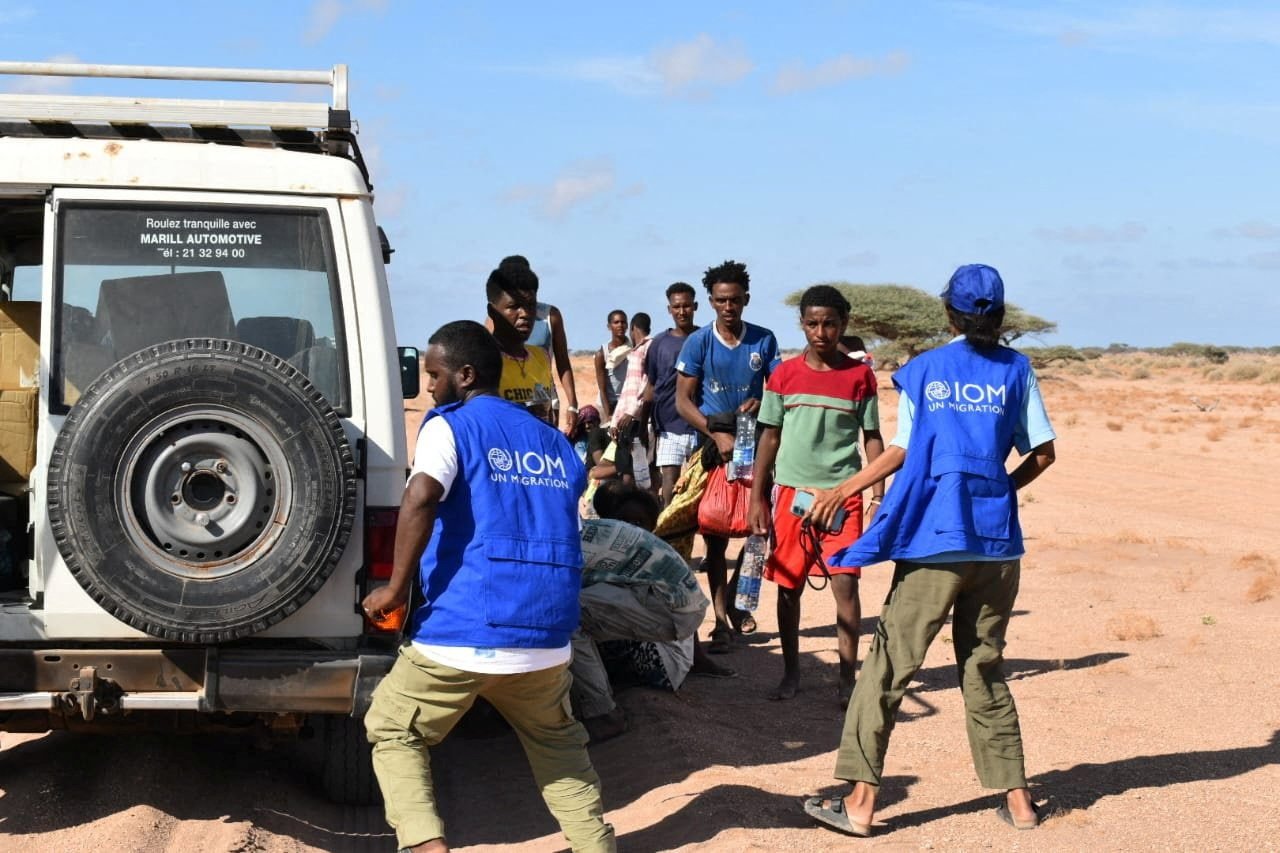
“Our teams are on the ground alongside local authorities to provide emergency assistance,” said IOM Chief of Mission in Djibouti Alexandre Coissac.

“This tragedy is a stark reminder of the dangers faced by migrants along this migration corridor as they seek economic opportunities,” Coissac said.

Djiboutian authorities are continuing search and rescue operations, the IOM statement said, adding that local authorities are also providing medical care to survivors and arranging burials for the deceased.

The Djibouti government could not be immediately reached for comment.

The migrants were heading to Yemen, hoping eventually to reach wealthier Gulf nations, even as Yemeni nationals flee their own country, which is experiencing its most serious escalation in fighting between Saudi Arabia-backed government forces and the Iran-backed Houthis since a UN-brokered truce in 2022.

“Despite the violence in Yemen, migrants are still making the perilous journeys hoping to make it to the Gulf countries,” the IOM statement said.

Fighting in Ethiopia

Fighting has also broken out in Ethiopia since last month, marking the biggest escalation of violence since the 2020-2022 Tigray war.

An IOM official told Reuters that the UN agency had documented heavy migrant traffic along the so-called Eastern Route through Djibouti for several years.

“People continue to use the route amid changing conditions in Ethiopia and Yemen, although the volume and direction of movement can shift over time,” the official said.

Ethiopian migrants interviewed for the agency’s most recent situation report on Djibouti, covering September 20 to September 30, said they had left their country because of difficult living conditions, including the impact of drought.

“Some migrants also reported that they were fleeing conflict and forced recruitment by armed forces,” the report said.

Multiple residents of Tigray, where fighting erupted on September 23, have told Reuters they had seen Tigrayan rebels forcibly recruiting young men into the defense forces.

The rebels have denied conducting forced recruitment.

The conflict has sparked fears of a return to all-out war, with Ethiopia and Eritrea severing relations over alleged Eritrean support for the rebel alliance seeking to overthrow Ethiopia’s government. Eritrea has denied backing the alliance.

Severe risks

The so-called Eastern Route presents many dangers, including accidents at sea, trafficking and arbitrary arrests on land. In 2025, more than 900 migrants died or went missing along the route, according to the IOM’s Missing Migrants Project, as the number of people undertaking the journey increased by 18%.

The IOM has described the crisis sparked by the fighting in Yemen as alarming, with displacement figures surging to 200,000 from 76,000 in mid-September, according to data released by the agency last week.

More than 3,700 people had fled Yemen by sea to Djibouti as of last week, it said. – Rappler.com
Similar Posts

  • | |

    Paris scout tied to Epstein network found dead

    A modelling scout with ties to the late convicted sex offender Jeffrey Epstein has been found dead at his home in France. Authorities discovered Daniel Siad, 69, on Monday in Colombes, a suburb northwest of Paris, according to confirmation from the Nanterre prosecutor’s office. The office said it opened an investigation Monday evening to determine the cause of death and confirmed that a post mortem examination would be conducted. Siad’s name appeared thousands of times across documents released by the US government related to Epstein. He had denied any awareness of the threat Epstein posed to the women and girls around him. His lawyer, Menya Arab Tigrine, stressed that Siad had faced several complaints in France, including allegations of rape, but had never been prosecuted. She said in a statement that he had died and that he was innocent. A woman identified only as Anya, an Epstein victim who spoke previously to reporters, said Siad had introduced her to Epstein and described the arrangement as a complete set up, calling Siad essentially a professional trafficker. In one email to Epstein released among the files, Siad wrote in broken English that in this business he sometimes catches fish quickly and other times catches none, a comment referencing his work finding models. Ahead of a recent investigative report examining the allegations, Arab Tigrine had said her client was unavailable for comment. However, in an earlier television interview, Siad said he had not known that women were being abused by Epstein, adding that he trusted Epstein and believed he was a professional person. The first complaints against Siad in France were filed in February. He denied any wrongdoing in multiple recent media appearances, telling one French broadcaster in May that he had never raped anyone in his life. Lawyers representing the former model who filed the first complaint against Siad said they were stunned by news of his death, saying they struggled to find words for the anger and sadness they felt, with alleged victims now denied the chance for a criminal trial. The lawyers expressed strong frustration toward the Paris prosecutor’s office, which had announced in February that it was opening an investigation into Epstein’s French associates. They accused the office of what they called scandalous inaction, arguing it reflected contempt from public authorities toward victims of sexual crimes connected to the trafficking network Epstein and his associates built. Another former model who gave a police deposition in June as part of the investigation into Siad told reporters that his death means any information he might have held about Epstein has now been lost. She said an important link in the chain had vanished before authorities had any chance to recover what he might have known, since he was never formally questioned. She said too much time had already been lost in the investigation and expressed hope that authorities would not wait years longer before searching his home, though she suggested it might already be too late. Anne Claire Le Jeune, a lawyer representing six women who filed complaints against Siad, said her clients had been denied justice. She said her clients found the strength to break a heavy silence surrounding Siad’s ties to Epstein and faced every stage of the legal process with remarkable courage. She called it deeply regrettable that the slow pace of the investigation allowed Siad to die before he could be questioned or detained, depriving the victims of a crucial step in their pursuit of truth and accountability. Another Epstein associate, French modelling agent Jean Luc Brunel, was found hanged in his Paris prison cell in 2022. Brunel, 76 at the time, had spent more than a year in custody while under investigation on suspicion of raping minors and trafficking minors for sexual exploitation, allegations he denied. Brunel founded the modelling agency MC2 Model Management with funding from Epstein and was suspected of helping transport and house young women and girls on Epstein’s behalf. Epstein, who was 66, died by suicide in a New York jail cell in 2019 while awaiting federal trial on sex trafficking charges. This account involves detailed allegations of serious sexual abuse and trafficking. If any of this touches on something you’re personally affected by, I’m glad to help you find appropriate support resources.

  • | |

    South Indian actress Shakeela undergoes neck surgery after excessive phone use

      South Indian actress Shakeela has revealed that her excessive use of mobile phones left her with a serious neck problem that eventually required surgery costing around Rs300,000 Indian rupees. The 53-year-old actress shared her experience in a video posted on her YouTube channel and urged people, especially parents, to limit unnecessary mobile phone use. Shakeela, who has worked in Malayalam, Tamil, Kannada and Telugu films, said her habit of playing games and watching videos on her phone for several hours caused significant damage to her neck. She explained that she would often lie on her side in bed for long periods while using her phone. “I used to play games on my phone continuously for four hours while lying on my side in bed,” Shakeela said. She added that she would only get up occasionally to have tea or coffee before returning to her phone. After playing games, she would spend hours watching reels on YouTube and Instagram. According to the actress, maintaining an incorrect posture while using her phone, combined with prolonged screen time, affected important blood vessels in her neck and eventually led to serious health complications. She underwent surgery in Chennai and said that a titanium screw was also used during the procedure. After returning home, doctors advised Shakeela to wear a neck collar until she recovered. She said that following the surgery, she has needed assistance even with basic activities such as getting out of bed and eating. Shakeela stressed that mobile phones are useful devices when used responsibly, but excessive use can have serious consequences. She advised people not to spend unnecessary hours watching videos or playing games, even if the content is entertaining. She also issued a warning to parents, urging them to avoid giving mobile phones to children unnecessarily. According to her, children should use phones only for essential activities and educational or useful content rather than spending long periods watching short videos and playing games. The actress said that people could end up paying a heavy financial and physical price for excessive phone use, adding that her own experience had cost her around Rs300,000 and caused considerable pain and difficulty. Shakeela Begum was born in Chennai. Her mother, Chand Bee, was from Andhra Pradesh, while her father, Chand Basha, was from Tamil Nadu. She began her acting career with a Tamil film in 1995. However, she gained widespread recognition after appearing in the Malayalam film Kinnarathumbikal, released in 2000. Over the years, Shakeela became a well-known name in South Indian cinema, particularly for her work in Malayalam films. Her latest health experience has now prompted her to use her public platform to raise awareness about responsible mobile phone use and the potential health risks associated with prolonged screen time and poor posture.

  • |

    Houthi attacks kill 38 Yemeni troops, dozens injured

    Houthi missile and drone strikes killed at least 38 Yemeni government soldiers and injured 29 others on Thursday in one of the deadliest attacks in recent years, according to medical sources. The assaults targeted military camps in Marib and Hadramawt provinces, including positions near the Saudi Arabian border. Security officials said one of the missiles struck troops during their morning assembly at a military camp in Marib, causing heavy casualties. Military sources said the attacks hit camps in the Al-Ruwaik area of Marib as well as Al-Abr and Al-Wadiah in Hadramawt. The strikes left dozens of soldiers dead or wounded, with officials warning that the casualty toll could rise as some of the injured remain in critical condition. The latest violence comes as Yemen’s long-running conflict has intensified following recent regional tensions. Last month, the Iran-backed Houthi movement expanded its military actions after renewed hostilities involving Iran and the United States. The group resumed attacks after a period of relative calm, including strikes on government forces and maritime targets. In a separate incident last month, Houthi fighters killed 16 government-aligned soldiers during an attack south of the strategic port city of Hodeidah. Yemen has been devastated by conflict since 2014, when the Houthis seized the capital, Sanaa, forcing the internationally recognised government to relocate. The rebels continue to control much of northern Yemen, while government forces hold large parts of the south. Although a UN-brokered truce reached in 2022 significantly reduced large-scale fighting, the agreement eventually expired, and sporadic clashes have continued. The latest attacks highlight the fragile security situation and raise fears of further escalation in a war that has already claimed hundreds of thousands of lives and created one of the world’s worst humanitarian crises.

  • | | |

    Mrunal Thakur warns of legal action over deepfake …

    Bollywood actress Mrunal Thakur has strongly condemned the misuse of artificial intelligence to create fake videos and images using her identity. Expressing serious concern over the growing circulation of AI-generated deep fake content on social media, the actress warned that she will pursue legal action against anyone involved in creating or sharing such material. According to Indian media reports, several deepfake videos and manipulated images featuring Mrunal Thakur have recently appeared across social media platforms. The actress described the unauthorized use of her face and identity through AI technology as unacceptable and called for an immediate end to the practice. Taking to her Instagram Stories, Mrunal Thakur issued a clear warning to individuals responsible for generating or distributing fake AI content using her name or likeness. She urged them to stop immediately, stating that continued misuse of her identity would leave her with no choice but to take legal action against those involved. Deepfake technology, powered by artificial intelligence, allows users to create highly realistic but fabricated videos, images, and audio recordings. While the technology has legitimate applications in entertainment and education, it has increasingly been misused to spread misinformation, damage reputations, and violate personal privacy. Mrunal Thakur’s statement has once again highlighted the growing concerns surrounding the ethical and legal challenges posed by deepfake technology. Experts warn that AI-generated fake content can seriously affect an individual’s reputation, personal life, and professional career. In many cases, victims may also face emotional distress and legal complications as a result of manipulated media circulating online. The issue has become increasingly significant in the entertainment industry, where celebrities are frequent targets of AI-generated fake content. Actors, musicians, and public figures across the world have raised concerns about the unauthorized use of their identities and have called for stronger legal protections against digital impersonation. Governments and technology companies are also working to address the misuse of artificial intelligence by introducing stricter regulations, improving content detection systems, and developing tools to identify manipulated media. However, experts believe that public awareness and responsible use of AI remain equally important in tackling the problem. Mrunal Thakur’s strong response reflects the growing determination among celebrities to protect their privacy and digital identity. Her warning serves as a reminder that while artificial intelligence offers remarkable technological advancements, its misuse can have serious legal, ethical, and social consequences. As deep fake technology continues to evolve, stronger safeguards and greater accountability will be essential to prevent its abuse.

  • |

    Nepal flood disaster deepens as new threat emerges

    KATHMANDU: Rescue teams in Nepal are digging through thick layers of mud and debris in search of survivors two days after a devastating flash flood swept through Himalayan communities, killing at least 469 people and leaving nearly 1,000 others missing in Nepal and neighbouring Tibet. The scale of the destruction has left entire villages cut off, roads and bridges destroyed and families desperately waiting for news of loved ones. With the possibility of another major flood looming, authorities are also racing to prevent a second disaster. The catastrophe began on Wednesday morning after a glacier collapse sent a massive torrent of water, rocks, ice and mud rushing through mountain river systems. The sudden surge tore through settlements along a major route connecting Nepal’s capital Kathmandu with Lhasa in Tibet. The affected region is also popular with trekkers and pilgrims, adding to concerns over the fate of foreign nationals caught in the disaster. Authorities said almost 1,000 people remained missing on both sides of the border. At least 540 of those reported missing are foreigners, according to officials. Rescue teams battle destroyed roads Nepalese rescue workers have been using heavy machinery, helicopters and sniffer dogs to search damaged areas. Helicopters have also been delivering emergency supplies to people stranded in remote towns and valleys where roads have disappeared beneath mud and debris. Rescue operations have been particularly difficult in the mountainous terrain, where landslides and damaged infrastructure have restricted access. In one of the most heartbreaking accounts from the disaster, Dibga Tamang was among the final people rescued from the badly affected town of Rasuwa on Thursday. He was airlifted with three others to an army camp in Nuwakot. Tamang described the devastation in deeply personal terms, saying that his community had been destroyed and that he had lost everyone who mattered to him. His account reflected the grief of hundreds of families still waiting for information about relatives who disappeared when the floodwaters swept through their communities. New flood threat raises alarm Even as rescuers continue searching for survivors, authorities are facing a dangerous new threat. Nepal’s disaster management authorities warned that a debris blockage had created a lake on the Bhotekoshi River. The water level is continuing to rise, raising fears that the natural barrier could collapse and unleash another destructive flood downstream. Across the border, Chinese authorities are also monitoring a rapidly filling barrier lake in Tibet. Chinese officials said around three million cubic metres of water could flow into the already dammed lake over the next three days. That volume is roughly equivalent to 1,200 Olympic-sized swimming pools. The situation could become particularly dangerous around September 1, when officials expect the water flow to reach its peak. Chinese state media reported that authorities had deployed an eight-member engineering team to carry out aerial surveys and three-dimensional modelling of the barrier lake. Engineers are studying whether a drainage channel can be constructed through the natural dam to lower the lake’s water level. However, the operation is complicated by steep cliffs and unstable terrain created by the glacier collapse. Engineer Chen Hanxiao told Chinese state broadcaster CCTV that experts needed precise calculations of the lake’s filling rate and the speed at which water could pass through a proposed drainage channel. Teams are also expected to monitor the lake floor, collect additional data and keep a close watch on weather conditions in the coming days. Gyirong border crossing badly damaged On the Chinese side, the Gyirong border crossing has emerged as one of the worst-hit locations. Chinese rescue teams had yet to reach the most severely affected area by Thursday evening, with crews concentrating on clearing debris from the road leading to Gyirong Port. Dramatic footage from the disaster showed huge torrents of muddy water and debris racing through the border crossing within seconds. Structures were engulfed while people scrambled to escape. Authorities said 558 people were missing in Gyirong County, including 260 foreign nationals. Three deaths had been confirmed on the Chinese side at the time of the report. The seriousness of the disaster was underscored by the visit of Chinese Premier Li Qiang to Gyirong on Thursday. His presence signalled the high priority Beijing has placed on the rescue and relief operation. Families wait desperately for news Far from the disaster zone, relatives of missing people have been searching for answers. Sneha Sudhir, from Chantilly, Virginia, is among those desperately waiting for news. Her husband was part of a group of 10 men from northern Virginia who travelled from Nepal towards Tibet’s Mount Kailash when the disaster struck. Several Americans are believed to be among those still missing. Sudhir said families were supporting one another while contacting officials, politicians, friends and relatives in the United States and India in an effort to locate their loved ones. Her account captured the painful uncertainty facing families who do not know whether their relatives survived. US President Donald Trump said the United States had offered assistance to Nepal following the disaster. “Nobody’s ever seen anything quite like that,” Trump said, describing the destruction and promising American support. Bodies recovered hundreds of kilometres away The force of the flood was so immense that bodies were carried far from the areas initially hit by the torrent. Ganesh Aryal, administrator of Nepal’s Chitwan district, said authorities had recovered 103 bodies from the river system in his district. Chitwan lies around 100 kilometres from the worst-hit areas around Trishuli, highlighting the extraordinary reach of the floodwaters. Local hospitals have struggled to accommodate the large number of bodies recovered. Authorities have therefore been preparing tents and other facilities where families can identify and claim the remains of their relatives. Government faces major test Nepal’s Prime Minister Balendra Shah visited flood-hit Nuwakot on Thursday and acknowledged the severity of the situation. He said government agencies were operating at full capacity, with the immediate priorities being the rescue of missing people, treatment of the injured and delivery of emergency assistance to affected families. The disaster presents a

Leave a Reply

Your email address will not be published. Required fields are marked *