sanctions icc president
|

US sanctions ICC president, senior trial lawyer in latest attack on court

WASHINGTON, USA – The United States imposed sanctions on Tuesday, August 18, on the International Criminal Court’s president and a senior trial lawyer at the court, US Secretary of State Marco Rubio said.

The move is the latest escalation in the Trump administration’s campaign against The Hague-based court, which was established in 2002 by the international community to prosecute war crimes, genocide and crimes against humanity. The US is not a member of the court.


US sanctions ICC president, senior trial lawyer in latest attack on court

Rubio said in a statement that he was imposing sanctions on Tomoko Akane, a Japanese judge who is president of the ICC, and Abdoulaye Seye, a senior trial lawyer and a Senegalese national, under a Trump executive order last year authorizing sanctions against the court.

“These individuals have directly engaged in efforts by the ICC to investigate, arrest, detain, or prosecute officials whose government has not consented to ICC jurisdiction,” Rubio said.

The ICC condemned the move, saying in a statement that the measures undermine the rule of law.

“When judicial actors are threatened for applying the law, it is the international legal order itself that is placed at risk,” the ICC said.

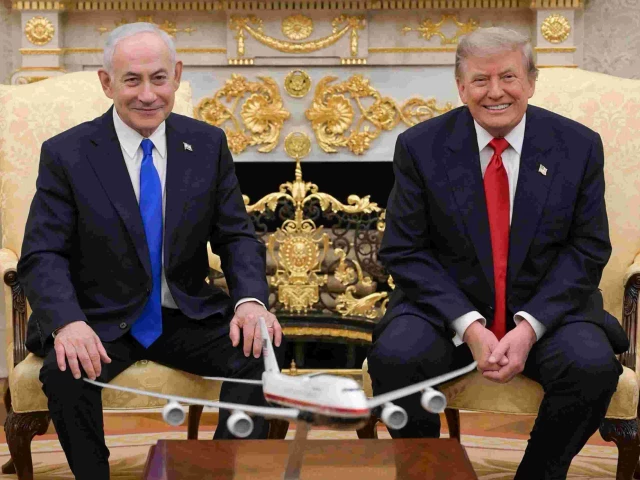
Seye is a senior trial lawyer on the prosecution team that sought an arrest warrant for Israeli Prime Minister Benjamin Netanyahu, and has been nominated for election as an ICC judge.

The US effort has put it at odds with allies in Europe.

Dutch Foreign Minister Tom Berendsen said on X that the Netherlands, which hosts the court, disapproved of the latest US sanctions and he had invited Akane to “discuss our continued support.”

“International courts and tribunals must be able to freely carry out their mandates,” Berendsen wrote.

Top ICC judge Akane warned in December that the US sanctions would “rapidly undermine the court’s operations in all situations and cases, and jeopardize its very existence”.

The US imposed targeted sanctions last year on several ICC officials, including prosecutors and judges, citing the ICC’s arrest warrants for Netanyahu and former Israeli Defense Minister Yoav Gallant, as well as a past probe into US troops in Afghanistan.

The sanctions freeze any US assets the individuals may have and essentially cut them off from the US financial system, with which almost all internationally operating banks have close ties.

The US Treasury Department also issued a general license on Tuesday authorizing the wind-down of transactions involving Akane and Seye through September 17.

‘Defending’ Netanyahu

Three ICC judges sued Trump and his administration in June over the sanctions, arguing the measures were unlawful.

Advocacy groups, in two separate lawsuits, have said that the US campaign infringes on the constitutional rights of organizations working with the court to seek justice for atrocities around the world.

Rubio said last month that the administration would step up efforts to undermine the ICC, including a diplomatic campaign aimed at persuading other countries to quit the institution, a call that at least five countries have already heeded.

Rubio argued that the court posed a threat to US personnel carrying out US President Donald Trump’s hardline immigration policies or strikes on boats accused of carrying drugs, as well as other US service members.

Trump has said the campaign was aimed at defending Netanyahu and others from prosecution, rather than Trump himself.

The US has never been a member of the court. The ICC asserts jurisdiction only if a member state is unable or unwilling to prosecute atrocities itself.

However, the ICC statute also gives the court the power to prosecute atrocity crimes committed on the territory of member states by nationals of non-member states. – Rappler.com
Similar Posts

  • |

    UK faces potential red weather alerts as fifth heatwave of 2026 brings 36C temperatures

    The United Kingdom is preparing for a fifth heatwave this summer, with temperatures projected to reach 36C and prompting the Met Office to consider issuing rare red weather alerts. The extreme heat poses severe risks of disruption across railway lines and power networks, whilst compounding growing concerns over drought and food security. Following a temporary drop in temperatures on Monday, heat levels across England and Wales are expected to climb rapidly. Sunday marked the 35th day in 2026 where British temperatures exceeded 30C, hitting a peak of 30.6C. Met Office meteorologist Tom Morgan indicated that mid-30s temperatures will become widespread on Wednesday and Thursday, with Thursday currently tracking as the hottest day of the week and holding a small chance of exceeding 36C. The prolonged period of dry conditions has left half of England and Wales grappling with near-drought environments, and officials warn that further regions could soon be declared affected zones. Alongside potential infrastructure damage, authorities are highlighting risks to health and agricultural output. The Met Office confirmed that formal amber and red warnings are under active consideration as the situation develops. Meanwhile, the UK Health Security Agency has put yellow heat-health alerts in place across the East Midlands, West Midlands, South East, South West, East of England, Yorkshire and the Humber, and London. These health advisories remain active through Tuesday evening, with potential extensions if extreme conditions persist.

  • |

    Brazil recalls ambassador after Milei labels Lula a “thief” at campaign rally

    Relations between Brazil and Argentina have taken another sharp turn after Brazilian President Luiz Inacio Lula da Silva was indirectly attacked by Argentine President Javier Milei during a political rally in Sao Paulo. Brazil responded by recalling its ambassador from Buenos Aires, calling Milei’s remarks an insult to the country’s leadership, institutions, and democracy. Milei traveled to Brazil over the weekend to support Flavio Bolsonaro, who officially launched his campaign for Brazil’s presidential election scheduled for October. Flavio is the son of former Brazilian president Jair Bolsonaro and is representing the right wing Liberal Party after his father was barred from seeking office. During his speech, Milei did not mention Lula by name but referred to “the thief” and “the convict,” comments widely understood to be aimed at the Brazilian president. The remarks referenced Lula’s previous imprisonment on corruption charges before those convictions were later overturned, allowing him to return to politics and win the 2022 presidential election. Standing alongside Flavio Bolsonaro, Milei praised the candidate and said he believed he was the only person capable of defeating Lula in the upcoming election. The Argentine president has maintained close political ties with the Bolsonaro family and has openly supported their conservative agenda. Milei also criticized a senior Brazilian Supreme Court judge who oversaw legal proceedings involving Jair Bolsonaro. Without naming Justice Alexandre de Moraes directly, he used insulting language while referring to the judge. Earlier this month, Moraes rejected Milei’s request to visit the former Brazilian president, who is currently under house arrest in Brasilia. Jair Bolsonaro is serving a prison sentence of more than 27 years after being convicted of plotting a coup to remain in power following his defeat in the 2022 election. Because he is no longer eligible to run for public office, he has endorsed his son Flavio as the candidate for his party in this year’s presidential race. Brazilian officials reacted strongly to Milei’s comments. According to diplomatic sources, the statements were viewed as offensive not only to the country’s president but also to its judiciary, democratic institutions, and the Brazilian people. In response, Brazil recalled its ambassador from Argentina in a diplomatic protest, signaling growing frustration with Milei’s repeated criticism of the Brazilian government. President Lula did not directly address Milei’s speech during a public event on Sunday. However, he appeared to respond indirectly by saying that Brazil would not accept interference from outsiders in its internal affairs. His comments were seen as a clear message that foreign leaders should avoid becoming involved in Brazil’s domestic political disputes. The latest exchange has further strained ties between South America’s two largest economies. Despite their political differences, Brazil and Argentina remain each other’s biggest trading partners, making stable diplomatic relations important for regional trade and economic cooperation. With Brazil’s presidential election approaching, political tensions are expected to remain high. Milei’s public support for Flavio Bolsonaro and his criticism of Lula have added an international dimension to the campaign, increasing pressure on relations between the neighboring countries at a time when cooperation remains vital on economic and regional issues.

  • |

    India passes bill prescribing three-year Jail term 

      India has passed a controversial bill that introduces penalties for insulting or disrupting the singing of Vande Mataram, the country’s national song. Under the proposed legislation, anyone found guilty of obstructing the performance of Vande Mataram or showing disrespect toward it could face up to three years in prison. The bill has triggered widespread political debate, with opposition parties and minority groups expressing concern that it undermines India’s secular principles and religious freedoms. The bill was presented by India’s Minister of State for Home Affairs, Nityanand Rai. Once it receives the approval of the President, it will officially become law. According to Rai, the legislation is not aimed at targeting any individual, religion, or political ideology. Instead, he argued that it is intended to safeguard the dignity of the nation and strengthen a shared sense of national identity and unity among Indian citizens. However, the bill has faced strong opposition from several political parties, including the Indian National Congress and other opposition groups. Critics argue that the legislation violates the secular character of the Indian Constitution and threatens the constitutional right to freedom of religion. Opposition leaders have warned that compelling citizens to participate in or show reverence toward Vande Mataram could create unnecessary religious and social tensions in a country known for its cultural and religious diversity. Opposition parties also pointed out that there was no need to enforce the entire version of Vande Mataram through legislation. They noted that during the framing of the Indian Constitution, the Constituent Assembly had recognized only the first two stanzas of the song for official purposes. In their view, extending legal protection to the entire composition goes beyond the historical constitutional understanding and could lead to disputes over interpretation and implementation. All India Majlis-e-Ittehadul Muslimeen (AIMIM) President and Member of Parliament Asaduddin Owaisi strongly criticized the bill, describing it as a violation of the constitutional guarantee of religious freedom. He argued that Vande Mataram contains references to the worship of Hindu goddesses and deities, making it incompatible with the religious beliefs of many citizens, particularly those belonging to non-Hindu faiths. Owaisi claimed that forcing respect for the song through legal penalties amounts to imposing a particular religious belief on the entire population. He further alleged that the legislation reflects an attempt to transform India into a “Hindu Rashtra,” or Hindu nation. According to Owaisi, such measures weaken India’s constitutional commitment to secularism and equal treatment of all religious communities. He warned that laws based on religious symbolism could deepen divisions rather than promote national unity. The All India Muslim Personal Law Board also expressed serious concern over the bill’s approval. In its statement, the organization argued that using legislation to impose a specific religious concept or belief on all citizens contradicts the fundamental spirit of the Indian Constitution. The Board maintained that India’s democratic framework guarantees equal rights and religious freedom for people of all faiths and that no law should compel citizens to endorse religious practices or beliefs that conflict with their convictions. The debate surrounding the bill has highlighted the broader discussion over nationalism, constitutional values, and religious freedom in India. Supporters believe the legislation promotes national pride and respect for national symbols, while critics argue that it risks eroding the country’s secular foundations. As the bill now awaits presidential approval, it continues to generate significant political and public debate across the country.

  • Chinese Scientists Unlock New Secrets of the M87 Supermassive Black Hole

    Humanity made history in 2019 by capturing the very first image of a distant black hole. Now, researchers are diving much deeper into this dark and fascinating cosmic mystery. Chinese scientists have successfully decoded the complex radiation secrets of the supermassive black hole in galaxy M87. They have taken a massive leap forward in the […]

  • | |

    Oman oil spill spreads dramatically, nearing scale…

    An oil spill off the coast of Oman is rapidly expanding into one of the worst maritime environmental disasters in years after weeks of largely unchecked spread, according to international agencies, satellite imagery and environmental organizations. The slick, which originated from a grounded tanker carrying Russian crude, had reached Oman’s mainland by Wednesday, the United Nations shipping agency confirmed. John Amos, an oil spill specialist who reviewed satellite imagery, said the affected area now covers more than 2,000 square kilometers. The vessel involved, the Caroline Bezengi, was carrying an estimated 800,000 barrels of Russian oil and operates under international sanctions. It ran aground on June 30 near an Omani island that forms part of a protected marine nature reserve. The tanker first reported trouble off the coast of Yemen on June 8, and maritime sources said an explosion appeared to have occurred on board. No party has claimed responsibility for any attack, though the ship was navigating waters tied to two separate conflicts during its voyage from Russia to India. The tanker departed the Black Sea port of Novorossiysk in April, a region central to the ongoing war between Russia and Ukraine. Ukrainian forces have targeted vessels belonging to the so called shadow fleet used to transport Russian oil, a network that includes the Caroline Bezengi. Ship tracking data shows the tanker then passed through the Suez Canal in late May before sailing near Yemen, where Iran aligned Houthi forces have become entangled in the broader regional conflict involving the United States, Israel and Iran. A tangled set of war related and sanctions related shipping regulations is already complicating the emergency response and could further delay efforts to contain the disaster, according to insurers and analysts. The IOPC Funds, the intergovernmental body responsible for compensating tanker spill damages, told a foreign news agency it will not cover cleanup costs since the incident is being classified as an act of war rather than an ordinary accident. The 25 year old tanker also lacks coverage from any recognized Western insurer. Amos, who serves as chief executive of the environmental nonprofit SkyTruth, said the worst case outcome would involve no adequate response capable of preventing further damage. He said the spill’s scale could ultimately rival the 1989 Exxon Valdez disaster and noted that the tanker is comparable in size to the Sanchi, an Iranian vessel that collided with a freighter off China in 2018 in what became the world’s worst tanker disaster in decades. Slick accelerates toward mainland The spill was first identified by analysts in early July and has since begun reaching Oman’s mainland, according to the International Maritime Organization. A spokesperson for the agency said oil is drifting offshore northeast of Al Qibliyyah Island, with some already washing ashore, and confirmed that contingency planning for the spill is underway. The IMO said seasonal monsoon weather has restricted access to the tanker and delayed salvage efforts. Satellite images show the vessel grounded at Al Qibliyyah Island, part of a nature reserve that includes the Hallaniyat Islands and provides habitat for endangered sea turtles, humpback whales and coral reef ecosystems, all of which now face heightened risk from the spreading oil. Omani officials said Monday the slick covers nearly 400 square kilometers, though they have not responded to requests for additional detail on containment efforts beyond confirming the use of booms to limit the spread. Environmental groups and independent specialists estimate the true size at several times that figure, and say the rate of spread has accelerated sharply since early August. Greenpeace reported Tuesday that the affected area grew from around 45 square kilometers at the end of July to 150 square kilometers by early August, then quadrupled to roughly 600 square kilometers within just two days, according to Hanen Keskes, the group’s political campaigns lead for the Middle East. Amos’s estimate of 2,000 square kilometers suggests the spill has grown more than 40 times larger since the start of August alone. Amos said containing the disaster will require more than floating booms, including stabilizing the grounded vessel and transferring any remaining crude to another tanker. He warned that delays in salvage operations will only worsen the tanker’s condition and make the eventual recovery effort more complicated and dangerous.

Leave a Reply

Your email address will not be published. Required fields are marked *