lindsay clancy psychiatrist
| | |

Lindsay Clancy psychiatrist ‘surprised’ by sui…

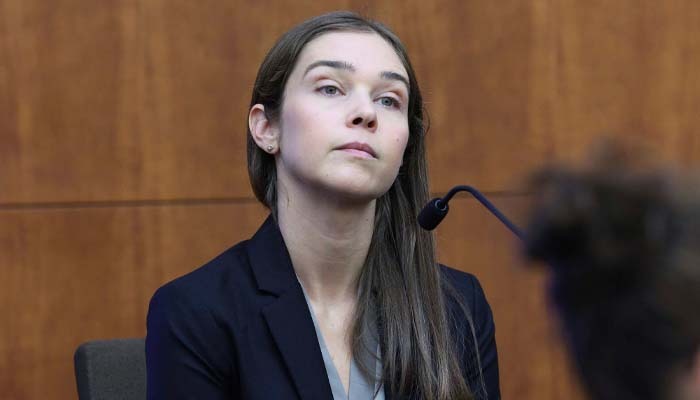
Lindsay Clancy’s psychiatrist testified in court Monday as her defense lawyer questioned whether warning signs were missed during the Massachusetts mother’s deteriorating mental health in the months before the deaths of her three young children.

Dr. Jennifer Tufts, who began treating Clancy in September 2022, faced detailed questioning from defense attorney Kevin Reddington about her approach to treatment, medication decisions and the use of relatively brief video appointments.

According to the Associated Press, Reddington argued that Clancy’s mental healthcare may have been inadequate at a time when she was experiencing serious emotional and psychological difficulties. He focused on 25-minute telehealth appointments, computerized clinical forms and the numerous medications prescribed as Clancy reported different symptoms and side effects.

During questioning, Reddington challenged Tufts over whether Clancy should have received more intensive or in-person care.

When asked why she did not recommend that Clancy meet her face-to-face instead of continuing with video appointments, Tufts said she did not believe there was a problem with providing treatment through telehealth.

The psychiatrist also told jurors she was “surprised” to learn that Clancy had contacted a suicide hotline twice while receiving treatment.

Tufts said Clancy had denied experiencing suicidal thoughts during their treatment, although she acknowledged that she had been “close to feeling suicidal.”

Reddington highlighted an appointment roughly two months before Clancy strangled her children, asking the psychiatrist what she had done after Clancy described feeling hopeless.

Tufts responded that she had reassured Clancy that there was hope and that treatment options and different programs were available. She said her goal was to make Clancy understand that she still had options and reasons to hope.

Reddington highlighted an appointment roughly two months before Clancy strangled her children, asking the psychiatrist what she had done after Clancy described feeling hopeless.

Tufts had previously testified for prosecutors that Clancy initially sought treatment because of anxiety and had raised concerns about medication side effects.

Court records indicate that Clancy was prescribed more than a dozen psychiatric medications through multiple healthcare providers before the killings.

The testimony is part of the ongoing trial involving Clancy, whose case has drawn significant attention because of the deaths of her three children. The defense continues to examine the care she received and whether her mental health deterioration was properly recognized and addressed before the tragedy.

As the trial continues, jurors are expected to hear further testimony about Clancy’s mental state, treatment history and the circumstances surrounding the deaths of her children.

Similar Posts

  • |

    Police Detain Two Suspects Possibly Linked to Missing Russian Siblings and Buried Motorcycle Near Pattaya

    CHONBURI, Thailand Tourism and immigration police on Thursday detained two suspects believed to have helped dig a pit to bury the dismantled remains of a motorcycle belonging to a pair of missing Russian siblings, while also assisting two other men in escaping a large-scale police cordon. The case involves Miss Diana Nazimova, 22, and her […]

  • |

    CM Murad decides to transform Sindh PPP Unit into private limited company

    KARACHI : Sindh Chief Minister Syed Murad Ali Shah has decided to restructure the Public-Private Partnership (PPP) Unit into a private limited company to build a more autonomous, commercially agile and investment-oriented PPP ecosystem for the next phase of development in the province. The decision was taken at a meeting chaired by the chief minister at the CM House on Wednesday. The meeting was attended by Special Assistant to the CM on Investment Syed Qasim Naveed, Chief Secretary Asif Hyder Shah, Principal Secretary to CM Agha Wasif, Planning and Development Board Chairman Najam Shah, Finance Secretary Fayaz Jatoi, Transport Secretary Asad Zamin and other senior officials. The chief minister was informed that Sindh’s PPP programme has emerged as Pakistan’s leading sub-national PPP initiative, with a growing portfolio of projects in roads and bridges, transport, economic zones, information technology, energy, water, livestock, education, health and environmental sectors. The programme has received international recognition at platforms including the UNECE PPP Forum and The Asset Infrastructure Awards. Sindh’s PPP programme was also ranked sixth in Asia by The Economist in 2018. The PPP Unit has additionally provided technical and legal support to other provinces for strengthening their PPP frameworks and project structuring. The meeting noted that the Unit’s transition into a private limited company would enable it to promote and facilitate PPP projects more effectively, assist procuring agencies, strengthen departmental PPP nodes, formulate and implement policies and guidelines, build capacity and monitor portfolio performance. The chief minister directed that the proposed institutional transformation be pursued to remove operational bottlenecks, retain specialised professionals and ensure continuity in PPP project development and implementation. He emphasised the need for a strong institutional structure capable of providing timely technical, financial and legal support to departments and implementing agencies. Mr Shah was informed that the existing PPP Unit faced challenges in retaining skilled staff because of limited competitive compensation and incentives. The absence of dedicated project implementation units and project directors in certain departments was also affecting the pace and quality of project delivery. The proposed PPP Private Limited Company will have greater commercial flexibility to undertake strategic activities, make equity investments where required, mobilise capital through financial instruments and support project financing. It will also be able to develop diversified revenue streams beyond government funding, subject to the approval and oversight of its board. The chief minister underscored that the company must operate with robust governance, transparent performance review mechanisms and clear statutory oversight. He directed that the new structure should strengthen PPP nodes in provincial departments, empower competent officers and ensure that projects are processed efficiently without compromising accountability. The meeting concluded that the restructuring would help improve administrative efficiency, facilitate innovative financing, enhance investor confidence and accelerate the delivery of development projects. The chief minister said the objective was to establish a capable, sustainable and responsive PPP institution that could contribute meaningfully to Sindh’s progress and prosperity.

  • | |

    Canada’s pushback against Trump tests bounda…

    Two days before trade negotiations between the United States and Canada collapsed dramatically over the weekend, Vice President JD Vance told an audience at a private fundraiser that Canadian Prime Minister Mark Carney was, in his words, a very sweet guy. According to a private audio recording obtained by a Canadian news outlet, Vance went on to describe Carney as someone who talks tough and claims he can out tough Donald Trump, before ultimately backing down on major issues, a pattern Vance called hilarious. Those remarks, which drew significant attention across Canada, may not have directly caused Carney’s negotiating team to walk away from the table, but they certainly did not help matters. Carney’s decision abruptly ended talks over a new trade agreement and triggered a fresh round of tariffs between two countries that conduct more than 872 billion dollars in annual bilateral trade. The deepening rift, paired with Vance’s comments, offers the latest example of an American administration willing to apply pressure against both allies and adversaries alike, underscoring how such tactics can produce unpredictable consequences on the world stage. If Trump anticipated that Canada would eventually yield to American pressure, following a pattern seen among other US allies over the past year and a half, that assumption may prove mistaken, and the fallout could shape the remainder of his presidency. Tension between Washington and Ottawa did not begin this weekend. It traces back to the first Trump administration and the negotiations that produced the USMCA, the agreement that replaced the original 1990s era North American Free Trade Agreement. Personal friction between Trump and former Canadian Prime Minister Justin Trudeau complicated those earlier talks. As Trump prepared to return to office in late 2024, he mockingly referred to Trudeau as governor and to Canada as America’s 51st state. Behind those remarks sat a broader worldview in which the United States positions itself as the dominant power within its own hemisphere, entitled to shape political, military and economic outcomes across the region, Canada included. Administration officials have argued that Canada contributes too little to regional defense spending while benefiting disproportionately from trade with its southern neighbor. Within Trump’s framework, where economic and national security are treated as inseparable, Canada and Mexico, two of America’s largest trading partners, emerged as early targets. Drew DeLong, head of corporate statecraft at the Kearney Foresight think tank, said officials across the State, Treasury and Commerce departments frequently repeat the phrase that economic security equals national security. By early this year, as North American trade talks moved forward unevenly, Trump’s focus shifted away from Canada toward military interventions in Venezuela and later the Middle East. Even so, the central thread running through Trump’s foreign policy approach has remained consistent, treating the United States as a dominant power capable of imposing its will for national advantage. That power has limits, however, and Trump’s second term has repeatedly tested where those limits lie. Despite the obvious differences between an active conflict with Iran and a trade dispute with Canada, the underlying dynamics share similarities. In both cases, the United States confronts a counterpart with far less overall power but still capable of retaliation. Iran has leaned on its ability to threaten US allies and disrupt global commerce through chokepoints like the Strait of Hormuz. Canada, meanwhile, has begun testing its own capacity to inflict economic pressure, with this week’s targeted tariffs marking an initial step. Future Canadian measures could include limiting American access to Canadian energy and critical minerals, alongside consumer boycotts targeting US products. DeLong said that as the broader global landscape shifts toward economic security concerns, countries increasingly search for chokepoints and leverage across global supply chains, adding that such opportunities exist for nations willing to look for them. For now, clear paths toward resolution remain limited. Trump has escalated his public rhetoric, repeatedly accusing Canada of ripping off the United States, while Ontario Premier Doug Ford responded sharply, telling the American president to kiss his ass. Imran Bayoumi, deputy director of the GeoStrategy Initiative at the Atlantic Council, said that pushing allies and partners away tends to incentivize them to seek new relationships rather than comply with American demands. Room still exists for tensions to ease. Canada’s new tariffs take effect in two weeks, while the most significant American countermeasure, a 50 percent tariff on Canadian built vehicles and auto parts, will not take effect until early 2027. Escalation cycles in economic or military conflicts can be difficult to reverse, but the several month gap before the next round of US tariffs gives both sides room to potentially resume negotiations, which had shown signs of progress before talks collapsed Friday night. A more immediate deadline looms in November’s US midterm elections. Democratic gains in Congress could limit Trump’s authority significantly, while unexpected Republican success could strengthen his position further. Ottawa currently appears to be betting on the former scenario, calculating that concern over midterm losses in industrial swing states like Michigan and Ohio will pressure Trump to soften his stance before voters head to the polls. Bayoumi said he does not see the kind of internal political division within Canada that the Trump administration may have anticipated, adding that Carney has considerable political room to negotiate a favorable outcome for Canada rather than settle for less. Carney has also raised another possibility publicly since Trump returned to office, suggesting Canada may continue drifting away from the United States altogether and deliberately widen the distance between the two nations. Carney has said Canada cannot depend on traditional alliances now that the rules of engagement have fundamentally shifted. While geographic proximity guarantees the two countries will remain connected in some form, the deeply integrated economic relationship built over recent decades may be approaching its end. This stands in contrast to Mexico, which appears to be pursuing closer economic integration with the United States rather than distancing itself. Meanwhile, other global trading partners, including US allies across Europe and Asia, are closely watching Canada’s assertive stance

  • | |

    Senate panel seeks Bullah suspension until title, dialogue changes

    The release of Bullah, a Pakistani film written by veteran screenwriter Nasir Adeeb and starring Shaan Shahid and Saleem Shah, has been placed in uncertainty after a Senate standing committee recommended that its screening be halted until its title is changed and certain dialogues are revised. The recommendation emerged from a meeting of the Senate Standing Committee on Information and Broadcasting held on Thursday, July 24, chaired by Senator Sarmad Ali. The session was convened to review concerns that had been raised about the film’s certification process by the Central Board of Film Censors. Officials from the CBFC appeared before the committee to defend the approval process, telling members that Bullah had already been cleared without any cuts by both the Punjab and Sindh censor boards under the same title. They explained that the federal board’s jurisdiction was limited to Islamabad Capital Territory and cantonment areas, and maintained that the CBFC chairman could not unilaterally reject a film. Certification decisions, they clarified, were taken collectively by the board, with the chairman holding only a casting vote in the event of a tie. The officials further noted that if the committee believed the film should be banned or its title changed, the matter could be referred to the federal government, which serves as the next appellate authority under the applicable legal framework. Senator Pervaiz Rashid pushed back on the board’s defence, questioning whether Nasir Adeeb’s reputation as a screenwriter was a sufficient basis for approving the film’s content. He pointed out that Adeeb was primarily known for writing violence-based films, particularly Maula Jatt, and argued that this background did not establish the screenwriter’s credentials as an authority on history, national personalities or Pakistan’s cultural traditions. Senator Rashid also remarked that Maula Jatt had introduced the “gandasa” as a cultural symbol to mainstream audiences, saying he had not been aware of the weapon before the film popularised it. Following the discussion, committee chairman Senator Sarmad Ali concluded the session by proposing that the film’s title be changed and that certain dialogues be revised before it is permitted to screen. He further suggested that Bullah remain suspended until these recommended changes have been implemented. The meeting was attended by Senators Abdul Shakoor Khan, Syed Waqar Mehdi, Pervaiz Rashid and Jan Mohammad, along with Secretary Information Ashfaq Ahmed Khalil and officials from the Ministry of Information and Broadcasting and the Central Board of Film Censors. The film’s makers have not publicly responded to the committee’s recommendations. With both provincial censor boards having already cleared the film without cuts, the situation now rests on what the federal government decides to do with the parliamentary committee’s proposal.

  • |

    Pakistan’s Umair Arif wins Hong Kong Junior Squash Open U17 title

    HONG KONG: Pakistan’s young squash sensation Umair Arif produced a fighting performance to capture the Under-17 title at the Hong Kong Junior Squash Open on Sunday, overcoming England’s Luke McBride in a thrilling five-game final. Arif recovered from a slow start to defeat McBride 3-2, showing composure and determination when the championship was on the line. The Pakistani teenager struggled in the opening game, losing 4-11 as McBride established early control. But Arif quickly turned the contest around, winning the next two games 11-6 and 11-5 to move within one game of the title. McBride refused to surrender and responded strongly in the fourth game, edging Arif 11-9 to level the match at 2-2 and force a decisive fifth game. With the title hanging in the balance, Arif produced his best squash of the match. He controlled the final game and secured an emphatic 11-4 victory to complete the comeback and lift the Under-17 trophy. The victory adds another promising achievement to Arif’s growing junior career. He has previously represented Pakistan at both the World Junior Squash Championships and Asian Junior Squash Championships, gaining valuable experience against some of the best young players in the sport. Arif is also a fellow of the Bilquis and Abdul Razak Dawood Foundation, which supports promising young talent. His latest triumph will further raise expectations around his future, particularly as Pakistan continues to nurture a new generation of squash players. The hard-fought Hong Kong final was a reminder of Arif’s fighting spirit — and his ability to respond when the pressure is at its highest.

  • |

    Pakistan wins historic double gold at Ju-Jitsu Worlds

    Pakistan achieved a historic milestone at the 2026 World Ju-Jitsu Championship by winning two gold medals and one bronze medal, marking one of the country’s finest performances in the international competition. The championship, being held at the Mubadala Arena in Abu Dhabi, has attracted more than 1,500 athletes from across the world. Competitors are taking part in Under-16, Under-18, Under-21, adult and Masters categories, with the event continuing until August 9. Pakistan’s biggest success came through former Asian champions Abu Huraira and Muhammad Ammar, who secured gold medals in both the Masters Duo and Duo Show events. Their victories created history as it was Pakistan’s first-ever participation in the Masters category at the World Ju-Jitsu Championship. The pair produced outstanding performances throughout the competition, demonstrating exceptional coordination, technical excellence and consistency to finish at the top of both events. Pakistan added another medal to its tally when young athletes Muhammad Yousaf and Muhammad Umar captured the bronze medal in the Under-21 Duo category. The duo impressed judges with their teamwork, precision and discipline during the competition. Yousaf and Umar are also scheduled to compete in the Under-21 Duo Show event, where they will look to add another medal for Pakistan before the championship concludes. Pakistan Ju-Jitsu Federation Chairman Khalil Ahmed Khan congratulated the athletes on their remarkable achievements and described the victories as a proud moment for the country. He said the success would inspire young athletes to pursue excellence in the sport. Secretary General Tariq Ali also praised the national team, saying the results reflected years of dedication, hard work and continuous improvement by Pakistan’s ju-jitsu athletes on the international stage. The federation congratulated Abu Huraira, Muhammad Ammar, Muhammad Yousaf and Muhammad Umar for their outstanding performances and expressed confidence that the national team would continue to achieve success in the remaining events of the championship.

Leave a Reply

Your email address will not be published. Required fields are marked *