august total solar
|

August 12 total solar eclipse, will it be visible in Pakistan?

Islamabad – A rare total solar eclipse will occur on August 12, 2026 attracting the attention of astronomy enthusiasts around the world. However, will it be visible in Pakistan?

The solar eclipse will not be visible in Pakistan as it will be nighttime in the country during the key phases of the eclipse.

According to Pakistan Standard Time, the partial eclipse will begin at 8:34 PM on August 12 while the total eclipse will begin at 9:58 PM. The eclipse will reach its peak at 10:46 PM and the total eclipse will end at 11:34 PM.

Where will solar eclipse be visible?

On August 12, the Moon will pass between the Earth and the Sun causing a total solar eclipse to be visible in Greenland, Iceland, northern Russia and parts of Spain and Portugal.

A partial solar eclipse will be visible across various parts of North America, Canada, most of Europe and northwestern Africa.

According to NASA, the Sun will set during the eclipse in western parts of Europe and Africa creating a unique spectacle in which the solar eclipse will coincide with sunset.

How can solar eclipse be watched live?

NASA will also provide an online live broadcast of this astronomical event which can be watched online from Pakistan on the night of August 12.

Astronomers have warned people in areas where the eclipse will be visible never to look directly at the Sun without specially designed solar-viewing glasses as doing so can cause severe damage to the eyes.

Similar Posts

  • | |

    KP sets 60% enrolment target for school dropouts

    The Khyber Pakhtunkhwa government has launched a major initiative to bring millions of out-of-school children into the education system. The provincial government has started work on a comprehensive plan. The initiative will identify children who are not attending school and provide them with suitable educational opportunities. Officials from the education, local government, health and social welfare departments have signed a memorandum of understanding for the programme. Khyber Pakhtunkhwa Chief Minister Muhammad Sohail Afridi was also present at the signing ceremony. Officials gave a detailed briefing on the initiative. They said a province-wide survey would be conducted to identify out-of-school children. The government will also develop a “One Map” system. The system will identify the number of children who are out of school. It will also show their locations. This data will help the authorities plan enrolment drives in areas where the need is greatest. According to figures presented during the briefing, around 4.9 million children in KP were out of school according to the 2023 census. The provincial education department has estimated the number at around 2.6 million. The government has set an initial target of bringing 60% of out-of-school children into the education system during the first phase. Officials said children under the age of five would also be included in the data collection process. Their information will help the government prepare future education plans and estimate upcoming enrolment needs. The programme will use different forms of education. Government schools will be used where possible. Community schools will also play a role. Double-shift schools will be introduced or expanded in areas facing limited capacity. Digital platforms will also be used to reach children who cannot easily access conventional schools. Poverty has been identified as one of the major reasons children leave school. The government plans to provide financial support to vulnerable families. Scholarships, Zakat funds and other assistance will be used to encourage children to remain in education. Scholarship payments will be linked to attendance. Officials said students would need to maintain at least 75% attendance to qualify for the scholarship payments. The programme will also focus on skills development. Children will receive technical and vocational training under the United Nations’ Generation Unlimited programme. The initiative is aimed not only at increasing school enrolment but also at improving the future employment prospects of young people. The government has also planned independent verification of the survey data. An independent organisation will verify 5% of the collected data to improve transparency and ensure that the figures accurately reflect the situation on the ground. Authorities said the survey would provide a clearer picture of the out-of-school population in the province. The data will then be used to design targeted education programmes.

  • |

    Rash driving and road

    Meer Baloch Through the columns of your respected newspaper, I would like to draw the attention of the concerned authorities to the increasing number of road accidents caused by rash driving. Many drivers do not follow traffic rules and drive at very high speed. As a result, they lose control of their vehicles and cause serious accidents. Innocent people are injured or even lose their lives, and the drivers themselves also become victims of these accidents. Most of these accidents can be prevented if drivers drive carefully and obey traffic laws. The government should strictly enforce traffic rules, impose heavy fines on reckless drivers, and create awareness about road safety. Drivers should always wear seat belts, avoid using mobile phones while driving, and keep their speed within the legal limit. I hope the concerned authorities will take immediate action to reduce road accidents and make our roads safer for everyone.

  • The Unspoken Pain: A Lexicon of Shame – Infertility in Pashtun Society

    By Dr.Sajjad Ali A suffering pervades the walled villages of Khyber Pakhtunkhwa, and the privacy of the homes in the city, in a language of suffering all distinct. The language of infertility is not the one used in medical textbooks but it is the one that speaks to life and death in Pashtun society. Being a childless woman is being defined by a lexicon of failure here, a failure that runs against the very ethos of Pashtunwali, where a person’s nasl (lineage) and naam (name) is everything. The condition is identical, but the language employed to use it as a weapon against women and men are very different, very vicious. It is a public indictment to her; a silent, emasculating damnation to him. The Woman’s Cross: The Public Indictment The worthiness of a Pashtun woman is arbitrarily squeezed into her reproductive capability. When she drops the one perceived duty, she is not infertile, she is cursed, useless and dangerous. The attack starts with an endless list of names and peghoor (tease). She is a banjh (barren), the most common and heart-breaking epithet. She is a shana (dry, unfruitful tree that bears no fruit). She is khaanch (empty), a hollow vessel with no substance. The elders of the family complain, “Mata plar na laree, khaanch de” (She hasn’t borne him a son, she is empty). Her body is compared to the barren land of Sheera zameena (salty, infertile land) which nothing can grow, or shara (fallow land). The childless woman or the one whose children have died is generally known as a kheeri, which translates as woman of ill omen, bearer of misfortune. She is slightly banned from being present at weddings or cradles (gharay). When a child is sick after the visit, people begin muttering, “Da kheeri da las na ye bimar sho” (After the touch of the kheeri the child fell sick). This spiritual banishment is so devastating! If her husband returns to marriage, or if the family goes bankrupt, she is considered a shamat (a bad omen, a curse to the family) and a manhoos (inauspicious, unlucky). The psychological take-home message is no less horrifying: she is not only failing to give birth; she is an active, evil agent of birthlessness and death and decay. She’s a curse for their existence. The peghoor is available in a dramatic fashion. A mother-in-law would see a hen with chicks and will loudly cry out, “Da charkha ham bachy kawal, khu da adamzad mung na shwe.” (Even this hen hatched chicks, but this human gave us nothing). Neighbours grumble, ‘Khudai da qahar da, cha ta kho pukha na we (She is God’s wrath, she hasn’t ripened for anybody—to mean that she has not become a mother). A cruel comic scene that is often acted out: The guest exclaims the house is a paradise, and the mother-in-law replies, “Kor kho jannat de, khu khaanch de, khoonda raghlay na de” [The house is a paradise, but it is empty, no fragrance has come into it]—singing about the fragrance of a child which reminds her of something she failed to do with her daughter-in-law. This puts her in an economic hostage position. She is a servile slave to make up for her “defect” because of the ever-present unspoken danger of a balka (co-wife). All the money is spent on her own “cure,” which includes dangerous dai (traditional birth attendant) concoctions, expensive visits to taweez-keeping (piir sahib) and futile taweez (amulet) usage. She will wear a tawiz laced with prayers for fertility and she will be made to drink water that has been washed with a dranzay (a special supplication)—her husband’s diagnosis will not even be suspected. This quest devours the family’s resources, everything aimed at the woman who is in a desperate struggle to remain not the family’s shamat. The Man’s Secret: The Silent Emasculation The man feels that the lack of producing babies is not something he has failed to do biologically, but something he has failed to do as a man. He can’t be brought into pity, because if he is, he’s acknowledging that he lost nang (honour). The words he has to say, the words he is not allowed to say, the words he can’t say at all: his torment is a poison that is surrounded by a wall of aggressive denial, but is intended to un-man him. If he is unable to generate a zo-ye (a son), then he is no longer a sar-ye (a man, a leader). His name is a na-mard, the worst of all names, that of a non-man. He is a susra—an utterly impotent, weakling man, a term of maximum contempt. A khassya (castrated bull, eunuch), who has no power and virility. He is a namardanz (an impotent creature). A popular bit of vicious poetry is: “Dwa kalah ye we-weted, khu goly ye na kholay shwe” (“He tried twice, but not a bud was able to blossom for him”, a poetic and mean way of saying that he was unable to start life. His true trial is in the hujra (man’s assembly). The taunt is never a literal arrow, but an arrow of some sort. A story will be told: “Da kala de, cha tofang walwela, khu dasy nese wa, che laande khassia we” (“There’s a man who wields a big rifle, and makes a lot of noise, but inside, he’s a eunuch”). They all laugh, the childless man is forced to laugh loudest, and the white-hot shame is his. The tale is best told in a popular social media comic strip that shows a doctor showing a semen analysis report to a furiously upset husband with a nervous wife looking on: Panel 1: A doctor shows a semen analysis report to a furious-looking husband, with his wife sitting nervously. The Doctor says, “The report reads: azoospermia.The Doctor says, “The report reads azoospermia. Panel 2: A huge, broken speech bubble bursts out of the husband’s mouth: “Tor! Tor! Sta da peghalay!” (“Lies! “It’s your slander!”)

  • Robot dogs take over night security

    As artificial  intelligence enters more parts of daily life even security jobs are beginning to change. In Atlanta robotic dogs are now being used to guard homes and residential areas  at night. According to foreign media reports the new system has been introduced at residential complexes in the US city of Atlanta where robotic dogs have replaced human guards for night patrols. Equipped with cameras sensors and AI technology the robot dogs move around the complexes and monitor their surroundings. They can detect unusual or suspicious activity while human operators control and monitor them from a distance. At first some residents found the robots unusual but they have gradually become  familiar with them.  Residents say the robots provide a new layer of security and may help reduce crime in the area. With AI developing rapidly robotic security could become more common in homes apartment buildings streets and shopping areas in the future.

  • | |

    Field Marshal Asim Munir, Iranian foreign minister…

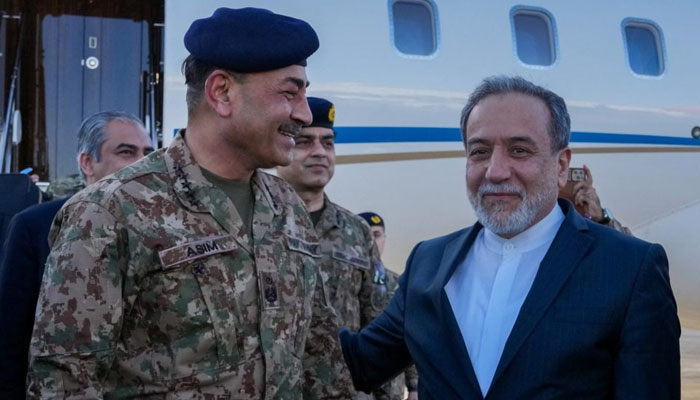
    Pakistan’s Chief of Defence Forces, Field Marshal Asim Munir, held a telephone conversation with Iranian Foreign Minister Abbas Araghchi, during which the two officials discussed the evolving situation in the region. According to Iranian media, the conversation took place a day earlier and focused on regional developments and matters of mutual interest. Meanwhile, Iranian Foreign Ministry spokesperson Esmail Baghaei said that Field Marshal Asim Munir is scheduled to visit Iran on Monday. Baghaei described the visit as part of Pakistan’s continued efforts to promote peace and stability in the region. He said the visit would also provide an opportunity to further strengthen relations between Pakistan and Iran. During his visit, the Pakistani Chief of Defence Forces is expected to meet senior Iranian officials and hold discussions on bilateral ties as well as regional developments. The upcoming visit comes amid heightened regional tensions and growing diplomatic efforts by countries in the region to promote dialogue and stability. The telephone conversation between Field Marshal Munir and Araghchi ahead of the visit is expected to provide further momentum to bilateral engagement between Islamabad and Tehran. Pakistan and Iran share close geographical, economic and security ties, with both countries regularly discussing border security, regional developments and broader cooperation.

  • | |

    Cambridge announces 2026 A-Level results in Pakist…

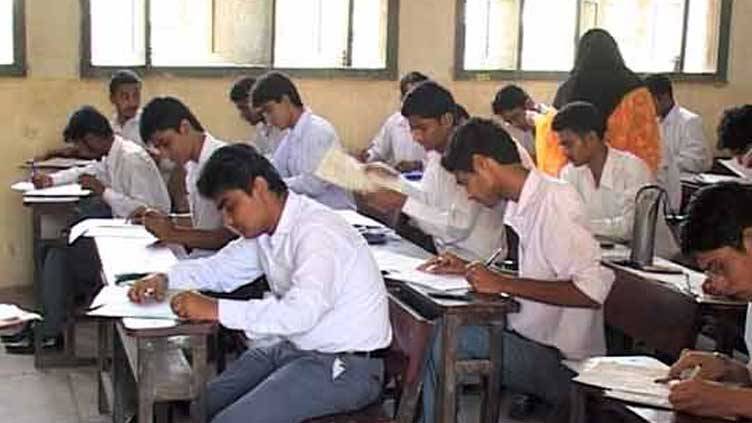
    Cambridge International has released the results of its June 2026 examination session, with more than 100,000 students across Pakistan receiving their AS and A-Level results. Students from more than 850 schools in Pakistan took part in the examination session. The results were announced globally on Tuesday, with nearly 368,000 students worldwide receiving their Cambridge International AS and A-Level results. In Pakistan, thousands of students appeared for examinations in a wide range of subjects. Mathematics, Physics, Chemistry, Business and Computer Science remained among the most popular choices. Cambridge officials congratulated students on completing their examinations and acknowledged the challenges faced by some candidates during the preparation period. Cambridge Pakistan Country Director Uzma Yousuf said this year’s results were particularly significant because some students had prepared for their examinations amid regional tensions, uncertainty and disruptions. She congratulated the students and praised teachers, parents and school communities for supporting candidates throughout the academic year. Yousuf said education should not be viewed only through examination grades. She stressed the importance of developing knowledge, confidence and practical skills that can help young people succeed in higher education, employment and their future lives. Cambridge International also said it was continuing to develop its assessment system. The organisation is working on digital examination initiatives and flexible assessment options aimed at giving students greater choice and accessibility. Cambridge qualifications are accepted by universities and educational institutions in many countries. The organisation said its international qualifications provide students with pathways to higher education both in their home countries and abroad. According to Cambridge, recent UK university application data showed that 98% of Cambridge International A-Level students who applied to British universities during the 2025 admissions cycle received at least one university offer. The organisation said its qualifications are designed to provide students with internationally recognised academic credentials while allowing them to study within their own countries. The latest results have also been announced amid concerns surrounding examination security in Pakistan during the 2026 examination cycle. Earlier this year, allegations emerged that Cambridge Mathematics examination papers had been circulated before scheduled tests. One A-Level Mathematics paper was cancelled and candidates were required to sit a replacement examination. A separate AS-Level Mathematics paper was also cancelled following reports of a leak. Further claims regarding the circulation of another Mathematics paper were later raised by students. The incidents led to calls for stronger examination security and prompted education authorities to seek investigations into the allegations. Cambridge has previously said it investigates reports concerning examination integrity and has urged students and parents to follow information released through its official channels. Meanwhile, students who appeared for the June 2026 IGCSE and O-Level examinations are expected to receive their results on August 18.

Leave a Reply

Your email address will not be published. Required fields are marked *