israeli rabbi sparks
| | |

Israeli rabbi sparks outrage with denial of Palest…

JERUSALEM: An Israeli chief rabbi has sparked widespread controversy after reportedly denying the existence of the Palestinian people and asserting that Gaza and the occupied West Bank belong exclusively to Jews.

Chief Rabbi David Yosef was quoted as saying that there was no Palestinian nation in the past and that Palestinians have no rights to the land. His reported remarks have drawn attention amid the continuing conflict in Gaza and growing international concern over the humanitarian situation.

Yosef also reportedly claimed that Gaza and cities in the West Bank belong to Jews and suggested that Gaza would eventually be destroyed and populated by Jewish people.

The comments come as Israeli military operations in Gaza continue, with Palestinian officials reporting further deaths and injuries. The conflict has caused widespread destruction, displacement and a severe humanitarian crisis.

The remarks have also renewed scrutiny of developments in the occupied West Bank, where tensions between Palestinians and Israeli settlers remain high.

According to reports, Palestinian residents and farmers in areas including Hebron have faced incidents involving Israeli settlers. One reported incident involved a Palestinian farmer’s donkey being tied to a vehicle and dragged, resulting in the animal’s death.

The latest statements have added to concerns over rhetoric surrounding the future of Palestinian territories. Palestinian leaders and rights advocates have long opposed attempts to deny Palestinian national identity or rights, while the international community continues to debate the political future of Gaza and the West Bank.

The comments also come as diplomatic efforts over the conflict remain under intense scrutiny. The humanitarian situation in Gaza has made the question of civilian protection and the future governance of the territory increasingly urgent.

For Palestinians, statements denying their existence or connection to their homeland are particularly sensitive, coming after decades of conflict, displacement and political uncertainty.

The controversy surrounding Yosef’s remarks is therefore likely to fuel further debate over Palestinian rights, Israeli settlement policies and the prospects for a lasting political settlement in the region.

Similar Posts

  • |

    Pakistani Fighters shine at GAMA Asian MMA Champio…

    Pakistan’s young Mixed Martial Arts (MMA) fighters delivered outstanding performances at the GAMA Asian MMA Championship, securing two gold medals for the country. In the under-16 category’s 54kg weight class final, Muhammad Javad Ahmad defeated Kazakhstan’s Dartikelasinov Merman to claim the gold medal and the title of Asian Champion. In the under-18 H-group’s 56kg weight class final, Muhammad Saqib triumphed over Thailand’s Jangpan Watchart to win the gold medal and become Asian Champion. Saqib had previously won a gold medal at the 2024 GAMA World MMA Championship as well. The GAMA Asian MMA Championship featured over 200 athletes from 16 countries competing across various weight categories. Pakistan Mixed Martial Arts Federation President Zulfiqar Ali congratulated both fighters, the coaching staff, and the national team on this historic achievement. He stated that the young fighters had raised Pakistan’s flag high across Asia through their hard work and dedication. The GAMA Asian MMA Championship is one of the most prestigious mixed martial arts competitions on the continent, featuring top fighters from across Asia. Pakistan’s success at the event is expected to further boost the growth and popularity of MMA in the country.

  • | |

    Peshawar court bars marriage of 13-year-old girl u…

    The Child Protection Court in Peshawar has issued a ruling on a petition concerning the alleged forced marriage of a 13-year-old girl in the Phando area. According to the written order, the girl will not be married off or sent to her husband’s home until she reaches the age of 16. The girl’s father also agreed to the court’s direction. The petition was filed by an officer of the Child Protection Commission in Peshawar, who approached the court over allegations that the minor had been forcibly married in Phando. During the proceedings, the girl was produced before the court in the presence of a social worker and a psychologist from the Child Protection Unit. The court reviewed the circumstances surrounding the alleged marriage and issued its written decision. The girl’s father, grandfather and grandmother denied that she had been married. They told the court that no marriage ceremony had taken place and that the family had only held an engagement ceremony. The court directed the Child Protection Officer to closely monitor the girl’s safety and submit a follow-up report every three months. The ruling effectively prevents the girl’s marriage or departure to a marital home until she turns 16, while authorities will continue monitoring her welfare and protection.

  • | | |

    DPM Dar boosts Pakistan-ADB partnership

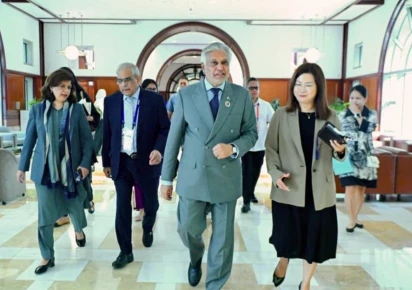
    Deputy Prime Minister and Foreign Minister Ishaq Dar visited the headquarters of the Asian Development Bank (ADB) in Manila on Wednesday to review the bank’s partnership with Pakistan and discuss ways to strengthen future cooperation. The visit took place on the sidelines of the 33rd ASEAN Regional Forum Ministerial Meeting, where Pakistan is participating in a series of high-level diplomatic engagements with regional and international partners. Upon his arrival at the ADB headquarters, Dar was welcomed by senior officials of the bank. He signed the visitors’ book before holding discussions on the institution’s evolving development agenda and its ongoing collaboration with Pakistan. The meeting focused on expanding cooperation in several important sectors, including infrastructure, energy, climate resilience, education, economic reforms and sustainable development. Both sides also discussed future opportunities to support Pakistan’s economic growth and development priorities. Dar later attended a working luncheon hosted by Pakistan’s Executive Director to the ADB, Nashita Mohsin. The event was attended by Pakistani professionals serving in senior leadership positions across different departments of the bank. During the interaction, Dar appreciated the contributions of Pakistani professionals working at the ADB. He said their expertise and leadership have strengthened the institution’s work while enhancing Pakistan’s image at the international level. He also congratulated Nashita Mohsin on assuming her responsibilities as Pakistan’s Executive Director to the Asian Development Bank and expressed confidence that she would further strengthen Pakistan’s engagement with the institution. On the sidelines of the ASEAN forum, Dar also met Bangladesh’s Foreign Minister Khalilur Rehman. The two leaders reviewed the positive momentum in bilateral relations and discussed ways to expand cooperation between the two countries. Both sides welcomed the steady improvement in diplomatic ties and appreciated the growing engagement in trade, communication and people-to-people contacts. They noted that the launch of direct flights earlier this year has further improved connectivity and created new opportunities for cooperation. The two ministers reaffirmed their commitment to maintaining the positive momentum in bilateral relations and agreed to continue close engagement in areas of mutual interest. Dar and Rehman also exchanged views on regional and international developments, including issues affecting South Asia and broader global challenges. They emphasized the importance of dialogue and cooperation in promoting regional peace, stability and economic development. Earlier, Dar arrived in Manila with a Pakistani delegation to participate in the 33rd ASEAN Regional Forum Ministerial Meeting. During the visit, he is expected to attend the forum’s plenary session and hold several bilateral meetings with foreign ministers from participating countries. The ASEAN Regional Forum brings together foreign ministers and senior diplomats from ASEAN member states and major global powers to discuss regional security, economic cooperation, energy security, food security, geopolitical developments and other international issues. Representatives from the United States, China, Japan, India, Australia, South Korea, Russia, the United Kingdom and the European Union are also participating in the meeting.

  • | |

    Trump imposes up to 100% tariff on Chinese drones

    WASHINGTON: US President Donald Trump has announced tariffs of up to 100 per cent on imported drones and certain drone components, escalating Washington’s efforts to reduce dependence on Chinese technology and strengthen America’s domestic unmanned aircraft industry. The White House said the new duties were introduced on national security grounds and would target specific unmanned aircraft systems considered particularly sensitive. The measures cover larger unmanned aerial systems weighing more than 25 kilograms at take-off. Drones equipped with technologies considered important to national security, including thermal imaging systems and drone docking stations, will also face the additional tariffs. Under the new policy, smaller drones will be subject to a 25pc tariff, while larger and more technologically sophisticated systems could face duties of up to 100pc. The structure means the final tariff will depend on a drone’s weight, size and capabilities. The decision comes as the United States seeks to reduce its reliance on Chinese-made drones and strengthen domestic supply chains for critical technologies. Chinese manufacturers have long held a significant position in the global and US drone market, particularly in consumer and commercial unmanned aircraft. The Trump administration argues that drones have become increasingly important to national security, surveillance and other sensitive operations. Officials therefore want to encourage greater production of drones and key components inside the United States. The tariffs could have an immediate impact on the prices of some imported drones, potentially making Chinese-made models significantly more expensive for American buyers. Businesses that rely on drones for commercial, industrial or specialised operations could also face higher costs. At the same time, Washington expects the policy to encourage US manufacturers to expand production and invest in domestic drone technology. The move marks another step in the broader US strategy of limiting dependence on China in strategically important technologies while promoting American manufacturing and supply-chain security.

  • Government Orders Data Centre Framework Revamp As Power Demand Surges To 20gw

    BANGKOK, Thailand – Prime Minister Anutin Charnvirakul has ordered an immediate regulatory overhaul and the creation of a clear legal definition for data centres, after power requests from the sector surged to nearly 20,000 megawatts, prompting growing public anxiety over unchecked development and environmental impacts. Presiding over the inaugural meeting of the Data Centre Policy […]

  • |

    Afghan fathers struggle as girls remain barred from secondary schools

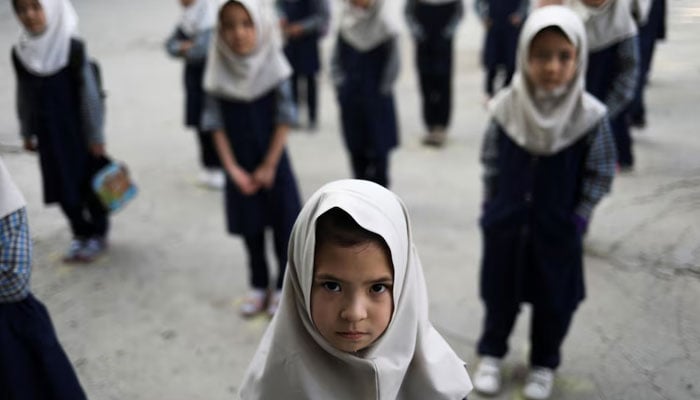
    KABUL: Afghan fathers are facing growing distress as their daughters remain unable to continue their education beyond primary school under restrictions imposed by the Taliban authorities. Families across Afghanistan say the education ban is creating deep emotional and financial pressure. Some fathers are openly questioning the policy, despite their religious beliefs and support for other government measures. The Taliban administration has defended the restrictions as temporary and based on its interpretation of religious principles. However, many Afghan men say they cannot understand why girls should be prevented from receiving secondary education. A United Nations survey conducted last year found that about nine out of 10 Afghan men considered it important for girls to attend secondary school. Nearly two-thirds also viewed supporting a daughter’s education as a religiously commendable act. Girls were barred from secondary schools after the Taliban returned to power in 2021. Women were later also prohibited from attending universities. The restrictions have affected a large number of young Afghan women and girls. For many families, the approaching end of primary education has become a source of fear. Fathers worry that their daughters will lose their chance to pursue higher education and build professional careers. One father, identified as Ahmad, said he had never imagined that his daughters could be forced to stop studying. His wife is a mathematics teacher who is also unable to continue teaching secondary-level students. Ahmad said his eldest daughter is approaching the end of primary school. The family has considered private and underground educational options, but the cost is difficult to manage. Another father, a doctor identified as Mohammad, said he had always wanted his daughters to attend leading universities. He believes women are essential to Afghanistan’s development and should have opportunities beyond household responsibilities. His daughters are approaching the age when they will be forced to leave formal schooling. The family has considered sending them abroad, including to Pakistan, but changing regional circumstances have made that option difficult. Some families have turned to private schools that secretly provide general education alongside religious studies. These institutions often charge high fees and may not provide recognised graduation certificates. Parents also fear that authorities could take action against schools operating outside official restrictions. This leaves families caught between protecting their children and trying to continue their education. Another father from Kandahar said his young daughter has a strong interest in astronomy. She asks questions about the solar system, gravity and science. The girl reportedly asked her father how she could continue learning if she could not study beyond the sixth grade. Her question has become a painful reminder of the limited opportunities available to girls. Some families have moved to Kabul in search of better educational opportunities. Others are relying on online courses, home schooling and secret classes. The restrictions are also affecting children emotionally. Parents say many girls feel frustrated, isolated and uncertain about their future. One father said his teenage daughter often stays at home and becomes deeply upset when she thinks about her education. He said he sometimes leaves the room because he cannot control his emotions and ends up crying privately. Another family has created a home-schooling routine using old secondary-school textbooks. The parents try to maintain a school-like schedule so their daughters can continue learning. However, the parents say home education cannot fully replace a formal school environment. They worry about the lack of recognised qualifications, social interaction and access to trained teachers. Some girls have also begun attending secret classes. Their families remain concerned about possible consequences if the authorities discover them. The prolonged restrictions have created uncertainty for an entire generation of Afghan girls. Parents fear that years without formal education will limit their daughters’ future opportunities

Leave a Reply

Your email address will not be published. Required fields are marked *