pakistani fighters shine
|

Pakistani Fighters shine at GAMA Asian MMA Champio…

Pakistan’s young Mixed Martial Arts (MMA) fighters delivered outstanding performances at the GAMA Asian MMA Championship, securing two gold medals for the country.

In the under-16 category’s 54kg weight class final, Muhammad Javad Ahmad defeated Kazakhstan’s Dartikelasinov Merman to claim the gold medal and the title of Asian Champion.

In the under-18 H-group’s 56kg weight class final, Muhammad Saqib triumphed over Thailand’s Jangpan Watchart to win the gold medal and become Asian Champion. Saqib had previously won a gold medal at the 2024 GAMA World MMA Championship as well.

The GAMA Asian MMA Championship featured over 200 athletes from 16 countries competing across various weight categories.

Pakistan Mixed Martial Arts Federation President Zulfiqar Ali congratulated both fighters, the coaching staff, and the national team on this historic achievement. He stated that the young fighters had raised Pakistan’s flag high across Asia through their hard work and dedication.

The GAMA Asian MMA Championship is one of the most prestigious mixed martial arts competitions on the continent, featuring top fighters from across Asia. Pakistan’s success at the event is expected to further boost the growth and popularity of MMA in the country.

Similar Posts

  • Thailand Prepares for Unprecedented Simultaneous Election and Referendum

    BANGKOK — Thailand is set for a historic and logistically complex national vote this Sunday, February 8, as it prepares to hold a general election and a constitutional referendum concurrently for the first time. With the 48-hour campaign silence period beginning, international observers have arrived to monitor the high-stakes process. Advance Voting Underway in Thailand […]

  • | |

    Justice Babar Sattar told to vacate official house

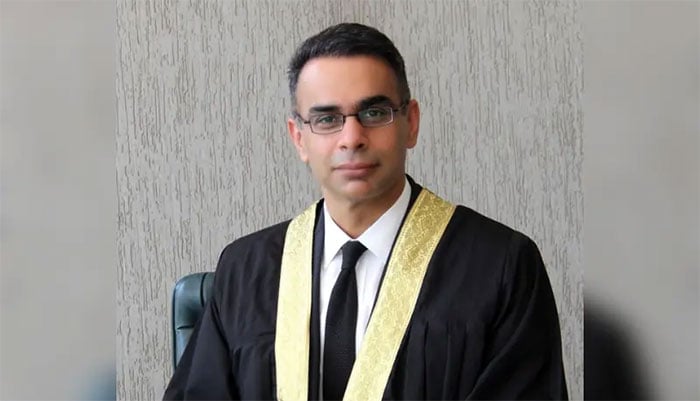
    Justice Babar Sattar has been directed to vacate his official residence in Islamabad after the cancellation of its government allotment following his transfer to the Peshawar High Court. According to an official notice issued by the Registrar of the Islamabad High Court, Justice Sattar has been given 30 days to hand over the residence. The notice states that the Estate Office cancelled the allotment of the government house on July 3 after his transfer from the Islamabad High Court to the Peshawar High Court. The document explains that the one-month notice period began on July 3, the same day the official accommodation was withdrawn. Justice Sattar has been instructed to vacate the residence within that period in accordance with government rules governing official housing for judges transferred to another high court. The move follows Justice Sattar’s transfer to the Peshawar High Court, where he is expected to perform his judicial duties after leaving the Islamabad High Court. Sources familiar with the matter said that after the transfer, Justice Sattar did not apply for or obtain an official residence in Peshawar. Instead, he reportedly decided to continue staying in the government house allotted to him in Islamabad. The notice highlights that the cancellation of the residence allotment was carried out by the Estate Office, making the continued occupation of the house subject to the expiry of the notice period. The registrar’s office formally communicated the decision to ensure compliance with the applicable administrative procedures. The development comes as part of the routine administrative process that follows the transfer of judges between high courts. Under the existing rules, official accommodation is generally linked to the judge’s place of posting, and transferred judges are required to vacate residences allocated at their previous station once the prescribed notice period expires.

  • Over 150,000 new EVs expected on Thai roads this year amid energy crisis

    BANGKOK, Thailand – Approximately 153,000 new electric vehicles are projected to hit Thailand’s roads this year, driven largely by the ongoing energy crisis triggered by the prolonged conflict in the Middle East, according to a forecast by TMBThanachart Bank’s economic assessment centre, TTB Analytics. Luxury Hybrid Car Catches Fire While Charging Overnight In Pathum Thani […]

  • | |

    Senate, NA leaders vow closer coordination for Par…

    ISLAMABAD: The leadership of Pakistan’s Senate and National Assembly has agreed to strengthen cooperation between the two houses of Parliament, with the aim of promoting democratic stability, improving legislation and ensuring a more effective parliamentary system. Senate Chairman Syed Yousaf Raza Gilani met National Assembly Speaker Sardar Ayaz Sadiq and Deputy Speaker Syed Ghulam Mustafa Shah at his residence in Islamabad on Saturday. The meeting focused on parliamentary affairs, matters of national importance and coordination between the two legislative houses. According to a statement issued by the Senate Secretariat, the participants stressed that closer institutional coordination was essential for strengthening parliamentary democracy and ensuring the smooth functioning of the system. Gilani said effective communication and cooperation between the Senate and National Assembly were necessary to uphold strong democratic traditions and reinforce an effective parliamentary structure. He also emphasised the importance of maintaining close liaison between the two houses, saying institutional coordination would contribute to the stability and effectiveness of Parliament. Sadiq, meanwhile, said collaboration between parliamentary institutions needed to be further strengthened to ensure effective legislation and better respond to public expectations. The leaders also discussed the overall situation in the country and exchanged views on issues of national importance. During the meeting, they agreed on the need to keep national interests at the forefront, uphold the supremacy of the Constitution and work towards greater democratic stability. They further reaffirmed their commitment to promoting mutual respect and effective communication between parliamentary institutions. The agreement comes as Parliament continues to play a central role in legislative and constitutional affairs, making coordination between its two houses important for ensuring that legislation and parliamentary business proceed smoothly. The Senate and National Assembly form the two chambers of Pakistan’s bicameral Parliament, with the National Assembly representing the population and the Senate providing equal representation to the federating units. The Senate chairman’s emphasis on cooperation also reflects a broader focus on strengthening parliamentary institutions and improving their capacity to perform constitutional responsibilities. A day earlier, Gilani inaugurated a newly modernised office complex of the Senate Secretariat at Parliament House. Addressing the ceremony, he described the upgrade as part of efforts to improve institutional capacity and modernise parliamentary operations. He said strong democratic institutions required modern systems, efficient infrastructure and a professional working environment. The upgraded facilities, according to the Senate, are intended to improve service delivery and enable the Secretariat to better support Parliament in carrying out its constitutional duties. With the latest meeting, the parliamentary leadership has signalled that stronger coordination between the Senate and National Assembly will remain a key priority in efforts to consolidate democratic institutions and ensure a stable parliamentary system.

  • FIFA chief Infantino faces mounting backlash 

      FIFA president Gianni Infantino is facing growing criticism over his controversial proposal to sell stakes in the governing body’s competitions to private investors, with opposition continuing to build from football officials, regional confederations and political figures. The latest criticism came from FIFA’s own chief operating officer, Kevin Lamour, who issued a strongly worded statement questioning the proposal and calling on football leaders worldwide to carefully reconsider the direction of the organisation. Lamour described the initiative as “the project of one person,” suggesting it lacked broad institutional support. He also claimed that FIFA’s administration had been “deceived” regarding the proposal, adding that the time had come for football’s political leaders to ask difficult questions and make responsible decisions for the future of the sport. Although Lamour did not mention Infantino by name, his remarks were widely seen as a direct challenge to the FIFA president’s leadership. He stressed that the organisation’s employees remain committed to serving football rather than advancing the interests of any individual. “Our mission is to serve football,” Lamour said, adding that a FIFA president should unite people and inspire confidence rather than create division. He also acknowledged that speaking out could cost him his position but insisted he was prepared to accept the consequences in order to remain true to his principles. “If that means I lose my job, then so be it,” he said, adding that he would rather stand by his values than remain silent. The controversy intensified as the Asian Football Confederation (AFC) became the third continental governing body to publicly oppose the proposal. In a statement, the AFC expressed solidarity with UEFA and Concacaf, arguing that the plan lacks the broad consensus necessary for such a significant change to world football. The AFC warned that the FIFA World Cup derives its strength from the participation of all confederations and football nations, saying any proposal that threatens the tournament’s unity and universal character should be reconsidered. Further pressure emerged when Carlos Cordeiro, one of Infantino’s senior advisers on global strategy and governance, announced his resignation. Cordeiro described the proposal as “a bad deal for football,” warning that it could mortgage the sport’s future by placing excessive commercial interests ahead of the game’s long-term stability.   Political criticism has also followed. Greater Manchester Mayor Andy Burnham condemned the proposal, calling it an “outrageous suggestion” and arguing that the plan demonstrated why Infantino was no longer the right person to lead world football’s governing body.   Meanwhile, US President Donald Trump said he had not discussed the proposal with Infantino despite their close relationship since Trump’s return to office in 2025.   The growing opposition could ultimately prove decisive if the proposal is put before FIFA’s 211 member associations. Infantino has indicated that a simple majority of 106 votes would be required for approval.   However, UEFA’s 55 members, Concacaf’s 35 associations and the AFC’s 46 members account for a combined 136 votes. If those member associations follow the positions taken by their respective confederations, the proposal would almost certainly fail to secure enough support. With resistance continuing to spread across the football world, Infantino now faces one of the biggest leadership challenges of his presidency, as critics argue that any major reform must be built on transparency, consultation and the collective interests of the global game.

  • | | |

    Pakistan needs hard governance to defeat terror: D…

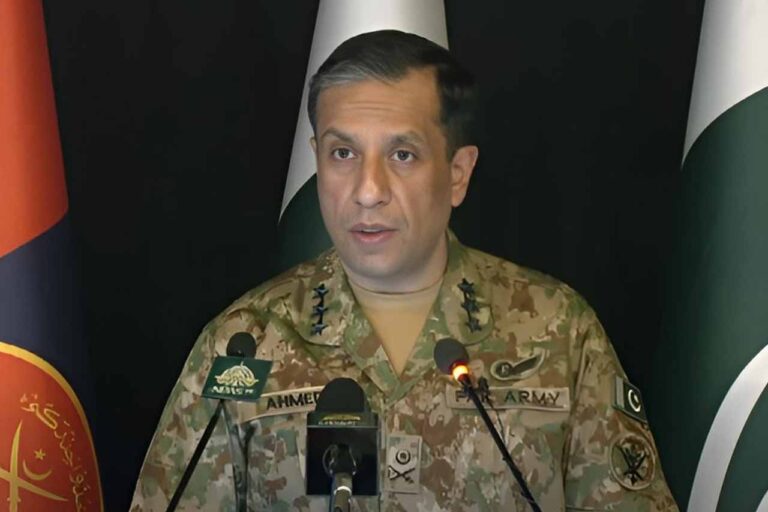
    Director General of Inter-Services Public Relations (ISPR) Lieutenant General Ahmed Sharif Chaudhry has said Pakistan must become a “hard state” where the Constitution and law are applied equally to everyone, stressing that strong governance is essential to defeating terrorism and ensuring lasting peace. He rejected claims that the security situation in Balochistan is worsening, calling them part of a deliberate campaign to create a false perception about the province. Addressing a detailed press conference on Friday, the military spokesperson said Pakistan’s security forces continue to make significant gains against terrorism through sustained intelligence-based operations across the country. Lt Gen Chaudhry said a total of 40,348 intelligence-based operations (IBOs) have been carried out so far this year by the armed forces, police, intelligence agencies and civil armed forces. More than 31,000 of these operations were conducted in Balochistan, reflecting the state’s continued focus on restoring peace in the province. He said Pakistan recorded 3,145 terrorism-related incidents during 2026. Of these, 1,971 incidents occurred in Khyber Pakhtunkhwa, 1,148 in Balochistan and 26 in other parts of the country. The ISPR chief said security forces killed 2,084 confirmed terrorists during operations this year, describing it as the highest average in the country’s history. On average, around 10 terrorists have been eliminated every day, while nearly 200 intelligence-based operations are conducted daily. Highlighting the sacrifices made in the fight against terrorism, Lt Gen Chaudhry said 819 Pakistanis lost their lives in terrorism-related incidents this year. The victims included 303 military personnel, 194 members of police and civil armed forces, and 322 civilians. He also revealed that 28 suicide attacks had taken place across the country during the year. According to him, most of these attacks involved Afghan nationals or individuals linked to groups operating from Afghan territory. The military spokesperson said the rise in terrorist attacks should not be viewed as a sign of weakness. Instead, he argued that militant groups have intensified attacks because of increasing pressure from proactive security operations and repeated battlefield setbacks. Lt Gen Chaudhry also accused the Afghan Taliban administration of allowing terrorist groups to operate from Afghan soil, claiming cross-border support remains a major factor behind terrorism inside Pakistan. Explaining his vision of a “hard state,” he said it does not mean military rule. Rather, it refers to a country where institutions function according to the Constitution, laws are enforced fairly, and no individual or group stands above the law. Referring to Article 5 of Pakistan’s Constitution, he said loyalty to the state and obedience to the Constitution are fundamental duties of every citizen. He added that discussions about rights must also include recognition of civic responsibilities. Speaking specifically about Balochistan, Lt Gen Chaudhry said the province’s real challenge lies with certain elites and tribal leaders who seek to preserve the existing power structure. He alleged that some influential groups oppose educational and economic progress because they fear losing their traditional influence. He further claimed that some individuals benefit from illegal activities, including smuggling and other criminal networks, and promote unrest whenever the state strengthens law enforcement or cracks down on such activities. The military spokesperson reiterated that Pakistan would not negotiate with terrorist groups or those using violence for political purposes. Instead, he said the armed forces would continue engaging directly with the people of Balochistan, whom he described as the province’s true stakeholders. Lt Gen Chaudhry also alleged that hostile foreign powers are attempting to exploit Balochistan’s strategic location and natural resources by supporting anti-state elements in collaboration with local actors opposed to reforms and development. Discussing the issue of missing persons, he said the Commission of Inquiry on Enforced Disappearances has received 10,901 complaints since its establishment. Of these, 9,372 cases have been resolved, with 4,896 individuals returning home, around 1,030 found in prisons, 308 confirmed dead, and nearly 2,400 complaints determined to be incorrectly reported. He added that 2,933 complaints originated from Balochistan, of which 2,767 have already been resolved.

Leave a Reply

Your email address will not be published. Required fields are marked *