senate leaders vow
| |

Senate, NA leaders vow closer coordination for Par…

ISLAMABAD: The leadership of Pakistan’s Senate and National Assembly has agreed to strengthen cooperation between the two houses of Parliament, with the aim of promoting democratic stability, improving legislation and ensuring a more effective parliamentary system.

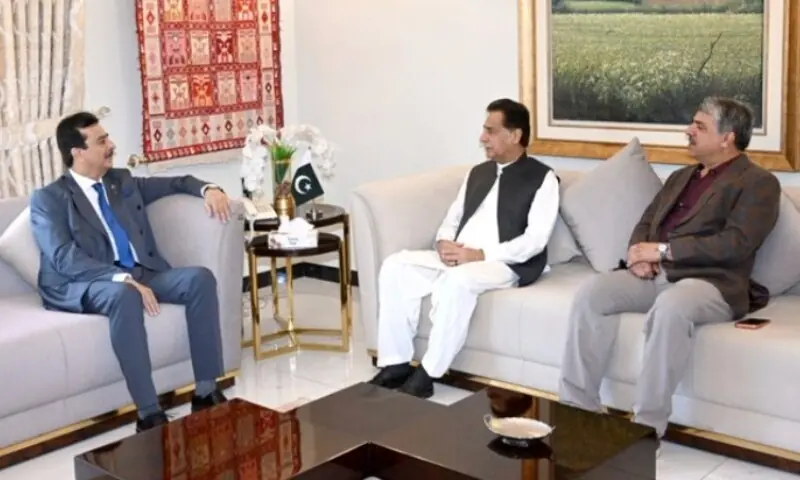
Senate Chairman Syed Yousaf Raza Gilani met National Assembly Speaker Sardar Ayaz Sadiq and Deputy Speaker Syed Ghulam Mustafa Shah at his residence in Islamabad on Saturday. The meeting focused on parliamentary affairs, matters of national importance and coordination between the two legislative houses.

According to a statement issued by the Senate Secretariat, the participants stressed that closer institutional coordination was essential for strengthening parliamentary democracy and ensuring the smooth functioning of the system.

Gilani said effective communication and cooperation between the Senate and National Assembly were necessary to uphold strong democratic traditions and reinforce an effective parliamentary structure.

He also emphasised the importance of maintaining close liaison between the two houses, saying institutional coordination would contribute to the stability and effectiveness of Parliament.

Sadiq, meanwhile, said collaboration between parliamentary institutions needed to be further strengthened to ensure effective legislation and better respond to public expectations.

The leaders also discussed the overall situation in the country and exchanged views on issues of national importance.

During the meeting, they agreed on the need to keep national interests at the forefront, uphold the supremacy of the Constitution and work towards greater democratic stability.

They further reaffirmed their commitment to promoting mutual respect and effective communication between parliamentary institutions.

The agreement comes as Parliament continues to play a central role in legislative and constitutional affairs, making coordination between its two houses important for ensuring that legislation and parliamentary business proceed smoothly.

The Senate and National Assembly form the two chambers of Pakistan’s bicameral Parliament, with the National Assembly representing the population and the Senate providing equal representation to the federating units.

The Senate chairman’s emphasis on cooperation also reflects a broader focus on strengthening parliamentary institutions and improving their capacity to perform constitutional responsibilities.

A day earlier, Gilani inaugurated a newly modernised office complex of the Senate Secretariat at Parliament House. Addressing the ceremony, he described the upgrade as part of efforts to improve institutional capacity and modernise parliamentary operations.

He said strong democratic institutions required modern systems, efficient infrastructure and a professional working environment.

The upgraded facilities, according to the Senate, are intended to improve service delivery and enable the Secretariat to better support Parliament in carrying out its constitutional duties.

With the latest meeting, the parliamentary leadership has signalled that stronger coordination between the Senate and National Assembly will remain a key priority in efforts to consolidate democratic institutions and ensure a stable parliamentary system.
Similar Posts

  • | |

    Pakistani climbers open historic new route on broa…

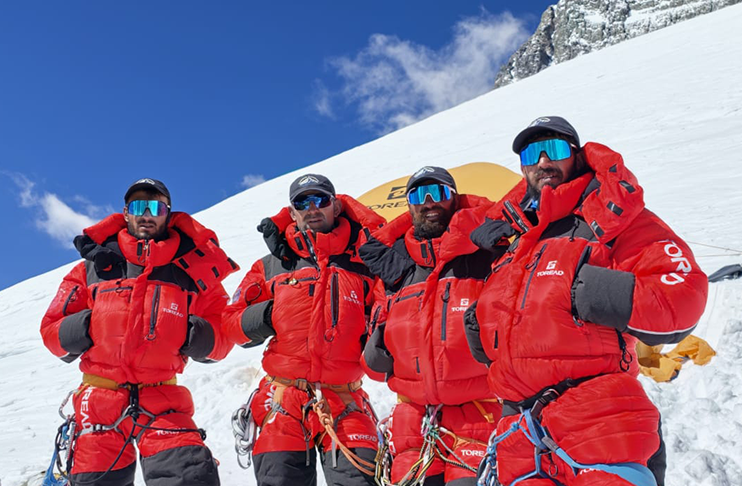
      Pakistani mountaineers have achieved a landmark feat by opening a brand-new climbing route on Broad Peak, one of the world’s highest mountains. The accomplishment is being hailed as a major milestone for Pakistan’s mountaineering community, showcasing the country’s growing expertise in high-altitude climbing and technical expedition planning. Broad Peak, standing at 8,051 metres (26,414 feet), is located in the Karakoram mountain range of Gilgit-Baltistan, approximately five miles from K2. Ranked as the world’s 12th-highest mountain, Broad Peak has long attracted climbers from around the globe because of its challenging terrain and unpredictable weather conditions. The newly established route, officially named the Mirza Ali Legacy Route, begins above Camp 3 and offers a fresh approach to the summit. The route was created after an intensive three-day effort that required climbers to navigate deep snow, steep rock faces, and mixed sections of snow and rock under extremely demanding conditions. The expedition was led by renowned Pakistani mountaineer Mirza Ali, founder of Karakorum Expeditions. Along with his team, he spent days fixing ropes and securing the mountain to make the route accessible for future expeditions. Their summit push began at 2:00 a.m. local time on July 19. Battling continuous snowfall, freezing temperatures, and severe weather, the climbers finally reached the summit at 9:55 p.m. after more than 24 hours of nonstop climbing. To establish the route, the team installed over 1,600 metres of fixed rope and placed permanent rock pitons at critical points to improve safety and stability. According to expedition organisers, the new line is shorter, more direct, and significantly safer than the traditional path, which passes through Broad Peak’s hazardous “V Section.” The redesigned route is expected to reduce climbers’ exposure to avalanches and falling rocks, two of the mountain’s most serious risks. Organisers estimate that under normal weather conditions, climbers using the new route should be able to reach the summit from Camp 3 within seven to eight hours and descend in approximately two to three hours, making the ascent both faster and more efficient. The route was unanimously named in honour of Mirza Ali to recognise his 16 years of dedication to Pakistan’s mountaineering sector. Throughout his career, he has trained aspiring climbers, organised national and international expeditions, and promoted Pakistan as a premier destination for adventure tourism. Reflecting on the achievement, Mirza Ali said the successful opening of the route demonstrates the technical capability, determination, and resilience of Pakistani climbers. He also stressed the importance of investing in mountaineering education, safety training, and adventure tourism, highlighting Gilgit-Baltistan’s enormous untapped potential within the mountain economy. International members of the expedition also praised the accomplishment. Argentine climber Juan Toro described the project as a historic milestone for Pakistani mountaineering, while Hungarian climber David Klein called the newly opened path an innovative and technically brilliant route that reflected the team’s exceptional skill and perseverance. The summit team included Mirza Ali, Ahmed Baig, Rizwan Dad, Waqar Ali, Nawaz Ali Khan, Zaman Karim, Juan Toro, and David Klein. To support future expeditions and improve emergency response, the team also recorded all major anchor locations using Garmin inReach GPS technology, ensuring the new route can be safely managed for climbers in the years ahead.

  • Thailand Raises Diesel Price by Another 3.50 Baht per Liter

    BANGKOK — Diesel prices will rise another 3.50 baht per litre to 44.24 baht at service stations across Thailand on Thursday morning, marking a 48 percent increase from just one month ago as the government continues to scale back fuel subsidies. Thai Government to Promote B20 Biodiesel as Cheaper Alternative PTT and Bangchak subsequently announced […]

  • | | | | | |

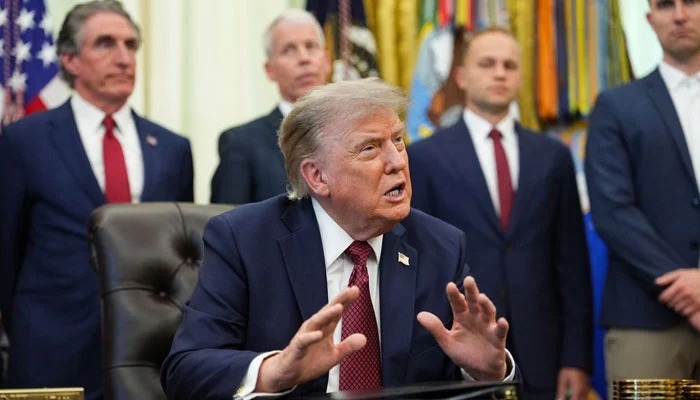
    Trump orders one-day pause in Iran strikes as talks continue

    US President Donald Trump has reportedly ordered a one-day halt to military strikes against Iran, temporarily interrupting a nearly two-week-long series of attacks, according to reports from US media outlets. The pause comes as uncertainty remains over whether the decision represents a temporary break in operations or the beginning of a broader ceasefire process. Reports suggest that the US military had been preparing for possible further strikes against Iran, but Trump has not yet approved any new major offensive. According to US media reports, military plans for continued operations were presented to the president, but Trump instructed officials not to proceed with attacks on that day. The decision marked a significant shift after a period of repeated strikes targeting Iranian positions. Trump later told reporters that the United States still had the option to continue military action and increase the intensity of attacks if necessary. However, he indicated that pursuing a diplomatic solution could be a more effective strategy. “The smart strategy is to make a deal,” Trump was reported as saying, adding that Iran appeared to be becoming more serious about discussions while the US remained prepared for possible military action. The reported pause came as an Omani delegation arrived in Iran for discussions aimed at addressing regional tensions and negotiating a possible agreement related to the reopening of the Strait of Hormuz. Officials suggested that a deal between Iran and Oman could potentially be reached during the weekend, after which the final decision would depend on Washington. Meanwhile, Iran’s Islamic Revolutionary Guard Corps (IRGC) claimed that Iranian forces had destroyed several US military aircraft and drones during attacks on American bases. The group claimed that 17 drones, an F-15 fighter jet, a P-8 aircraft, a C-17 transport aircraft, and eight refueling planes were destroyed. The claims from both sides have not been independently verified, and officials have continued to provide competing accounts of the military developments. The situation remains highly sensitive as regional tensions continue, with diplomatic efforts taking place alongside military preparations. The coming days are expected to determine whether the temporary pause leads to broader negotiations or whether hostilities resume.

  • | |

    NCLEX programme under fire: only 7 nurses pass out…

    Islamabad: A Government backed programme designed to help Pakistani nurses qualify for international jobs came under strong questioning in the National Assembly after lawmakers raised concerns over the transparency, student selection and results of the NCLEX Nursing Training Programme. The National Assembly Standing Committee on Federal Education and Professional Training questioned how a Rs 150 million programme selected its training partner and why only seven nurses had cleared the NCLEX exam out of 500 trainees so far. The committee supported opportunities for Pakistani nurses to work abroad but demanded complete transparency regarding the programme’s planning, the selection of the implementing partner, and the use of public money. The issue was discussed during the 25th meeting of the committee, where members reviewed the performance and implementation of the NCLEX Nursing Training Programme launched by the National Vocational and Technical Training Commission (NAVTTC). NAVTTC Executive Director Muhammad Amir Jan informed the committee that before this initiative, Pakistani nurses had to travel to countries such as Dubai, Bahrain, Turkey and Thailand to appear in the NCLEX examination. He said that with support from SIFC, NAVTTC was given responsibility to bring the examination system to Pakistan for the first time through Pearson VUE during 2024 and 2025. Officials informed the committee that the programme was designed to train 500 nurses. The training phase has been completed, 182 nurses have applied for the NCLEX examination and seven nurses have successfully cleared the test. However, members questioned the low success rate and asked whether the programme was producing the expected results. One committee member pointed out that seven successful candidates out of 500 trainees represented a very small percentage and questioned whether the programme needed improvements before more public funds were spent. NAVTTC officials defended the programme, saying that NCLEX is a difficult international examination and nurses who pass the test still require additional time before moving abroad for employment. Officials said nurses might need eight to eighteen months after passing the exam before they can travel for work opportunities. The committee also raised questions about the selection of the implementing partner, the Institute of Contemporary Studies. Members questioned whether a public advertisement was issued before selecting the organisation or if other institutions were given an opportunity to compete. They said programmes funded through public money must follow transparent procedures to maintain public confidence. NAVTTC officials explained that the programme was developed under an industry led model and was based on a proposal received from the Pakistan Nursing and Midwifery Council. They said such programmes do not always follow open advertisement procedures because they are based on specific industry requirements. However, members questioned whether a government body could recommend a specific private organisation without a competitive process. The committee also raised concerns about the role of the Pakistan Nursing and Midwifery Council. Members noted that in previous discussions, representatives of the council had stated they were not fully aware of the nurse selection process and training arrangements. NAVTTC officials responded that the council had formally approached NAVTTC for the project and that decisions taken by government bodies should be accepted by all stakeholders involved. Financial matters also came under discussion. NAVTTC informed the committee that the total project cost was Rs 150 million and that Rs 87 million had been released so far. Officials clarified that the remaining funds would be released only after achieving agreed results under a performance-based payment system. They said a bank guarantee was also available to protect government funds. The committee also questioned the quality and locations of the training centres. MNA Dr Shazia Sobia Aslam Soomro raised concerns about some training locations, including Matta in Swat, and asked how proper facilities and monitoring were ensured in those areas. NAVTTC officials responded that Khyber Medical University conducted training in Matta and promised to provide complete details of nurses trained there. Questions were also raised about trainer qualifications. Members asked how individuals with nursing degrees could provide NCLEX preparation training. Officials explained that trainers must themselves be NCLEX qualified according to programme requirements. The committee further discussed the selection of nurses for training. NAVTTC officials said their role was to set eligibility criteria, not directly select candidates. They explained that under the pay for success model, the training provider selects participants because the provider is responsible for results. At the conclusion of the meeting, the committee decided to invite the Pakistan Nursing and Midwifery Council in the next session to clarify the selection process of nurses and the appointment of the training partner. Chairperson Mahtab Akbar Rashdi said that every concern must be properly addressed because public funds were involved and the programme was created to provide international opportunities for Pakistani nurses.

  • | | | |

    Roman-Era masterpiece found hidden beneath fields …

    Archaeologists have uncovered a stunning 4th-century Roman mosaic beneath farmland in England, offering new insight into life during the period when Britain was part of the Roman Empire. The remarkable mosaic was discovered at the remains of an ancient Roman villa in Devon. Made from thousands of colorful stones arranged into intricate floral patterns, the artwork is believed to date back to the fourth century AD. The discovery provides fresh evidence of the wealth, architecture and cultural influence that existed in Roman Britain. The Roman Empire controlled much of Britain from around AD 43 until around AD 410, leaving behind numerous settlements, villas, roads and other archaeological remains. Alongside the mosaic, archaeologists discovered a large and sophisticated Roman bathhouse near the site. The complex reportedly contained several small pools, walls decorated with colorful plaster and a range of other ancient artifacts. The excavation was carried out over a two-month period by archaeologists from the University of Exeter and Cotswold Archaeology. Volunteers also participated in the work, helping researchers investigate the agricultural land located between the Devon villages of Hill Barton and Sampford Peverell. The archaeological team already knew that the Roman villa and surrounding working areas were potentially important for understanding the spread of Roman culture across Devon. However, the latest findings have revealed that the site was considerably larger and more significant than previously understood. Project leader Dr Susan Greaney said the discoveries could help researchers better understand Roman cultural influence and its interaction with local communities in the region. The detailed mosaic is particularly significant because such decorative artwork can provide clues about the status and lifestyle of people who lived at Roman villas. Its elaborate design and the presence of a substantial bathhouse suggest that the site was an important settlement rather than a simple rural dwelling. Archaeologists will now continue studying the discoveries and artifacts recovered from the site. Researchers hope the evidence will shed more light on how people lived, worked and adopted Roman customs in southwest England nearly 2,000 years ago. The Roman mosaic discovered in Devon is another reminder of how much of Britain’s ancient history remains hidden beneath modern farmland. Further archaeological investigation could reveal even more about the communities that lived in the region during the final centuries of Roman rule.

  • | |

    Trump hits back at Canada as tariff war escalates

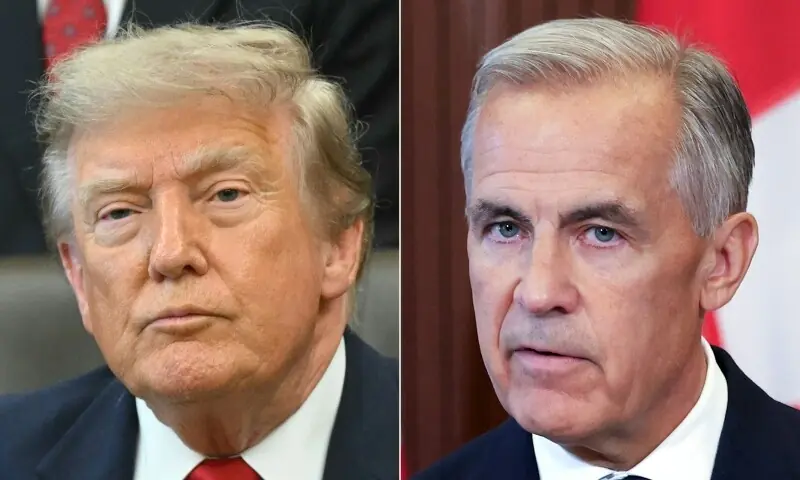
    WASHINGTON: US President Donald Trump has lashed out at Canada after Prime Minister Mark Carney announced retaliatory tariffs on American goods, deepening a trade dispute that threatens to further strain economic ties between the two neighbouring countries. Trump responded sharply on Sunday after Canada confirmed that new tariffs targeting US products would take effect on September 8. “Canada wants the benefits of being a state, without being one!!!” Trump said in a post on Truth Social, while also accusing Canada of imposing heavy tariffs on American farmers for years. The latest escalation follows the introduction of new US tariffs covering around $20 billion worth of Canadian goods. The measures, which took effect on Saturday, impose tariffs of up to 50 per cent and affect products ranging from hockey sticks and cement to other Canadian exports. Carney announced Canada’s response a day earlier, saying Ottawa would impose new tariffs particularly targeting American steel and dairy products. The Canadian prime minister described the situation in unusually forceful terms, saying the country had effectively been “attacked” and was responding accordingly. The confrontation follows the collapse of recent trade negotiations between Washington and Ottawa. Earlier discussions had appeared more constructive, with Trump saying he believed the United States could reach an agreement with Canada and pointing to his positive relationship with Carney. But Carney said the latest US demands had crossed a line. According to the Canadian leader, Washington proposed terms that were “uneconomic” and “unfair” while undermining the benefits Canada expected from a potential agreement. Ottawa ultimately rejected the proposal. US Trade Representative Jamieson Greer offered a different account of the negotiations. He told The New York Times that Washington had offered to reduce tariffs on Canadian steel, aluminium and automobiles while also removing a recently imposed tariff on Canadian lumber. Greer said the proposed measures would have provided Canada with exceptionally favourable treatment compared with other US trading partners. However, the offer failed to produce a breakthrough. Greer also told Fox News that Washington was preparing measures in response to Canada’s retaliation, signalling that the dispute could escalate further rather than return immediately to the negotiating table. A senior US official described the latest talks as candid but not acrimonious, suggesting that despite the increasingly hostile public statements, both sides had maintained communication during negotiations. The economic stakes are significant. The United States and Canada share one of the world’s largest trading relationships, with businesses and consumers on both sides relying heavily on cross-border commerce. The latest tariffs could therefore raise costs for companies, disrupt supply chains and put additional pressure on industries already facing uncertainty. With Canadian counter-tariffs scheduled to take effect in September, attention will now turn to whether Washington and Ottawa can find a compromise before the measures trigger a wider trade confrontation.

Leave a Reply

Your email address will not be published. Required fields are marked *