pakistani climbers open
| |

Pakistani climbers open historic new route on broa…


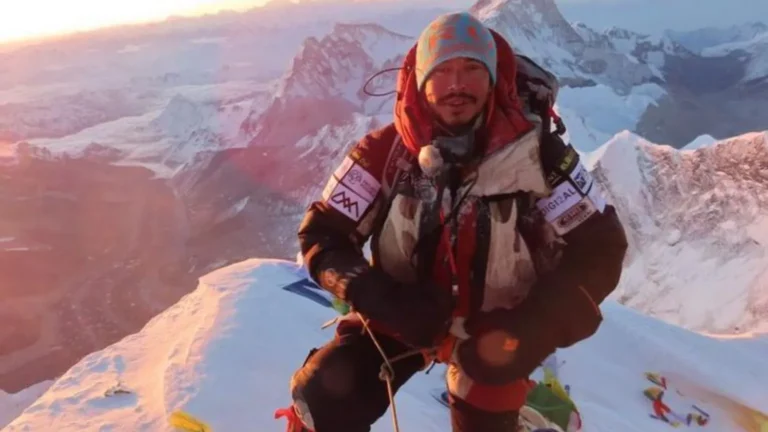
Pakistani mountaineers have achieved a landmark feat by opening a brand-new climbing route on Broad Peak, one of the world’s highest mountains. The accomplishment is being hailed as a major milestone for Pakistan’s mountaineering community, showcasing the country’s growing expertise in high-altitude climbing and technical expedition planning.

Broad Peak, standing at 8,051 metres (26,414 feet), is located in the Karakoram mountain range of Gilgit-Baltistan, approximately five miles from K2. Ranked as the world’s 12th-highest mountain, Broad Peak has long attracted climbers from around the globe because of its challenging terrain and unpredictable weather conditions.

The newly established route, officially named the Mirza Ali Legacy Route, begins above Camp 3 and offers a fresh approach to the summit. The route was created after an intensive three-day effort that required climbers to navigate deep snow, steep rock faces, and mixed sections of snow and rock under extremely demanding conditions.

The expedition was led by renowned Pakistani mountaineer Mirza Ali, founder of Karakorum Expeditions. Along with his team, he spent days fixing ropes and securing the mountain to make the route accessible for future expeditions. Their summit push began at 2:00 a.m. local time on July 19. Battling continuous snowfall, freezing temperatures, and severe weather, the climbers finally reached the summit at 9:55 p.m. after more than 24 hours of nonstop climbing.

To establish the route, the team installed over 1,600 metres of fixed rope and placed permanent rock pitons at critical points to improve safety and stability. According to expedition organisers, the new line is shorter, more direct, and significantly safer than the traditional path, which passes through Broad Peak’s hazardous “V Section.” The redesigned route is expected to reduce climbers’ exposure to avalanches and falling rocks, two of the mountain’s most serious risks.

Organisers estimate that under normal weather conditions, climbers using the new route should be able to reach the summit from Camp 3 within seven to eight hours and descend in approximately two to three hours, making the ascent both faster and more efficient.

The route was unanimously named in honour of Mirza Ali to recognise his 16 years of dedication to Pakistan’s mountaineering sector. Throughout his career, he has trained aspiring climbers, organised national and international expeditions, and promoted Pakistan as a premier destination for adventure tourism.

Reflecting on the achievement, Mirza Ali said the successful opening of the route demonstrates the technical capability, determination, and resilience of Pakistani climbers. He also stressed the importance of investing in mountaineering education, safety training, and adventure tourism, highlighting Gilgit-Baltistan’s enormous untapped potential within the mountain economy.

International members of the expedition also praised the accomplishment. Argentine climber Juan Toro described the project as a historic milestone for Pakistani mountaineering, while Hungarian climber David Klein called the newly opened path an innovative and technically brilliant route that reflected the team’s exceptional skill and perseverance.

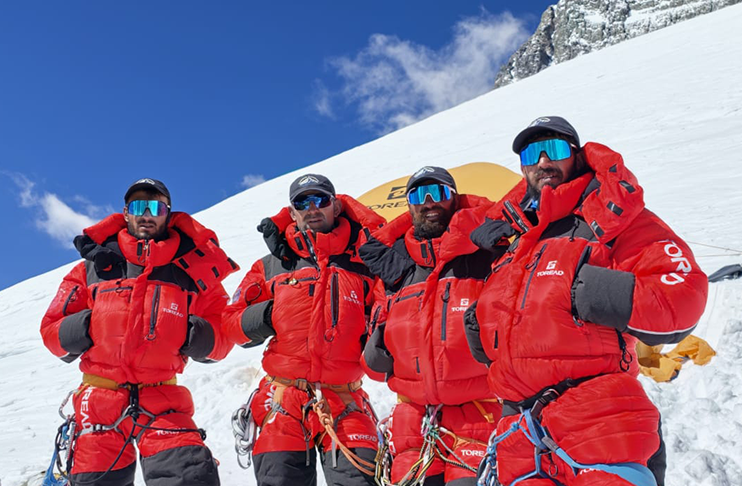
The summit team included Mirza Ali, Ahmed Baig, Rizwan Dad, Waqar Ali, Nawaz Ali Khan, Zaman Karim, Juan Toro, and David Klein. To support future expeditions and improve emergency response, the team also recorded all major anchor locations using Garmin inReach GPS technology, ensuring the new route can be safely managed for climbers in the years ahead.

Similar Posts

  • | |

    Philippines says ship hit by Chinese water cannon …

    The Philippines accused China’s coast guard of blasting a government vessel with a water cannon near Scarborough Shoal on Friday, marking the third confrontation between the two sides this week in the South China Sea. The Philippine Coast Guard said the Chinese vessel came within seven metres of the BRP Datu Paduhinog, striking it with a water cannon that caused a temporary loss of satellite connectivity. Two other ships — the BRP Datu Cabaylo and BRP Cape San Agustin — were also targeted but not hit. China’s coast guard confirmed it fired water cannon, saying it had taken “necessary measures” to drive the Philippine ships away. “We sternly warn the Philippine side to immediately stop its infringing and provocative actions,” spokesperson Jiang Lue said. Beijing’s foreign ministry added that Philippine vessels had “deliberately intruded first” and insisted its actions were “professional and standard.” The clash came as Southeast Asian diplomats concluded a regional forum in Manila and as Rome hosted talks between Lebanon and Israel. Earlier this week, tensions flared at Second Thomas Shoal, where Manila accused Chinese sailors of clubbing a Filipino crew member, prompting condemnation from allies. On Thursday, the Philippines reported another water cannon incident at Scarborough. Both countries have said they are working toward completing a Code of Conduct for the South China Sea by year’s end, but the repeated confrontations underscore the volatility of the disputed waters. Beijing claims most of the sea, including Scarborough Shoal, despite a 2016 international tribunal ruling that rejected its claims.

  • | |

    Shahid Khaqan Abbasi challenges delisting of Awaam…

      Former Prime Minister Shahid Khaqan Abbasi has written a letter to Chief Election Commissioner Sikandar Sultan Raja, challenging the Election Commission of Pakistan’s decision to delist the Awaam Pakistan Party. In his letter, Abbasi expressed concern over what he described as an unjustified decision by the Election Commission to remove the party from its list of registered political parties. He said he was surprised that Awaam Pakistan had been delisted on the grounds that it had failed to conduct intra-party elections. Abbasi rejected the allegation and maintained that the party had already conducted intra-party elections for its National General Council and national office-bearers. According to him, the elections were held between March 26 and April 2, within the deadline provided by the Election Commission of Pakistan. The former prime minister said that Awaam Pakistan fulfilled the requirements set by the electoral body and completed its intra-party election process within the prescribed period. He added that the party submitted the election results along with detailed documentation to the Election Commission on April 6. Abbasi argued that the party had therefore complied with the Election Commission’s instructions and questioned the basis on which it was subsequently delisted. The letter stated that a total of 12,084 members participated in Awaam Pakistan’s intra-party elections. Abbasi described the electoral process as democratic and transparent, saying that the participation of thousands of party members demonstrated the party’s commitment to democratic procedures. He further expressed concern over what he termed the unfair and unusual manner in which an active political party had been delisted. According to Abbasi, the decision was difficult to understand, particularly because the party had conducted its intra-party elections and submitted the required documents to the Election Commission. Abbasi also objected to the fact that the party was delisted without being given an adequate opportunity to present its position. He said that removing an active political party from the electoral list without hearing its case was beyond comprehension and raised questions about due process. The former prime minister urged Chief Election Commissioner Sikandar Sultan Raja and the Election Commission to conduct an immediate hearing into the matter. He requested that Awaam Pakistan be provided an opportunity to explain its position and present the relevant evidence regarding the intra-party elections. Abbasi’s letter comes amid continued debate over the legal and procedural requirements that political parties must meet to remain registered with the Election Commission. Intra-party elections are an important requirement under Pakistan’s political and electoral framework, as they are intended to ensure democratic participation and accountability within political parties. The former prime minister maintained that Awaam Pakistan had fulfilled this requirement within the deadline and had provided the Election Commission with the necessary election results and supporting documents. He called on the electoral body to review its decision and hear the party’s case before taking any further action. Abbasi stressed that Awaam Pakistan should be given a fair opportunity to clarify the circumstances surrounding its intra-party elections and the documents submitted to the Commission. The controversy has placed renewed focus on the relationship between political parties and the Election Commission, particularly regarding compliance with electoral laws and the right of political parties to be heard before facing major administrative decisions. Abbasi’s appeal now seeks an immediate hearing and a review of the delisting decision, with the party arguing that it followed the prescribed procedure and conducted its intra-party elections in a democratic and transparent manner.

  • | |

    Wet spring fuels costly disease battle for Canadia…

    Canadian farmers growing durum, spring wheat, canola and pulse crops have spent the growing season battling an unusually aggressive wave of crop diseases triggered by the wettest year the country has seen this decade. Jake Leguee, who farms roughly 19,000 acres, or about 7,689 hectares, of durum, wheat, lentils, flax and spring wheat in southeastern Saskatchewan, said he sprayed his entire operation with fungicide this year to keep disease pressure under control. He said the costs associated with that level of treatment add up quickly. The sudden surge in crop disease during early summer poses a serious threat to both the quantity and quality of Canada’s harvest this year. Canada ranks as the world’s top exporter of canola, durum wheat, dry peas and oats, and stands among the leading global suppliers of high protein spring wheat, making the outcome of this year’s harvest significant well beyond its own borders. The disease outbreak traces back to an extremely wet spring and early summer that left soils saturated with moisture, creating ideal conditions for fungal disease once temperatures turned hot and humid. That combination has forced many farmers into a difficult decision this season, choosing between spending additional money on crops that may not turn a profit given elevated fertilizer and input costs, or investing further to protect whatever yield remains in the field. For farmers like Sabourin, the level of moisture and frequency of rain throughout the season left little room for debate about whether to apply fungicide. Leguee said it will take several more weeks before he knows whether he applied the right fungicides in the right locations at the right time. He said his crops look healthy so far, with the exception of his lentils, though he cautioned that disease damage can sometimes hide inside kernels and pods that appear fine from the outside. That uncertainty means the ultimate quantity and quality of Canada’s export crops remain unresolved just as full scale harvesting gets underway across the prairies. Leguee said farmers will not have a clear picture of how the season played out until combines actually move through the fields, adding that fungicide treatment does not always deliver the results growers hope for.

  • |

    Harshad Chopda becomes first finalist as Shivangi Joshi exits

    Harshad Chopda has secured the first finalist position in Lock Upp 2, while Shivangi Joshi’s journey on the reality show came to an unexpected end after a dramatic elimination that left contestants and viewers stunned. The latest episode featured an emotional task to determine the season’s first finalist. Several contestants, including Varun Yadav, Shilpa Shinde, Ram Kapoor and Akanksha Chamola, stepped aside, leaving Harshad Chopda and Shivangi Joshi as the final two contenders for the coveted spot. As part of the challenge, the two actors were locked inside the final cell and asked to decide between themselves who deserved to move directly into the finale. However, the decision proved difficult as both contestants hesitated to choose themselves over the other, resulting in an emotional conversation that revealed the strong bond they had formed during the competition. During the discussion, Chopda surprised Joshi by admitting that he had intentionally lost one of the earlier tasks to help her. The revelation caught the actress off guard, especially after he had previously denied making such a sacrifice. “I did lose the game,” Chopda confessed, leaving Joshi visibly confused and emotional. Questioning his decision, Joshi asked why he had given up an opportunity that could have benefited him. Chopda explained that throughout the season he had often put others before himself. This time, however, he felt it was important to focus on his own journey and fight for a place in the finale. Despite his explanation, neither contestant was willing to make the final decision. Their reluctance prompted hosts Farah Khan and Riteish Deshmukh to intervene and encourage them to settle the matter. Chopda remained firm, saying that for the first time in the competition he wanted to prioritise himself. Realising his determination, Joshi eventually stepped out of the final cell, allowing Chopda to claim the title of the season’s first finalist. The emotional moment was followed by another dramatic twist that changed the course of the game. Earlier in the episode, Shreya Kalra had earned a special advantage after winning a crucial task. The reward gave her the authority to eliminate one contestant from the competition. Most contestants believed Kalra would use her power against either Yogesh Rawat or Akanksha Chamola, making her eventual decision all the more surprising. Instead, Kalra chose to evict Shivangi Joshi, bringing the actress’s journey on Lock Upp 2 to an abrupt end. The unexpected elimination shocked fellow contestants, many of whom had not anticipated Joshi’s exit at this stage of the competition. Viewers also reacted with surprise, as the actress had been widely considered one of the strongest contenders for the title. With Chopda becoming the first confirmed finalist and Joshi leaving the show in a dramatic fashion, the race for the Lock Upp 2 trophy has become even more intense. As the finale draws closer, the remaining contestants will continue battling for the remaining spots in the final, promising more emotional moments, strategic gameplay and unexpected twists before the winner is crowned.

  • Dera police arrest alleged inter-provincial robbers after encounter

    Dera Ismail Khan: Police in the City Circle arrested an alleged inter-provincial robber and his accomplice in an injured condition following an exchange of fire during a police operation. According to police, DSP City Syed Sagheer Gillani received information that an alleged inter-provincial robber was travelling with an accomplice from Peshawar to Punjab via Dera Ismail Khan. Acting on the tip-off, the DSP, along with a police contingent, set up a checkpoint at Sheikh Yousaf Chowk. Police said that when officers signalled a suspicious vehicle to stop, one of the occupants allegedly opened fire on DSP Gillani with a pistol instead of complying. Police returned fire, injuring both suspects. Their vehicle reportedly went out of control, veered off the road and crashed into a nearby wall. After the exchange of fire ended, police searched the vehicle and identified the injured suspects as Safdar Ali and his accomplice, Ahsan, son of Sajjad, a resident of Faisalabad. According to the police spokesperson, the two suspects were wanted by police in Punjab and Dera Ismail Khan in connection with 51 serious criminal cases, including murder, robbery, theft and illegal arms trafficking. Police further stated that the suspects were also wanted in robbery and theft cases registered at City, Town and Paharpur police stations in Dera Ismail Khan. The injured suspects were taken to hospital for medical treatment after the completion of legal formalities, while further investigation is underway. Meanwhile, District Police Officer (DPO) Dera Ismail Khan commended the police team for the successful operation, stating that indiscriminate action against criminal elements would continue and that every possible measure would be taken to maintain peace and security in the district.

  • | |

    Nirmal Purja’s body recovered after deadly Broad Peak avalanche

    Renowned British-Nepali mountaineer Nirmal Purja’s body has been recovered from Broad Peak in Pakistan, days after a devastating avalanche claimed the lives of members of his international climbing team. Rescue officials confirmed that Purja’s remains were found at an altitude of around 5,700 metres on Sunday. Search teams also located three additional bodies on the mountain, although their identities have not yet been officially confirmed. The fatal avalanche struck the 8,047-metre Broad Peak in the Karakoram mountain range during a climbing expedition. Authorities earlier confirmed that at least 10 climbers from different countries lost their lives in the tragedy. Purja, 43, was leading the multinational expedition when the avalanche occurred. Before his body was recovered, rescue teams had already retrieved the remains of American climber Mallory Geis, Omani mountaineer Nadhira Ahmed Abdullah Al Harthy, and Nepalese climber Pur Bahadur Gurung. Rescue operations continue in the difficult high-altitude terrain, with officials working to recover the remaining victims. The recovered bodies are being transported to a nearby base camp before further arrangements are made. Purja was regarded as one of the world’s greatest mountaineers. Born in Nepal, he later served in the British Army and spent several years with the elite Special Forces before pursuing a career in high-altitude climbing. He gained global recognition in 2019 after completing the ascent of all 14 mountains above 8,000 metres in just 189 days, breaking the previous world record by several years. His remarkable achievement was later featured in the widely acclaimed Netflix documentary 14 Peaks: Nothing Is Impossible. At the time of the accident, Purja was attempting another historic milestone by becoming the first climber to summit all 14 peaks above 8,000 metres twice without supplemental oxygen. His death has prompted tributes from leaders and members of the international mountaineering community. Britain’s Prince William expressed deep sorrow over the loss, describing Purja as an outstanding soldier and one of the world’s finest climbers. Nepalese officials also praised his courage, determination and lasting contribution to mountaineering.

Leave a Reply

Your email address will not be published. Required fields are marked *