harshad chopda becomes
|

Harshad Chopda becomes first finalist as Shivangi Joshi exits

Harshad Chopda has secured the first finalist position in Lock Upp 2, while Shivangi Joshi’s journey on the reality show came to an unexpected end after a dramatic elimination that left contestants and viewers stunned.

The latest episode featured an emotional task to determine the season’s first finalist. Several contestants, including Varun Yadav, Shilpa Shinde, Ram Kapoor and Akanksha Chamola, stepped aside, leaving Harshad Chopda and Shivangi Joshi as the final two contenders for the coveted spot.

As part of the challenge, the two actors were locked inside the final cell and asked to decide between themselves who deserved to move directly into the finale. However, the decision proved difficult as both contestants hesitated to choose themselves over the other, resulting in an emotional conversation that revealed the strong bond they had formed during the competition.

During the discussion, Chopda surprised Joshi by admitting that he had intentionally lost one of the earlier tasks to help her. The revelation caught the actress off guard, especially after he had previously denied making such a sacrifice.

“I did lose the game,” Chopda confessed, leaving Joshi visibly confused and emotional.

Questioning his decision, Joshi asked why he had given up an opportunity that could have benefited him. Chopda explained that throughout the season he had often put others before himself. This time, however, he felt it was important to focus on his own journey and fight for a place in the finale.

Despite his explanation, neither contestant was willing to make the final decision. Their reluctance prompted hosts Farah Khan and Riteish Deshmukh to intervene and encourage them to settle the matter.

Chopda remained firm, saying that for the first time in the competition he wanted to prioritise himself. Realising his determination, Joshi eventually stepped out of the final cell, allowing Chopda to claim the title of the season’s first finalist.

The emotional moment was followed by another dramatic twist that changed the course of the game.

Earlier in the episode, Shreya Kalra had earned a special advantage after winning a crucial task. The reward gave her the authority to eliminate one contestant from the competition.

Most contestants believed Kalra would use her power against either Yogesh Rawat or Akanksha Chamola, making her eventual decision all the more surprising.

Instead, Kalra chose to evict Shivangi Joshi, bringing the actress’s journey on Lock Upp 2 to an abrupt end. The unexpected elimination shocked fellow contestants, many of whom had not anticipated Joshi’s exit at this stage of the competition. Viewers also reacted with surprise, as the actress had been widely considered one of the strongest contenders for the title.

With Chopda becoming the first confirmed finalist and Joshi leaving the show in a dramatic fashion, the race for the Lock Upp 2 trophy has become even more intense. As the finale draws closer, the remaining contestants will continue battling for the remaining spots in the final, promising more emotional moments, strategic gameplay and unexpected twists before the winner is crowned.
Similar Posts

  • | | |

    AJK reserved seats election: Polling set for Augus…

    The AJK reserved seats election will be held on August 24, with the Azad Jammu and Kashmir Election Commission announcing the schedule for polling in the Legislative Assembly. According to the notification, voting will take place at the AJK Assembly from 10am to 1pm. The reserved seats include five for women, one for Ulema-e-Deen or Mashaikh, one for Jammu and Kashmir state subjects living abroad, and one for technocrats and other professionals. Candidates will be able to submit their nomination papers on August 20 between 9am and 2pm. The returning officer will subsequently scrutinise the papers and publish the list of valid candidates. Appeals against decisions on nomination papers can be filed on August 21. The Chief Election Commissioner will hear the appeals on August 22, while candidates can withdraw their nominations before 2pm on August 23. The AJK Assembly has 53 members, including 45 directly elected members and eight members elected through reserved seats. However, polling on seven directly elected seats could not take place because of law and order concerns. As a result, the reserved-seat election will initially be conducted by the 38 directly elected members elected so far. The development comes as AJK’s three-phase electoral process continues amid political and security challenges.

  • | |

    FIA launches unit to hunt dark web criminals

    The Federal Investigation Agency (FIA) has established a dedicated unit to investigate criminals operating through the dark web. The move is aimed at strengthening Pakistan’s ability to deal with hidden online criminal networks. The new unit has been set up at the FIA’s National Command and Control Centre (NC3) in Islamabad. It will use advanced technology and digital investigation techniques to identify suspects who use encrypted platforms to conceal their identities. FIA Director General Dr Usman Anwar said the unit would focus on criminal networks involved in activities that fall under the agency’s jurisdiction. Investigators will also examine suspicious digital transactions, including those involving cryptocurrencies. A major focus will be networks involved in producing fake documents. Such documents can be used to facilitate human trafficking and illegal migrant smuggling. The unit will also investigate other forms of cyber-enabled crime linked to the dark web. The dark web is a hidden part of the internet. Its websites are not normally indexed by standard search engines. Access often requires specialised software and knowledge. Criminals can use these systems to hide their identities and locations. The technology has also been misused for illegal trade, cybercrime and other criminal activities. Authorities face additional challenges because many dark web networks operate across national borders. Criminals can also use cryptocurrency to make financial transactions more difficult to trace. The FIA plans to address these challenges through modern digital investigation tools and greater coordination between specialised teams. The new unit will work closely with the FIA’s cryptocurrency investigation unit. Both units will operate under the same facility and share technical expertise. Investigators will use blockchain forensic techniques to examine cryptocurrency transactions. These techniques can help authorities analyse transactions and potentially connect anonymous or pseudonymous digital addresses with real-world identities. Open-source intelligence will also be used to support investigations. Officials said digital evidence gathered from different sources could help strengthen criminal cases. Investigators will track aliases, usernames and pseudonyms used by suspected criminals across online marketplaces, forums and other hidden platforms. The information will be used to build detailed profiles of suspected offenders. Authorities can then use the evidence to identify suspects and pursue legal action. NC3 Director Dr Athar Waheed explained the basic structure of the internet. He said it is commonly divided into three broad layers: the surface web, deep web and dark web. The surface web includes websites that can be found through regular search engines. News websites, social media platforms, blogs and online shopping sites are examples. The deep web contains online material that search engines do not index. This includes private databases, email accounts, banking systems, academic resources and internal organisational networks. Much of the deep web is legitimate. Users normally need passwords, subscriptions or specific permissions to access such content. The dark web is a smaller and deliberately hidden section of the deep web. It uses technologies designed to provide greater anonymity. Tor is one of the technologies commonly associated with accessing dark web services. It routes internet traffic through multiple volunteer-operated relays, making it more difficult to identify the original source. The FIA’s new unit will seek to overcome these anonymity measures through digital forensics, intelligence gathering and technological investigation.

  • |

    Poland unveils Europe’s tallest Virgin Mary statue in tiny village

    A towering new statue of the Virgin Mary has been unveiled in a small Polish village, instantly becoming the tallest statue anywhere in Europe. Standing at 55.6 metres, the monument now dominates the local skyline. The devotional sculpture was consecrated by a local bishop during a ceremony held on Saturday in the rural village of Konotopie. The unveiling comes at a notable moment, as the Catholic Church’s broader influence over public life in Poland continues to decline. Despite its scale, the statue sits in a remote location, far from any of Poland’s major population centres. Its placement was reportedly requested specifically by a wealthy local couple who funded the project. During the ceremony, two helicopters were seen circling above the towering figure, which stands with arms open and a large crown atop its head. The dramatic aerial display added to the significance of the occasion. While Poland remains a predominantly Catholic country, many younger Poles living in urban areas have grown increasingly distant from the church and its traditions. The statue’s unveiling arrives against that broader backdrop of shifting religious engagement. Among those attending Saturday’s ceremony was Lech Walesa, the former Polish president who played a central role in the collapse of communism in the country. Now 82, Walesa reflected on his own life journey in comments to the Associated Press, describing his story as one that started and ended with the Virgin Mary. Local authorities are hoping the massive structure will serve a dual purpose going forward, functioning as both a significant pilgrimage site and a tourist attraction. To support that goal, the statue includes a viewing platform built directly into its base, offering visitors a chance to take in sweeping views of the surrounding countryside. The unveiling adds Poland to the small list of countries hosting record-breaking religious monuments, and local officials appear hopeful the structure will draw visitors from well beyond the immediate region in the years ahead.

  • |

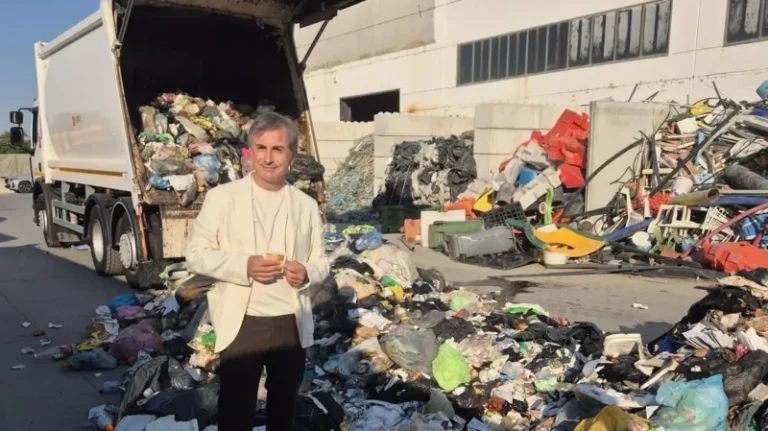
    Italian waste workers recover discarded €1m lottery ticket from mountain of refuse

    An anonymous lottery player in southern Italy has successfully retrieved a winning ticket worth €1 million (£857,000) after accidentally discarding the slip into a municipal bin. The mix-up occurred at a local shop in Bitonto when a ticket scanner displayed a “non-payable” notification. Unaware that the message indicated a payout exceeding the shop’s cash limit rather than a losing ticket, the player threw the slip into a rubbish bin. Upon returning home, family members pointed out that the player’s chosen numbers, 2, 4, 8, 10, and 51, had indeed been drawn. After returning to the store, the family discovered that the bin had already been emptied by a municipal collection vehicle operated by local sanitation company SANB. The owner alerted SANB officials, who tracked down the specific bin lorry before its contents were transferred to a compactor or landfilled. “This story is nothing short of miraculous,” said Roberto Nicola Toscano, director of SANB, noting that because the incident occurred on a Sunday, the lorry’s contents had not yet been processed. Sanitation staff escorted the vehicle to a secure facility and spent two days sifting through a massive heap of municipal waste. On Tuesday morning, a refuse worker located the intact winning ticket inside a damaged bag. The lottery winner, who signed a formal agreement to cover the operational costs of the search effort, will receive the full prize sum following official validation.

  • | |

    14 August: Films that bring Quaid-e-Azam’s i…

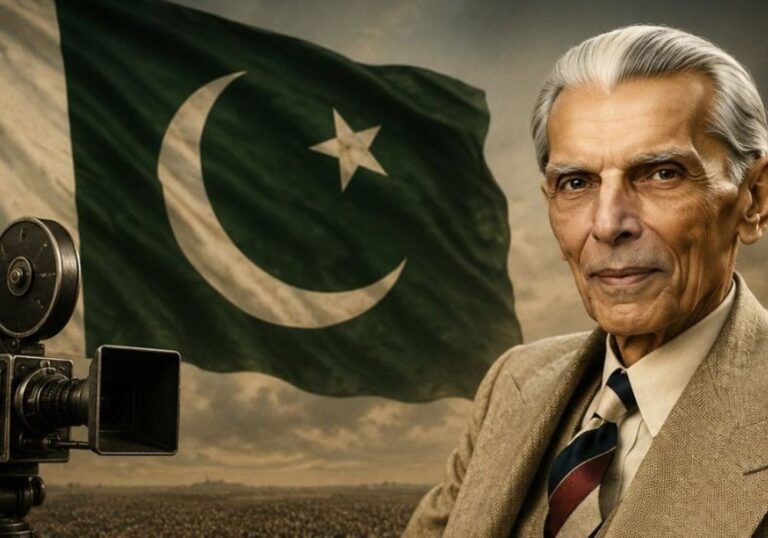
    Every year on August 14, Pakistan celebrates its Independence Day, marking the day in 1947 when the country emerged as an independent nation. The occasion is a reminder of the struggle, sacrifices and leadership that shaped Pakistan’s journey towards independence. Among the many personalities connected with this historic movement, Quaid-e-Azam Muhammad Ali Jinnah remains one of the most important figures. From his early career as a lawyer to becoming the leader of the Pakistan Movement, Jinnah’s life has continued to inspire filmmakers, writers and storytellers. Over the years, several films, dramas and documentaries have explored different phases of his life, highlighting his political struggle, leadership and the challenges behind the creation of Pakistan. One of the most notable films based on his life is Jinnah (1998), directed by Jamil Dehlavi. The biographical drama stars Christopher Lee as Quaid-e-Azam Muhammad Ali Jinnah and follows his journey from a successful lawyer to the founder of Pakistan. The film focuses on important moments from Jinnah’s political career, including his efforts during the Pakistan Movement and the challenges he faced while working towards the creation of a separate homeland. Written by Akbar S. Ahmed, Farrukh Dhondy and Jamil Dehlavi, Jinnah presents a detailed portrayal of the events that shaped one of South Asia’s most influential leaders. Although the film received mixed responses at the time of its release, it remains one of the most recognised international productions based on the life of Pakistan’s founder. On television, Jinnah Se Quaid Tak became another important drama that introduced audiences to different stages of Jinnah’s life. The PTV production showed his transformation from a successful barrister into a political leader who played a central role in the independence movement. Directed by Mohsin Ali, the drama focused on key historical events and highlighted Jinnah’s dedication towards achieving his political goals. Through television, the series reached audiences who wanted to explore the personal and political journey behind Pakistan’s creation. Another production that explores Jinnah’s legacy is the documentary Quaid-e-Azam: Founder of Pakistan. Unlike fictional portrayals, documentaries use archival footage, historical records and expert discussions to present a closer look at his personal life and political career. These documentaries provide viewers with an opportunity to understand not only the major events surrounding independence but also the leadership qualities and decisions that shaped Pakistan’s early years. Apart from these productions, Pakistani cinema and television have continued to revisit stories connected with the country’s history and independence. Historical films and dramas allow audiences to connect with important moments from the past while introducing younger generations to personalities who played a significant role in shaping the nation. As Pakistan celebrates its Independence Day, these cinematic portrayals offer a chance to revisit the journey behind August 14, 1947. They highlight the determination, political struggle and leadership that contributed to the creation of Pakistan. Through films, dramas and documentaries, the story of Quaid-e-Azam Muhammad Ali Jinnah continues to remain part of Pakistan’s cultural memory, allowing new generations to learn about the man behind the independence movement.

  • | |

    Suicide bombing at Kabal Police Station kills 14, injures 20 in Swat

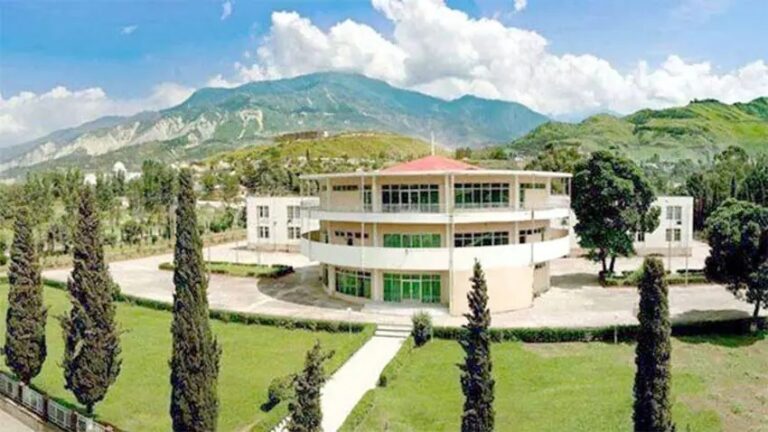
    SWAT: At least 14 people, including five police personnel and nine civilians, were killed and 20 others injured in a suicide bombing at the main gate of Kabal Police Station in Swat district on Sunday. According to Malakand Regional Police Officer (RPO) Syed Fida Hassan Shah, the attacker attempted to enter the police compound but was intercepted by security personnel stationed at the entrance. Prevented from gaining access, the suicide bomber detonated his explosive vest at the main gate. Police said the 20 injured include 14 police personnel and six civilians. The wounded were shifted to nearby hospitals, where several are reported to be in critical condition. The RPO said the police compound houses Kabal Police Station, Kabal Police Lines, a public facilitation center, and several other government offices. He noted that the casualties could have been significantly higher had the attacker succeeded in entering the compound. Following the blast, police and other law enforcement agencies cordoned off the area and launched a search operation, while investigators began collecting forensic evidence from the scene. Police officials said the severed head of the suspected suicide bomber has been recovered, and investigators are working to establish his identity and determine the circumstances surrounding the attack. Local sources said a public demonstration calling for peace was underway at nearby Kabal Chowk when the explosion occurred. Authorities have not yet confirmed whether the protest was linked to or affected by the attack. An investigation into the incident is ongoing. An emergency has been declared at the Saidu Group of Teaching Hospitals following the suicide blast in Kabal, Swat. All doctors, nursing staff, and paramedics have been placed on high alert to ensure the timely treatment of those injured in the attack. Hospital authorities said every effort is being made to provide the best possible medical care to the victims. Medical Superintendent Dr. Muhammad Saleem Khan, along with other senior officials, is personally overseeing the emergency response and monitoring the situation. The Saidu Hospital administration has appealed to the public to donate blood to help meet the urgent needs of the injured. Citizens have also been requested to avoid unnecessary visits to the hospital during the emergency to prevent overcrowding and allow medical teams to carry out their work efficiently. Hospital officials said the situation is being closely monitored, and emergency medical services remain fully operational.

Leave a Reply

Your email address will not be published. Required fields are marked *