punjab pms officers
| |

Punjab PMS officers oppose plan to create 101 AAC …

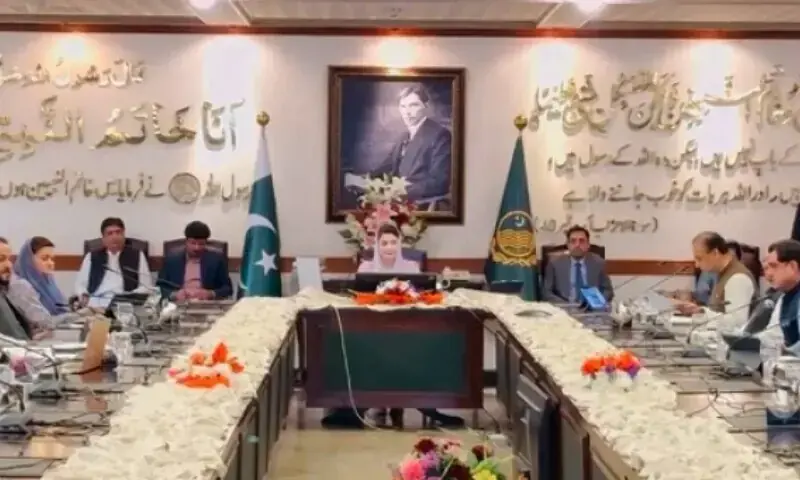
LAHORE: The Provincial Management Service (PMS) Officers Association has strongly opposed the Punjab government’s proposal to create 101 new Additional Assistant Commissioner (AAC) posts, describing the move as unnecessary and harmful to the existing administrative structure.

The association argued that the AAC posts had been abolished years ago and their revival was not justified, particularly after the establishment of the Punjab Enforcement and Regulatory Authority (PERA), which was created to strengthen enforcement and regulatory functions across the province.

During an executive committee meeting chaired by Association President Qamar Zaman Qaisrani, members unanimously decided to raise their concerns with senior government officials. A delegation of the association is expected to meet the Punjab services secretary and the additional chief secretary to seek a review of the proposed decision.

The association warned that if its concerns remain unaddressed, PMS officers across Punjab will begin a province-wide protest campaign. As part of the first phase, officers plan to wear black armbands while performing official duties to register their protest against the government’s decision.

PMS officers believe the creation of the new posts would place a significant financial burden on the provincial treasury. According to the association’s estimates, establishing one Additional Assistant Commissioner post, including official facilities, office infrastructure, staff, transport and operational expenses, would cost approximately Rs46.8 million. They claim that creating all 101 posts would require nearly Rs4.73 billion initially, in addition to recurring expenditures on salaries, allowances and other administrative costs.

The association further expressed concerns over what it described as long-standing issues within the provincial bureaucracy. These include delays in promotion boards, alleged discrimination in transfers and postings, and the appointment of junior officers to positions traditionally reserved for senior officials.

Former administrative secretary Yawar Mehdi also commented on the proposal, saying that efforts to improve public service delivery were welcome if they genuinely strengthened governance. However, he stressed that introducing additional administrative positions should not weaken the existing civil service structure or negatively affect the career progression of Provincial Management Service officers.

Similar Posts

  • |

    New dinosaur species discovered in Zimbabwe reveals distinct ancient ecosystems across southern Africa

    Palaeontologists have identified a new species of Late Triassic dinosaur from fossils discovered on the shores of Lake Kariba in northern Zimbabwe, offering fresh insights into prehistoric ecosystems across southern Africa. Named Musango matusadonaensis, the 4.5-metre-long creature lived approximately 210 million years ago, a pivotal era when dinosaurs were beginning to spread across the supercontinent Gondwana prior to becoming the planet’s dominant land animals. The discovery represents only the fifth dinosaur species formally named from Zimbabwe, stemming from a international research collaboration between institutions in the United Kingdom, South Africa, and Zimbabwe. Lead researcher Professor Paul Barrett from London’s Natural History Museum, alongside co-authors publishing in the Journal of Systematic Palaeontology, detailed the anatomical characteristics of the fossilised skeleton, which included bones from the spine, arms, and feet. Musango was an early sauropodomorph, an evolutionary precursor to massive four-legged herbivores like Diplodocus, though this earlier relative was lightly built and walked primarily on two legs. Microscopic analysis of its fibula revealed eight distinct growth rings, indicating the animal was around eight years old and nearly fully grown when it died, while weighing an estimated 222 kilogrammes. The discovery challenges long-held scientific assumptions that Late Triassic dinosaur populations were uniform across the southern regions of Gondwana. Based on structural features of its skeleton and comparative ecosystem data, researchers believe Musango was an opportunistic omnivore that fed on plants, small reptiles, lungfish, and crocodile-like phytosaurs. The presence of a distinct species in the Lake Kariba region demonstrates that ancient southern Africa was divided into unique, localised environments with varied wildlife compositions, showing that regional climate and geography drove dinosaur diversification much earlier than previously understood.

  • | |

    JPMC doctor seeks relief amid patient death contro…

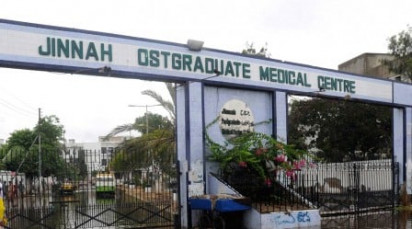
    A senior doctor at Jinnah Postgraduate Medical Centre (JPMC) has asked to step down from her responsibilities amid controversy surrounding the death of a 65-year-old patient who was shifted from the hospital’s emergency department to the National Institute of Cardiovascular Diseases (NICVD) on July 28. Dr Sanobar Sikandar, JPMC’s only senior emergency medicine specialist, submitted a request to the hospital’s Executive Director seeking relief from her duties as an assistant professor of medicine. She cited mounting professional pressure, internal interference and what she described as an unhealthy working environment. Dr Sanobar said the hospital administration criticised her after asking her to explain the circumstances surrounding the patient’s death. She said the situation had made it increasingly difficult for her to continue managing her medical, teaching and administrative responsibilities effectively. In her application, she highlighted what she described as a lack of professional respect in the emergency department, political interference and inappropriate conduct by some junior doctors. She said these issues had caused her severe mental stress and made it difficult to continue working under the prevailing conditions. The Young Doctors Association (YDA) Sindh has backed Dr Sanobar and urged the JPMC administration to address the dispute immediately. YDA Sindh Chairman Dr Mehboob Noonari said Dr Sanobar is the hospital’s only FCPS assistant professor in emergency medicine. He noted that she also serves as faculty for the FCPS programme and supervises trainee doctors. Dr Noonari warned that her departure could seriously disrupt emergency medicine training at JPMC and may even put the FCPS programme at risk of closure. He also alleged that the administration was pressuring Dr Sanobar to protect the doctor who was in charge of the night shift when the incident occurred. He questioned why the night-shift in-charge was being shielded and demanded that hospital authorities clarify the matter. The YDA chairman further claimed that senior doctors had questioned Dr Sanobar over her decision to issue an explanation regarding the patient’s death, raising concerns about the handling of the case within the hospital.

  • |

    US House approves $1.15 trillion defense budget package

    The US House of Representatives has passed a $1.15 trillion defense budget bill by a narrow vote of 216 to 212. Supported by a majority of Republicans and six Democrats, the legislation includes provisions to deepen defense ties and military technology integration with Israel. The bill faced internal pushback, with Congressman Thomas Massie raising concerns over integrating US military technology and supply chains with Israel. The passage follows a major funding request from the Trump administration, which asked Congress for nearly $87 billion in supplemental appropriations to support ongoing operations against Iran. Appropriations Committee, US Secretary of Defense Pete Hegseth stated that military action against Iran has cost $37.5 billion so far, including projected costs through September 30. Hegseth urged lawmakers to maintain robust military spending, arguing that failing to provide the full defense budget represents the single greatest threat to national security.

  • | |

    PTI announces September 27 to Islamabad over key d…

    Pakistan Tehreek-e-Insaf (PTI) has announced plans to march to Islamabad on September 27 if its demands regarding party founder Imran Khan are not met, with senior party leaders calling for legal and constitutional relief. The announcement was made during a public gathering near the motorway in Peshawar, where PTI leaders said the planned demonstration would go ahead unless progress is made on several issues, including regular meetings with Imran Khan, access to his personal physician, and timely hearings of court cases involving the former prime minister. Addressing supporters, Khyber Pakhtunkhwa Chief Minister Ali Amin Gandapur said the party had pursued every available constitutional and legal avenue but had failed to achieve the desired outcomes. He argued that the party had little confidence in the judicial process and claimed that recent constitutional amendments had affected the functioning of the courts. Gandapur also alleged that PTI supporters had faced excessive force during previous demonstrations. He questioned the continued detention of Imran Khan and reiterated the party’s position that the former premier’s removal from office was the result of external interference. He further claimed that Pakistan’s economy had performed better during Imran Khan’s tenure and criticized the current government’s handling of economic and security challenges. The chief minister also expressed concern over inflation, unemployment, law and order, and the country’s overall economic situation. He accused the federal government of mismanagement and urged supporters to remain united ahead of the planned protest. Speaking at the same event, PTI leader Sohail Afridi said the party had exhausted all legal and constitutional options before deciding to launch another protest movement. He maintained that the planned march was intended to demand justice rather than political concessions. Afridi announced that PTI would proceed towards Islamabad on September 27 if its demands remained unaddressed. He told supporters that the party was seeking what it described as judicial justice and the restoration of legal rights for its leader. The planned demonstration is expected to become one of PTI’s major political mobilization efforts in the coming months. Party leaders have called on supporters from across the country to participate peacefully in the protest. The federal government has not yet issued a detailed response to PTI’s latest announcement. Political observers say the coming weeks will be important as both sides weigh their next steps amid Pakistan’s evolving political landscape.

  • | |

    Bunnie Xo explores new career chapter after report…

    Bunnie Xo is reportedly turning the page on a new chapter of her life by exploring opportunities in reality television following her high-profile divorce from country music star Jelly Roll. According to People, the podcast host, author and entrepreneur has been holding meetings with producers, agents and production companies in Los Angeles as she considers starring in her own reality TV series. The reported project would mark Bunnie’s biggest step yet into mainstream entertainment as she continues to expand her career beyond podcasting.  The 46-year-old, whose real name is Alisa DeFord, has spent recent weeks embracing what she calls a fresh start after finalizing her divorce from Jelly Roll, born Jason DeFord. The former couple ended their nearly 10-year marriage earlier this summer in what has been described as an amicable split. Court records cited irreconcilable differences, and both agreed to keep details of the separation private while maintaining respect for one another.  Sources told People that Bunnie is eager to focus on new professional goals and has been seriously exploring television opportunities. One reported concept would follow her move into a shared compound with close friends, offering viewers a behind-the-scenes look at her personal life, business ventures and friendships. However, no official deal has been announced, and discussions are still in the early stages.  Bunnie first gained a loyal audience through her hit Dumb Blonde podcast, where she interviews celebrities, musicians and internet personalities while also speaking openly about her own life. Her candid personality and willingness to discuss difficult topics have helped her build a large following across social media platforms.  Since the divorce, Bunnie has continued sharing updates about her life with fans. She recently revealed that she is focusing on healing, personal growth and new experiences rather than jumping into another relationship. She has also documented several lifestyle changes, including moving into a new home, purchasing a luxury Rolls-Royce and planning to return to school by enrolling at Arizona State University for a double major.  Although public interest in her personal life remains high, Bunnie has emphasized that she wants to shape her own future through new creative projects. A reality series could give audiences a closer look at her life after divorce while showcasing the entrepreneurial side that has helped her build a successful media brand.  For now, Bunnie’s reported television ambitions remain in development, but the interest from Hollywood producers suggests she could soon become a familiar face on reality TV. As she navigates life after her marriage, she appears determined to transform a difficult personal chapter into an opportunity for professional growth, proving that sometimes the end of one journey can become the beginning of another. 

  • | | | |

    Trump signs new orders to restrict birthright citi…

    US President Donald Trump has signed two new executive orders aimed at restricting birthright citizenship and curbing birth tourism, reviving one of the most contentious immigration debates in the United States despite a recent Supreme Court ruling that upheld constitutional protections for children born on American soil. The latest executive actions were announced at the White House, where President Trump defended his administration’s renewed effort to limit automatic US citizenship for certain children born in the country. He argued that the policy should have been implemented years ago and vowed to pursue a different legal path after the courts rejected an earlier attempt. The move comes only weeks after the US Supreme Court ruled that Trump’s previous executive order seeking to end automatic birthright citizenship was inconsistent with the Constitution. The court reaffirmed that the 14th Amendment continues to guarantee citizenship to individuals born in the United States. Under the first executive order, the administration seeks to expand the categories of foreign parents whose US-born children would not automatically qualify for American citizenship. According to the White House, the order targets cases involving parents linked to foreign terrorist organizations, individuals working for foreign governments, those accused of immigration fraud, or people residing in certain US territories where automatic citizenship rules differ. The second executive order focuses on birth tourism, a practice in which pregnant women travel to the United States on tourist or visitor visas to give birth so their children can obtain US citizenship. The Trump administration argues that the practice exploits America’s immigration laws and places an unnecessary burden on public resources. President Trump claimed that hundreds of thousands of children obtain US citizenship each year through birth tourism. However, independent estimates from the Migration Policy Institute suggest that approximately 22,000 to 26,000 births annually are linked to birth tourism. Official US government data also recorded around 9,600 births to foreign mothers in 2024. White House Deputy Chief of Staff and Homeland Security Adviser Stephen Miller defended the new policy, saying some visitors misuse tourist visas with the primary intention of securing citizenship for their children. He argued that existing immigration law gives the president authority to impose entry restrictions in specific circumstances. Legal experts, however, remain skeptical about the long-term viability of the new measures. Gabriel Chin, a law professor at the University of California, Davis School of Law, said that while the president may have authority to regulate entry into the United States, citizenship for children born on US soil is protected by the Constitution. He noted that the Supreme Court has already addressed the issue, making it likely that the latest executive orders will face fresh legal challenges. The renewed effort is expected to trigger another high-profile court battle over immigration policy and the constitutional limits of presidential authority, ensuring that the debate over birthright citizenship remains at the center of US politics.

Leave a Reply

Your email address will not be published. Required fields are marked *