fresh claims link
| | |

Fresh claims link India using Afghan soil for anti…

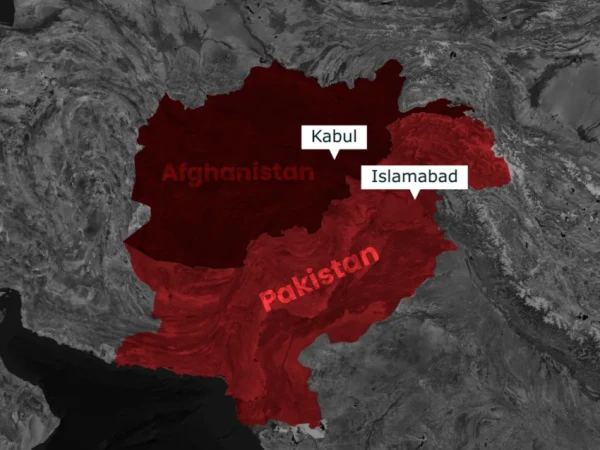
ISLAMABAD: Fresh claims regarding alleged Indian support for anti-Pakistan militant groups have resurfaced after former Afghan intelligence chief Masood Andarabi made remarks linking New Delhi to militant activities operating from Afghan territory.

According to media reports, Andarabi, while speaking during a program hosted by The Diplomat, claimed that India has sought to expand its influence in Afghanistan following recent regional developments. He alleged that New Delhi’s objective is to cultivate influence over the militant group referred to by Pakistan as Fitna al-Khawarij and use it to advance activities against Pakistan.

His comments have reignited discussions over Pakistan’s longstanding position that militant groups allegedly backed by India have exploited Afghan soil to target Pakistan’s security and stability.

The developments come amid heightened regional tensions following Pakistan’s reported strikes on suspected militant hideouts inside Afghanistan. Analysts say the operation was intended to signal Islamabad’s resolve against cross-border terrorism while underscoring its concerns over the presence of armed groups operating from Afghan territory.

Security experts believe Andarabi’s remarks lend support to Pakistan’s repeated assertions that hostile elements have used Afghanistan as a base for launching attacks against Pakistan with alleged external backing. However, India has consistently rejected such accusations and denies supporting militant activities against Pakistan.

Similar Posts

  • | |

    Javed Sheikh says he refused fee for Om Shanti Om

    Veteran Pakistani actor Javed Sheikh has revealed that he initially refused to take any remuneration for his role in the hit 2007 Bollywood film Om Shanti Om, stating that sharing the screen with Indian megastar Shah Rukh Khan was an honor in itself. ​Speaking in an interview with Vasay Chaudhry, the veteran actor reminisced about playing the role of Rajesh Kapoor—Shah Rukh Khan’s on-screen father in the Farah Khan directorial—and reflected on the immense warmth and respect he experienced during the film’s production. ​Recalling the financial negotiations prior to filming, Sheikh shared that when the production manager approached him to finalize his contract and discuss his fee, he immediately declined monetary compensation. He emphasized that being chosen out of countless actors across India to portray Shah Rukh Khan’s father felt like a massive privilege that transcended money: ​”Farah Khan wanted me to play Shah Rukh’s father and they started discussing my fee. I said, ‘Money? I won’t take it.’ They said that was impossible. I told them it was such a big honour that, out of everyone in India, they had chosen a Pakistani actor to play Shah Rukh Khan’s father. Money wasn’t important.” ​When the production team insisted that working without pay violated contract guidelines, Sheikh jokingly proposed accepting a symbolic fee of just one rupee. However, both director Farah Khan and Shah Rukh Khan rejected the gesture, insisting on compensating him generously to honor his professional standing. Sheikh praised Shah Rukh Khan for his exceptional hospitality and care on set, describing their working relationship during the shoot as superb. ​Reflecting on his journey in the entertainment industry, Sheikh spoke candidly about his early career struggles. He disclosed that despite his deep passion for acting—which often involved running from school to Radio Pakistan—his father remained strict and skeptical. After his debut film Dhamaka (1974) failed at the box office, his career faced significant setbacks, leaving him devastated when industry insiders initially labeled him a “flop actor.” ​Five years later, his fortunes took a dramatic turn with the hit television drama Ankahi, which earned immense popularity across both Pakistan and India, effectively cementing his star status. Sheikh concluded by highlighting the mindset that guided his decade-long career: focusing entirely on self-improvement rather than competition, envy, or status. ​With a career spanning over four decades, Javed Sheikh continues to remain a vital force across Pakistani media, recently appearing in prominent projects including Delhi Gate, Aag Lagey Basti Mein, and the drama series Kabhi Main Kabhi Tum.

  • | | |

    Sister reveals shocking details of Imran’s check…

    Uzma Khan, sister of incarcerated former prime minister Imran Khan, said Friday that the PTI founder had complained of health problems that he believed were connected to his prolonged solitary confinement. She made the remarks during a press conference in Islamabad alongside Imran’s personal physician, Dr Faisal Sultan, following his transfer to hospital for a medical examination. Uzma said she and Dr Sultan were asked to reach Adiala Jail on Friday evening after receiving a phone call. According to her, they arrived at the prison at around 8pm to 8:30pm. She said they were taken to a room belonging to a deputy superintendent of police. After some time, she alleged, Dr Sultan was asked to leave the room with a police official while she was taken separately by a female police officer. Uzma said police officers did not explain where she was being taken or provide clear information about Dr Sultan. She was eventually taken to the Pakistan Institute of Medical Sciences (Pims), despite the Supreme Court directing that Imran be shifted to Shifa International Hospital for a medical checkup. According to Uzma, officials told her the visit to Pims was related to a follow-up examination of Imran’s eye condition. She described the hospital environment as unusually dark and said she was taken through the building with the help of a mobile phone flashlight before being brought to an office. Uzma said she was later taken upstairs, where she unexpectedly saw her brother. She recalled that Imran appeared surprised and shocked to see her after a long period apart. He reportedly introduced her to the doctors as his sister, saying they were meeting after about 10 months. Uzma said she informed Imran that he had been brought for a medical examination and was expected to be taken to Shifa International Hospital afterward. She also asked about Dr Sultan but said she was not given a clear answer. The examination eventually focused on Imran’s eye. Uzma said several doctors were present, although she was familiar with only one of them, whom she identified as Dr Arif. Imran has previously received treatment at Pims following the diagnosis of right central retinal vein occlusion, an eye condition identified earlier this year. The Supreme Court had directed authorities to arrange Imran’s medical examination while also instructing that information about his health should not be used for political purposes.

  • | | | |

    Maryam hails Katcha’s historic security turnarou…

    Punjab Chief Minister Maryam Nawaz has said that the Katcha region has become a safer area after decades of insecurity. She made the remarks while addressing an Independence Day ceremony at the Safe City Authority. She said the government was taking steps to improve security and protect citizens across the province. Maryam said Safe City cameras have now been installed in 43 cities of Punjab. She said the expanded surveillance system would help improve monitoring and strengthen the security network. The chief minister said the government wants to provide a safer and better Pakistan to future generations. She stressed that public safety remains an important part of the government’s development agenda. Maryam rejected the impression that government attention was limited to Lahore. She said development cannot be considered meaningful if people living in other cities and regions are ignored. She said every citizen has the right to benefit from better public services and improved security. The government, she added, is working to ensure that development reaches different parts of the province. Referring specifically to the Katcha region, Maryam said the area had witnessed insecurity for decades. She claimed that the situation had now changed and the region had become a safer place for the people. She said modern security technology was playing an important role in improving law and order. The expansion of Safe City surveillance, she added, would help authorities monitor sensitive areas and respond more effectively to security concerns. The chief minister said the government would continue strengthening security infrastructure across Punjab. She also reiterated her commitment to creating safer cities and improving the quality of life for citizens.

  • Three women killed in Faisalabad firing, IG Punjab orders arrests

    Lahore – Inspector General of Police Punjab Abdul Kareem has taken notice of the incident in which three women were killed and one was injured in firing over an old enmity at the makeshift tents of nomads in Samanabad, within the jurisdiction of Airport Police Station, Faisalabad. He has sought a report from RPO Faisalabad. IG Punjab has directed CPO Faisalabad to ensure the immediate arrest of the suspects involved in the firing, stating that all available resources should be utilized to apprehend the accused. Punjab Police spokesperson said that senior police officers and forensic teams reached the crime scene and collected evidence. CPO Faisalabad said that special teams have been constituted to arrest the suspects and they will be apprehended soon.

  • | |

    Gold prices fall in global and Pakistan markets as…

    In the international bullion market, the price of gold fell by $10 per ounce, bringing it down to $4,040 per ounce. The decline in global prices was mirrored in Pakistan’s local bullion market, where the price of 24-karat gold dropped by Rs. 1,000 per tola, settling at Rs. 426,436. Similarly, the price of 10 grams of 24-karat gold in the domestic market decreased by Rs. 857, reaching Rs. 365,600. The latest adjustment follows fluctuations in global bullion markets, where investor sentiment and international economic developments continue to influence precious metal prices. While gold registered a decline, silver prices moved in the opposite direction. In the international market, silver gained 68 cents per ounce, pushing its price to $58.12 per ounce. The increase in global silver prices was also reflected in Pakistan’s local market. The price of silver per tola rose by Rs. 68, reaching Rs. 6,291, while the price of 10 grams of silver increased by Rs. 58 to Rs. 5,393. Market analysts say fluctuations in precious metal prices are primarily driven by movements in international bullion markets, changes in investor demand, currency trends, and expectations regarding global economic conditions. Gold often experiences price volatility as investors respond to inflation data, interest rate expectations, and geopolitical developments, while silver prices are influenced by both investment demand and industrial consumption. Jewellers and bullion traders in Pakistan closely monitor international price movements, as domestic gold and silver rates are largely determined by global market trends along with the exchange rate of the Pakistani rupee against the US dollar. The latest decline in gold prices may provide some relief for buyers planning jewellery purchases or investment in physical gold. However, traders caution that bullion prices remain highly volatile, and future movements will depend on developments in the global economy and financial markets. With gold easing and silver continuing to strengthen, investors are expected to keep a close watch on international market trends before making further investment decisions in precious metals.

  • |

    Russian missile strike kills 9 in Kyiv

    At least nine people were killed and 23 others injured after Russia launched a missile attack on Ukraine’s capital, Kyiv, on Saturday morning, according to Ukrainian emergency authorities. The Ukrainian Emergency Service said the casualties included two young boys. Officials also reported that one of the injured victims remained in critical condition as rescue and emergency teams continued their operations across the affected areas. The missile strike caused extensive damage to several buildings and triggered fires at multiple locations in the capital. Emergency workers rushed to the scene to extinguish the fires, secure damaged structures and search through piles of debris for survivors. Rescue teams continued clearing the rubble in an effort to locate anyone who might still be trapped beneath collapsed sections of buildings. The attack added to growing concerns over the security situation in Kyiv, which has faced an increase in Russian missile and drone strikes in recent months. Ukrainian authorities have repeatedly warned that Russian attacks continue to pose a serious threat to civilians as well as critical infrastructure. The latest assault also renewed Ukraine’s calls for stronger air defence capabilities. Kyiv has been pressing its Western allies to provide additional advanced defence systems and ammunition, arguing that stronger air protection remains essential to defending major cities and strategic facilities from Russian missile and drone attacks. Ukraine has particularly sought additional Patriot air defence systems, which can intercept certain types of high-speed missiles and provide protection against aerial threats. Ukrainian officials have consistently described air defence as one of their most urgent military requirements as the conflict continues. Meanwhile, US President Donald Trump said discussions are continuing over the possibility of providing Ukraine with technology linked to the production of Patriot missile systems. Trump indicated that talks remain ongoing but made clear that Washington has not yet reached a final decision on the matter. The issue is significant for Ukraine, which has sought to strengthen its ability to defend its territory while reducing its dependence on foreign supplies. Access to advanced air defence technology could potentially help Kyiv expand its defensive capabilities and respond more effectively to repeated missile attacks. The latest strike comes as the war between Russia and Ukraine continues to put civilians and urban centres at risk. Kyiv remains a key target, and Ukrainian officials have repeatedly appealed to international partners for greater military support and stronger air defence measures to protect the capital and other major population centres.

Leave a Reply

Your email address will not be published. Required fields are marked *