hamas accepts breakthrough
|

Hamas accepts breakthrough disarmament framework as US announces Gaza peace deal

US President Donald Trump announced that the international Board of Peace has reached a historic agreement for the complete disarmament of Hamas and all other armed groups in the Gaza Strip.

Under the proposed framework, Hamas has agreed to the phased inventorying, storage, and decommissioning of its heavy and light weaponry under Palestinian supervision, marking the first time in the group’s history that it has accepted a formal plan to disarm completely.

The agreement forms the core of the second phase of the US-brokered 20-point peace plan designed to end the long-running war. According to the terms, Israeli military forces will gradually withdraw from Gaza as disarmament milestones are met, transferring local security to an International Stabilisation Force operating alongside a newly formed Palestinian police force.

Civil administration will simultaneously transition to a technocratic governing body, the National Committee for the Administration of Gaza.

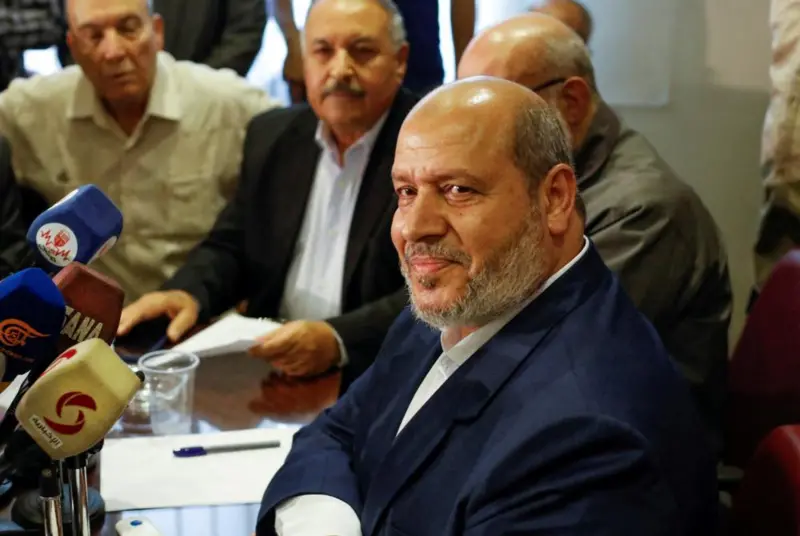
The breakthrough follows months of intensive negotiations in Cairo mediated by Egypt, Qatar, and Turkey. Internal momentum within Hamas shifted following leadership elections that elevated Gaza-based leader Khalil al-Hayya, alongside mounting pressure from the severe humanitarian crisis affecting over two million residents in the enclave.

Senior Hamas officials confirmed their acceptance of the framework and indicated an official statement would be issued shortly, expecting mediators and the Board of Peace to guarantee Israeli compliance with the withdrawal timeline.

Uncertainties remain regarding full implementation, as Israeli officials have expressed skepticism and maintained that complete demilitarisation remains a non-negotiable prerequisite. US officials acknowledged that whilst full disarmament and troop withdrawal could take up to a year, the consensus represents the most viable operational roadmap for ending the conflict to date.
Similar Posts

  • | |

    Kylie Kelce reveals how miscarriage changed her pr…

    Kylie Kelce has opened up about the lasting emotional impact of her first pregnancy loss, revealing that her miscarriage changed the way she experienced every pregnancy that followed. The podcaster and wife of former NFL star Jason Kelce discussed the painful experience during the August 13 episode of her podcast, Not Gonna Lie. Responding to a listener who asked whether she was afraid to become pregnant again after a miscarriage, Kylie gave an honest answer. “Yes, Sarah. I was terrified,” she admitted. (People.com⁠) Kylie experienced a miscarriage before she and Jason welcomed their first daughter, Wyatt. The loss happened in 2018, shortly after the couple married. During a 13-week appointment, doctors could not find the baby’s heartbeat. A follow-up ultrasound confirmed that she had experienced a missed miscarriage. (The Bump⁠) When Kylie became pregnant with Wyatt, the excitement of expecting her first child was accompanied by intense anxiety. Instead of simply enjoying the pregnancy, she found herself constantly thinking about the possibility of another loss. She explained that she would regularly search online for information about the chances of a pregnancy continuing safely. During the early stages, she focused on questions about whether the pregnancy would “stick.” Once she reached the second trimester, her worries changed to whether the baby would survive. (Us Weekly⁠) Although those fears were difficult, Kylie said they helped her cope with the uncertainty at the time. The experience also showed her how deeply pregnancy loss can affect someone, even years later. Kylie has previously spoken about how her miscarriage continues to hurt despite eventually becoming a mother of four. In October 2025, she shared her story publicly during Pregnancy and Infant Loss Awareness Month, explaining that the grief does not simply disappear after having healthy children. (E! Online⁠) Today, Kylie and Jason are parents to four daughters: Wyatt, Elliotte, Bennett and Finnley. Their growing family has brought enormous happiness, but Kylie has made it clear that her earlier loss remains part of her story. (People.com⁠) Her openness also reflects why she has pushed back against casual pregnancy speculation. In 2024, Kylie asked people to allow parents to share pregnancy news when they are ready, explaining that pregnancy and loss are deeply personal subjects. (ABC News⁠) For Kylie, becoming a mother did not erase the pain of losing a pregnancy. Instead, it taught her that grief and happiness can exist together. Her story is a reminder that pregnancy after loss can bring joy, but it can also bring fear and uncertainty. By speaking openly about those emotions, Kylie hopes others experiencing similar feelings will know they are not alone.

  • | |

    New provinces debate gains momentum as coalition p…

    A renewed debate over the creation of new provinces in Pakistan has gathered political momentum after two major coalition partners publicly endorsed Interior Minister Mohsin Naqvi’s proposal to restructure the country’s administrative system. However, the ruling Pakistan Muslim League-Nawaz (PML-N) has yet to officially comment, fueling speculation over its stance on the sensitive issue. The discussion began after Naqvi argued that Pakistan’s existing administrative framework had become ineffective and called for a national consensus on establishing smaller provinces to improve governance and public service delivery. His remarks quickly drew support from coalition allies, including the Muttahida Qaumi Movement-Pakistan (MQM-P) and the Istehkam-e-Pakistan Party (IPP). Federal Health Minister Mustafa Kamal described the proposal as an urgent national necessity rather than a political choice, stressing that decentralizing administrative powers was essential for effective governance. The MQM-P has long advocated the creation of an additional province in Sindh, making the party one of the strongest supporters of the initiative. Privatization Minister Abdul Aleem Khan of the IPP also endorsed the proposal, suggesting that each of Pakistan’s four existing provinces could eventually be divided into three administrative regions. He argued that smaller provinces would bring government closer to the people and reduce the hardships faced by citizens traveling long distances to provincial capitals. Despite growing support from coalition partners, the proposal faces significant constitutional and political challenges. Any change to provincial boundaries requires a two-thirds majority in the affected provincial assembly, making consensus difficult to achieve. The Pakistan Peoples Party (PPP), which governs Sindh and is also part of the federal coalition, has expressed strong reservations, warning that such a move could create more problems than solutions. Opposition leaders have also criticized the proposal, arguing that the government lacks the political mandate for such a major constitutional change. They insist that strengthening democratic institutions and improving governance should take priority over redrawing provincial boundaries. Political analysts have offered differing views on the initiative. Some believe creating new provinces could deepen ethnic and regional divisions, while others see the debate as an attempt to shift public attention away from pressing national issues, including recent unrest in Azad Jammu and Kashmir and ongoing security challenges in Balochistan. Many experts argue that empowering local governments under the 18th Constitutional Amendment would be a more practical and effective way to improve governance without altering provincial boundaries. Mustafa Kamal also acknowledged that stronger local governments are essential regardless of whether new provinces are eventually created. With the PML-N maintaining silence and key coalition partners taking opposing positions, the proposal has opened a fresh political debate that is likely to remain at the center of Pakistan’s national discourse in the coming months.

  • |

    Govinda recalls how he inspired Salman Khan before Partner

    Indian actor Govinda once opened up about a difficult phase in Salman Khan’s life before the two actors came together for their successful comedy film Partner. According to Govinda, Salman was going through a period of personal pain and emotional distress at the time, which had made him unusually quiet and withdrawn. Recalling their interaction before the shooting of the 2007 film, Govinda said he felt the need to speak to Salman and encourage him. He believed that when a person is struggling with personal issues, whether related to love, expectations or disappointment, it can become difficult for anyone else to help them overcome their emotions. Govinda remembered telling Salman that he had spent enough time focusing on things outside himself and now needed to look inward. He encouraged the actor to concentrate on his own well-being and work on rebuilding his confidence. The veteran actor also spoke to Salman about his physical fitness. Govinda recalled that he himself was going through a challenging period and weighed around 114 kilograms after stepping away from politics. Despite his own struggles, he tried to motivate Salman and remind him of his potential. Govinda reportedly told Salman that he did not look like a typical hero at that point because he appeared unhappy and sad. Rather than allowing himself to remain trapped in that difficult phase, Salman was encouraged to move forward and regain his confidence. According to Govinda, Salman asked him what he should do next. In response, Govinda advised him to exercise regularly for several hours each day. He also reminded Salman of the qualities that made him special as an actor and a leading man. Govinda compared Salman’s potential with that of legendary actor Dharmendra. He believed Salman had been blessed with a supportive family, a good appearance, personality and the qualities needed to become a major star. His advice was not simply about improving Salman’s physical appearance but also about helping him rediscover his confidence and strength. Govinda further recalled making a prediction about Salman’s career at the time. He told him that he believed he would continue to rule the film industry for the next 10 years. Looking back, Govinda said Salman ultimately proved that prediction right through his continued success and popularity. Their professional association later became particularly memorable through Partner, directed by David Dhawan. Released on July 20, 2007, the romantic comedy starred Salman Khan and Govinda in the lead roles, with the two actors developing a popular on-screen partnership. The film went on to become a notable commercial success and remains remembered for the chemistry and comic timing between its two leading stars. Govinda’s recollection of his conversations with Salman offers another glimpse into the relationship between the actors before they appeared together on screen. His advice also reflected the importance of self-confidence, discipline and perseverance during difficult periods. For Salman, that phase eventually became part of a larger journey that saw him strengthen his image as one of Bollywood’s most prominent stars.

  • | | |

    Gulf conflict pushes oil above $100

    Global oil prices continued their sharp upward trend on Friday as escalating conflict in the Gulf region raised fresh concerns about energy supplies and the outlook for the world economy. The sustained rise in crude prices has increased fears of renewed inflation, unsettled financial markets and strengthened expectations that central banks may keep interest rates higher for a longer period. Brent crude was trading at around $100 per barrel after briefly crossing $102, its highest level in nearly two months. Oil prices have climbed by almost 40% during the month, driven by growing concerns that the conflict could disrupt major shipping routes used for transporting crude oil. The latest increase comes as military tensions involving the United States, Iran and the Iran-backed Houthi movement continue to intensify. Attacks on commercial vessels in the Red Sea have heightened concerns about the safety of one of the world’s busiest maritime trade routes. At the same time, uncertainty surrounding shipping through the Strait of Hormuz has added to worries over global oil supplies. Analysts say the combination of risks to both the Red Sea and the Strait of Hormuz has significantly increased market uncertainty. Any prolonged disruption in these waterways could reduce oil exports from the Middle East and place additional pressure on global energy markets. The rise in crude prices has also revived concerns about inflation. Higher oil prices generally increase transportation, manufacturing and production costs, which can eventually lead to higher prices for goods and services. Economists warn that this could slow progress in reducing inflation across many countries. Global financial markets reacted cautiously to the latest developments. Major Asian stock markets recorded notable losses as investors worried about the combined impact of geopolitical tensions, rising energy costs and uncertainty over future economic growth. Investors increasingly shifted towards safer assets amid concerns that market volatility could continue. The outlook for monetary policy has also changed. Financial markets now expect that major central banks, including the US Federal Reserve, could delay planned interest rate cuts or even consider further rate increases if higher energy prices continue to fuel inflation.

  • |

    Fauzia Haimani finishes fourth Ironman challenge

    Fauzia Haimani has done it again. The Pakistani athlete, who is based in Canada, has completed her fourth full Ironman triathlon. This latest finish came at the Ironman event held in Ottawa, where she once again showed off her fitness and endurance. The Ironman is widely considered one of the toughest challenges in endurance sports. It is not a single race. It is three gruelling events combined into one long day. Athletes start with a 3.8-kilometre swim. From there, they move straight into a 180-kilometre cycling stretch. The event then wraps up with a full 42.2-kilometre marathon. All three legs happen back to back, with no rest days in between. Completing all three takes serious physical and mental preparation. Fauzia finished the entire course in 15 hours, 22 minutes, and 35 seconds. Her swim alone took 1 hour and 45 minutes. She then moved on to cycling, completing that portion in 7 hours and 7 minutes. The final stretch, the marathon, took her 6 hours and 11 minutes to finish. This is not new territory for her. Fauzia has completed the full Ironman challenge three times before this latest finish. She first did it in 2021. She returned to complete it again in 2024, and once more in 2025. That makes this her fourth full Ironman overall. Her endurance résumé does not stop there. Alongside the full Ironman races, Fauzia has also completed the half Ironman challenge five separate times. Together, these accomplishments paint the picture of an athlete who has built real consistency in one of the most demanding sports out there. Events like these require months of training. Long swims, long rides, and long runs all need to be built up gradually. Athletes also have to manage nutrition, pacing, and recovery carefully to make it through such a demanding single-day event. Fauzia’s latest finish adds another achievement to her growing list. It also reflects the kind of discipline and determination it takes to keep coming back to one of the hardest physical challenges an athlete can attempt. Her continued participation in international endurance events also highlights the presence of Pakistani athletes on demanding global sporting stages, even outside more commonly covered sports.

  • |

    US and Asian chip stocks fall after report of Chinese semiconductor breakthrough

    Shares of major semiconductor companies dropped sharply on Monday after a report suggested that a Chinese firm has made significant progress in developing advanced chipmaking equipment. The news raised concerns among investors that China could reduce its reliance on foreign technology and strengthen its position in the global semiconductor industry. The market reaction followed a report by The Information, which said Shanghai Yuliangsheng is producing immersion deep ultraviolet lithography machines. These machines use ultraviolet light to carve extremely small circuits onto silicon wafers, a key step in manufacturing modern computer chips. Neither Shanghai Yuliangsheng nor related companies SiCarrier and Huawei responded immediately to requests for comment. However, the report was enough to unsettle investors, who fear that China’s progress in chip manufacturing could reshape competition in the technology sector. If the reported breakthrough proves successful, China could reduce its dependence on Dutch company ASML, the world’s leading supplier of advanced lithography equipment. ASML’s exports are subject to strict restrictions, limiting China’s access to some of the most advanced chipmaking technology. Developing its own DUV lithography machines would allow China to expand domestic chip production and accelerate the development of more powerful processors. Industry analysts believe this could help Chinese technology companies narrow the gap with leading American semiconductor manufacturers. The development is also seen as important for China’s artificial intelligence industry. Improved access to advanced chips would strengthen the country’s AI capabilities and help Chinese companies compete more closely with leading US firms developing cutting edge AI models. The report triggered heavy selling across the US technology sector. Shares of AMD fell by as much as eight percent during trading, while Nvidia dropped nearly five percent. Micron Technology also lost around five percent, and Intel declined about 3.7 percent as investors reassessed the competitive outlook for the semiconductor industry. The decline spread quickly to Asian markets on Tuesday. South Korea’s stock market suffered steep losses as concerns over the future of the AI industry combined with the reported Chinese breakthrough. The Kospi index plunged more than 10 percent to its lowest level since April. Major South Korean chipmakers were among the hardest hit. Shares of SK hynix and Samsung Electronics each fell by around 12 percent as investors worried that stronger competition from China could affect future earnings and market share. Japan’s technology sector also came under pressure. The Nikkei 225 index dropped more than four percent, while leading technology companies including Advantest, Kioxia and Tokyo Electron each lost more than 10 percent during trading. The sharp decline across global markets highlights how closely investors are watching developments in the semiconductor industry. As countries compete to secure leadership in chip production and artificial intelligence, even reports of technological advances can have an immediate impact on stock markets and reshape expectations for the future of the global technology sector.

Leave a Reply

Your email address will not be published. Required fields are marked *