|

PSX extends rally as KSE-100 jumps nearly 1,500 points

The Pakistan Stock Exchange (PSX) maintained its strong upward momentum on Thursday, with investors continuing aggressive buying across major sectors, pushing the benchmark KSE-100 Index higher by nearly 1,500 points during intraday trading.

By 2:40pm, the KSE-100 Index was trading at 181,488.61 points, reflecting an increase of 1,473.68 points, or 0.82%, compared with the previous session’s close. The latest gain extended the market’s recovery after Wednesday’s sharp rally, indicating renewed investor confidence amid improving domestic and international market conditions.

Market participants said buying activity remained broad-based, with investors accumulating shares in several heavyweight sectors. Strong demand was witnessed in automobile assemblers, cement manufacturers, chemical companies, commercial banks, fertiliser producers, oil and gas exploration firms, oil marketing companies (OMCs), and power generation stocks.

Among the index-heavy companies contributing to the rally were Attock Refinery Limited (ARL), Hub Power Company (HUBCO), Mari Energies (MARI), Oil and Gas Development Company (OGDC), Pakistan Petroleum Limited (PPL), Pakistan Oilfields Limited (POL), MCB Bank, Meezan Bank (MEBL), and National Bank of Pakistan (NBP), all of which traded in positive territory during the session.

The bullish sentiment follows Wednesday’s impressive recovery, when the benchmark KSE-100 Index climbed 2,931.71 points, or 1.66%, to settle at 180,014.93 points. The surge enabled the index to reclaim the important 180,000-point milestone for the first time in 16 trading sessions, signaling renewed optimism among investors.

Analysts attributed the recent gains to easing geopolitical concerns in the Middle East, which have reduced fears of supply disruptions in global energy markets. The decline in international crude oil prices has also helped improve investor sentiment by easing inflationary concerns and strengthening expectations for economic stability.

The recovery has encouraged investors to return to the equity market, particularly in sectors expected to benefit from lower energy costs and improving macroeconomic indicators. Banking and energy stocks remained among the biggest contributors to the benchmark index’s advance.

Meanwhile, global financial markets presented a mixed picture on Thursday. Asian stock markets paused after a technology-led rally in the previous session, while crude oil prices traded within a narrow range as investors monitored developments surrounding potential diplomatic progress between Iran and the United States.

MSCI’s broad index of Asia-Pacific shares excluding Japan declined by 0.69%, weighed down primarily by losses in technology stocks. South Korea’s benchmark index fell 3.64%, while Japan’s Nikkei 225 dropped 1.57%.

Major technology companies also came under pressure. In South Korea, Samsung Electronics slipped 2.44%, while semiconductor manufacturer SK Hynix fell 6.95%. In Japan, memory chip producer Kioxia plunged 9.61%, and Tokyo Electron declined 4.61%.

The cautious mood in Asia followed a weaker overnight performance on Wall Street, where the Nasdaq Composite ended its recent winning streak. Investors reacted to quarterly earnings from major technology companies, including SpaceX and Advanced Micro Devices (AMD).

Although companies continued to highlight strong demand for artificial intelligence-related investments, market participants remained cautious about the sustainability of heavy spending on AI infrastructure. Investors also questioned whether profitable businesses such as satellite internet services could continue financing expensive data centre expansion over the long term.

Similar Posts

  • |

    Turkish parliament passes landmark law to advance PKK peace process

    Turkey’s parliament passed a law on Monday establishing a legal framework for the disbandment of the outlawed Kurdistan Workers’ Party (PKK), marking a major step toward ending a decades-old conflict that has killed tens of thousands. The legislation provides legal protections for many former militants who have not committed specific crimes and facilitates the suspension of prison sentences for some people convicted of PKK membership, paving the way for their reintegration into society. The law was approved by a 468-vote majority in the 600-seat parliament after securing support from President Tayyip Erdogan’s ruling AK Party, its nationalist MHP allies, and the pro-Kurdish DEM Party. This measure represents the most concrete step taken by Ankara in the peace process since jailed PKK leader Abdullah Ocalan called on the group in February 2025 to disarm and disband. Following Ocalan’s call, the PKK announced in May 2025 that it would end its armed struggle, leading to a symbolic ceremony in northern Iraq two months later where a group of militants burned their weapons. The PKK launched its insurgency in 1984, leading to a conflict that has killed over 40,000 people, placed a heavy economic burden on southeast Turkey, and fuelled decades of political and social division. This new legislation specifically addresses the long-standing question of how to manage thousands of PKK members as the organisation dismantles its military and organizational structures. The current public peace initiative began in October 2024 when MHP leader Devlet Bahceli unexpectedly suggested that Ocalan could address parliament to announce the PKK’s dissolution. A parliamentary commission established in August 2025 subsequently heard testimony from politicians, officials, and civil society groups before recommending legislation to oversee disarmament and reintegration. While the law addresses reintegration, it does not by itself resolve broader Kurdish demands regarding expanded political and cultural rights, anti-terrorism amendments, or the detention status of Ocalan. The Turkish government frames the initiative as a pathway toward creating a “terror-free Turkey,” whereas Kurdish politicians emphasize that achieving lasting peace requires broader democratic and legal reforms.

  • | | |

    CDF Asim Munir lauds veterans’ vital national ro…

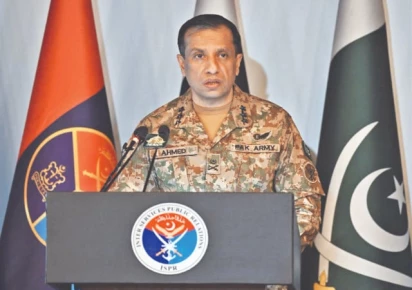
    Field Marshal Syed Asim Munir has praised the services of Pakistan’s former military personnel. He said their experience and guidance remain a valuable institutional asset for the country. The army chief made the remarks while hosting a reception in honour of ex-servicemen on Pakistan’s Independence Day. A large number of retired officers and personnel attended the event. According to the Inter-Services Public Relations (ISPR), Field Marshal Asim Munir paid tribute to the former servicemen for their contributions to Pakistan’s defence. He also recognised their role in strengthening national resilience. He said the services of retired military personnel continued to hold importance even after their formal retirement from the armed forces. Field Marshal Asim Munir said Pakistan was facing a complex and changing security environment. He noted that the experience of former servicemen could help the country better understand and respond to emerging security challenges. He described their knowledge, experience and guidance as an important institutional resource. He said the contribution of veterans could support efforts to strengthen national security and resilience. The army chief also acknowledged the sacrifices and services rendered by former members of the armed forces during their years of service. The ex-servicemen, in turn, expressed confidence in the leadership of the Pakistan Army. They reaffirmed their support for the armed forces in dealing with emerging security challenges. The retired personnel also pledged to continue playing their role in strengthening national unity. They expressed their commitment to supporting peace and prosperity in the country. The gathering provided an opportunity to recognise the continued connection between serving and retired military personnel. It also highlighted the importance of preserving institutional experience and benefiting from the knowledge of veterans.

  • | |

    199 polling stations set for LA-17 election

    BAGH: A total of 199 polling stations have been established for the election in LA-17 Bagh-4 Haveli, with 10 security personnel to be deployed at each polling station. According to a notification issued by the Returning Officer’s office, 117,514 registered voters will be eligible to cast their ballots in the constituency. Polling will take place across 12 union councils and a town committee. Election officials have also completed arrangements for transporting election materials to remote areas, including Bheedi, Halla and Kairni. Haveli has been divided into 16 sectors to facilitate the distribution of election materials and manage polling arrangements. Of the 199 polling stations, 50 have been classified as sensitive and 25 as highly sensitive. Ten security personnel will be deployed at every polling station to maintain security during polling. Preparations have also been completed for the third phase of the Azad Jammu and Kashmir Legislative Assembly elections, with polling scheduled in four constituencies across Bagh and Haveli districts of the Poonch Division. The transportation of election materials to polling stations is currently underway. Elections in five constituencies of Poonch and two constituencies of Sudhanoti have been postponed. The upcoming electoral contest also features three former prime ministers among the candidates. Former AJK prime ministers Sardar Attique Khan and Sardar Tanveer Ilyas, who lead the Muslim Conference and Istehkam-e-Pakistan Party respectively, are contesting the elections. AJK Prime Minister Faisal Rathore is also taking part in the electoral contest. Authorities have stepped up security and logistical preparations ahead of polling to ensure a peaceful voting process across the constituency.

  • | | |

    ISPR calls India’s ‘Operation Sindoor&…

    Pakistan has strongly rejected what it described as India’s attempt to reshape the history of the 2025 military confrontation through a recently produced documentary on “Operation Sindoor,” calling the production a highly dramatized and factually distorted portrayal of events. In a statement, Pakistan said the documentary relied on selectively edited interviews, emotional narration and cinematic reconstructions to present a version of the conflict designed primarily for domestic political consumption. It argued that the production failed to provide an objective account of the military engagements and instead sought to portray a disputed outcome as an unequivocal Indian victory. Pakistan also questioned the documentary’s chronology surrounding the Pahalgam incident of April 22, 2025. It said India had subsequently claimed that the alleged perpetrators of the incident were identified and eliminated on July 28, nearly three months after Operation Sindoor. Islamabad argued that this timeline raised questions about India’s assertion that the May 7 operation was specifically intended to punish those responsible for the Pahalgam attack. The statement further rejected India’s claim of “100 percent mission success,” maintaining that Pakistani forces had effectively responded to the Indian offensive during what Pakistan refers to as Marka-e-Haq. Islamabad claimed that eight Indian military aircraft were shot down during the confrontation and said Pakistan later launched Operation Bunyanum Marsoos, targeting military installations with precision-guided rockets and missiles, precision air-launched munitions, loitering munitions and artillery. Pakistan said the documentary itself contained admissions that undermined its portrayal of decisive Indian dominance. According to Islamabad, references by Indian military officials to Pakistani missile and drone activity, prolonged engagements along the Line of Control and the activation of Indian air-defence systems demonstrated that the confrontation involved significant military exchanges on both sides. The Pakistani statement also challenged New Delhi’s account of how hostilities ended. It noted that the documentary acknowledged communication between the two countries’ Directors General of Military Operations and an agreed cessation of military activity. Islamabad said this account was inconsistent with portraying the conclusion of the conflict as an unconditional Indian military victory, particularly given the role of international diplomatic engagement in facilitating the ceasefire. Pakistan further accused the documentary of presenting contradictory explanations for India’s approach to escalation. While the production reportedly emphasised surprise attacks, precision strikes and escalation dominance, it simultaneously portrayed India as deliberately restricting the scope of the conflict and offering Pakistan an opportunity to withdraw. Islamabad described the documentary as an attempt to create a politically convenient narrative rather than an impartial military assessment. It maintained that cinematic reconstructions and official claims could not alter the chronology of events, the military engagements or the losses suffered during the confrontation. Pakistan said it had no need to construct an alternative narrative around Marka-e-Haq, arguing that battlefield developments, diplomatic interactions and subsequent statements by Indian officials provided sufficient material for assessing the conflict. Reaffirming its stated commitment to regional peace and stability, Pakistan said its armed forces remained prepared to protect the country’s sovereignty and territorial integrity. It warned that any future military escalation would receive a strong response, while asserting that no subsequent narrative or media production could change the actual course of events on the battlefield.

  • | | |

    Suicide blast outside Swat police station injures …

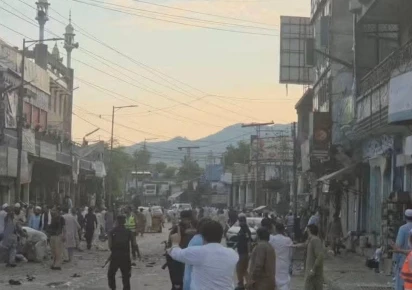
    A suspected suicide bomber detonated explosives outside the Kabal Police Station in Swat district on Sunday after reportedly failing to enter the premises, leaving several police personnel and civilians injured. According to senior police officials, the attacker tried to force his way into the police station but was intercepted by an alert police officer at the main entrance. Unable to gain access, the suspect blew himself up near the station’s gate, triggering a powerful explosion. Authorities said the police station is located close to the police lines and several other sensitive government installations, raising concerns that the attacker may have intended to target security facilities. Officials credited the swift response of police personnel with preventing the bomber from reaching the compound, which likely averted greater casualties and damage. Initial reports indicated that at least four police officers sustained serious injuries in the blast, while two civilians were also hurt. However, rescue officials later confirmed that more than 15 injured people had been transported to different hospitals for medical treatment, suggesting the number of casualties could rise as rescue efforts continued. Emergency response teams rushed to the scene immediately after the explosion, providing first aid to the injured and shifting them to nearby healthcare facilities. Security forces cordoned off the area, launched a search operation, and began collecting evidence to determine the nature of the attack and identify those behind it. Police officials also clarified that a protest by local youths was taking place in the wider area at the time of the incident, but the demonstration was located some distance from the blast site and was not directly affected.

  • | | | | |

    Protest erupts in Washington over Netanyahu visit

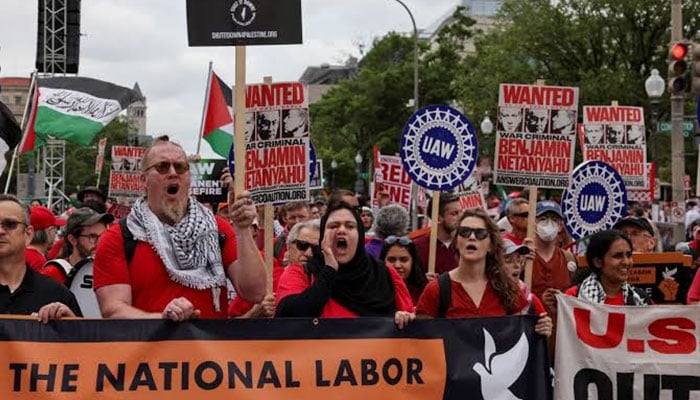
    WASHINGTON: Israeli Prime Minister Benjamin Netanyahu’s visit to Washington has sparked a fresh wave of protests, with demonstrators taking to the streets to oppose U.S. support for Israel and demand that the Israeli leader be arrested. Pro-Palestinian protesters gathered in the U.S. capital carrying Palestinian flags and banners criticising Washington’s backing of Israel. The demonstrations came as Netanyahu arrived in the United States for a scheduled meeting with President Donald Trump. At the heart of the protest was a demand that U.S. authorities enforce the International Criminal Court’s arrest warrant against Netanyahu. Demonstrators argued that the United States should not provide protection to an Israeli leader facing allegations before the international court. The protest reflects the wider political and public debate in the United States over Washington’s relationship with Israel and its approach to the conflict in Gaza. Trump rules out Netanyahu arrest The demonstrations gained additional attention because Trump has already made his position clear. The U.S. president has said Netanyahu will not be arrested while he is in the United States, directly rejecting calls for his detention. Trump has also strongly defended Israel and Netanyahu in connection with the ongoing regional conflict. Netanyahu’s visit comes at a particularly sensitive moment. His meeting with Trump on Tuesday is the first between the two leaders since their joint war against Iran, with tensions reportedly emerging over how the conflict should be handled. Protest adds pressure ahead of Trump meeting The Washington demonstration adds another layer of political pressure surrounding Netanyahu’s visit. Protesters say U.S. support for Israel should be reconsidered and that international legal proceedings should not be ignored. The issue of Netanyahu’s potential arrest has also become prominent in U.S. politics. New York Mayor Zohran Mamdani has said his administration is examining whether the city could enforce the ICC warrant if Netanyahu visits New York for the United Nations General Assembly in September. For now, however, Trump’s administration has made clear that Netanyahu will not face arrest during his stay in the United States. With protests continuing and the Trump-Netanyahu meeting attracting international attention, the visit is likely to keep the debate over Gaza, U.S.-Israel relations and international accountability firmly in the spotlight.

Leave a Reply

Your email address will not be published. Required fields are marked *