women allege rape
|

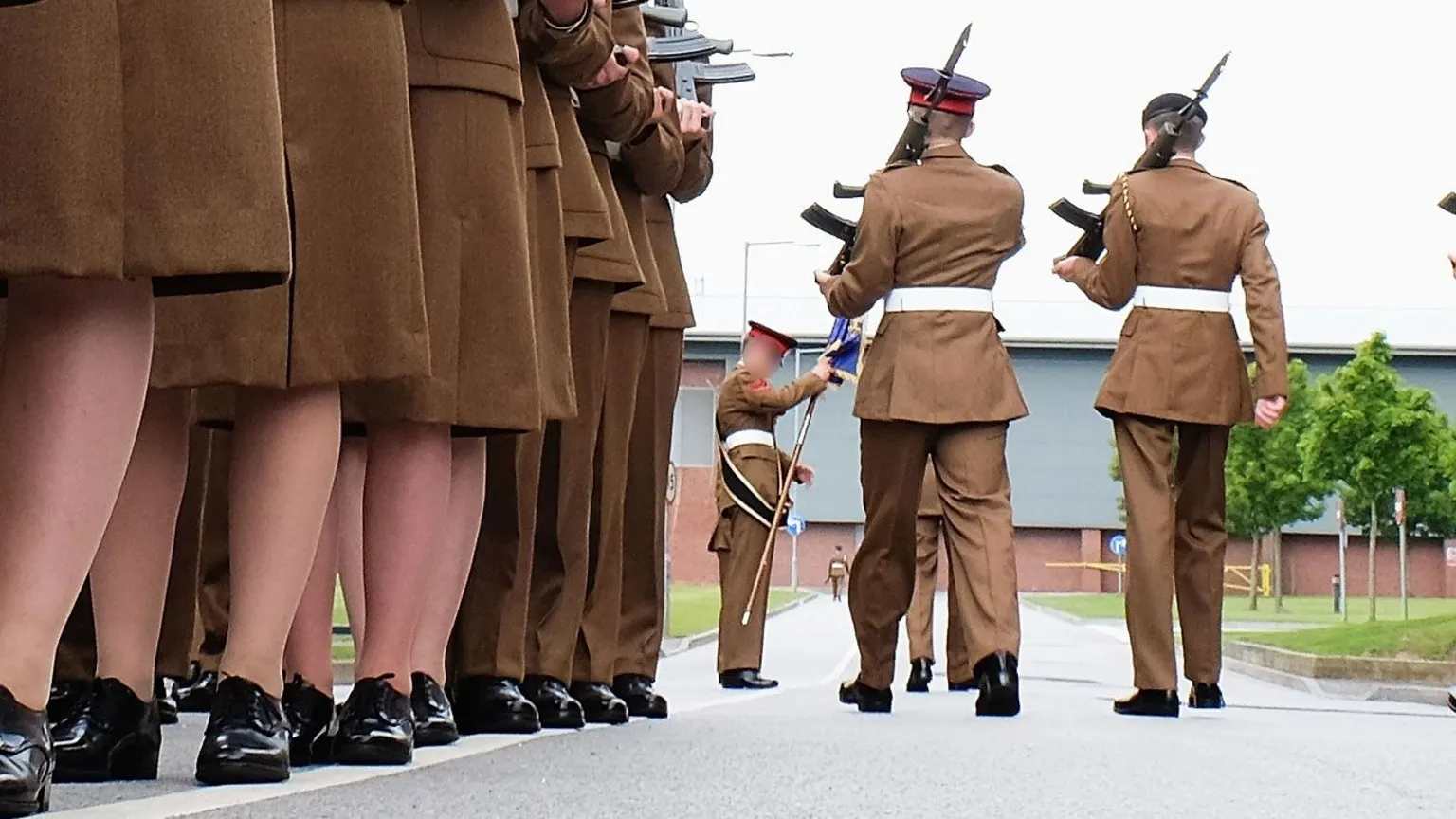
Women allege rape, abuse at UK Army teen college

Four former female recruits have accused the UK’s Army Foundation College (AFC) in Harrogate of fostering a culture of sexual abuse, harassment and misogyny, with one woman alleging she was raped by several fellow recruits when she was 17 years old.

The women, who attended the military training college over the past five years, shared their experiences publicly for the first time. They said they faced sexual violence, harassment and degrading treatment while undergoing training at the college, which prepares teenagers for military service.

One former recruit said she accepted an invitation to another recruit’s room, believing it was harmless. She alleged that several male recruits sexually assaulted and raped her over the course of several hours. The traumatic incident forced her to leave the Army within weeks, saying she could no longer continue her training after the attack.

Another former recruit alleged that a fellow trainee trapped her inside a room before sexually assaulting her. She said she managed to escape after struggling with the attacker. A third former recruit’s mother said her daughter endured repeated sexual harassment throughout her training and even blocked her dormitory door at night because the room’s lock was broken and she feared male recruits entering.

A fourth woman claimed some instructors openly made sexist remarks, rated female recruits based on their appearance and entered female dormitories without warning. She alleged that such behaviour encouraged disrespectful attitudes toward women among male trainees.

Official data obtained through freedom of information requests revealed that police received 16 reports of sexual offences linked to the college during the year ending in June. The reported incidents included allegations of sexual assault, exposure and voyeurism. Separate Ministry of Defence figures showed that 176 complaints involving inappropriate sexual behaviour were recorded at the college between January 2018 and June 2025. Most complaints involved junior soldiers, while dozens concerned permanent staff members.

The British Army described the allegations as extremely serious and distressing, stating that criminal or unacceptable behaviour has no place in the armed forces. It said several reforms have been introduced to improve victim support and strengthen the handling of serious offences, including specialist investigations conducted outside the normal chain of command.

The Army also said it encourages anyone who has experienced or witnessed misconduct to report it and maintained that the college remains committed to providing a professional, safe and supportive environment for all recruits.

However, concerns have grown over the safety of young recruits following previous convictions involving Army personnel for sexual offences and wider reports highlighting sexual misconduct within the armed forces.


Similar Posts

  • | |

    Rs19,000 billion federal spending sparks Senate de…

    Islamabad: A Senate committee has raised serious questions over the functioning of the Council of Common Interests (CCI), warning that constitutional powers given to provinces after the 18th Amendment are being weakened through the revival of federal ministries on devolved subjects. The Senate Standing Committee on Devolution expressed concern that ministries related to education, health, agriculture, food security, climate change and other provincial matters were recreated at the federal level despite their transfer to provinces under the constitutional process. The committee questioned why federal institutions were continuing to handle matters that were supposed to belong to provinces after the 18th Constitutional Amendment, calling for a review of the entire system. The meeting was held at Parliament House, Islamabad, where Senator Zamir Hussain Ghumro presided over the session. Senators Poonjo Bheel and Jan Muhammad Buledi also attended the meeting. Senator Ghumro said that under the 18th Amendment, a detailed process was completed in 2010 and 2011 to transfer powers from the federal government to provinces. He explained that notifications issued on December 2, 2010, April 15, 2011, and June 29, 2011 resulted in the devolution of 17 ministries dealing with subjects that were shifted to provincial control. According to Senator Ghumro, the recreation of ministries after June 30, 2011, on subjects already transferred to provinces was against the spirit of the Constitution. He specifically pointed towards areas including education, health, national food security, culture, climate change, housing, social initiatives, EOBI, Evacuee Trust matters and Zakat and Ushr related functions. The senator argued that creating federal structures for provincial subjects has increased government expenses at a time when Pakistan is facing financial pressure. He claimed that federal government expenditure has increased to around Rs19,000 billion, while the country’s total tax and non tax revenue stands near Rs20,000 billion. Senator Ghumro said that apart from defence requirements due to security challenges, other federal ministries should have limited budgets according to constitutional responsibilities. He suggested that reducing unnecessary federal administrative structures could save around Rs5,000 to Rs6,000 billion and help reduce dependence on foreign loans. The committee also raised concerns about the ineffective role of the Council of Common Interests, a constitutional body responsible for resolving issues between the federation and provinces. Senator Ghumro said the CCI’s permanent secretariat was not functioning effectively and stressed that the institution must be strengthened to protect provincial rights. The committee decided to form a subcommittee to examine alleged violations related to the implementation of the 18th Amendment, including the revival of ministries and the role of the CCI. Senator Poonjo Bheel said that ministries created on devolved subjects should be abolished because the matter had already been settled through the constitutional process. Senator Jan Muhammad Buledi said the subcommittee should not only review the recreated ministries but also examine why the CCI had become ineffective despite having an important constitutional role. The committee also directed the Establishment Division to avoid making appointments in departments dealing with devolved subjects and ensure that provincial representation is protected in government appointments and promotions. Officials were asked to provide details of appointments in different grades within two weeks and submit a compliance report within 15 days. It emphasized that the federal government should support provinces rather than reduce their constitutional benefits. The committee also reviewed the issue of the Rs46 billion allocation for Quaid-e-Azam’s Mausoleum, which was not released last year and was reportedly transferred to another ministry. The committee directed authorities to provide monthly progress reports regarding the development and maintenance of Mazar-e-Quaid. The committee further sought details about the tenure of federal secretaries and directed the Establishment Division to submit complete records.

  • | |

    Meghan Markle has an offer: The truth behind her d…

    Meghan Markle and Prince Harry’s decision to return to the UK has raised plenty of questions. After leaving Britain in 2020 and building a new life in California, the couple are now preparing to move back with their children, Prince Archie and Princess Lilibet. But according to fresh reports, Meghan may have another reason to welcome the move: a new career opportunity. The Duchess of Sussex has reportedly been offered a British television role, with the potential project being described as a major acting opportunity. Reports suggest the offer could mark Meghan’s first significant acting role in around eight years. However, details about the production and whether she has formally accepted the role have not been confirmed. (Nine⁠) The timing has naturally fueled speculation. Meghan was an actress before joining the Royal Family. She became widely known for playing Rachel Zane on Suits, but stepped away from acting after marrying Harry in 2018. Since leaving royal life, she has focused on producing, philanthropy and her lifestyle business, As Ever. Her reported acting offer could therefore represent a surprising return to the career she left behind. Still, the acting opportunity is only one part of the story. Harry and Meghan are preparing to establish themselves in Britain again, with their children expected to begin school there in September. The family will reportedly live in a private, non-royal residence outside London rather than returning to a royal property. (The Guardian⁠) Their decision also appears connected to family. Harry recently reunited with his father, King Charles, during a private visit. The meeting was significant because Charles had not seen Archie and Lilibet since 2022. Reports suggest Harry wants his children to have a stronger relationship with their British relatives and for the family to spend more time together. (Page Six⁠) Meghan’s reported acting offer may make the UK more attractive professionally, but it does not mean the couple are returning as working royals. They will remain private citizens and will not resume official royal duties. (The Guardian⁠) The Sussexes are also expected to keep their Montecito home, meaning the move does not necessarily signal a permanent goodbye to America. Instead, it appears to be an attempt to build a life that connects both sides of the Atlantic. (People.com⁠) For Meghan, a return to British television could bring her career back to where her public story changed forever. Whether the reported role becomes reality remains to be seen, but the possibility adds another intriguing layer to the Sussexes’ unexpected return.

  • | | | |

    S&P upgrades Pakistan’s rating to ‘B’ o…

    S&P Global Ratings has upgraded Pakistan’s long-term sovereign credit rating from ‘B-’ to ‘B’, citing improvements in economic stability, foreign exchange reserves and reform progress. The global rating agency maintained a stable outlook for Pakistan, indicating expectations that the country’s economic recovery will continue if current policies and reforms remain in place. S&P said the rating upgrade reflects stronger institutional capacity and Pakistan’s progress in implementing reforms under the International Monetary Fund’s (IMF) programme. The agency highlighted that the $7 billion IMF Extended Fund Facility (EFF) has played an important role in improving economic management, supporting fiscal reforms and rebuilding external financial buffers. According to S&P, Pakistan has achieved most of the IMF programme targets so far, which has helped maintain the flow of financial assistance and improve investor confidence. The rating agency also pointed to a major improvement in Pakistan’s foreign exchange reserves. It said reserves increased to around $25.3 billion, including gold holdings, by the end of last month. This is a significant rise compared with the low level of around $6.7 billion recorded in December 2022. S&P said the improved reserve position provides greater capacity to manage external payments and cover upcoming foreign debt obligations. The agency added that continued support from international partners, multilateral institutions and access to global financing markets would help Pakistan strengthen its external position. S&P projected further improvement in Pakistan’s fiscal performance, saying the government deficit could decline to around 4% of GDP by fiscal year 2027. This compares with nearly 8% during the economic difficulties faced in 2022 and 2023. The agency also noted that economic reforms, fiscal discipline and improved financial management could help Pakistan achieve sustainable growth in the coming years. However, S&P warned that a slowdown in reforms, increased fiscal pressures or worsening external conditions could create risks for the country’s future rating. The agency said Pakistan could receive another rating improvement if it continues reducing fiscal deficits, increasing revenues, lowering financing costs and strengthening external economic indicators.

  • | | |

    Nearly 600 Israeli settlers enter Al-Aqsa mosque c…

    Nearly 600 Israeli settlers entered the Al-Aqsa Mosque compound in occupied East Jerusalem on Thursday under Israeli police protection, according to a local official cited by Anadolu Agency. An official from Jerusalem’s Islamic Endowments Department said at least 584 settlers entered the compound during the morning period through the Moroccan Gate. The official added that additional groups were expected to enter after noon prayers. Eyewitnesses reported that some of the incursions involved prayers, religious rituals and dancing. Such activities have become a source of heightened tension because of disputes surrounding the longstanding arrangements governing access and worship at the holy site. The latest incident occurred on the first day of a new month in the Hebrew calendar, a period when Israeli settler visits to the compound have traditionally increased. According to the report, Israel began allowing such entries into the compound in 2003. Since then, visits have taken place regularly, except on Fridays and Saturdays, with the number of participants increasing over the years. The Al-Aqsa Mosque compound is one of the most sensitive religious and political sites in Jerusalem. It is Islam’s third-holiest site and holds profound religious significance for Muslims around the world. The site is also known to Jews as the Temple Mount, who associate the area with the historical location of two ancient Jewish temples. Competing religious and political claims over the site have contributed to repeated tensions in Jerusalem. East Jerusalem, where Al-Aqsa Mosque is located, was occupied by Israel during the 1967 Arab-Israeli War. Israel later annexed the entire city in 1980, a move that has not been recognised by the international community. The latest entry of hundreds of Israeli settlers under police protection is likely to draw further attention amid the longstanding tensions surrounding access to and activities at the holy compound. The incident underscores the continuing sensitivity of Al-Aqsa Mosque and its central role in the broader Israeli-Palestinian conflict.

  • | |

    Police probe deepens into Mir Raza Ali Khan’…

    Police have intensified their investigation into the death of 25-year-old former Institute of Business Administration (IBA) student and aspiring entrepreneur Mir Raza Ali Khan, saying several pieces of evidence point toward the possibility of suicide. However, investigators have not ruled out other possibilities as key questions remain unanswered. The young businessman was found dead with a gunshot wound to his chest in bushes near Shahi Qila in Gulistan-i-Jauhar, opposite the University of Karachi. His body was recovered two days after he was reported missing from his residence in PECHS. According to investigators, Raza had returned home after closing his business in Bahadurabad before leaving again after collecting a pistol from his office. Before departing, he reportedly left the keys to his house and car, along with his wristwatch and some cash for his mother. Police also found that all data on his iPhone had been deleted before his disappearance. The investigation revealed that he booked an online ride to Gulistan-i-Jauhar. The cab driver told police that Raza requested his favourite song during the journey and paid more than the required fare. CCTV footage reviewed by investigators showed him walking alone after being dropped off, with no one seen accompanying him. Police later recovered his mobile phone after tracing it to a person who inserted a SIM card into the device. The individual was detained, and investigators recovered the phone for forensic examination. Authorities also found the holster of Raza’s pistol hanging from a tree near the location where his body was discovered. However, the firearm used in the incident has not yet been recovered. Investigators believe it may have been taken away by someone passing through the area after the incident. The investigation has further revealed that Raza had been facing significant financial difficulties. Police said he had suffered losses worth millions of rupees through business investments and was under pressure to repay investors. Investigators also learned that he had sought a loan of Rs30 million from one investor, but the request was declined. According to statements recorded by police, the investor claimed Raza had spoken about experiencing disturbing thoughts before his death. His fiancée also told investigators that he had become deeply focused on cryptocurrency investments, particularly Bitcoin. She said she sent him a message on the night of his disappearance, but it was never delivered because his phone had already gone offline. Despite the evidence gathered so far, investigators say three major questions remain unresolved. They are trying to determine why Raza chose the isolated location where his body was found, where the missing pistol is, and why forensic experts did not detect gunshot residue on his hands despite the bullet being fired from close range. Officials noted that the body’s partial decomposition may have affected forensic findings.

  • |

    7.1-magnitude earthquake jolts Japan’s Kyushu

    TOKYO: A powerful 7.1-magnitude earthquake struck Japan’s southern Kyushu island on Tuesday, prompting authorities to issue a tsunami warning for coastal areas. The earthquake hit Kumamoto prefecture at around 4:27pm local time, according to the Japan Meteorological Agency (JMA). The agency recorded the tremor at the highest level on Japan’s seven-point seismic intensity scale in some areas. Following the earthquake, the JMA warned that tsunami waves of up to one metre could reach nearby coastal areas. Residents were urged to remain alert and follow evacuation instructions issued by local authorities. The Japanese government also issued emergency earthquake warnings for several prefectures across Kyushu. These included Kumamoto, Nagasaki, Kagoshima, Fukuoka, Saga, Oita and Miyazaki. The strong tremor disrupted daily life in several areas. Around 40,000 homes reportedly lost electricity after the earthquake. Train services operated by JR Kyushu were also suspended as authorities assessed the situation. Kyushu Electric Power said its Sendai and Genkai nuclear power plants reported no abnormalities or damage following the earthquake. Officials continued monitoring the facilities as a precaution. The latest earthquake comes after another strong tremor struck northern Japan on June 25. That earthquake measured 7.2 in magnitude but did not cause major casualties or widespread damage. Japan is one of the world’s most earthquake-prone countries. It sits along the Pacific “Ring of Fire”, a region known for frequent earthquakes and volcanic activity. The country experiences thousands of earthquakes every year. It also accounts for a significant share of the world’s earthquakes measuring magnitude 6 or higher.

Leave a Reply

Your email address will not be published. Required fields are marked *