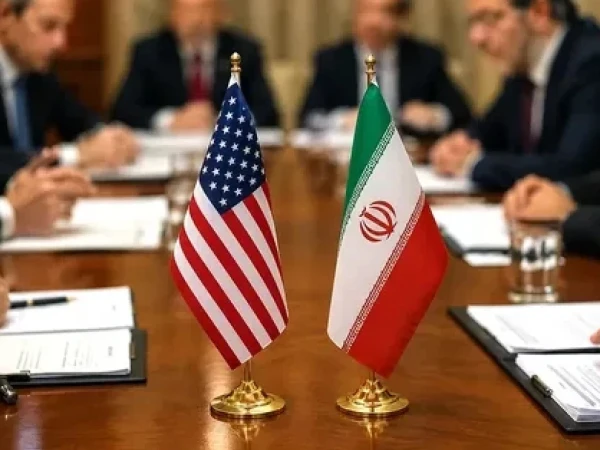
iranian footballers become
|

Iranian footballers become Australian citizens

Two Iranian women footballers who refused to publicly support their government’s stance during an international tournament have officially become Australian citizens after seeking protection in Australia earlier this year.

Atefeh Ramezanisadeh, 34, and Fatemeh Pasandideh, 22, received their Australian citizenship at a ceremony in Brisbane on Wednesday, marking the end of a journey that began when they chose not to return to Iran following the Women’s Asian Cup.

The pair were among seven members of Iran’s national women’s football team who were granted humanitarian visas while in Australia. However, five of the players later returned to Iran, while Ramezanisadeh and Pasandideh remained, citing concerns about their safety.

The players drew international attention after refusing to sing Iran’s national anthem before their opening match during the tournament. Their silent protest came amid heightened tensions following the conflict involving Iran, the United States and Israel, raising fears they could face punishment if they returned home.

Australian authorities allowed the athletes to seek asylum after appeals from members of the Iranian community living in Australia. Their citizenship was formally granted at a ceremony attended by Australia’s Interior Minister, Tony Burke.

Speaking after the ceremony, Pasandideh described becoming an Australian citizen as the beginning of a new chapter in her life, while Ramezanisadeh said the moment reflected years of hardship and sacrifice. Both expressed gratitude for the opportunity to build a future in Australia.

The footballers are now training with Brisbane Roar FC Women and hope to continue their professional football careers in the country.

Their decision to remain in Australia followed reports that Iranian state media criticised members of the national team for remaining silent during the anthem, with some commentators branding them disloyal. Human rights advocates also voiced concerns that players who returned to Iran may have faced pressure through threats directed at their families.

Similar Posts

  • |

    Who is Epstein’s potential heir?

    Attention has shifted to Karyna Shuliak, the longtime girlfriend of convicted sex offender and disgraced US financier Jeffrey Epstein. The development comes years after Epstein died in a federal prison in 2019. His death brought an end to his criminal case but left behind a complicated estate and several legal disputes. Shuliak is now being described as a potential major beneficiary of Epstein’s remaining wealth. According to court documents, Epstein signed a new will just two days before his death. The document created a private trust known as the 1953 Trust. Recent court records reportedly show that Shuliak was included among the important beneficiaries of the trust. However, the exact amount she could receive remains uncertain. US Department of Justice records reportedly indicate that Shuliak was the last person Epstein spoke to outside prison before his death. Reports also say that Epstein made some of his final telephone calls to her while he was in custody. At the time of his death, Epstein’s estate was estimated to be worth around $600 million. A significant portion of that wealth has since been used to compensate people who accused Epstein of sexual abuse. More than $170 million was reportedly paid to over 200 victims through compensation arrangements. The estate has also faced several legal claims and settlements with government authorities. These matters have complicated the distribution of Epstein’s remaining assets. After a recent tax refund, the value of the estate’s remaining assets is estimated at between $120 million and $150 million. Despite being named as a potential beneficiary, Shuliak has not yet secured the inheritance. Payments connected to the trust remain suspended while legal proceedings continue. Richard Kahn, the executor of Epstein’s estate, has reportedly raised concerns about the wording of the trust agreement. He described the document as unclear and poorly prepared. The uncertainty has made it difficult to determine exactly how Epstein intended his remaining fortune to be divided. Legal experts say Shuliak’s potential inheritance cannot be confirmed until outstanding claims and court proceedings are resolved.

  • |

    CBI charges husband, mother-in-law in Bhopal woman’s suicide case

      The Central Bureau of Investigation (CBI) has filed a chargesheet against the husband and mother-in-law of 31-year-old Tewisha Sharma, who died by suicide at her in-laws’ home in Bhopal, India, just months after her marriage. The agency has accused the two of subjecting her to continuous mental harassment and abetting her suicide. Tewisha was found hanging at her in-laws’ residence in the Katara Hills area of Bhopal on May 12. Her family had alleged that she was being harassed over dowry and had claimed that she may have been murdered. Tewisha and her husband, Samarth Singh, had married by choice after meeting through a dating application in 2024. They got married in December 2025. In its 30-page chargesheet submitted to the court on August 14, the CBI named Samarth Singh and his mother, Giri Bala Singh, as accused. According to the investigation, the couple allegedly subjected Tewisha to sustained emotional and psychological abuse. The agency alleged that her husband used derogatory language while referring to her past relationships, while her mother-in-law allegedly supported her son and ignored Tewisha’s complaints. The chargesheet states that Tewisha sent a WhatsApp message to her sister-in-law only hours before her death, asking her to let her die peacefully. A few minutes later, CCTV footage reportedly showed her walking towards the roof of the house. At around 9:41 p.m., Tewisha called her father while crying. According to the chargesheet, she told him that her husband had become extremely aggressive and violent and that she was frightened. She asked her parents to come to her immediately. She later spoke to her mother on the phone, but the call was disconnected. At approximately 10:23 p.m., CCTV footage allegedly showed Samarth and his mother going towards the roof. Tewisha was subsequently brought downstairs and taken to AIIMS Bhopal, where she was declared dead at around 10:55 p.m. The CBI also alleged that Tewisha had shares worth approximately INR 2 million in her demat account. According to the chargesheet, her husband and mother-in-law were pressuring her to transfer the money into a joint bank account. Tewisha allegedly refused, saying the money belonged to her father. Several WhatsApp messages were also included in the chargesheet. In them, Tewisha reportedly described her life as a “hell” and asked her mother to take her away. In another message, she said she felt suffocated at home and could not see a future in the marriage. The CBI said Tewisha had complained to her mother a day before her death that she was being blamed for her temperament and alleged drug use, while her husband’s alleged emotional neglect of her was being ignored. An initial post-mortem concluded that she died from asphyxia caused by hanging. After her family challenged the findings, the Madhya Pradesh High Court ordered a second post-mortem by a medical board at AIIMS Delhi. The second examination also concluded that the cause of death was asphyxia due to hanging and classified the death as suicide. No significant injuries indicating physical assault were reportedly found on her body. The CBI clarified that its case is not that Tewisha was physically murdered. Rather, it alleges that prolonged mental harassment and emotional abuse drove her to take her own life. A forensic psychological assessment also reportedly found signs of hopelessness, persistent mental distress and a lack of emotional support.

  • | | |

    KP considers law for computerized prescriptions an…

    The Khyber Pakhtunkhwa (KP) government is considering new legislation that would require doctors to prescribe medicines using their generic names instead of brand names and issue computerized prescriptions to patients. The provincial government has announced plans to consult the federal government, as the matter falls under federal jurisdiction. The proposal was discussed in the Khyber Pakhtunkhwa Assembly after Pakistan Peoples Party (PPP) lawmaker Mehr Sultana submitted a calling attention notice highlighting the absence of an effective legal framework requiring doctors to prescribe medicines by their generic names. According to the lawmaker, many physicians continue to prescribe branded medicines, limiting patients’ ability to choose more affordable alternatives. She argued that requiring doctors to write only the generic or formula name of a medicine would improve transparency, increase competition among pharmaceutical companies, and reduce treatment costs for patients. Mehr Sultana also emphasized the need to make computerized prescriptions mandatory, pointing out that handwritten prescriptions are often difficult to read. Illegible prescriptions can result in medication errors, delays in treatment, and confusion for pharmacists and patients. She urged the provincial government to introduce legislation or regulations that would modernize the prescription system and improve patient safety. Responding to the proposal, KP Health Minister Khaliq ur Rahman acknowledged the importance of the issue but explained that the authority to legislate in this area primarily rests with the federal government. He said the provincial government would formally approach the federal authorities to explore the possibility of introducing the necessary legal changes. The discussion also covered healthcare infrastructure in the province. During the assembly session, lawmaker Shahida Waheed raised concerns over non-functional CT scan and MRI machines at Mardan Medical Complex. In response, the health minister informed the assembly that the CT scan machine had already been repaired, while the MRI machine is expected to become operational within a week. If implemented, the proposed reforms could significantly improve prescribing practices across Khyber Pakhtunkhwa by encouraging the use of generic medicines and replacing handwritten prescriptions with digital records. Supporters of the proposal believe these changes would help reduce medication errors, lower healthcare costs, and improve access to affordable medicines, while also promoting greater efficiency in hospitals and clinics. Any legal amendments, however, will require coordination with the federal government before they can be introduced and enforced.

  • |

    Kashmir marks ‘Black Day’ as India celebrates …

    As India celebrates its Independence Day on Saturday, August 15, Kashmiris on both sides of the Line of Control (LoC) and across the world are observing the day as a “Black Day”, protesting what they describe as India’s continued control over occupied Kashmir. The call for the observance was issued by the All Parties Hurriyat Conference, with various pro-freedom leaders and organisations announcing their support. Demonstrations are expected in different parts of the world as members of the Kashmiri diaspora seek to draw international attention to the situation in the disputed region. According to Kashmir Media Service, protesters will highlight what they describe as Indian measures in occupied Kashmir and alleged human rights violations. The demonstrations are aimed at keeping the Kashmir issue in international focus and expressing opposition to Indian rule in the region. Meanwhile, security has been significantly tightened across occupied Kashmir, particularly in Srinagar, ahead of India’s Independence Day celebrations. Authorities have established multiple layers of security around Bakshi Stadium, where the main ceremony is scheduled to take place. Vehicles, passengers and pedestrians are reportedly being subjected to strict checks around key locations. Additional security measures have also been put in place to prevent any disruption during the official celebrations. The contrasting scenes—official Independence Day ceremonies in Srinagar and protests by Kashmiris elsewhere—are once again highlighting the long-running political dispute over Kashmir, which remains a deeply contested issue between India and Pakistan. The Black Day observance is expected to continue throughout the day, with Kashmiri groups calling for greater international attention to their demands.

  • |

    Far-right extremism expert Heidi Beirich arrested as US Justice Department expands case against SPLC

    The United States Department of Justice has arrested leading far-right extremism expert Heidi Beirich, charging her with financial crimes in an expansion of the federal government’s criminal case against the Southern Poverty Law Centre (SPLC). A superseding indictment returned in Alabama federal court charges Beirich, the former chief financial officer and Intelligence Project director for the SPLC, with conspiracy to commit wire fraud, conspiracy to make false statements to a bank, and conspiracy to commit money laundering. The charges stem from an April indictment against the civil rights organization over a discontinued intelligence programme that paid informants to infiltrate white supremacist groups. Federal prosecutors allege the SPLC secretly funneled donor funds through shell companies and fictitious entities to hide payments made to field sources. The government claims Beirich engaged in a romantic relationship with one informant and oversaw the transfer of $140,000 in donor funds into a shared bank account. Beirich, who currently serves as chief strategy officer and co-founder of the Global Project Against Hate and Extremism, denied the allegations through her legal counsel. Defense attorney Michael Proctor characterized the prosecution as politically motivated retaliation against an expert who dedicated decades to dismantling white supremacist movements. A federal judge in Alabama permitted the broader case against the SPLC to proceed last week after rejecting arguments requesting a dismissal on grounds of vindictive prosecution.

  • | |

    From Glasgow to the heart of UK power

    How Anas Sarwar challenged a Prime Minister, reshaped Labour politics and rose to become a UK minister Anas Sarwar’s journey from a young Scottish politician carrying the weight of a famous political surname to one of the most senior ministers in the British government has reached a defining moment. His appointment as Minister of State for Business, Innovation, Science and Trade, alongside his elevation to the House of Lords, marks one of the most significant political achievements by a British politician of Pakistani heritage in recent decades. The appointment also underlines the confidence Prime Minister Andy Burnham has placed in Sarwar, entrusting him with a department central to the government’s ambitions for economic growth, scientific research, innovation and international trade. A FAMILY THAT MADE HISTORY Politics has long been part of the Sarwar family story. Anas Sarwar is the son of Mohammad Sarwar, who made British political history in 1997 by becoming the first Muslim and the first MP of Pakistani origin elected to the House of Commons. Mohammad Sarwar later went on to serve as Governor of Punjab, Pakistan’s largest province, giving the family a unique political legacy spanning both Britain and Pakistan. Although his father’s achievements opened doors for greater representation of British Pakistanis in politics, Anas Sarwar has spent much of his career building his own political identity through perseverance, resilience and leadership. A POLITICAL CAREER BUILT ON RESILIENCE A qualified dentist by profession, Sarwar entered Parliament after winning Glasgow Central in 2010. His political career has been shaped by both success and setbacks. Following Labour’s electoral collapse in Scotland in 2015, Sarwar emerged as one of the party’s most recognisable figures during one of its darkest periods. He served as Deputy Leader of Scottish Labour before unsuccessfully contesting the party leadership. Rather than retreating from frontline politics, he rebuilt his standing within the party and was elected Leader of Scottish Labour in 2021. Tasked with reviving a party that had suffered years of decline, Sarwar focused on rebuilding Labour’s organisation, reconnecting with voters and restoring its credibility as Scotland’s principal opposition party. THE MAN WHO FIRST CHALLENGED STARMER Sarwar’s reputation as an independent political figure was cemented during Labour’s leadership crisis when he became the first senior Labour politician to publicly call for Keir Starmer to resign. At a time when many senior figures remained publicly loyal, Sarwar openly argued that Labour required a change in leadership. Political observers viewed his intervention as a turning point that encouraged wider debate within the party over Starmer’s future. In the weeks that followed, pressure on the Prime Minister intensified, ultimately culminating in Starmer’s resignation and the election of Andy Burnham as Labour leader and Prime Minister. Today, the politician who first publicly challenged Starmer has become one of the key members of Burnham’s ministerial team—an illustration of how dramatically Labour’s political landscape has changed. A KEY ROLE IN GOVERNMENT Sarwar’s appointment as Minister of State for Business, Innovation, Science and Trade places him at the centre of one of the government’s most important departments. His responsibilities will include supporting business investment, promoting innovation, advancing scientific research, strengthening Britain’s industrial strategy and expanding international trade—areas regarded as crucial to the UK’s long-term economic future. His elevation to the House of Lords enables him to take up ministerial office while bringing his tenure as Leader of Scottish Labour to an end, triggering a contest to choose his successor. POLITICAL SIGNIFICANCE Political commentators believe the appointment carries significance far beyond a routine cabinet reshuffle. For Prime Minister Andy Burnham, it brings an experienced political strategist into a department central to delivering economic growth. For Scottish Labour, it marks the departure of the leader who steadied the party during a challenging period and leaves a significant leadership vacancy. For Britain’s Pakistani community, Sarwar’s promotion represents another landmark in the growing influence of British Pakistanis at the highest levels of national politics. COLLEAGUES SEE A RESILIENT LEADER Labour colleagues have publicly described Sarwar as a disciplined and pragmatic politician who remained committed to rebuilding Scottish Labour despite difficult electoral circumstances. Political observers argue that his appointment reflects years of persistence, resilience and organisational leadership rather than a sudden political promotion. Critics, meanwhile, have questioned his move from frontline Scottish politics to the unelected House of Lords, arguing that Scottish Labour loses one of its most experienced leaders at a crucial political moment. A NEW CHAPTER Anas Sarwar now moves from leading Labour in Scotland to helping shape Britain’s economic future from the heart of government. His appointment completes a political journey that began in Glasgow, was forged through years of electoral battles and internal party struggles, and has culminated in one of the most influential ministerial positions in Westminster. From following in the footsteps of his father, Mohammad Sarwar, to becoming the first senior Labour figure to challenge Keir Starmer’s leadership and now joining Andy Burnham’s Cabinet, Anas Sarwar’s rise reflects one of the most remarkable political stories in contemporary British politics.

Leave a Reply

Your email address will not be published. Required fields are marked *