over 150000 new

Over 150,000 new EVs expected on Thai roads this year amid energy crisis

BANGKOK, Thailand – Approximately 153,000 new electric vehicles are projected to hit Thailand’s roads this year, driven largely by the ongoing energy crisis triggered by the prolonged conflict in the Middle East, according to a forecast by TMBThanachart Bank’s economic assessment centre, TTB Analytics.

Luxury Hybrid Car Catches Fire While Charging Overnight In Pathum Thani

The figure, which also benefits from more affordable and stable domestic EV prices, represents a year-on-year increase of approximately 28.5 percent, signaling accelerating adoption of battery electric vehicles among Thai motorists.

Overall registrations of EVs nationwide in the first five months of this year stood at 84,000 units, a surge of 94.8 percent compared to the same period last year, while countrywide registrations of red license plate EVs in the same period also increased, particularly across 23 provinces, reflecting growing consumer confidence in electric mobility. TTB Analytics assessed that overall registrations of red plate BEVs domestically should rise by 25.1 percent this year, up from 19.8 percent last year, as more motorists make the switch from conventional internal combustion engine vehicles.

The bank’s analysis also noted that the more EVs are used, the less local drivers will have to spend on fuel and maintenance, citing its latest study on the total cost of ownership of EVs, which demonstrates significant long-term savings for owners. However, TTB Analytics emphasized that it is necessary to accelerate the development of domestic infrastructure to cater for the increasing number of BEVs across Thailand, particularly the even provision of charging stations nationwide to sustain the domestic EV ecosystem in the long term, alongside other supportive measures provided by the public sector.

Based on the International Energy Agency guideline, there should be a charger for every 10 to 15 EVs in Bangkok and all provinces to promote the use of EVs and address range anxiety issues for inter-provincial motorists, a benchmark that Thailand has yet to meet as demand continues to outpace infrastructure development.

Electric Car Erupts In Flames While Charging In Nonthaburi Garage

The projection comes as the government continues to implement incentive schemes to encourage EV adoption, including tax breaks and subsidies, while automakers ramp up local production to meet rising demand in Southeast Asia’s second-largest economy. Industry observers view the rapid growth of Thailand’s EV market as a significant step toward the nation’s goal of becoming a regional hub for electric vehicle manufacturing and innovation.

-Thailand News (TN)

Similar Posts

  • | |

    Sherry Rehman accuses India of using flood situati…

    Pakistan Peoples Party Senator Sherry Rehman has criticised India’s water policies, accusing New Delhi of using the flood situation as a tool of “water aggression” against Pakistan. In a statement, Sherry Rehman said India was adopting a contradictory approach by threatening to suspend the Indus Waters Treaty while also releasing floodwater towards Pakistan. She claimed that India opened the gates of the Salal Dam, putting millions of Pakistanis at risk of flooding. She stressed that river water management should be handled responsibly and should not become a source of conflict between the two countries. The senator said India’s alleged failure to provide timely information about water flows had created uncertainty, particularly regarding the flow of the Chenab River. She warned that sudden changes in the river’s water levels could affect Pakistan’s irrigation system and agriculture. The Chenab River supports millions of acres of farmland in Punjab, and any unexpected increase or decrease in water flow could damage crops and impact farmers’ livelihoods. Sherry Rehman said Pakistan’s agricultural economy depends heavily on the proper management of river systems. She added that uncertain water policies could increase risks for farmers and create challenges for the country’s water security. She urged India to respect existing water agreements and follow international commitments. She said western rivers under the Indus Waters Treaty cannot be diverted, stored, or transferred in a manner that affects Pakistan’s water supply.

  • Swedish Pop Star Zara Larsson Once Called Koh Lanta Home

    KRABI, Thailand – Before she was a Grammy-nominated pop sensation with millions of streams and international acclaim, Zara Larsson was just a third-grade student attending school on the Thai island of Koh Lanta, a place she says raised her and shaped part of her childhood. The 28-year-old Swedish singer-songwriter, who has released five albums including […]

  • | |

    Field Marshal visits NEOC, reviews monsoon disaste…

    Field Marshal Syed Asim Munir visited the National Emergencies Operation Center (NEOC), where he was briefed on preparedness measures and coordinated response arrangements for dealing with monsoon-related disasters. According to the Inter-Services Public Relations (ISPR), the Chairman of the National Disaster Management Authority (NDMA) briefed the Field Marshal on the authority’s operational capabilities and its technology-driven disaster response mechanism. During the visit, Field Marshal Asim Munir stressed that the protection of human lives and critical national infrastructure must be ensured under all circumstances. He said the Pakistan Armed Forces remain fully prepared at all times to support the civil administration and the NDMA in relief, rescue, and rehabilitation operations whenever required. The Field Marshal also appreciated the NDMA’s efforts to strengthen the country’s disaster management capacity and enhance preparedness for natural emergencies. According to the ISPR, he underscored the importance of maintaining constant readiness, ensuring effective coordination among all relevant institutions, and delivering a timely response to emergency situations during the ongoing monsoon season.

  • | |

    China’s hypersonic arsenal expands with long-ran…

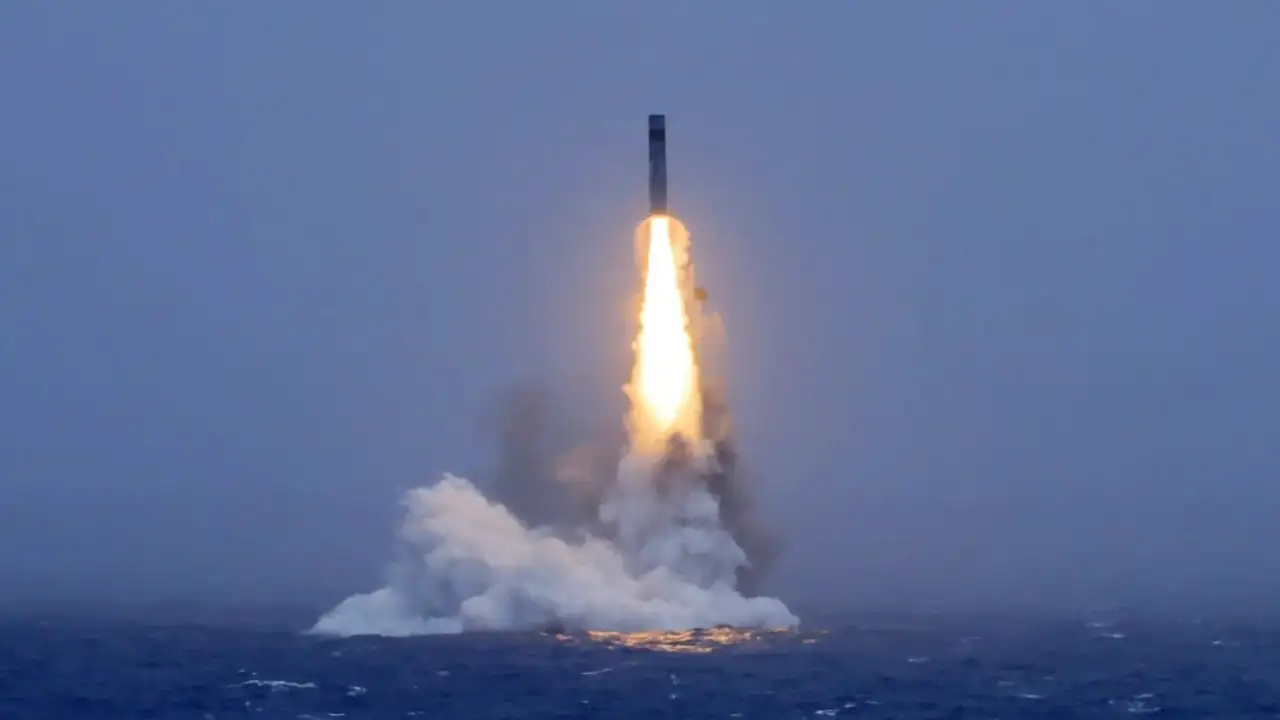
    BEIJING: China has developed a new generation of hypersonic weapons that could potentially threaten high-value military aircraft thousands of kilometres away, according to a Bloomberg report, highlighting the rapidly changing nature of long-range warfare and the growing strategic competition between Beijing and Washington. The reported development involves hypersonic glide vehicles (HGVs) capable of carrying air-to-air weapons. Such systems could potentially target aircraft that normally operate far behind the frontline, including aerial tankers, airborne command-and-control platforms and other support aircraft that provide fuel, communications and battlefield information to fighter jets. The report, citing a person with direct knowledge of the matter, said China has also added air-to-air capabilities to some hypersonic cruise missiles and anti-ship capabilities to several other missile systems. The reported changes reflect Beijing’s broader effort to make its large missile arsenal capable of carrying out a wider range of missions. A New Threat Beyond the Front Line The significance of the reported technology lies in the type of targets it could threaten. Modern air forces rely heavily on support aircraft. Tankers allow fighter jets to remain airborne for longer periods, while airborne early-warning and command aircraft help monitor enemy activity, coordinate operations and share information with aircraft and ground forces. If these platforms could be attacked from much greater distances, commanders could be forced to move them farther away from contested areas. That could reduce their effectiveness and complicate air operations. A hypersonic glide vehicle released from a DF-17 missile is reported to have a range of around 2,414 kilometres, a distance slightly shorter than the separation between mainland China and the US territory of Guam, a major American military hub in the western Pacific. China’s more advanced DF-27 is estimated to have a range of about 8,000 kilometres, potentially putting much of the western and central Pacific within reach. However, details about the system remain limited, and several of its reported capabilities are based on intelligence assessments rather than publicly released Chinese specifications. Why Hypersonic Weapons Are Difficult to Counter HGVs differ from conventional ballistic missile warheads because they can manoeuvre while travelling through the atmosphere. Their ability to alter their flight path can complicate efforts to predict where they will go and how they can be intercepted. China’s DF-17 has already been publicly displayed and is considered one of the world’s operational hypersonic glide weapon systems. Recent Chinese state media footage showed multiple DF-17 launch vehicles, suggesting the system has been deployed on a significant scale. But the reported ability to use such technology against distant aircraft also presents major operational challenges. A missile travelling thousands of kilometres would require highly accurate and continuously updated information about a moving target. Analysts note that the longer the flight, the greater the opportunity for an opponent to disrupt the intelligence and targeting chain. There is also a potential escalation risk. A ballistic missile launch could be difficult to identify immediately, creating uncertainty over whether the weapon is carrying a conventional or nuclear payload. Washington Responds With Longer-Range Weapons The development comes as the United States is also expanding its long-range air-to-air capabilities. The US Navy has begun testing the AIM-424 MALICE, a new long-range air-to-air missile reportedly designed to engage targets at distances exceeding 463 kilometres. Washington is also pursuing other extended-range weapons, including the AIM-260 and AIM-174B. The emerging competition reflects a broader shift in military planning. Future air battles may not be decided solely by which side has more fighter jets, but by which side can protect its own support aircraft while threatening those that keep an opponent’s air force operating. For China and the United States, that could make long-range missiles and hypersonic systems an increasingly important part of the military balance across the Indo-Pacific. Still, some details of China’s reported new capabilities remain classified or independently unverified. The claims therefore offer an indication of Beijing’s evolving military ambitions rather than a complete picture of its operational capabilities. Even so, the reported progress adds another layer to the increasingly sophisticated missile competition between the world’s two major military powers.

  • Thailand Braces For Severe Weather

    BANGKOK, Thailand — The Thai Meteorological Department has issued severe weather warnings, forecasting very heavy rainfall across the northern and upper northeastern regions of the country, which carries a high risk of flash flooding and dangerous water runoff in several provinces. Meteorological Department Issues Storm Alert For Multiple Regions The department reported on Sunday that […]

  • | |

    Cross border strikes kill at least fourteen as Ukr…

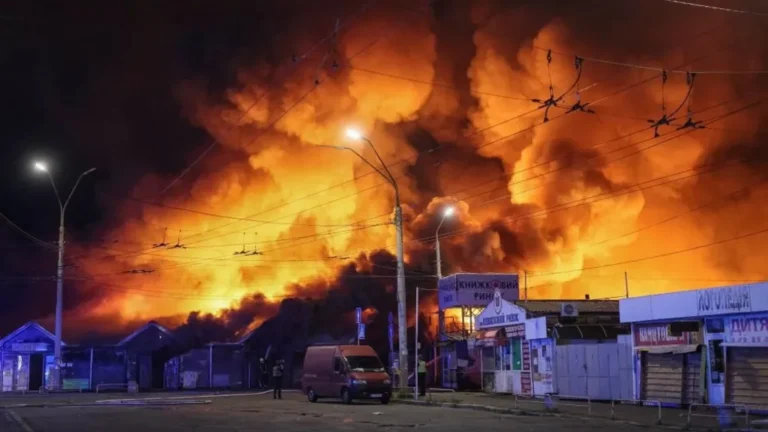
    At least seven people died in Russia following what officials described as Ukraine’s largest scale attack of the year, while separate Russian strikes on Ukraine killed at least seven more people and injured over 39 others. Ukraine launched roughly 822 drones in the assault, with 600 of them targeting Moscow, according to the region’s governor, who called it one of the most massive drone attacks the Russian capital has faced in recent memory. The strikes hit a warehouse belonging to online retailer Wildberries among other targets. In Russia’s southwestern Rostov region, five people died following overnight strikes, the regional governor said. In Belgorod, which borders Ukraine, officials said a woman died after a civilian bus was hit, while Moscow region governor Andrey Vorobyov reported that an 83 year old man died in a separate drone attack. Moscow Mayor Sergei Sobyanin said a Wildberries warehouse in Koledino, about 25 kilometers, or 15.5 miles, from central Moscow, was struck and left three people injured, with video footage showing fire and heavy smoke rising above the facility. Wildberries, often compared to Amazon, has faced repeated attacks since July, when Kyiv said it was deliberately targeting logistics hubs Russians use to acquire military equipment as part of a broader effort to disrupt supply lines feeding the Russian army. In Ukraine, officials said a 66 year old man and a 64 year old woman died after a guided aerial bomb struck a private home in the Zaporizhzhia region. Two additional deaths were reported in Kryvyi Rih, a city in the Dnipropetrovsk region, while officials in Sumy, Donetsk and Kherson each reported one fatality, including a 51 year old killed in a drone strike in Sumy. Air raid sirens sounded four times overnight in Kyiv as Russian forces struck the capital. Mayor Vitali Klitschko said at least six people, including a child, were injured in the attacks. Russian officials said their strikes on Kyiv Saturday night targeted a FirePoint facility that produces components for Ukraine’s Flamingo missiles, along with a factory manufacturing drone parts. The strikes also damaged a book market in the city’s Pochayna district, leaving charred books scattered across the ground as firefighters worked to extinguish the remaining flames. Valentina, 69, whose husband ran a stall at the market, described searching through the debris and recognizing books that had belonged to his stall lying scattered on the ground. She said she never imagined something like this would happen to her family. Luba, 42, who owns a vinyl record store nearby, said she lost stock worth roughly 500,000 hryvnias, or about £8,262, in the strikes. She called the shop her life’s work and said many of the destroyed records were rare and could not be replaced. Ukrainian President Volodymyr Zelensky said 13 regions across the country came under attack this week, with Russia launching more than 1,550 attack drones, nearly 1,560 guided aerial bombs and 62 missiles during that period. He said Russian forces strike civilian infrastructure wherever their ballistic missiles can reach. Russia launched its full scale invasion of Ukraine in February 2022 and currently controls roughly a fifth of Ukrainian territory. With neither side making significant progress along the lengthy front line in recent months, the war has increasingly shifted toward an aerial contest, with both countries trading missile and drone strikes aimed at degrading the other’s capacity to keep fighting.

Leave a Reply

Your email address will not be published. Required fields are marked *