sherry rehman accuses
| |

Sherry Rehman accuses India of using flood situati…

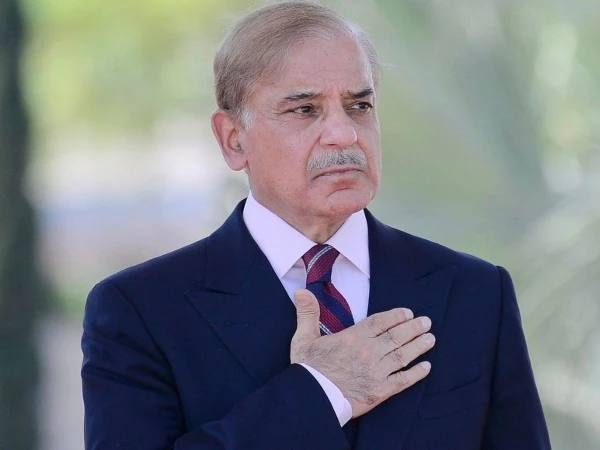
Pakistan Peoples Party Senator Sherry Rehman has criticised India’s water policies, accusing New Delhi of using the flood situation as a tool of “water aggression” against Pakistan.

In a statement, Sherry Rehman said India was adopting a contradictory approach by threatening to suspend the Indus Waters Treaty while also releasing floodwater towards Pakistan.

She claimed that India opened the gates of the Salal Dam, putting millions of Pakistanis at risk of flooding. She stressed that river water management should be handled responsibly and should not become a source of conflict between the two countries.

The senator said India’s alleged failure to provide timely information about water flows had created uncertainty, particularly regarding the flow of the Chenab River.

She warned that sudden changes in the river’s water levels could affect Pakistan’s irrigation system and agriculture. The Chenab River supports millions of acres of farmland in Punjab, and any unexpected increase or decrease in water flow could damage crops and impact farmers’ livelihoods.

Sherry Rehman said Pakistan’s agricultural economy depends heavily on the proper management of river systems. She added that uncertain water policies could increase risks for farmers and create challenges for the country’s water security.

She urged India to respect existing water agreements and follow international commitments. She said western rivers under the Indus Waters Treaty cannot be diverted, stored, or transferred in a manner that affects Pakistan’s water supply.

Similar Posts

  • | |

    Javed Sheikh says he refused fee for Om Shanti Om

    Veteran Pakistani actor Javed Sheikh has revealed that he initially refused to take any remuneration for his role in the hit 2007 Bollywood film Om Shanti Om, stating that sharing the screen with Indian megastar Shah Rukh Khan was an honor in itself. ​Speaking in an interview with Vasay Chaudhry, the veteran actor reminisced about playing the role of Rajesh Kapoor—Shah Rukh Khan’s on-screen father in the Farah Khan directorial—and reflected on the immense warmth and respect he experienced during the film’s production. ​Recalling the financial negotiations prior to filming, Sheikh shared that when the production manager approached him to finalize his contract and discuss his fee, he immediately declined monetary compensation. He emphasized that being chosen out of countless actors across India to portray Shah Rukh Khan’s father felt like a massive privilege that transcended money: ​”Farah Khan wanted me to play Shah Rukh’s father and they started discussing my fee. I said, ‘Money? I won’t take it.’ They said that was impossible. I told them it was such a big honour that, out of everyone in India, they had chosen a Pakistani actor to play Shah Rukh Khan’s father. Money wasn’t important.” ​When the production team insisted that working without pay violated contract guidelines, Sheikh jokingly proposed accepting a symbolic fee of just one rupee. However, both director Farah Khan and Shah Rukh Khan rejected the gesture, insisting on compensating him generously to honor his professional standing. Sheikh praised Shah Rukh Khan for his exceptional hospitality and care on set, describing their working relationship during the shoot as superb. ​Reflecting on his journey in the entertainment industry, Sheikh spoke candidly about his early career struggles. He disclosed that despite his deep passion for acting—which often involved running from school to Radio Pakistan—his father remained strict and skeptical. After his debut film Dhamaka (1974) failed at the box office, his career faced significant setbacks, leaving him devastated when industry insiders initially labeled him a “flop actor.” ​Five years later, his fortunes took a dramatic turn with the hit television drama Ankahi, which earned immense popularity across both Pakistan and India, effectively cementing his star status. Sheikh concluded by highlighting the mindset that guided his decade-long career: focusing entirely on self-improvement rather than competition, envy, or status. ​With a career spanning over four decades, Javed Sheikh continues to remain a vital force across Pakistani media, recently appearing in prominent projects including Delhi Gate, Aag Lagey Basti Mein, and the drama series Kabhi Main Kabhi Tum.

  • |

    Karachi petroleum dealers consider options as dispute over strike call looms

    Plans for a nationwide closure of petrol pumps entered a new phase after dealers in Karachi refrained from immediately supporting a shutdown call issued by petrol pump owners. The Petrol Pump Owners Association had instructed fuel outlets to close across the country from midnight following inconclusive negotiations with Petroleum Minister Ali Pervez Malik. However, the Karachi Petroleum Dealers Association did not move to align with the closure order due to disagreements between the two bodies. To address the situation, the Petroleum Dealers Association scheduled an executive committee meeting to consult with counterparts across Pakistan and evaluate the seven-day deadline set by the Oil and Gas Regulatory Authority (OGRA). The meeting’s outcome will decide whether the association proceeds with a nationwide strike or pursues alternative methods of protest. The Petroleum Dealers Association stated that the government has requested an additional week to resolve outstanding demands and assured dealers that its concerns will be addressed. The association noted that it will consider the government’s request during its internal consultations and formally communicate its final strategy to OGRA and relevant state authorities.

  • | | |

    Govt increases petrol by Rs1.63, diesel by Rs1.55

    The government on Tuesday increased the price of petrol by Rs1.63 and high-speed diesel (HSD) by Rs1.55 per litre, passing on the impact of fluctuating global oil prices following renewed hostilities in the Persian Gulf. Following the changes, the price of petrol stands at Rs335.81 per litre, while HSD is now priced at Rs388.38 per litre. The government is charging a total of Rs110 per litre in taxes and duties on petrol and Rs96 on diesel. The Petroleum Division’s notification said the new prices would be applicable for July 29 (Wednesday). The diesel price has come down from a peak of Rs520.35 recorded on April 3, after beginning its upward trajectory from Rs281 per litre when the US-Iran war broke out on February 28. Similarly, petrol had peaked at Rs458.41 on April 3 after rising from Rs266 in the first week of March. Earlier, Petroleum Minister Ali Pervaiz Malik announced that fuel prices would now be fixed on a daily basis due to fluctuations in international market prices. The government had been announcing weekly revisions since early March, alongside conservation measures amid possible oil supply disruptions due to the ongoing Middle East conflict. In April, the federal government also announced targeted relief measures to provide subsidised fuel. The petroleum minister stated that the cabinet and prime minister had decided to give the Oil and Gas Regulatory Authority (OGRA) the responsibility of deciding fuel prices daily based on international market trends. The daily pricing decision was rejected by the All Pakistan Dealers Association, which said it would consider a protest plan this week. Petrol is mainly used in private transport, small vehicles, rickshaws and two-wheelers, and changes in its price affect the middle and lower-middle classes. Similarly, diesel price changes impact the public at large, as it is primarily used in the heavy transport sector, power plants and large generators. Petrol and HSD are the major revenue earners, with monthly sales of about 700,000 to 800,000 tonnes, compared to just 10,000 tonnes of monthly demand for kerosene.

  • | |

    Princess Isabella begins military service, decline…

    COPENHAGEN: Denmark’s Princess Isabella has begun her mandatory military service, becoming the first member of the Danish royal family to complete the country’s full compulsory military training under its updated national service program. The 19-year-old princess, the eldest daughter of King Frederik X and Queen Mary, reported for duty on August 3 after completing her education. She is expected to serve for 11 months as part of Denmark’s expanded military service requirements. In a gesture that has drawn public attention, Princess Isabella has declined to receive the salary and daily allowances provided to military recruits. According to the Danish royal household, she will instead rely on financial support from her parents to cover her personal expenses during training. Her older brother, Crown Prince Christian, previously completed military training, but Isabella is the first royal to undertake the extended compulsory service introduced under Denmark’s revised defense policy. Denmark expanded mandatory military service to include women in 2024 and increased the duration of service from four months to 11 months. The changes were introduced in response to Europe’s evolving security environment, the ongoing war in Ukraine, and growing strategic concerns in the Arctic region. This week, around 1,600 young recruits began their military service across the country, while Denmark is also preparing to deploy personnel to Greenland for the first time as part of its strengthened defense strategy.

  • Senate slams 20-year delay in gas supply to Ghotki villages

    Islamabad: The Senate Sub Committee on Petroleum has expressed serious concern over a delay of more than 20 years in providing gas to localities within five kilometers of Pakistan’s gas fields, highlighting administrative lapses despite directives from the Prime Minister and the Supreme Court. The Sub Committee, chaired by Senator Jam Saifullah Khan Dharejo, called for accountability of the authorities responsible for failing to implement these binding instructions, particularly in Ghotki, one of the country’s major gas producing and densely populated districts. During the session, MNA and subcommittee members reviewed the progress of gasification projects, noting that out of 57 villages identified in Ghotki, only 42 fall within the five kilometer radius of gas fields. Despite being included in earlier phases of the project in 2021, several schemes remain incomplete. Senator Haji Hidayatullah also raised concerns about ungasified localities in Khyber Pakhtunkhwa, emphasizing that many eligible areas were still awaiting service. Officials informed the committee that approximately Rs670 million is required to complete gasification in Ghotki, while around Rs1 billion may be made available in phases. The funding will be released as a grant and not through the PSDP, with the Petroleum Ministry responsible for preparing a phased implementation mechanism. The committee instructed the Ministry to present a comprehensive plan within a week, detailing timelines, responsibilities, and funding strategies to ensure full compliance with Supreme Court orders. The Sub Committee criticized inconsistent and potentially misleading information previously provided by the Director General (Gas), Petroleum Division. The matter has been referred to the Senate Committee on Privileges to ensure future information is accurate, complete, and supported by official records. Additionally, the absence of the OGRA Chairman, despite prior directions to attend, was strongly noted. The committee decided to inform the Cabinet Division and request his presence at the next meeting to provide viable solutions. The Managing Director of SSGC briefed the committee that Rs480 million had been used in accordance with existing subsidy and tariff provisions, but emphasized the need for a structured, transparent mechanism to ensure funds reach the intended localities. The Sub Committee also requested the Attorney General for Pakistan to attend the next meeting to explain the legal implications of Supreme Court judgments on gas provision. Senator Abro underscored that the directions of both the Prime Minister and the Supreme Court must be implemented “in letter and spirit,” warning that no further undue delay would be tolerated. The Sub Committee emphasized the importance of a fully funded, transparent, and time bound strategy to ensure that all eligible villages in Ghotki, Khyber Pakhtunkhwa, and other regions within the five kilometer radius of gas fields receive gas access without further postponement. The next meeting date and time will be announced separately, with expectations that all relevant stakeholders, including the OGRA Chairman, SNGPL representatives, and the Attorney General, will be present to finalize implementation plans.

  • | |

    Trump imposes up to 100% tariff on Chinese drones

    WASHINGTON: US President Donald Trump has announced tariffs of up to 100 per cent on imported drones and certain drone components, escalating Washington’s efforts to reduce dependence on Chinese technology and strengthen America’s domestic unmanned aircraft industry. The White House said the new duties were introduced on national security grounds and would target specific unmanned aircraft systems considered particularly sensitive. The measures cover larger unmanned aerial systems weighing more than 25 kilograms at take-off. Drones equipped with technologies considered important to national security, including thermal imaging systems and drone docking stations, will also face the additional tariffs. Under the new policy, smaller drones will be subject to a 25pc tariff, while larger and more technologically sophisticated systems could face duties of up to 100pc. The structure means the final tariff will depend on a drone’s weight, size and capabilities. The decision comes as the United States seeks to reduce its reliance on Chinese-made drones and strengthen domestic supply chains for critical technologies. Chinese manufacturers have long held a significant position in the global and US drone market, particularly in consumer and commercial unmanned aircraft. The Trump administration argues that drones have become increasingly important to national security, surveillance and other sensitive operations. Officials therefore want to encourage greater production of drones and key components inside the United States. The tariffs could have an immediate impact on the prices of some imported drones, potentially making Chinese-made models significantly more expensive for American buyers. Businesses that rely on drones for commercial, industrial or specialised operations could also face higher costs. At the same time, Washington expects the policy to encourage US manufacturers to expand production and invest in domestic drone technology. The move marks another step in the broader US strategy of limiting dependence on China in strategically important technologies while promoting American manufacturing and supply-chain security.

Leave a Reply

Your email address will not be published. Required fields are marked *