three accused doctor
| |

Three accused in doctor Akash murder case eliminat…

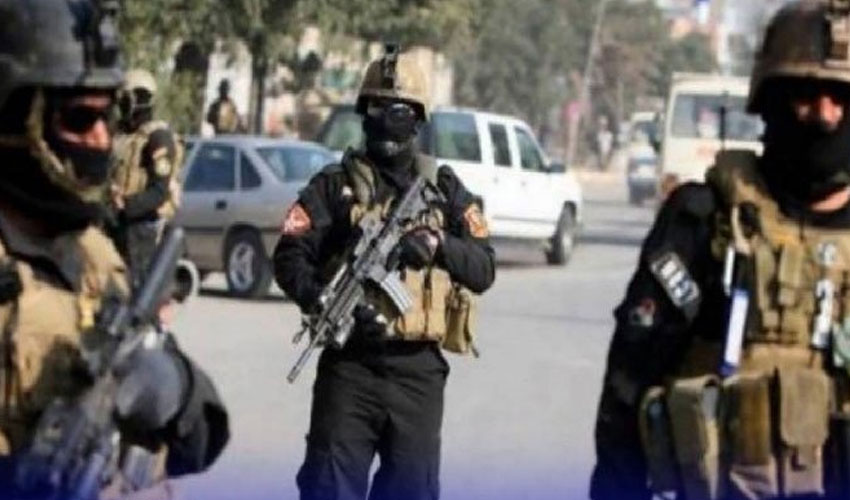
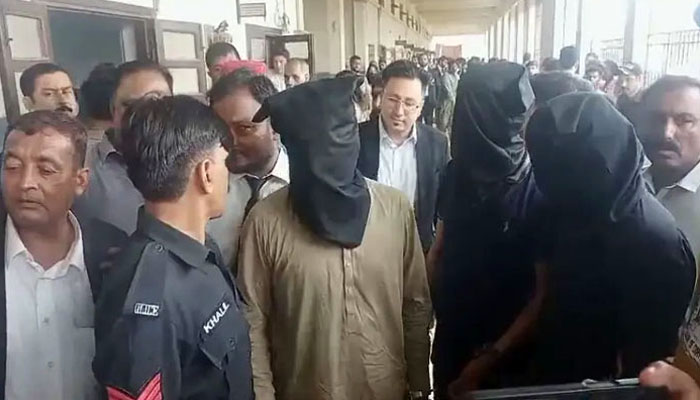
Three suspects arrested in the murder case of young doctor Akash were killed during a police operation in Karachi after an alleged exchange of fire between law enforcement officials and criminal suspects.

According to the Special Investigation Unit (SIU), the incident took place in Umar Brohi Goth area of Gulshan-e-Maymar. Police officials said the arrested suspects had provided information about their escaped accomplices, following which a raid was carried out to arrest the remaining members of the group.

During the operation, the alleged criminals opened fire on police teams. Officials said a police officer was also injured in the firing.

The SIU claimed that the three suspects already arrested in connection with Dr Akash’s murder were killed after being hit by bullets fired by their own accomplices during the clash.

The case relates to a robbery incident in Karachi’s Clifton area on July 13. Dr Akash was killed when armed suspects opened fire outside a bank during a cash-snatching attempt.

Police said the suspects had targeted people carrying large amounts of cash. During the incident, the criminals allegedly took away Rs25 million from a total amount of Rs50 million withdrawn from the bank.

Investigators later found that the suspects arrested in the case were allegedly involved in other criminal activities, including robberies outside banks and attacks on traders in Karachi.

The police investigation also revealed the possible involvement of an unidentified woman in the robbery case. Officials said further investigation was being carried out to determine her role and identify other members of the criminal network.

Authorities said efforts are continuing to trace the remaining suspects linked to the gang. The police have vowed to take action against individuals involved in organised street crimes and cash robbery incidents across the city.

Similar Posts

  • | |

    Egypt could join expanding Mecca Agreement, says E…

    Turkish President Recep Tayyip Erdogan has said Egypt could become part of the Mecca Agreement in the future, describing the framework as open to participation by additional countries. Speaking to Arab media, Erdogan said the agreement provides for collective action if any participating member comes under external attack. He suggested that the inclusion of Egypt could further broaden the scope of the regional arrangement. Erdogan also said Turkey’s immediate priority is not the European Union, arguing that Europe is currently facing serious shortcomings. He further stressed the need to reopen the Strait of Hormuz, warning that keeping the strategic waterway closed for an extended period would serve no country’s interests.

  • | |

    Pakistan backs Saudi Arabia’s right to self-defe…

    ISLAMABAD: Pakistan has strongly condemned the attack on Saudi Arabia, reaffirming that every sovereign nation has the right to defend itself under international law. Islamabad stated that Saudi Arabia’s military response in Iraq should be viewed within the framework of legitimate self-defence. Speaking at the weekly media briefing, Foreign Office spokesperson Tahir Andrabi said Article 51 of the United Nations Charter grants states the inherent right to take necessary measures to protect their sovereignty and security against armed attacks. He said Saudi Arabia’s actions should be understood in that legal context. The spokesperson stressed that Pakistan remains committed to promoting peace and stability in the Middle East and urged all parties to exercise restraint to prevent further escalation of regional tensions. Andrabi also said Pakistan supports the effective implementation of the Islamabad Memorandum of Understanding (MoU) involving the United States and Iran, adding that diplomatic efforts are continuing to reduce tensions and encourage dialogue among the concerned parties. During the briefing, he welcomed the ratification of a defence cooperation agreement between Pakistan and Kuwait, describing it as a positive step toward strengthening bilateral ties. He noted that Pakistan also maintains close defence cooperation with Jordan and Bahrain and continues to expand collaboration in multiple sectors. He added that if any new defence agreements are finalised with Jordan or Bahrain in the future, the government will inform the public and the media at the appropriate time.

  • | |

    Fuel price hikes spark transgender protest in Kara…

    KARACHI: Frustration over soaring inflation and repeated fuel price hikes spilled onto the streets of Karachi on Wednesday as members of the transgender community staged a protest outside the Karachi Press Club, urging the government to provide immediate relief from the rising cost of living. Holding placards and chanting slogans, protesters called for a reduction in petroleum prices and stricter measures to curb inflation, saying the financial burden had become unbearable for vulnerable communities already struggling with limited economic opportunities. The demonstrators said increasing prices of fuel and essential household items had significantly affected their ability to meet daily expenses. They argued that every increase in petroleum prices triggered higher transportation costs and pushed the prices of food, medicines and other necessities even further beyond the reach of low-income families. Addressing the gathering, Gender Interactive Alliance spokesperson Zehrish Somroo said the transgender community was facing severe financial hardship as inflation continued to erode incomes and reduce public support. “We have come out to protest because the rising cost of living is affecting everyone, including the transgender community,” she said. “Many of us depend on charity and public donations for survival. If inflation continues unchecked, even those sources of support are shrinking.” Somroo urged the government to take practical steps to reduce inflation, adding that the community had long struggled with limited access to education, employment and equal opportunities. Transgender rights activist Bindiya Rana said the demonstration was not intended to create conflict but to draw attention to the growing economic difficulties affecting ordinary citizens across Pakistan. Protesters said many families were being forced to make painful sacrifices to survive, including selling motorcycles, household belongings and even children’s jewellery to cover basic expenses. They warned that the rising cost of food, electricity, transport and healthcare had left countless households uncertain about how they would meet their daily needs. Participants appealed to policymakers to introduce urgent relief measures, including lowering fuel prices and stabilising the prices of essential commodities. They stressed that immediate action was needed to protect low-income and marginalised communities from further economic hardship. The protesters also issued a warning that if their demands were ignored, members of the transgender community from across Sindh would travel to Karachi to stage a larger province-wide demonstration, intensifying pressure on the government to address the worsening cost-of-living crisis.

  • | |

    Police constable martyred, another wounded in Lakk…

    A police constable was martyred and another sustained injuries after unidentified gunmen opened fire on a police patrol in Khyber Pakhtunkhwa’s Lakki Marwat district on Sunday. The attack took place near the old police lines within the jurisdiction of Lakki City police station, where the officers were performing patrol duties as part of the City Rider Squad. Police officials said Constable Sajidullah received critical injuries during the firing. He later succumbed to his wounds. Constable Muhammad Waqas was also injured and was taken to a hospital, where he is receiving medical treatment. Following the incident, police teams immediately sealed off the area and launched a search operation to locate those responsible for the attack. Security personnel are also examining the crime scene and collecting evidence that could help investigators identify the attackers. Lakki Marwat District Police Officer Shehbaz Elahi visited the site and reviewed the situation with senior officers. He was briefed about the circumstances surrounding the attack and the steps taken by police following the incident. The DPO directed investigators to use modern forensic and investigative methods and mobilise all available resources to track down the suspects. He also ordered authorities to strengthen security arrangements to protect both law-enforcement personnel and civilians. Officials said attacks against police officers would not be tolerated and that every effort would be made to bring those behind the assault to justice. The latest incident comes amid a series of attacks against security personnel in Khyber Pakhtunkhwa. The province has witnessed a rise in militant violence in recent weeks, prompting security forces and police to intensify operations against armed groups. Earlier this month, several police personnel were killed in a suicide attack outside a police station in Swat. In separate incidents in Hangu and Dera Ismail Khan, police officers were also targeted in attacks. The continuing violence has increased concerns over the security situation across parts of the province, particularly areas close to the former tribal districts and the Afghan border. Security officials have maintained that intensified intelligence-based operations are being conducted to prevent militant attacks and dismantle networks involved in violence against law-enforcement agencies.

  • | |

    CTD Karachi nabs most-wanted terror suspect, recov…

    KARACHI: The Counter Terrorism Department (CTD) Karachi has arrested a key suspected member of a militant network during an intelligence-based operation, officials said on Thursday. According to a CTD spokesperson, Syed Mehdi Nabvi Abidi, who was listed among the top 10 most-wanted suspects on the MQM-L death squad list, was taken into custody over alleged involvement in planning terrorist activities in Karachi and other parts of the country. Officials said the suspect was wanted in several terrorism-related cases registered in Karachi. During preliminary interrogation, he allegedly disclosed that following the arrest of two of his associates, he and other members of the network had planned attacks in Karachi and other cities. The CTD said the suspect had been nominated in multiple cases dating back to 2004 and 2005, including cases involving the killings of religious scholars and the alleged possession of explosives and other prohibited material. A hand grenade and a loudspeaker were reportedly recovered from his possession during the operation. Following the arrest, CTD Karachi registered two new cases against the suspect. One was registered under the Explosive Substances Act, 1908, read with Section 7 of the Anti-Terrorism Act, 1997, while the second was registered under the Anti-Terrorism Act. The department said further interrogation of the suspect is underway. Special teams have also been formed to trace and arrest other alleged facilitators and members of the network based on information obtained during the investigation. The CTD maintained that operations against the network would continue as investigators work to establish the full extent of the suspect’s alleged activities and connections.

  • |

    Trump’s generic drug tariff plan puts US-India pharma ties to test

    A newly announced tariff schedule introduced by President Donald Trump targeting generic pharmaceutical imports is expected to significantly affect the deep trade relationship between the United States and India, which serves as the principal supplier of generic medicines to the American market. Indian drug manufacturers currently supply roughly half of all generic pharmaceuticals consumed in the United States, with the American market generating close to a third of India’s overall pharmaceutical export earnings. The scale of this commercial exposure means the newly outlined tariff timeline, despite featuring a two-year grace period, has immediately drawn close scrutiny from Indian pharmaceutical firms and market analysts due to the critical role US sales play in corporate revenues. The policy introduces additional uncertainty to a bilateral trade dynamic already strained by recent tariff disputes, raising the stakes for Indian manufacturers as they decide whether to commit capital toward expanding domestic manufacturing inside the United States or absorb steep import duties in the future. Trump outlined a phased tariff framework for generic medications entering the United States. Under this timeline, generic drug imports will continue to enter duty-free under a zero per cent tariff until August 1, 2028, marking a two-year transition window from the policy’s effective date. Following this grace period, a 100 per cent tariff will apply for one year, after which the import levy will rise to 200 per cent. Trump framed the escalated duties as a penal mechanism designed to compel foreign pharmaceutical companies to construct manufacturing facilities on American soil within the allotted timeframe, rather than remaining reliant on overseas production plants. He explicitly distinguished this new generic drug framework from the administration’s policy on branded and patented pharmaceuticals, stating that existing regulations for branded drugs would remain unchanged due to their ongoing success. Reports citing White House details indicate that the new generic tariffs will be executed under Section 232 trade authority, matching the legal foundation used for the administration’s earlier tariffs placed on branded pharmaceuticals in April. Trump also highlighted what he described as an unprecedented surge in new domestic pharmaceutical plant construction currently underway across the United States, presenting the new tariff schedule as a measure to reinforce an existing shift toward onshore manufacturing. The policy holds major implications for the broader American healthcare system and global exporters because generic medications account for nearly 90 per cent of all prescriptions filled in the United States. This action follows previous interventions in the pharmaceutical sector, including the 100 per cent tariff placed on branded drugs starting in October 2025, alongside a most-favoured-nation pricing push. That pricing policy led more than a dozen major pharmaceutical corporations, including Pfizer, Eli Lilly, and Novo Nordisk, to conclude agreements to reduce US drug prices in exchange for multi-year exemptions from import duties. For Indian drugmakers, the two-year transition window provides initial breathing room but lacks long-term security. Indian generic manufacturers now face the choice of allocating capital to construct or expand production facilities within the United States before the 2028 deadline, or facing severe cost disadvantages once the punitive tariffs take effect. Industry analysts expect to monitor whether major Indian drug companies will announce accelerated manufacturing investments in the United States over the coming months as the sector formulates its response.

Leave a Reply

Your email address will not be published. Required fields are marked *