سندھ

  • | |

    Saeed Ghani says ethnic voting trend Is fading in …

    Pakistan Peoples Party (PPP) leader Saeed Ghani has said that the trend of securing votes in Karachi primarily on the basis of ethnicity is gradually losing its influence. Addressing a PPP public gathering in Union Council 8 of Korangi, Ghani said voters were increasingly making political choices based on a party’s performance, ideology and vision rather than ethnic identity. He claimed that the PPP government had carried out extensive development work in District Central and Korangi, arguing that these projects had strengthened the party’s connection with residents and addressed long-standing civic needs. Ghani said Karachi’s political landscape was changing as people became more focused on issues that directly affected their daily lives. According to him, voters now paid greater attention to development, public services and the performance of political representatives when deciding which party to support. The PPP leader maintained that political parties could no longer rely solely on traditional ethnic or linguistic loyalties to win elections. He said improved performance and engagement with local communities would play a more important role in shaping voters’ decisions in the future. Ghani also highlighted the importance of development initiatives in strengthening public confidence, saying continued work in areas such as infrastructure and civic facilities could help political parties earn lasting support from Karachi’s residents.

  • | |

    Karachi crime remains high in July

    The Citizens-Police Liaison Committee (CPLC) has released its latest crime statistics for Karachi, showing a significant number of killings, extortion cases, mobile-phone thefts and vehicle-related crimes during July. According to the CPLC data, 40 people lost their lives in different incidents across the city during the month. The figures also showed that extortion remained a concern, with 18 cases of bhata khori reported in July. Street crime continued to affect residents, particularly through mobile-phone and motorcycle theft. The CPLC recorded 1,846 mobile phones stolen across Karachi during the month, highlighting the continued risk faced by citizens while travelling or moving through public places. Vehicle-related offences also remained a major challenge. Criminals stole 110 vehicles in July, while 12 cars were snatched from citizens. The figures indicate that vehicle owners continued to face the threat of both theft and armed or forced snatching. Motorcycles accounted for the largest share of vehicle-related crime. The CPLC recorded 2,648 motorcycle thefts during July, while criminals snatched 492 motorcycles from citizens. The latest figures reflect the scale of crime reported across Karachi during the month, with motorcycles, mobile phones and vehicles remaining frequent targets. The data also highlights continued concerns over public safety, particularly in relation to street crime and property offences. The CPLC regularly compiles crime data from across the city to provide an overview of reported criminal activity. The July figures are likely to keep the focus on law-and-order conditions in Karachi and the need for stronger measures to protect citizens and their property.

  • | | |

    Why are thousands protesting Sindh’s major civil…

    HYDERABAD: A civil service examination meant to open the door to prestigious government jobs in Sindh has instead triggered months of protests, legal battles and allegations of irregularities, with unsuccessful candidates demanding that the entire process be scrapped and conducted again. The controversy centres on the Combined Competitive Examination 2024 (CCE-24) conducted by the Sindh Public Service Commission (SPSC). More than 4,300 candidates appeared in the written examination, which consisted of 10 papers. Yet when the results were announced on May 6, only 70 candidates were declared successful. The examination is particularly important because successful candidates can be appointed to Grade 16 and 17 positions, including assistant commissioners, assistant directors and section officers. For many candidates, the unusually low pass rate immediately raised questions. Why did the results trigger protests? The protesters’ concerns intensified when detailed marks certificates were uploaded following the announcement. Candidates noticed what they described as apparent inconsistencies in the marks sheets. One example involved Criminology, an optional subject carrying 100 marks in a single paper, which appeared in some detailed certificates as two papers carrying 200 marks. Candidates said a similar issue was visible in Environmental Science. Farman Ali, one of the campaign leaders, said candidates initially believed the discrepancy could simply be a technical mistake. However, after finding similar problems in other subjects, they began demanding an explanation from the commission. The SPSC, meanwhile, has maintained that the examination was conducted according to the applicable rules. Its spokesperson, Hifzullah Kaka, declined to comment on the disputed issues while the matter remained before the courts. Protests spread across Sindh Following the results, social media quickly filled with allegations that the examination process had been manipulated to benefit selected candidates. The Sindh Students Action Committee subsequently organised protests, while candidates began a sit-in outside the SPSC headquarters on Hyderabad’s Thandi Sarak. A larger rally was held on May 13, drawing students from different parts of Sindh. The following day, MQM-P lawmaker Maaz Mahboob submitted a resolution in the Sindh Assembly, expressing concern over alleged irregularities, merit violations and a lack of transparency. Protesters later launched the Movement for Restoration of Meritocracy, demanding broader reforms in public recruitment. The campaign has since spread beyond Hyderabad, with protests reported in Nawabshah, Ghotki, Qambar, Umerkot, Islamkot and Gambat. How did the controversy reach the courts? The dispute soon moved into the courtroom. The Sindh High Court suspended the CCE-24 results and directed the SPSC to produce the complete examination record. The court also halted further appointments and proceedings based on the disputed results. The SPSC challenged the Sindh High Court’s interim orders before the newly established Federal Constitutional Court, arguing that the examination had been conducted fairly, transparently and under the Sindh Public Service Commission Act, 2022, and Recruitment Management Regulations, 2023. On July 16, the federal court suspended the Sindh High Court’s interim orders concerning the inquiry, interviews and rechecking of failed candidates. The development allowed the SPSC to proceed with interviews of the 70 successful candidates. Protesters refuse to back down Despite the legal developments, unsuccessful candidates say their concerns remain unresolved. They are demanding that CCE-24 be cancelled and a fresh examination conducted. They are also calling for the resignation of SPSC Chairman Muhammad Rizwan and commission members, along with an independent judicial inquiry into SPSC examinations and recruitments for Grade 16 and 17 posts over the past five years. At the heart of the dispute is a question that extends beyond one examination: can young candidates trust the system responsible for deciding who gets a government career? For thousands of applicants who spent years preparing for the competitive examination, the answer remains uncertain. As the court proceedings continue, protesters remain camped outside the SPSC headquarters, insisting that their campaign will continue until they receive what they consider a transparent and credible resolution.

  • | |

    Sindh announces new school timings

    The Sindh School Education and Literacy Department has issued a revised schedule for government schools across the province, outlining new operating hours for primary, elementary, secondary, and higher secondary institutions. According to an official notification, the updated timings will remain in effect from August until October 31, after which a separate winter schedule will be implemented from November 1 to March 31. Under the summer schedule, single-shift primary schools will operate from 8:00 a.m. to 2:30 p.m. from Monday to Thursday, while on Fridays, classes will end earlier, with schools remaining open from 8:00 a.m. to 1:00 p.m. For secondary and higher secondary schools, the first shift will run from 7:30 a.m. to 1:30 p.m. until October 31. The department has also announced revised winter timings. From November 1 to March 31, single-shift primary schools will function from 8:30 a.m. to 3:00 p.m., while the first shift for secondary and higher secondary schools will be held from 8:00 a.m. to 1:45 p.m. Schools operating in double shifts will also follow updated schedules. Until October 31, the  second shift will run from 1:00 p.m. to 6:00 p.m. Monday through Thursday. During the winter months, from November 1 to March 31, the second shift will begin at 12:45 p.m. and continue until 5:45 p.m. On Fridays, second-shift schools will operate from 10:45 a.m. to 2:15 p.m. The revised timings aim to ensure a uniform academic schedule for government schools across Sindh while accommodating seasonal changes in daylight and weather conditions.

  • | | |

    Karachi seals 200 shops in Saddar over fire safety…

    The Karachi administration has sealed 200 shops in Saddar for violating fire safety regulations, as authorities intensify efforts to enforce safety standards across commercial areas. The action was taken after inspections revealed that several businesses were operating without complying with mandatory fire safety requirements. The action was taken after inspections revealed that several businesses were operating without complying with mandatory fire safety requirements. According to officials, Deputy Commissioner South Javed Nabi Khoso submitted a report to Karachi Commissioner Syed Hassan Naqvi detailing enforcement measures taken against businesses found in violation of fire safety laws across the district. The report stated that the sealed shops are primarily located on the ground floor of Bilal Centre and Koh Noor Centre in Saddar. Authorities found that these commercial units failed to meet prescribed fire safety standards and were operating in conditions considered unsafe for customers and employees. The crackdown forms part of a broader campaign to improve compliance with fire prevention regulations in Karachi’s busy commercial districts. Officials have emphasized that ensuring public safety remains a top priority, particularly in crowded shopping centers where inadequate emergency measures can increase the risk of serious incidents. Following the inspection drive, Commissioner Karachi Syed Hassan Naqvi directed all deputy commissioners in the city to strictly enforce fire safety regulations and take action against businesses that fail to comply with legal requirements. The directive aims to improve safety standards in markets, shopping centers, and commercial buildings throughout Karachi. Fire safety regulations typically require commercial establishments to maintain functioning fire extinguishers, emergency exits, alarm systems, and other protective measures designed to reduce the risk of fire-related accidents. Authorities have warned that businesses found violating these requirements may face sealing, fines, or additional legal action until the necessary safety measures are implemented. The latest enforcement drive reflects growing efforts by the city administration to strengthen public safety following concerns over fire hazards in commercial areas. Shop owners whose businesses have been sealed will be required to address the identified deficiencies and meet the prescribed safety standards before they can resume operations. Officials have indicated that inspections will continue across Karachi to ensure compliance with fire safety laws, with similar action expected against other businesses that fail to meet the required standards. The administration has urged commercial property owners and traders to fully implement fire safety measures to avoid penalties and help create a safer environment for workers and the public.

  • | | |

    Sindh forms third medical board for exhumation of …

    The Sindh government has constituted a third medical board to carry out the exhumation and medico-legal examination of 25-year-old businessman Mir Ali Raza’s body, following controversy over the findings of his initial post-mortem report. The new eight-member medical board was notified by the Sindh Health Department on Friday after two earlier notifications were withdrawn. The exhumation, which was initially scheduled for Friday, was postponed after the deceased’s family raised objections over the sudden changes in the medical board. According to the latest notification, Police Surgeon Dr Sumaiyya Syed has been appointed as the convener of the board, while Dow University of Health Sciences (DUHS) Pathology Department Head Professor Dr Naseem Ahmed will serve as the pathologist. Other members of the board include forensic expert Dr Farah Waseem from Jinnah Sindh Medical University, forensic identification expert Amir Hassan Khan, Additional Police Surgeon Dr Srichand, and medico-legal officers from Jinnah Postgraduate Medical Centre (JPMC), including Dr Kamran Khan and Dr Daniyal Mirza. The board has also been authorized to include additional experts if required. The exhumation has been scheduled for Saturday, August 8, at 11am, according to the Office of the Police Surgeon. A civil judge and judicial magistrate Karachi-XXI will also be present during the procedure. The decision to exhume Mir Ali Raza’s body came after his father approached the court seeking further investigation. A Karachi court allowed the exhumation and directed authorities to form a medico-legal board to examine the circumstances surrounding his death. The case gained attention after concerns were raised regarding possible inconsistencies in the original autopsy report. Karachi Police Surgeon Dr Sumaiyya Syed had pointed out that certain observations in the post-mortem report appeared inconsistent with available photographs, including questions regarding the bullet entry and exit wounds. She stated that the reported bullet trajectory and wounds required further examination and noted that gunshot residue testing, which can be relevant in suspected suicide cases, had not been conducted. Police officials responded by saying that such comments could affect the ongoing investigation but acknowledged that exhumation could provide further clarification through a committee of medical experts with court approval. Mir Ali Raza, the owner of food outlet Wafflix, went missing on July 28. His body was discovered the following day near Shahi Qila Ground in Gulistan-e-Jauhar with a gunshot wound. Initially, a kidnapping case was registered at Ferozabad Police Station on his father’s complaint. Police said their investigation indicated that Ali had been facing financial difficulties and had contacted friends for financial assistance before his death. Investigators said he left his home in PECHS Block-2 and traveled by a ride-hailing taxi, which dropped him near the location where his body was later found. The latest medical board is expected to examine the remains and provide further forensic findings that may help clarify the circumstances surrounding Mir Ali Raza’s death.

  • | | |

    Police officer martyred in gun attack near Jamali …

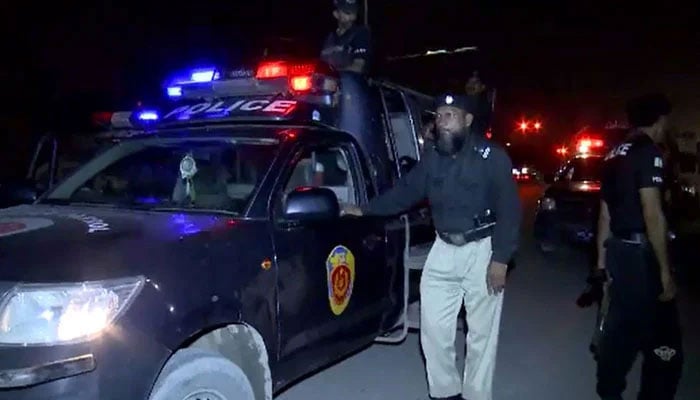
    A police officer was martyred after unidentified gunmen opened fire on two policemen near Jamali Bridge on Karachi’s Super Highway on Monday. The attack has prompted senior police officials and the Sindh government to order an immediate investigation and intensify efforts to apprehend those responsible. According to police, the two officers were deployed on duty near Jamali Bridge when unidentified assailants riding a motorcycle approached and opened indiscriminate fire. Constable Zaman, who was serving at Site-A Police Station, sustained fatal injuries and died at the scene. His fellow officer survived the attack without injury. Authorities have not yet confirmed the motive behind the shooting, and an investigation is underway to determine whether the incident was a targeted attack or linked to other criminal activity. Police have begun collecting evidence from the crime scene and reviewing available information to identify the suspects. Following the incident, Inspector General (IG) Sindh Javed Alam Odho took immediate notice of the attack and directed the Deputy Inspector General (DIG) East to submit a detailed report without delay. The IG instructed law enforcement officials to ensure that those involved in the attack are arrested and brought to justice as quickly as possible. The police chief also ordered investigators to utilize all available resources, including modern technology, intelligence networks, and investigative tools, to trace and capture the suspects. He further directed police units to strengthen patrolling, checkpoint operations, and snap checking across the area while maintaining strict surveillance of suspicious individuals and vehicles. Separately, Sindh Home Minister Zia-ul-Hassan Lanjar also sought an immediate report from the Senior Superintendent of Police (SSP) East regarding the incident. He emphasized that every available resource should be employed to identify and arrest the attackers and ensure they face the full force of the law. The home minister instructed police to make effective use of intelligence information, forensic techniques, and modern investigative methods during the operation. He also called for enhanced police patrols, tighter security measures, and increased monitoring of suspicious activity to prevent similar incidents. Paying tribute to the fallen officer, Lanjar said the sacrifice of police personnel would not be forgotten and reaffirmed the government’s commitment to pursuing those responsible. The attack highlights the continued security challenges faced by law enforcement officers in Karachi, where police personnel remain on the frontline against crime and violence. Investigations into the shooting are ongoing, and authorities have yet to announce any arrests.

  • | |

    MQM-P groups resume talks after Bahadurabad clash

    Differences between two groups within the Muttahida Qaumi Movement-Pakistan (MQM-P) have led to renewed contacts and negotiations between the rival factions, according to party sources. The dispute reportedly surfaced after a party meeting at the MQM-P headquarters in Bahadurabad, Karachi. Tensions escalated during the incident, with members of one group allegedly engaging in a physical confrontation with MPA Ijazul Haq, party leader Zakir, and their supporters. MQM-P leader Aminul Haq claimed that members of the opposing group also resorted to intense aerial firing during the confrontation. He said one party worker sustained injuries in the firing, while several others were hurt as a result of stone-pelting. Following the escalation, senior leaders from both sides have started communicating with each other in an effort to ease tensions and resolve their differences through dialogue. Party sources said the two groups are currently holding discussions and exploring ways to settle the dispute. The sources added that the two factions may hold a joint press conference within the next 48 hours. During the press conference, the leadership is expected to outline the party’s future course of action and announce decisions aimed at addressing the internal differences. The developments come as the party seeks to prevent further escalation and restore unity among its ranks following the clash at the Bahadurabad headquarters.

  • | | | |

    Pakistani folklore

    Pakistani folklore is a vibrant web regional oral traditions, Sufi mystical allegories, and tribal epics across Punjab, Sindh, Balochistan, Khyber Pakhtunkhwa, and the northern mountain valleys. Punjab: Sufi Metaphors & Tragic Romances Punjabi folklore is dominated by tragic love stories (Kissa) that doubled as spiritual allegories for divine love (Ishq-e-Haqiqi). Heer Ranjha is immortalized by the poet Waris Shah. This narrative details the doomed union between Heer, a noblewoman, and Ranjha, an outcast flute player turned jogi. In case of Sohni Mahiwal, Sohni crosses the volatile Chenab River nightly using an baked earthenware pot (gharra) to meet her lover Mahiwal. One night, her sister-in-law replaces the vessel with unbaked clay. This  dissolves mid-stream, leading to Sohni’s tragic drowning. Mirza Sahiban is tale of romance, familial duty, and betrayal. The story culminated in Sahiban breaking Mirza’s arrows to protect her brothers. This act leads to Mirza’s demise. Sindh: The Seven Queens (Satt Surmyun) Sindhi lore centers around seven heroic women celebrated in Shah Abdul Latif Bhittai’s monumental Sufi compendium, the Shah Jo Risalo. Sassi (Sassi Punhun) searches the Makran desert for her abducted lover, Punhun, until the earth swallows her. Marui (Umar Marui) was abducted by King Umar. She refuses wealth and palace luxuries to remain faithful to her desert village. Moomal (Moomal Rano) operates the enchanted palace of Kak Mahal, tests suitors with magical illusions, and loses Rano to misunderstanding. Balochistan: Tribal Epics & Renunciation Baloch folklore prioritizes chivalry, tribal honor, and ascetic devotion. Hani and Sheh Mureed: The legendary hero Mureed sacrifices his marriage to Hani due to a bound oath given to Mir Chakar Rind. Mureed becomes a wandering dervish, becoming an archetype of ultimate devotion. Lulla and Granaz: Tales celebrating battlefield bravery, hospitality, and tribal allegiance. Khyber Pakhtunkhwa & Northern Valleys: Pashtun & Mountain Legends Adam Khan and Durkhanai: A Pashto romance where music plays a central role. Adam Khan’s soulful mastery of the Rabab brings the lovers together against social friction. Prince Saiful Muluk & Badri-ul-Jamal: Set in the high-altitude Kaghan Valley, a Persian prince falls in love with a fairy princess at Lake Saiful Muluk, giving the actual alpine lake its legendary name.

  • | |

    Pakistan wheat import faces Sindh opposition

    The Sindh government has strongly opposed the federal government’s decision to import wheat, warning that the move could hurt local farmers and weaken the domestic agriculture sector. Sindh Food Minister Makhdoom Mehboob-uz-Zaman said the province does not support wheat imports at a time when the country already has sufficient local production. He argued that bringing in imported wheat would reduce demand for locally grown crops and create financial difficulties for farmers who are already struggling with rising production costs. The minister also criticized the Punjab government for restricting the inter-provincial movement of wheat. According to him, Punjab currently has a surplus of around seven million metric tons of wheat, while Sindh faces a shortfall of nearly one million metric tons. He said that easing the movement of wheat between provinces would help address supply gaps without relying on imports. Makhdoom Mehboob-uz-Zaman added that the Sindh government plans to purchase wheat from the Pakistan Agricultural Storage and Services Corporation (PASSCO) to meet the province’s procurement target. He stressed that local resources should be utilized before considering foreign imports. Commenting on flour prices, the food minister said wheat flour in Karachi is currently selling between Rs130 and Rs140 per kilogram. He maintained that better coordination between the federal and provincial governments, along with the efficient distribution of locally available wheat, would help stabilize supplies and protect the interests of both consumers and farmers.