shakib hasan stars
|

Shakib Al Hasan stars as Jaffna Kings beat Kandy R…

Shakib Al Hasan picked up a three-wicket haul and played a crucial cameo with the bat as Jaffna Kings defeated Kandy Royals by 21 runs in the 18th fixture of the Lanka Premier League (LPL) 2026 at the Pallekele International Cricket Stadium on Thursday.

Set a daunting target of 222, Royals were bowled out for 200 on the final ball of the innings. Earlier, Jaffna Kings posted a massive total of 221-6 in their 20 overs after being put into bat first.

Kings’ innings was built on a big opening stand, with Kamil Mishara and Avishka Fernando sharing 95 runs inside seven overs. Mishara fell one shy of a half-century, smashing five sixes and two fours, while Fernando scored 36 off 22 balls with the aid of three fours and a six. After a challenging powerplay, Royals bowlers pulled things back with quick wickets, leaving Kings at 139-5 in 14.2 overs.

However, Shakib Al Hasan and Chamindu Wickramasinghe stitched a 59-run partnership off just 23 balls to take their side into a commanding position. Wickramasinghe struck four sixes and three fours in his 15-ball 43, while Shakib made 22 off 16, including a six and a four. For Kandy Royals, Moeen Ali and Wanindu Hasaranga shared four wickets between them, while Shaheen Afridi remained wicketless and conceded 43 runs in his three overs.

In reply, Royals kept the chase alive until the final ball but ultimately fell short, with Shakib’s three-wicket haul proving decisive. The all-round performance strengthens Jaffna Kings’ position in the LPL standings as the tournament progresses.

Similar Posts

  • |

    Infantino’s FIFA gamble hits major roadblock

    FIFA President Gianni Infantino’s proposal to bring private investors into the commercial management of the FIFA World Cup has suffered another major setback after the Asian Football Confederation (AFC) formally rejected the plan. In a statement issued on Friday, the AFC announced that it stands alongside the European and North, Central American, and Caribbean football confederations in opposing the proposal. The confederation said the plan lacks the broad international support needed to move forward and warned that it could weaken the unity of global football. The AFC stressed that the FIFA World Cup belongs to the entire football community and should remain a competition shaped collectively by all member associations and confederations. It argued that decisions involving the future of the tournament should only be made after meaningful consultation with all stakeholders. The Asian governing body also criticized FIFA’s decision-making process, saying major proposals were introduced before proper discussions with confederations and member associations. It claimed the approach left many football authorities feeling excluded from an issue of global importance. The latest opposition significantly reduces the chances of the proposal being approved if it is presented for a vote. FIFA has 211 member associations, and a simple majority would be required for the plan to pass. With Europe, Asia, and Concacaf already opposed, the proposal faces strong resistance. Earlier, UEFA warned it could boycott future FIFA World Cups if the proposal moves ahead. Concacaf also rejected the plan, arguing that football’s biggest tournament should not become a commercial investment asset. Despite the growing backlash, FIFA has defended its proposal. The organization insists that it is not selling football but instead seeking new ways to strengthen the financial future of the game. FIFA says the planned reforms would attract investment, increase tournament revenues, and provide larger financial distributions to its member associations in the coming years. Under the proposal, FIFA would establish a new commercial subsidiary to manage its major competitions, including the FIFA World Cup. Outside investors would be allowed to purchase minority, non-controlling stakes in the new company while FIFA retains overall control. According to the governing body, the investment model would help expand football development programs, generate new business opportunities, and improve long-term financial sustainability. However, critics remain unconvinced. They argue that introducing private investors into the commercial structure of the World Cup risks prioritizing profits over the interests of players, supporters, and national associations. Opponents also say the process has lacked transparency and adequate consultation. The South American Football Confederation (CONMEBOL) has not yet announced its position on the proposal, while the African (CAF) and Oceania (OFC) confederations are expected to discuss the matter in the coming weeks.

  • | |

    Balochistan suspends nitrogen fertilizer movement …

    QUETTA: The Balochistan government has imposed a ban on the transportation of nitrogen-based fertilizers across the province for 15 days over concerns that such materials could be misused for sabotage and terrorist activities. According to an official notification issued by the Directorate General of Agriculture Balochistan, the decision was taken in view of the prevailing law and order situation and to ensure the safety of lives and property across the province. The order states that the sale, purchase, supply and distribution of nitrogen-based fertilizers have been suspended with immediate effect. Authorities said the restriction aims to prevent the possible use of these fertilizers in the manufacture of explosive materials and other unlawful activities. The banned products include urea, calcium ammonium nitrate, ammonium nitrate and potassium nitrate. Officials said the restrictions will remain in force until further orders. The notification also directs all dealers, distributors and suppliers to maintain a complete record and inventory of their existing fertilizer stocks. Authorities warned that compliance with the order would be closely monitored and that legal action could be taken against those found violating the restrictions. The provincial government said the temporary measure is part of broader efforts to strengthen security and prevent the misuse of materials that could pose a threat to public safety.

  • | |

    ‘Give me my baby back’: Mother’s desperate P…

    A devastating fire at the Pakistan Institute of Medical Sciences (PIMS) in Islamabad has claimed the lives of 15 children, turning a routine morning at the capital’s major public hospital into a scene of panic, grief and anguish. The fire broke out early Wednesday in the Mother and Child Health Ward, where critically ill newborns were receiving treatment. Thick smoke rapidly filled parts of the ward, leaving families and hospital staff struggling to reach the affected area. The tragedy has raised serious questions about fire safety, emergency response, hospital security and the availability of adequate facilities for vulnerable newborns. Among the grieving parents was a mother who could not hold back her anguish after losing her infant. “Give me my child back,” she cried, as families gathered outside the hospital waiting for information about their children. Witnesses described a chaotic situation inside the hospital, with heavy smoke making it difficult to move through the affected area. Some patients and attendants reportedly attempted to escape through windows after finding access points blocked. A witness said the fire spread rapidly and that babies as young as a day old were present in the ward. Another witness claimed rescue personnel took considerable time to reach the affected section, while hospital security allegedly restricted the movement of people trying to leave. However, Islamabad’s senior administration gave a different account of the emergency response. Officials said the emergency call was received shortly before 7am and that rescue and police teams reached the hospital promptly. The fire was subsequently brought under control. The exact circumstances surrounding the incident remain under investigation. PIMS officials said the preliminary cause of the fire appeared to be an electrical fault involving an air conditioner. Authorities are expected to examine the equipment, wiring, hospital safety systems and emergency procedures to determine how the fire started and why it spread so quickly. The deaths have caused widespread grief across the country. Prime Minister Shehbaz Sharif and Interior Minister Mohsin Naqvi expressed sorrow over the loss of the infants and called for a detailed examination of the circumstances that led to the tragedy. The prime minister directed that those responsible for any negligence be identified and that strict action be taken on the basis of the investigation. The incident has also brought renewed attention to safety standards at public hospitals. PIMS is one of Islamabad’s largest healthcare institutions and caters to a large number of patients from the capital and surrounding areas. Families and witnesses have raised questions about the availability of emergency exits, fire-fighting equipment, evacuation procedures and the preparedness of hospital staff to deal with fires in specialised wards. The presence of newborns in critical care areas makes emergency preparedness particularly important. Infants requiring intensive medical support cannot be evacuated in the same manner as ordinary patients, increasing the need for specialised fire-safety plans and trained personnel. The tragedy has also sparked anger over whether existing safety warnings and shortcomings at public hospitals were adequately addressed before the incident. For the bereaved families, however, the immediate concern is the loss of their children. Parents gathered outside PIMS in distress as they waited for confirmation and the return of their babies. The fire is among the most serious recent incidents involving a public healthcare facility in Pakistan and has intensified calls for stronger enforcement of fire-safety regulations in hospitals and other major public buildings.

  • | |

    Lahore building collapse kills 10, several critica…

    At least 10 people lost their lives and several others were injured after a three-storey residential building collapsed in Lahore’s Baghbanpura area late Wednesday night, prompting a large-scale rescue operation. Emergency teams rushed to the scene shortly after the incident and recovered 16 people from beneath the debris. Six victims were pronounced dead at the site, while the remaining injured were shifted to nearby hospitals. Four more later died from their injuries, raising the death toll to 10. Rescue officials said four people remain in critical condition and are receiving treatment, while two injured victims have been discharged after medical care. Search teams continued clearing the rubble to ensure no one remained trapped. According to preliminary findings, the roof of the ageing building collapsed at around 10:15pm, causing the entire structure to cave in. Members of an extended family living on different floors were inside the building when the collapse occurred. Police and rescue workers immediately launched a coordinated operation, using heavy machinery and manual equipment to search for survivors. Authorities said the exact number of people inside the building at the time of the collapse is still being determined. Punjab Chief Minister Maryam Nawaz expressed grief over the loss of lives and directed senior officials to monitor the rescue and relief efforts. The city commissioner visited both the accident site and the hospital to review the situation and meet the injured survivors. Local lawmakers also visited the area and assured affected families that all possible assistance would be provided during the rescue operation and rehabilitation process. The latest tragedy has renewed concerns over the safety of old and deteriorating buildings in Lahore. It comes only weeks after a deadly roof collapse at a private tuition centre in Kahna claimed the lives of 14 children. Following that incident, provincial authorities had ordered safety inspections of educational institutions and other ageing structures.

  • |

    Powerful El Niño could push 49 million more into …

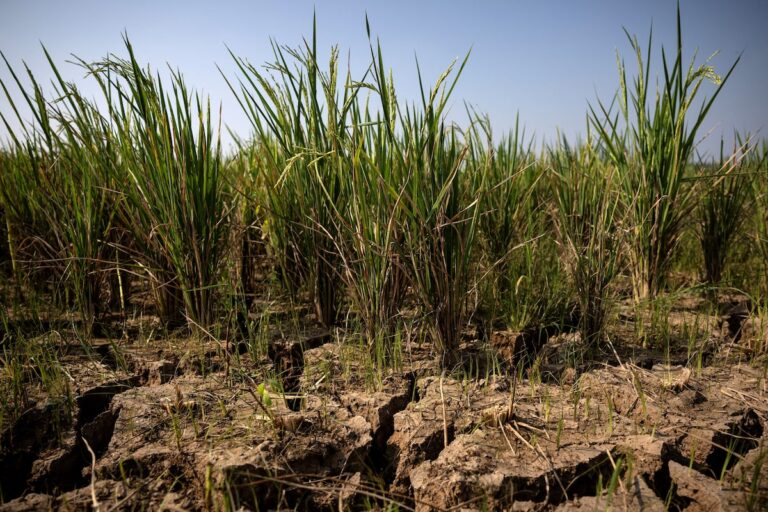
    A powerful El Niño weather event could push nearly 49 million more people into acute hunger by the end of 2027, the United Nations’ World Food Programme (WFP) has warned, raising fresh concerns about a worsening global food crisis driven by climate change and extreme weather. According to a new WFP report released on Wednesday, there is an 81 percent probability that the developing El Niño will become a very strong event, with Pacific Ocean temperatures already reaching their highest levels since at least 1982. If current forecasts hold, it could become the strongest El Niño recorded since 1950. El Niño is a naturally occurring climate pattern that warms surface waters in the central and eastern Pacific Ocean. Although it originates in the Pacific, it disrupts weather systems worldwide, often triggering droughts, delayed monsoons, floods and unpredictable rainfall that damage crops and threaten food supplies. The WFP estimates that 274 million people across 45 vulnerable countries could face acute food insecurity by the end of next year, representing a 22 percent increase from current crisis levels. Central America and Southern Africa are expected to suffer the most severe consequences. Food insecurity in Central America could rise by 83 percent, while Southern Africa may experience a 75 percent increase. More than 12 million additional people in Southern Africa, South America and the Caribbean could struggle to access enough food. Jean-Martin Bauer, Director of WFP’s Food Security and Nutrition Analysis Service, said previous strong El Niño events have repeatedly triggered major hunger emergencies. “These are events that in the past have caused widespread food crises,” Bauer said, urging governments and humanitarian organisations to prepare before conditions worsen. Although global food markets entered this El Niño cycle in a relatively stable position following strong harvests in 2025. Bauer warned that ongoing conflict in the Middle East and possible crop failures caused by extreme weather could push food prices higher. While worldwide price spikes are not considered inevitable, regional shortages could make food increasingly unaffordable for millions of vulnerable families already struggling with poverty. The report also highlights another growing concern—declining humanitarian funding. Budget cuts from major donors in the United States and Europe have significantly reduced WFP’s ability to monitor food security. Household surveys dropped from 1.1 million in 2024 to around 800,000 in 2025, with further reductions recorded this year due to funding shortages. Experts warn that limited data collection could delay the identification of emerging hunger hotspots, making humanitarian responses slower and less effective. The WFP also forecasts below-average rainfall across parts of East Africa, the Sahel, Central America and the Caribbean, while countries such as Somalia could face an increased risk of flooding. Across South and Southeast Asia, delayed monsoons, drought and localized floods are expected to disrupt agricultural production and livelihoods. Despite the alarming outlook, the UN agency stressed that forecasts remain uncertain and impacts will vary from region to region. To reduce future losses, the WFP has expanded its anticipatory action programmes in 18 countries, providing cash assistance and emergency support to more than 1.3 million people ahead of expected climate shocks. The agency says acting early will be critical to preventing millions more people from falling into hunger as one of the strongest El Niño events in decades continues to develop.

  • | |

    Pakistan’s new diplomatic momentum: Ishaq Dar’…

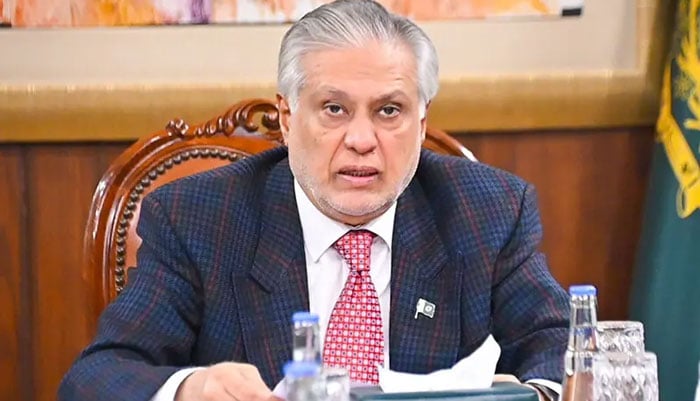
    Pakistan’s diplomatic profile has undergone a significant transformation over the past year. Once viewed primarily through the prism of regional security, the country is now increasingly being recognised as a constructive diplomatic actor capable of facilitating dialogue and contributing to regional stability. Against this backdrop, Deputy Prime Minister and Foreign Minister Senator Muhammad Ishaq Dar’s official visit to the United Kingdom, beginning on Monday, carries considerable strategic and political importance. The visit comes at a time when Pakistan’s international standing has strengthened through an active and confident foreign policy. Islamabad’s recent role in facilitating dialogue and reducing tensions in the Middle East has earned international recognition, while its efforts to promote regional peace have been acknowledged by major global powers. Pakistan’s leadership in supporting diplomacy between the United States and Iran, together with its broader commitment to regional stability, has enhanced its credibility as a reliable international partner. This growing diplomatic influence has also been reflected in the historic Makkah Joint Defence Agreement between Pakistan, Saudi Arabia and Türkiye. The agreement has reinforced Pakistan’s position as an important contributor to collective security, strategic cooperation and peace in the wider Middle East, demonstrating its ability to work closely with key regional partners on issues of shared security. Senator Ishaq Dar’s visit to the United Kingdom is aimed at building upon this diplomatic momentum by further strengthening Pakistan’s relationship with one of its most important international partners. It will be Pakistan’s first high-level engagement with the United Kingdom since Prime Minister Andy Burnham assumed office on 20 July 2026, making the visit particularly significant in establishing an early and comprehensive dialogue with the new British leadership. A central feature of the visit will be Mr Dar’s meeting with United Kingdom Foreign Secretary Ed Miliband. The discussions are expected to cover the full spectrum of Pakistan–United Kingdom relations, including political cooperation, trade and investment, institutional collaboration, education, cultural exchanges and people-to-people links. Particular emphasis is likely to be placed on the invaluable contribution of the British Pakistani community, which continues to serve as a bridge between the two countries. Regional and international developments, particularly the evolving situation in the Middle East, are also expected to feature prominently on the agenda. The Deputy Prime Minister is also scheduled to meet the United Kingdom’s National Security Adviser, Jonathan Powell. These talks are expected to focus on regional and global security challenges, with discussions covering counter-terrorism cooperation, intelligence sharing and broader strategic coordination. Such engagement reflects the growing importance both countries attach to security cooperation in an increasingly complex international environment. Another significant engagement will be Mr Dar’s meeting with International Maritime Organization (IMO) Secretary-General Arsenio Dominguez. The meeting will reaffirm Pakistan’s longstanding cooperation with the IMO and underline Islamabad’s commitment to promoting safe, secure and efficient international shipping. As a maritime nation with expanding regional connectivity ambitions, Pakistan’s engagement with the IMO remains an important component of its international diplomacy. Beyond the scheduled meetings, the visit represents a broader strategic opportunity. It offers both Islamabad and London the chance to redefine and modernise a long-standing partnership that extends beyond traditional diplomacy to encompass trade, investment, technology, education, climate cooperation and regional security. With changing geopolitical dynamics and emerging economic opportunities, both countries have strong incentives to deepen cooperation across multiple sectors. For Pakistan, the visit is also a demonstration of a more proactive and confident foreign policy that seeks engagement rather than isolation. It reflects Islamabad’s determination to cultivate stronger ties with major global powers while simultaneously playing a constructive role in addressing regional and international challenges. If successful, Senator Ishaq Dar’s visit is expected not only to strengthen Pakistan–United Kingdom relations under the new United Kingdom leadership but also to pave the way for further high-level exchanges in the months ahead. More importantly, it will reinforce Pakistan’s growing image as a responsible diplomatic partner whose influence extends beyond South Asia and whose voice is increasingly valued in discussions on international peace, security and strategic cooperation.


Leave a Reply

Your email address will not be published. Required fields are marked *