give baby back
| |

‘Give me my baby back’: Mother’s desperate P…

A devastating fire at the Pakistan Institute of Medical Sciences (PIMS) in Islamabad has claimed the lives of 15 children, turning a routine morning at the capital’s major public hospital into a scene of panic, grief and anguish.

The fire broke out early Wednesday in the Mother and Child Health Ward, where critically ill newborns were receiving treatment. Thick smoke rapidly filled parts of the ward, leaving families and hospital staff struggling to reach the affected area.

The tragedy has raised serious questions about fire safety, emergency response, hospital security and the availability of adequate facilities for vulnerable newborns.

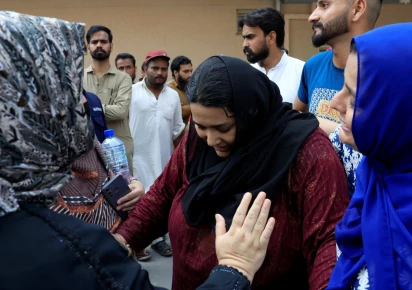
Among the grieving parents was a mother who could not hold back her anguish after losing her infant. “Give me my child back,” she cried, as families gathered outside the hospital waiting for information about their children.

Witnesses described a chaotic situation inside the hospital, with heavy smoke making it difficult to move through the affected area. Some patients and attendants reportedly attempted to escape through windows after finding access points blocked.

A witness said the fire spread rapidly and that babies as young as a day old were present in the ward. Another witness claimed rescue personnel took considerable time to reach the affected section, while hospital security allegedly restricted the movement of people trying to leave.

However, Islamabad’s senior administration gave a different account of the emergency response. Officials said the emergency call was received shortly before 7am and that rescue and police teams reached the hospital promptly. The fire was subsequently brought under control.

The exact circumstances surrounding the incident remain under investigation.

PIMS officials said the preliminary cause of the fire appeared to be an electrical fault involving an air conditioner. Authorities are expected to examine the equipment, wiring, hospital safety systems and emergency procedures to determine how the fire started and why it spread so quickly.

The deaths have caused widespread grief across the country. Prime Minister Shehbaz Sharif and Interior Minister Mohsin Naqvi expressed sorrow over the loss of the infants and called for a detailed examination of the circumstances that led to the tragedy.

The prime minister directed that those responsible for any negligence be identified and that strict action be taken on the basis of the investigation.

The incident has also brought renewed attention to safety standards at public hospitals. PIMS is one of Islamabad’s largest healthcare institutions and caters to a large number of patients from the capital and surrounding areas.

Families and witnesses have raised questions about the availability of emergency exits, fire-fighting equipment, evacuation procedures and the preparedness of hospital staff to deal with fires in specialised wards.

The presence of newborns in critical care areas makes emergency preparedness particularly important. Infants requiring intensive medical support cannot be evacuated in the same manner as ordinary patients, increasing the need for specialised fire-safety plans and trained personnel.

The tragedy has also sparked anger over whether existing safety warnings and shortcomings at public hospitals were adequately addressed before the incident.

For the bereaved families, however, the immediate concern is the loss of their children. Parents gathered outside PIMS in distress as they waited for confirmation and the return of their babies.

The fire is among the most serious recent incidents involving a public healthcare facility in Pakistan and has intensified calls for stronger enforcement of fire-safety regulations in hospitals and other major public buildings.
Similar Posts

  • Rescued Thai Scam Victim in Cambodia Warns of Beatings, Organ Sales

    TRAT – Thai authorities have repatriated 32 nationals who escaped from scam centers in Cambodia, with one survivor describing brutal conditions including beatings, fatalities, and the alleged sale of organs. The group crossed back into Thailand on January 31, 2026, following coordination between Thai officials and the embassy in Phnom Penh. Chinese Social Media Influencer […]

  • |

    Pakistan’s auto tax policy sparks industry divide over EV incentives

    LAHORE: Pakistan’s automobile industry is witnessing growing divisions over the government’s taxation policy for vehicles, with local manufacturers warning that the current framework unfairly benefits expensive imported and premium new energy vehicles (NEVs) while placing a heavier tax burden on affordable cars purchased by middle-income families. The controversy has intensified following the government’s decision to introduce a range of fiscal incentives for new energy vehicles, including battery electric vehicles (BEVs), plug-in hybrid electric vehicles (PHEVs) and range-extended electric vehicles (REEVs). While the policy is designed to accelerate Pakistan’s transition towards cleaner transportation and reduce reliance on fossil fuels, established local assemblers argue that the incentives are skewed in favour of luxury vehicle buyers instead of promoting affordable green mobility. Industry representatives say the taxation gap between conventional locally assembled vehicles and premium electric vehicles has widened considerably, raising concerns over fairness, competitiveness and the long-term sustainability of Pakistan’s domestic automobile manufacturing sector. According to industry estimates, a locally assembled Suzuki Alto—one of the country’s most affordable passenger vehicles priced at around Rs3 million—bears nearly Rs550,000 in taxes, including sales tax, federal excise duty (FED) and the recently introduced New Energy Vehicle (NEV) levy. In contrast, a premium REEV costing close to Rs10 million reportedly attracts sales tax of only around Rs100,000 while remaining exempt from both the federal excise duty and the NEV levy. The tax disparity has triggered criticism from domestic manufacturers, who argue that the current structure effectively penalises middle-income consumers while offering generous incentives to buyers of high-end imported vehicles. Local Assemblers Raise Concerns Pak Suzuki Motor Company spokesperson Ikhlaq Virk said the taxation framework has created an uneven competitive environment that disadvantages affordable vehicles widely used by Pakistani families. He said entry-level models such as the Alto and Cultus serve as essential transportation for the country’s middle class but receive no meaningful tax relief despite their affordability. Virk further noted that premium hybrid and electric vehicles, valued at nearly Rs10 million or more, continue to enjoy substantial concessions under the government’s clean mobility policy. He also pointed to reports suggesting that the sales tax on certain plug-in hybrid and hybrid electric vehicles could be reduced from 25 percent to 18 percent after changes introduced through the Finance Bill, arguing that such relief would primarily benefit affluent consumers rather than encouraging mass-market adoption. IMF Programme Adds Complexity The debate comes at a time when Pakistan remains under an International Monetary Fund (IMF) programme, which has required the government to increase tax revenues, rationalise subsidies and implement fiscal reforms to stabilise the economy. Against this backdrop, industry stakeholders argue that taxation policies should strike a balance between environmental objectives and economic realities, ensuring that clean energy initiatives do not disproportionately favour a small segment of wealthy consumers. The discussion has also reopened a broader policy debate over whether Pakistan’s green mobility strategy should focus solely on reducing emissions or also safeguard domestic manufacturing, employment and industrial investment. Analysts Call for Balanced Incentives Automobile industry experts believe Pakistan’s transition towards cleaner transportation is necessary, but they stress that government incentives should encourage widespread adoption instead of being concentrated in the luxury vehicle segment. Yousuf M. Farooq, Director Research at Chase Securities, said environmental goals should be pursued alongside industrial development and economic sustainability. He noted that while encouraging cleaner transportation is an important national objective, incentive programmes should also consider vehicle affordability, localisation, environmental benefits and the contribution of manufacturers to Pakistan’s economy. Farooq emphasised the need for a consistent taxation framework across all vehicle categories, including conventional internal combustion engine vehicles, hybrids, plug-in hybrids and range-extended electric vehicles, while maintaining adequate protection for local assembly operations and the domestic auto parts industry. He added that environmental incentives should not undermine the competitiveness of local manufacturers or threaten employment generated by Pakistan’s automotive sector. Local Industry Fears Investment Slowdown Pakistan’s automobile industry has invested billions of rupees over the past three decades in assembly plants, localisation programmes and vendor development. The sector supports hundreds of component manufacturers and provides employment to thousands of skilled workers across the country. Industry stakeholders warn that if imported premium electric vehicles continue to enjoy significantly lower taxation than locally assembled conventional vehicles, future investment in domestic manufacturing could slow, weakening Pakistan’s automotive supply chain and localisation efforts. Manufacturers believe a prolonged imbalance may discourage further expansion by existing assemblers while affecting the viability of local parts suppliers that have developed alongside the country’s automobile industry. Government’s Green Mobility Vision Supporters of the government’s policy argue that Pakistan cannot afford to lag behind the global transition towards electric mobility. Many countries are offering tax incentives, subsidies and policy support to encourage electric vehicle adoption, reduce dependence on imported petroleum products and lower carbon emissions. Pakistan, which spends billions of dollars annually on fuel imports, could also benefit from increased electrification of its transport sector by reducing its import bill and improving environmental sustainability over the long term. However, industry observers believe the core issue is not whether electric vehicles deserve policy support but how those incentives should be structured.

  • Thai Earth Observation Satellite Affected by Indian Rocket Failure

    BANGKOK – Thailand’s Geo-Informatics and Space Technology Development Agency (GISTDA) is in close coordination with the Indian Space Research Organisation (ISRO) after the launch of its high-resolution Earth observation satellite, THEOS-2A, encountered a major malfunction. The incident occurred shortly after liftoff from India’s Satish Dhawan Space Centre, reported Thai PBS. Thai Satellite KNACKSAT-2 Set for […]

  • | | |

    Security forces kill five militants in Panjgur ope…

    Security forces have killed five militants during an intelligence-based operation in Panjgur district of Balochistan, according to the Inter-Services Public Relations (ISPR). The operation was conducted after security agencies received intelligence about the presence of militants in the area. Security personnel moved into the suspected location and carried out the operation. Five militants were killed during the operation, ISPR said. A significant quantity of weapons and ammunition was also recovered from the militants. The recovered weapons and ammunition were taken into custody. They were later destroyed by the security forces, according to ISPR. Following the operation, security personnel launched a clearance and search operation in the surrounding area. The search operation is aimed at checking the area for any remaining militants and possible hideouts. Security forces are also examining the area for additional evidence and material linked to militant activities. ISPR said the operation was part of ongoing efforts to eliminate terrorism from Balochistan. The military’s media wing said security forces remain determined to prevent militant groups from carrying out attacks. It further said efforts would continue against terrorism allegedly being carried out with foreign support and assistance. Security forces have intensified operations against militant networks in different parts of the province. Authorities have repeatedly stressed the need for intelligence-based operations to identify and target militant elements. The latest operation in Panjgur comes amid continued security efforts in Balochistan

  • | |

    Sam Smith reveals how Christian Cowan inspired new…

    Sam Smith is entering a new musical era, and this time, love is at the center of it. The Grammy-winning singer recently opened up about their upcoming fifth studio album, Hazel Eyes, revealing that much of the record was inspired by their relationship with fiancé Christian Cowan. Smith discussed the deeply personal project during an appearance on The New Yorker Radio Hour on August 11. [WNYC](https://wnyc.org/browse/shows/episode/simplecast/0952c9d3-73c5-47c0-a19f-950b525afeb7?utm_source=chatgpt.com) For Smith, the new album represents a major change from their earlier work. Their breakthrough album, In the Lonely Hour, became famous for songsa about heartbreak and unrequited love. This time, however, Smith is writing from a place of happiness and mutual love. The singer explained that Cowan has been extremely supportive throughout the creative process. Smith described the fashion designer as someone who encouraged them while they worked on the record. The album is especially personal because Smith considers it a love letter to Cowan and the relationship they are building together. However, they also admitted that sharing such intimate feelings through music can be difficult. Smith said there was a balance between deciding how much of their relationship to reveal and protecting something that remains private. That tension became part of the process of creating the album. Even the album title carries a connection to Cowan. Hazel Eyes is named after the designer’s eye color, making the title itself a subtle tribute to Smith’s fiancé. The record is scheduled for release on August 21. [People\.com](https://people.com/sam-smith-says-new-album-is-love-letter-to-fiance-christian-cowan-12058496?utm_source=chatgpt.com) One of the most meaningful songs on the project is “Everlasting Love.” Smith began writing the track shortly before their first date with Cowan, making it particularly significant in the story of their relationship. The song also represents a new experience for Smith because it focuses on love that is returned rather than one-sided. [People\.com](https://people.com/sam-smith-says-new-album-is-love-letter-to-fiance-christian-cowan-12058496?utm_source=chatgpt.com) Smith and Cowan have been together for several years and confirmed their engagement in July 2026. Their relationship has increasingly become an important source of inspiration for Smith’s art, while the couple has continued to protect many details of their private life. [People\.com](https://people.com/sam-smith-is-engaged-to-christian-cowan-11968083?utm_source=chatgpt.com) The upcoming album therefore marks more than a new chapter in Smith’s music career. It reflects a different emotional perspective, one shaped by stability, joy and being loved in return. After years of singing about heartbreak, Smith is now turning their happiest relationship into music. And with Cowan’s support throughout the process, Hazel Eyes promises to offer fans a more intimate and hopeful side of the singer.

  • | |

    LHC CJ orders 2-month deadline for long-pending tr…

    Chief Justice Lahore High Court (LHC) Justice Aalia Neelum has taken a major step to expedite the trials of accused persons who have remained in custody for more than three years, directing that their cases be decided within two months. On the directions of Chief Justice Aalia Neelum, letters have been issued to the Sessions Judges of 28 districts across Punjab, directing them to ensure the speedy disposal of cases involving under-trial prisoners who have been in detention for more than three years. The Sessions Judges have been instructed to place such cases on a fast-track basis and hear them on a priority basis so that decisions are delivered within the stipulated period of two months. The Chief Justice directed that all Sessions Judges in Punjab would be bound to ensure the disposal of these cases within the prescribed timeframe. The district judiciary has also been directed to accelerate proceedings in cases involving long-incarcerated under-trial accused and avoid unnecessary adjournments that could further prolong their detention. The Lahore High Court has also sought implementation reports regarding cases in which accused persons have remained behind bars for more than three years, in order to monitor progress and ensure compliance with the directions. The initiative aims to facilitate the timely provision of justice to prisoners whose trials have remained pending for prolonged periods. The directions are also intended to address unnecessary delays in criminal proceedings and reduce the backlog of long-pending cases. The Chief Justice’s directive underscores the need for the district judiciary to prioritize cases involving under-trial prisoners and ensure that prolonged detention does not continue merely because of delays in the disposal of their trials. The Sessions Courts across Punjab have accordingly been asked to take immediate measures to speed up proceedings and submit reports regarding compliance with the Lahore High Court’s directions.

Leave a Reply

Your email address will not be published. Required fields are marked *