russia ready ukraine
|

Russia ready for Ukraine peace ideas, but sets con…

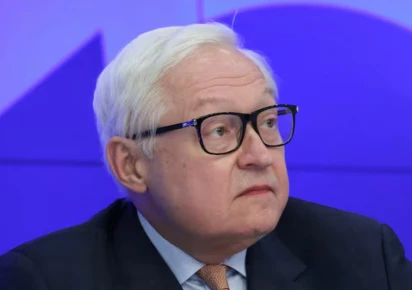
MOSCOW: Russia is prepared to consider fresh proposals aimed at ending the war in Ukraine, but any initiative must take account of what Moscow describes as the “realities on the ground”, a senior Russian diplomat said on Friday.

Deputy Foreign Minister Sergei Ryabkov said Moscow remained willing to maintain dialogue with Washington, while questioning whether the United States could exert enough influence over Kyiv and its European supporters to move negotiations forward.

His comments came as diplomatic efforts to end the conflict remain largely stalled, with international attention also focused on the wider tensions surrounding the war in Iran.

In an interview with Russian media outlet News.ru, Ryabkov said Moscow had seen signs that Washington was prepared for constructive discussions and showed some understanding of Russia’s position.

“At this stage, it is more important to what extent Washington is able to influence the decisions of the Kyiv regime and its European sponsors,” he said.

Ryabkov accused some European countries of continuing to seek what he called a “strategic defeat” of Russia, highlighting one of the central obstacles facing any potential peace agreement.

Moscow Awaits New Proposals

Russia and the United States have held discussions aimed at finding a path towards ending the Ukraine conflict, but negotiations have made little visible progress.

The Kremlin said on Thursday that it had not received information about a possible new visit to Moscow by US presidential envoys Jared Kushner and Steve Witkoff. The two have previously played prominent roles in contacts with Russian officials.

US Secretary of State Marco Rubio said last month that Washington remained committed to helping end the war after meeting Russian Foreign Minister Sergei Lavrov in Manila.

However, Rubio also warned against expecting a rapid agreement, saying Washington was attempting to find a middle ground between the positions of the two sides.

Ryabkov said Russia would be ready to examine any proposals put forward by Washington, provided they were consistent with Moscow’s stated objectives.

“The Russian Federation is ready to listen to any reasonable proposals and ideas that are in line with the goals set by the Russian president and meet the ‘realities on the ground’,” he said.

Territorial Disputes Remain Central

The comments underline the continuing importance of territory in the negotiations.

After almost four and a half years of war, Russia controls around one-fifth of Ukraine’s internationally recognised territory.

Moscow has repeatedly said it is willing to negotiate, but insists that any settlement must acknowledge what it calls the new realities created by the conflict.

Ukraine and its Western allies have opposed recognising Russian territorial gains, making the issue one of the most difficult elements of any potential peace agreement.

The challenge for Washington is therefore not simply bringing Moscow and Kyiv back to negotiations, but finding terms that could satisfy competing demands over territory, security guarantees and the future political order in the region.

Nuclear Dialogue Also on the Table

Ryabkov also signalled that Moscow wants to keep diplomatic channels open with Washington on nuclear weapons.

The issue has gained urgency since the New START treaty expired in February, leaving Russia and the United States without binding limits on their strategic nuclear arsenals for the first time in more than five decades.

Moscow has said it would continue observing the treaty’s limits on missiles and warheads as long as Washington does the same.

“We remain open in the future to find political and diplomatic ways to stabilise this area,” Ryabkov said.

The nuclear issue adds another layer to an already complicated US-Russia relationship. Even as the two countries remain deeply divided over Ukraine, Moscow appears keen to prevent the collapse of communication on strategic weapons.

For now, Russia’s message is that the door to diplomacy remains open — but only proposals that reflect Moscow’s stated conditions and its view of the battlefield are likely to receive serious consideration.

With the war continuing and previous negotiations stalled, the next major test will be whether Washington can persuade Kyiv, Moscow and European governments to move beyond competing positions and return to substantive peace discussions.
Similar Posts

  • |

    Majority of Americans see Iran War as tougher than…

    A majority of Americans believe the ongoing war with Iran has proven more difficult than initially anticipated by the US administration, according to a new CBS News/YouGov poll, with 76% of respondents describing the conflict as “more challenging” than expected . The survey, conducted between July 22 and 24, found that only 20% of respondents felt the war had unfolded as anticipated, while a mere 4% believed it had been easier than expected . Public sentiment surrounding the conflict appeared largely unsettled. The poll showed that 58% of respondents felt uncertain about the situation, while 57% reported feelings of frustration . Additionally, 36% expressed pessimism, compared to just 19% who said they felt optimistic . The findings also suggested limited confidence in the US position, with only 22% of respondents believing Iran currently held the advantage in the conflict . The results highlighted growing public concern over the trajectory of the war, which has drawn in regional actors and intensified tensions across the Middle East . The poll comes as the Trump administration has warned of “strong military action” if Iran talks fail, while Tehran has continued to signal defiance . The conflict has also impacted broader regional dynamics, including the recent trilateral framework agreement involving Israel, Lebanon, and the US, as well as Iran’s stated conditions for ending the war .

  • |

    Erdogan says Makkah defence pact could expand across region

    ANKARA: Turkish President Recep Tayyip Erdogan has said the vision behind the Makkah Joint Defence Agreement between Türkiye, Saudi Arabia and Pakistan extends beyond the three signatories and could eventually include other regional countries. Erdogan said the agreement was designed to strengthen collective security and promote lasting peace, stability and prosperity in the region. He stressed that the pact was not directed against any particular country. Speaking in an interview with an Arab newspaper, Erdogan said the three countries wanted to create a broader regional framework based on cooperation, mutual trust and collective responsibility. He said countries that support peace, stability and prosperity should be able to join the framework in the future. According to Erdogan, the agreement is based on the principle of collective deterrence. A security threat against one member would be treated as a concern for the other members. He said the arrangement could also encourage joint defence-industry projects and greater cooperation against terrorism. Erdogan argued that regional countries should take greater responsibility for addressing their own security challenges rather than relying on solutions imposed from outside the region. He described the agreement as the outcome of long-running consultations among the participating countries and said it reflected changing conditions in the region. The Turkish president also rejected the idea that the pact was simply a response to tensions between the United States and Iran. He said its broader objective was to establish a durable mechanism for regional security. Focus on Gulf security Erdogan said the agreement could contribute to stability in the Gulf, which he described as vital to international trade and the global economy. He highlighted the importance of energy supplies, maritime routes and trade links passing through the region. He also expressed concern over tensions surrounding the Strait of Hormuz, warning that prolonged disruption there could have consequences for economies around the world. Erdogan called for restraint and continued diplomatic engagement to ensure the waterway remains safe for international shipping. He said Türkiye preferred dialogue and negotiations over military escalation and believed diplomatic efforts were essential to resolving disputes in the region and beyond. The Makkah agreement formalises growing strategic cooperation between Pakistan, Saudi Arabia and Türkiye. The three countries describe the arrangement as defensive and aimed at strengthening collective deterrence rather than creating an offensive military bloc. Erdogan said stronger cooperation between Ankara and Riyadh would also contribute to regional stability. He pointed to expanding ties in defence, trade, investment, energy and tourism. Prime Minister Shehbaz Sharif has described the trilateral agreement as an extension of Pakistan and Saudi Arabia’s existing defence cooperation. Pakistan and Saudi Arabia had earlier signed a strategic mutual defence agreement under which aggression against either country would be treated as aggression against both. The latest trilateral framework builds on those longstanding security ties and introduces Türkiye into a wider mechanism for defence cooperation.

  • |

    North Korean missile unit reportedly deploys to Russia for Ukraine war

    Ukraine’s military intelligence claims that a North Korean missile unit has started deploying to western Russia, marking what could become a major expansion of military cooperation between Moscow and Pyongyang. According to Ukrainian officials, the unit may eventually be equipped with up to 120 ballistic missiles and six launchers for use in attacks against Ukraine. Andrii Cherniak, an official with Ukraine’s Main Directorate of Intelligence, said around 90 North Korean personnel are expected to be stationed in Russia’s Voronezh region as part of the Russian military’s 112th Missile Brigade. He added that discussions between senior Russian and North Korean officials next month are expected to determine the final deployment plan and missile numbers. Ukraine says North Korea has already delivered another batch of 40 KN-23 and KN-24 ballistic missiles along with military personnel. These missiles reportedly have a longer range and larger payload than Russia’s Iskander missiles, although Ukrainian military sources believe they are less accurate and have caused significant civilian casualties during previous strikes. The reported deployment comes as Russia has resumed using North Korean-made ballistic missiles after nearly a year. Ukrainian authorities say two such missiles were launched last week, including one that struck the village of Radushne in central Ukraine, reportedly killing at least five members of the same family. Ukraine remains heavily dependent on advanced air defence systems, particularly US-made Patriot batteries, to intercept ballistic missiles. Military analysts warn that an increase in North Korean missile supplies would place additional pressure on Ukraine’s already stretched air defence network, especially ahead of the winter months when Russia has previously targeted the country’s energy infrastructure. Cherniak said intelligence suggests Russia intends to integrate North Korean missile forces into its operations, although the exact role of North Korean personnel has not yet been confirmed. He also stated that about 9,500 North Korean troops remain in Russia’s Kursk region, though they are not currently taking part in direct combat operations against Ukraine. Russia and North Korea have strengthened military ties since Moscow launched its full-scale invasion of Ukraine in 2022. The two countries signed a mutual defence agreement in 2024, while Kyiv accuses Pyongyang of supplying millions of artillery shells, ballistic missiles and thousands of troops to support Russia’s war effort.

  • |

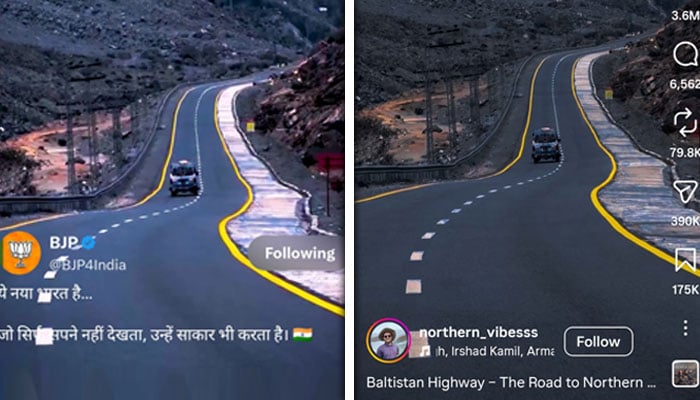
    BJP removes misattributed Pakistan highway video

    India’s ruling Bharatiya Janata Party (BJP) faced criticism after sharing a video from Pakistan’s Gilgit-Baltistan region to highlight India’s development achievements. The video was posted on the BJP’s official social media account. It was presented as an example of the progress of a “new India.” The caption claimed that India was not only dreaming of development but also turning those dreams into reality. However, social media users quickly identified the footage as a highway located in Gilgit-Baltistan, a region administered by Pakistan. The video was not related to any Indian development project. The footage was originally created by Pakistani digital content creator Northern Vibes. The creator has a large following on Instagram and regularly shares travel and landscape videos from northern areas of Pakistan. After noticing that the BJP had used the video, Northern Vibes shared a screenshot of the post on social media. The creator questioned how a road in Baltistan was being shown as part of India’s infrastructure progress. The content creator also alleged that the video had been used without permission and described it as unauthorized use of original content. The issue quickly gained attention online, with many users criticizing the BJP for sharing unverified material. Several social media users accused the party of using misleading content to promote its political message. The criticism intensified as more users pointed out the actual location shown in the video. The controversy also sparked discussions about digital copyright, content ownership and the need to verify online material before publishing it through official accounts. Following the growing backlash, the BJP removed the video from its official social media platform.

Leave a Reply

Your email address will not be published. Required fields are marked *