family launches urgent

Family Launches Urgent Fundraising Campaign To Repatriate British Crash Victim From Thailand

BANGKOK, Thailand — The family of a young British man who suffered life-threatening injuries in a road crash in Thailand has launched an urgent fundraising campaign to bring him back to the United Kingdom for specialist medical treatment. Ethan Lacey, a 20-year-old father from the Castle Vale area of Birmingham, has spent the last five weeks fighting for his life in a Thai hospital with severe brain injuries, and his relatives are striving to raise GBP 50,000 to cover the substantial costs of his medical repatriation, the BBC reported.

British Woman Seriously Injured After Fall from Pattaya Hotel Balcony

The devastating incident occurred while Lacey was visiting his cousin in Pattaya during what was originally planned as a four-week holiday. Authorities and medical staff believe he fell from a moving pick-up truck and was subsequently struck by the vehicle or another passing car. The situation quickly became critical, and his family was recently informed by medical professionals that life support might need to be withdrawn due to the severity of his condition.

Lacey’s father traveled to Thailand to be by his son’s side and has highlighted the immense difficulties the family faces while trying to navigate the foreign healthcare system. He noted that severe communication barriers have made it incredibly difficult to fully understand his son’s medical status, reinforcing their desperate need to bring him home for the specialized care he requires. The family later discovered that Lacey had extended his stay in Thailand shortly before the accident but had inadvertently failed to renew his travel insurance, leaving them entirely responsible for the exorbitant medical and repatriation expenses.

In response to the crisis, friends, relatives, and members of the local Birmingham community have rallied behind the fundraising effort. A recent community event was organized to support the campaign, with volunteers actively collecting donations across the region. Organizers and volunteers have praised the overwhelming public response, describing the local solidarity as outstanding. Supporters have been tirelessly working the streets and visiting local businesses with collection buckets to maximize donations, ensuring that no one passes by without being asked to contribute. Even younger community members have voiced their strong backing for the campaign, emphasizing that the young man deserves the same opportunity to be reunited with his family as anyone else.

As the fundraising campaign continues, the family remains focused on reaching their GBP 50,000 target. Supporters are hopeful that the collective efforts of the community will generate enough funds to allow Lacey to return to the UK, where he can receive the ongoing, specialized medical treatment his family believes is essential for his recovery.

British Man Seriously Injured in Pattaya Street Brawl with Friend

As the medical and logistical efforts continue, the family and their supporters are working tirelessly to secure the necessary funds for the repatriation flight and subsequent care.

-Thailand News (TN)
Similar Posts

  • | |

    PM Shehbaz seeks stronger US ties in trade, IT and…

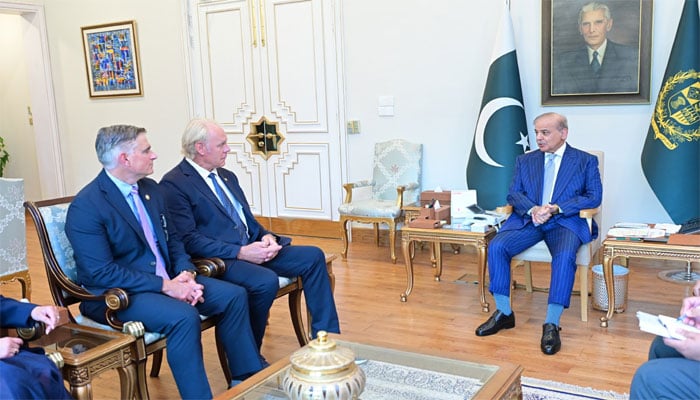
    Prime Minister Shehbaz Sharif has called for stronger cooperation between Pakistan and the United States in key economic and strategic sectors. The prime minister made the remarks during a meeting with a delegation of the US Congress. The delegation included Ryan Zinke and Representative Michael Baumgartner. According to an official statement, the meeting focused on Pakistan-US relations and opportunities to expand bilateral cooperation. Prime Minister Shehbaz welcomed the visit by the US lawmakers. He described it as a positive step towards strengthening ties between the two countries. The prime minister also conveyed his best wishes to US President Donald Trump. He appreciated Trump’s role in helping secure a ceasefire between Pakistan and India. Shehbaz described the US president’s intervention as bold and decisive. The prime minister said Pakistan wanted to further expand cooperation with the United States in several important areas. These included trade, agriculture, information technology and energy. He said stronger economic engagement could create new opportunities for both countries. Pakistan, he added, was interested in building broader and more productive relations with the United States. The US congressional delegation also spoke positively about bilateral relations. The delegation said President Trump’s strong ties with Pakistan’s leadership were producing positive results. It also recognised the importance of continued engagement between Islamabad and Washington. The visiting lawmakers praised Pakistan for its role in efforts to promote peace and stability in the region. The meeting comes as Pakistan seeks to deepen its relations with the United States. Economic cooperation remains an important part of the bilateral relationship. Trade and investment are among the areas where Pakistan wants greater engagement with the US. Islamabad is also seeking cooperation in technology, agriculture and energy. The government believes stronger cooperation in these sectors can support economic growth and create new opportunities for businesses. The meeting also highlighted the importance of political engagement between the two countries. Regular exchanges between Pakistani and US officials can help strengthen mutual understanding. Following the meeting, Prime Minister Shehbaz Sharif hosted a reception for a delegation of executives from the US corporate sector. The reception provided an opportunity to discuss business and investment opportunities. The government is seeking greater participation from international companies in Pakistan’s economy. It hopes stronger engagement with the US corporate sector will help attract investment and expand economic cooperation.

  • | | |

    91 trade exhibitions, 11 foreign delegations but n…

    Islamabad:Pakistan has preferential trade arrangements with 93 countries. Its trade promotion authority participated in 91 international exhibitions and sent 11 trade delegations abroad in the last financial year, yet the country still has no registered Pakistani trade representative organisation or joint chamber in China. The absence of a formal Pakistani commercial organisation in China became a major point of concern before the Senate Standing Committee on Commerce, as senators questioned why Pakistan has not established a stronger private sector trade presence in one of its most important international markets. The committee, chaired by Senator Anusha Rahman, was told that no Pakistani joint chamber is currently registered in China and no Pakistani trade representative organisation is operating there. The Secretary Commerce said a Pakistani chamber could be established in China either as a joint chamber or as a branch, but it would have to meet the requirements set by Chinese authorities. He further explained that only one joint chamber from Pakistan could register itself in China under the relevant arrangements. Senators questioned why such an organisation had not been established despite the large scale business relationship between Pakistan and China. The Secretary Commerce said the reason could best be explained by the trade organisations themselves. The issue became more important when senators asked what real benefit Pakistan would gain from establishing a joint chamber or representative office. The Secretary Commerce said the Ministry of Commerce could not give a clear position on the matter and suggested that the Federation of Pakistan Chambers of Commerce and Industry and other chambers should provide their views. He said Pakistani private sector organisations could establish a chamber in major Chinese commercial centres such as Beijing or Shanghai, while the Ministry of Commerce would provide full support to interested chambers if they fulfilled Chinese requirements. Senator Anusha Rahman said a chamber could help Pakistani companies follow up more effectively on commercial opportunities in China. The discussion exposed a gap between Pakistan’s growing trade ambitions and its physical commercial presence in an important foreign market. The committee also examined the performance of the Trade Development Authority of Pakistan and its efforts to increase exports. The Chief Executive of TDAP said the authority was often blamed whenever Pakistan’s exports failed to grow, but export performance depended on several factors beyond the authority’s direct control. He pointed to production costs, electricity prices and the cost of financing as major factors affecting the ability of Pakistani businesses to compete in international markets. This means that simply sending trade delegations or participating in international exhibitions cannot guarantee higher exports if Pakistani products remain expensive to produce. The Commerce Minister, Jam Kamal Khan, told the committee that the Ministry of Commerce regularly sends policy proposals and recommendations to the government to improve the country’s trade environment. He said he had also proposed to the Prime Minister that reciprocal incentives should be pursued to increase exports. The minister said the Ministry of Commerce was working on new proposals to improve international marketing and increase Pakistani exports. He stressed that Pakistan could not become more competitive in international markets without dealing with the underlying costs faced by businesses and improving the investment environment. The figures presented by TDAP showed that the authority remained active in promoting Pakistani products abroad. During the last financial year, TDAP participated in 91 international exhibitions. The authority also organised or supported 11 trade delegations to foreign countries to search for new markets and strengthen business connections. Pakistan currently has preferential trade arrangements with 93 countries, giving Pakistani businesses access to special trade opportunities in international markets. However, the Senate committee stressed that trade agreements and international relationships must produce visible economic results. Members said Pakistan’s trade agreements should not remain only on paper. They should lead to higher exports, more investment and greater access for Pakistani businesses in foreign markets. The Chief Executive TDAP also clarified an important point about the authority’s financing. TDAP does not receive funding from the Export Development Fund. Instead, it receives government financing for specific projects. The committee also discussed the importance of stronger cooperation between Pakistani and Chinese institutions and private sector organisations. Senator Saleem Mandviwalla highlighted the role that Chinese international cooperation and trade specialists could play in developing stronger business and investment links. The discussion suggested that Pakistan needs to connect several areas of economic policy instead of treating export promotion as a separate activity. Lower production costs, cheaper and reliable electricity, easier access to finance, stronger investment policies, better international marketing and effective trade representation are all important if Pakistani companies are to compete successfully abroad. TDAP’s participation in 91 international exhibitions and 11 foreign trade delegations shows that the authority is actively trying to open doors for Pakistani exporters. But the Senate discussion also made clear that opening doors is only the first step. Pakistan must ensure that its businesses are able to walk through those doors with competitive products, attractive prices and the capacity to supply international buyers. The committee appreciated TDAP’s efforts but stressed the need for a coordinated national strategy linking trade policy, investment, industrial competitiveness, export promotion and overseas market representation.

  • | | |

    Rising chip costs may increase phone prices in Pak…

    The rising cost of semiconductor chips in the global market could lead to another increase in mobile phone prices in Pakistan, as smartphone manufacturers continue to face higher production expenses. Industry experts say the global technology sector is experiencing a sharp rise in the cost of key components used in smartphones. The increasing demand for advanced semiconductor chips, particularly those used in artificial intelligence (AI) data centres, has placed significant pressure on chip manufacturers and global supply chains. In addition to AI-related demand, the prices of memory chips, silicon wafers, chip packaging materials and other electronic components have also increased. These factors have raised the overall cost of manufacturing smartphones, forcing companies to review their pricing strategies. The impact is being felt across the international mobile industry. Manufacturers are facing higher production costs, while suppliers are adjusting prices to cope with increased manufacturing expenses. As a result, smartphone companies are expected to pass part of the additional cost on to consumers. Pakistan’s mobile phone market is closely linked to global supply chains because most smartphones and their components are imported. Any increase in international production costs is likely to affect the prices of devices sold in the local market. Industry analysts say consumers may have to pay more for both premium and mid-range smartphones if the trend continues. They added that the exact increase will depend on international market conditions, import costs and currency exchange rates in the coming months. The expected rise would come at a time when consumers are already dealing with higher prices for electronic goods due to inflation and increased import expenses. A further increase in smartphone prices could reduce purchasing power and slow demand in the local market.

  • Thai Airways to Cut Multiple Domestic and International Flights in May as Fuel Costs Bite

    BANGKOK — Thai Airways International Plc has notified ticket agents that it will significantly reduce flight frequencies in May 2026 across domestic routes and services to Asia and Europe, citing sharply higher fuel costs and softer passenger demand during the traditional low-season travel period. Rising Fuel Costs in Thailand Threaten to Push Grocery Prices Higher […]

  • | |

    Becky G opens up about embracing complicated ideas…

    Becky G is entering a new chapter in her music career, and she is no longer interested in fitting herself into just one box. The Mexican-American singer, whose birth name is Rebbeca Marie Gomez, recently opened up about the personal ideas behind her fifth studio album, Baraja Bendita. Released on August 14, 2026, the 17-track project explores identity, culture, womanhood and the complicated experiences that have shaped her. (KUNC⁠) For Becky, the album is about embracing every part of herself rather than choosing one identity over another. She has often described herself as being “200%” — both American and Mexican. That duality has influenced her career, from her language and music to the expectations placed on her as a Latina artist. With Baraja Bendita, she decided to make that complexity part of the story. In a recent interview, Becky explained that the album represents a meeting point between Becky G, the public performer, and Rebbeca, the person behind the stage name. She described the project as a personal collaboration between those two sides of herself. (KUNC⁠) That honesty also appears in the subjects she tackles through her songs. One example is “EPA,” a track that addresses the difficult political climate surrounding Latino communities. Rather than avoiding uncomfortable subjects, Becky uses music to create a sense of joy and safety for people who may be dealing with uncertainty. She has emphasized that Latino communities deserve spaces where they can experience happiness, even when the world around them feels heavy. (HipLatina⁠) Other songs explore more intimate sides of her identity. Tracks such as “CHULA” embrace confidence, sensuality and womanhood, while other songs move through vulnerability, relationships and emotional complexity. The album allows those different moods to exist together instead of forcing Becky into a single image. (FemMusic⁠) That approach is especially meaningful for an artist who began working in entertainment as a teenager. After years of being publicly defined by her language, genre and cultural background, Becky now appears determined to define herself on her own terms. The album also moves freely between musical styles, including Latin, pop, electronic and urban influences. Becky has said she does not want to be restricted to one genre or language, embracing Spanglish as another natural part of who she is. (LOS40⁠) Ultimately, Baraja Bendita is less about becoming a new Becky G and more about accepting the woman she has always been. Through complicated ideas, personal stories and cultural themes, she is showing listeners that identity does not have to be simple. Sometimes, the most honest version of yourself is made up of many different sides.

  • | | | |

    NAB clarifies Rs500 million jurisdiction threshold

    ISLAMABAD: The National Accountability Bureau (NAB) has internally clarified that inflation-based adjustments to the value of liabilities cannot be used retrospectively to bring older, lower-value corruption cases under its jurisdiction. The clarification follows the enforcement of the National Accountability (Amendment) Act 2026 on March 5. NAB has issued internal guidance for prosecutors and investigators to ensure a uniform legal position on the revised Rs500 million threshold. Under the amended law, an offence falls within NAB’s jurisdiction when it involves corruption or misconduct involving at least Rs500 million. The law also links the financial threshold to annual inflation indicators issued by the Pakistan Bureau of Statistics, with the adjustment taking effect from July 1, 2026. However, NAB’s internal interpretation distinguishes between the statutory jurisdictional threshold and the inflation-adjusted value of liabilities. The Rs500 million figure remains the basic test for determining jurisdiction. Inflation adjustment is applied only after the actual liability involved in a case has been finally determined. The guidance identifies three situations based on when the alleged offence occurred. For offences committed before July 2022, the original amount involved will be assessed according to the year in which the offence took place. No inflation adjustment will be applied retrospectively. If the final liability is Rs500 million or more, NAB will retain jurisdiction. If it is below Rs500 million, the case will fall outside NAB’s jurisdiction and may be transferred to the ordinary courts. For offences committed after July 2022, the Rs500 million threshold will initially determine NAB’s jurisdiction. Once an inquiry or investigation establishes the final amount involved, the relevant inflation index for the year in which the case reaches its final stage will be applied if the original liability is at least Rs500 million. The final reference will therefore contain both the original liability and its inflation-adjusted value. If the original liability is below Rs500 million, no inflation adjustment will be made and NAB’s jurisdiction will cease. The third category concerns continuing offences that began before July 2022 but continued after that date. Such cases will be treated in the same manner as offences committed after July 2022. The guidance further states that once the original liability has been finally established and the inflation-adjusted amount has been calculated, the resulting figure will be considered final. It will not be repeatedly revised on the basis of inflation increases in subsequent years. According to the internal legal position, linking the financial threshold to inflation was intended to keep the threshold realistic and relevant over time and prevent inflation from reducing its practical value. NAB has also clarified that the amendment was not intended to retrospectively expand the bureau’s jurisdiction or disadvantage accused persons. The 2026 amendments made another significant change by expanding provisions concerning the transfer of cases falling outside NAB’s jurisdiction. The relevant provision now extends to pending appeals as well, whereas the earlier framework was primarily limited to inquiries, investigations and trials.

Leave a Reply

Your email address will not be published. Required fields are marked *