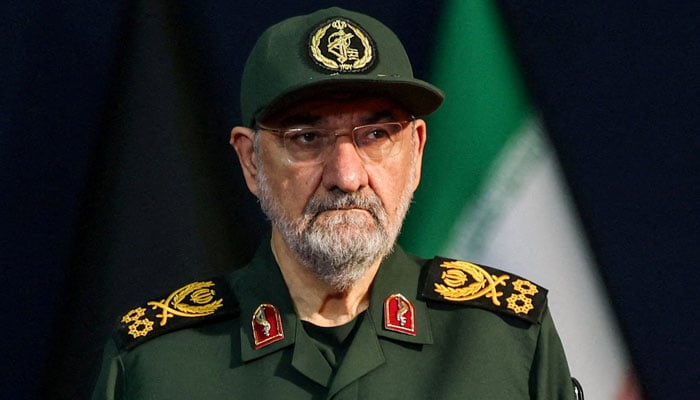
militants killed balochistan
| | |

13 militants killed in Balochistan operation: secu…

QUETTA: Security forces continued intelligence-based operations under Operation Azm in Balochistan, carrying out another targeted raid against suspected militants in Mastung district. According to security sources, the latest operation resulted in the killing of several militants, bringing the total number of militants killed during the ongoing operation to 13.

Security sources said the operation was conducted in the Khad Kocha area of Mastung after intelligence reports indicated the presence of armed militants in the region. Troops launched a coordinated operation and engaged the suspects during the raid.

According to the sources, several militants were killed during the exchange. Officials did not disclose the exact number of militants killed in the latest action but confirmed that the overall death toll in the operation has now reached 13.

The operation also targeted militant infrastructure in the area. Security sources said multiple hideouts allegedly linked to the group referred to as Fitna al-Hindustan were destroyed. They added that dismantling these hideouts is part of broader efforts to disrupt militant activities and prevent future attacks.

During the operation, security personnel recovered a cache of weapons, ammunition, explosives and materials allegedly used to manufacture improvised explosive devices (IEDs). Officials said the recovered items would be examined as part of the ongoing investigation.

Sources further claimed that several militants were injured during the operation. However, the exact number of those wounded has not been confirmed, and no official details have been released regarding their identities.

Security officials said intelligence-based operations are continuing across different parts of Balochistan to eliminate militant networks and improve the overall security situation. They added that such operations are being carried out on the basis of intelligence information to target suspected militant hideouts.

According to security sources, the campaign against militant groups will continue until terrorist networks are dismantled and peace and stability are restored across the province. They reiterated the commitment of security forces to maintain pressure on armed groups through sustained intelligence-led operations.
Similar Posts

  • | |

    Ghazi University, PMD and World Bank strengthen Hi…

    Dera Ghazi Khan: PMD, World Bank and Ghazi University Join Hands to Strengthen Hill Torrent Monitoring and Disaster Preparedness in Dera Ghazi Khan by establishment of State-of-the-Art Automatic Weather Station. A Major Milestone Towards Strengthening Weather Forecasting, Hill Torrent Monitoring and Community Resilience in Dera Ghazi Khan Ghazi University, Dera Ghazi Khan, has taken a significant step towards strengthening weather monitoring, disaster preparedness and climate resilience in the region through the establishment of a state-of-the-art Automatic Weather Station (AWS) under the World Bank-supported Modernization of Hydromet Services of PMD in Pakistan Project (MHSP). The initiative, being implemented by the Pakistan Meteorological Department (PMD) with support from the World Bank, aims to modernize Pakistan’s hydrometeorological observation network, enhance forecasting capabilities and improve climate service delivery. The project is expected to play a vital role in strengthening early warning systems and disaster preparedness, particularly in areas vulnerable to extreme weather events and climate-related hazards. The proposed Automatic Weather Station at Ghazi University will provide real-time, high-resolution meteorological data, significantly contributing to weather forecasting and the monitoring of weather conditions associated with hill torrents in Dera Ghazi Khan. Given the region’s vulnerability to flash floods and hill torrents, the installation represents an important step towards improving early warning capabilities and protecting communities, livelihoods and infrastructure. Under Phase-I of the MHSP, a total of 110 Automatic Weather Stations are being installed across Pakistan, including 25 stations in Punjab. These stations will expand the country’s real-time weather observation network and provide reliable meteorological data to support forecasting, research, disaster risk reduction and climate-resilience planning. A project team recently visited Ghazi University, Dera Ghazi Khan, where it held a meeting with the Vice Chancellor, Prof. Dr. Ashfaq Ahmad. During the visit, the team conducted a comprehensive assessment of the proposed site, finalized the location for installation of the Automatic Weather Station, and signed a Memorandum of Understanding (MoU), formally designating Ghazi University as an AWS installation site. The visiting delegation comprised Mr. Hassan Shafiq, Environment & Social Safeguards Consultant, World Bank; Dr. M. Yasir, Hydrology Consultant; Mr. Abdul Aziz, Director, Regional Meteorological Centre Lahore, Pakistan Meteorological Department; and Mr. Sajid Hussain, Meteorologist, PMD. The delegation was accompanied by Dr. Sagheer Atta, Director ORIC, Ghazi University. Speaking on the occasion, Vice Chancellor Prof. Dr. Ashfaq Ahmad expressed the university’s strong commitment to supporting the initiative and emphasized the importance of establishing an Automatic Weather Station at Ghazi University. He stated that the facility would not only strengthen real-time weather monitoring and forecasting in Dera Ghazi Khan but would also significantly enhance the monitoring and early warning of hill torrents, helping improve disaster preparedness and protect local communities from potential hazards. He described this contribution as an important form of community service, particularly for vulnerable populations in the hill-torrent-prone areas of the region. The station will also create valuable opportunities for research, academic collaboration, student training and practical learning in meteorology, hydrology, climate science and related disciplines.

  • | |

    Murree imposes Section 144 ahead of Independence D…

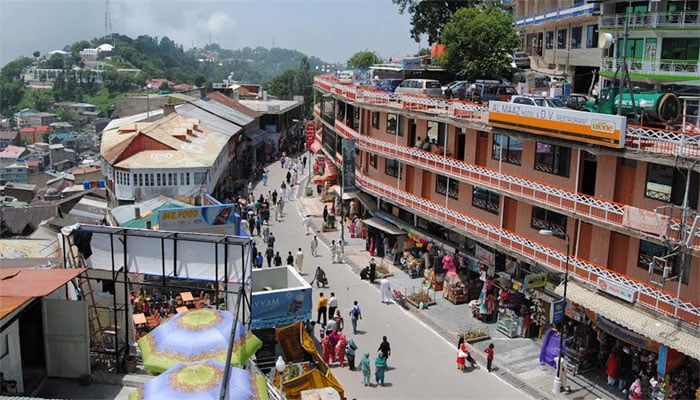
    Authorities in Murree have imposed Section 144 to maintain law and order during the Independence Day celebrations. According to an official notification, the restrictions came into effect on August 10 and will remain in place until August 16, 2026. The decision has been taken ahead of August 14 celebrations. Murree is expected to receive a large number of visitors during the holiday period. Officials have therefore introduced restrictions to manage crowds and prevent any situation that could affect public safety. Under the notification, access to key areas of the hill station will also be regulated. Only families will be allowed to visit Mall Road and GPO Chowk during the restriction period. Mall Road is among Murree’s busiest areas and usually attracts large crowds during public holidays. GPO Chowk is also a major gathering and commercial point. Limiting access to these locations is expected to help authorities control movement and reduce overcrowding. Security personnel will remain alert during the Independence Day period. Visitors have been advised to cooperate with law-enforcement personnel and follow the restrictions announced by the authorities. The administration is also expected to monitor the situation closely as visitor numbers increase. Any further measures required for crowd management and public safety may be taken during the restriction period.

  • |

    Iran appoints former IRGC commander Mohsen Rezaei as national security chief

    Iran has appointed former Islamic Revolutionary Guard Corps (IRGC) commander Mohsen Rezaei as secretary of the Supreme National Security Council (SNSC), placing a prominent hardliner at the center of the country’s defense and foreign policy establishment. Rezaei replaces Mohammad Baqer Zolqadr, who held the post briefly following the death of previous secretary Ali Larijani during an air strike in the ongoing conflict with the US and Israel. Supreme Leader Mojtaba Khamenei issued a decree appointing Rezaei as his direct representative on the council alongside Saeed Jalili, citing Rezaei’s extensive military experience during the Iran-Iraq War. The leadership shuffle comes as Iran negotiates conditional proposals to reopen shipping lanes through the Strait of Hormuz amid ongoing military and diplomatic friction. Rezaei, 71, commanded the IRGC from 1981 to 1997 and later served as secretary of the Expediency Discernment Council and vice president for economic affairs under President Ebrahim Raisi. Zolqadr, whom officials shifted to a political advisory role under the Supreme Leader, had previously outlined strict preconditions for diplomatic progress, including an immediate end to US military threats and an easing of economic sanctions.

  • | | |

    Jamaat-e-Islami storms streets over petrol levy

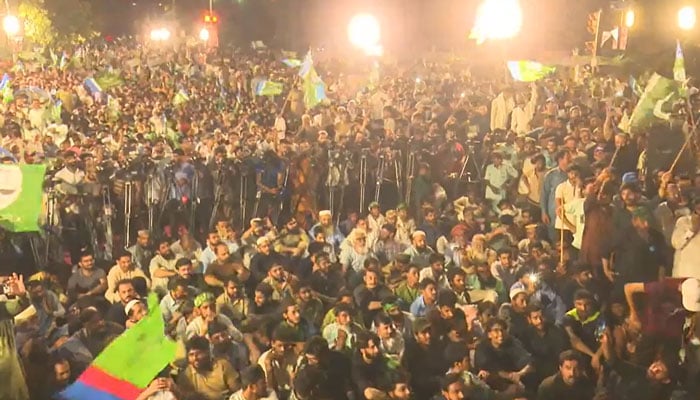
    Jamaat-e-Islami (JI) has staged sit-ins in Karachi, Lahore and Peshawar against the petroleum levy, rising fuel prices and inflation. In Karachi, a JI rally led by Karachi chief Munim Zafar reached Fawara Chowk. The party had announced a sit-in outside the Governor House to protest the petroleum levy. JI workers are moving towards the Governor House from the Sindh High Court. Party activists have been raising concerns over the impact of the petroleum levy and rising fuel prices on the public. Following the sit-in at Fawara Chowk, the road leading towards the Press Club and Arts Council remains open for traffic. Police personnel have also been deployed near the Governor House to maintain security and manage the situation. In Lahore, JI workers staged a sit-in at Faisal Chowk on Mall Road, near the Chief Minister’s House. JI Pakistan chief Hafiz Naeemur Rehman also reached the protest site and joined the demonstrators. The protest in Lahore was led by JI Punjab chief Javed Kasuri and other party leaders. The protesters are demanding relief from rising petroleum prices and the petroleum levy. The party has also criticised the increasing burden of inflation on ordinary citizens. JI leaders have called for measures to reduce the financial pressure faced by the public. In Peshawar, JI workers staged a sit-in outside the Governor House. The protest has resulted in the closure of the road up to the Sadar Khyber Pakhtunkhwa Assembly Chowk. JI Deputy Emir Liaquat Baloch is scheduled to address the protesters in Peshawar. Party leaders are expected to highlight their demands regarding petroleum prices, the levy and inflation. The demonstrations are part of JI’s wider campaign against the petroleum levy and rising prices. The party has announced protests in different cities to pressure the government to provide relief to consumers. JI leaders have argued that increases in petroleum prices affect the prices of transport, food and other essential goods. They have demanded that the government reconsider the petroleum levy and take steps to control inflation.

  • |

    Mohsen Rezaei takes Iran’s top security post

    Iran has appointed veteran Revolutionary Guards commander Mohsen Rezaei as secretary of the Supreme National Security Council (SNSC), placing a prominent security figure in a senior position at a sensitive time for the country. Rezaei, 71, replaces Mohammad Baqer Zolqadr as secretary of the council. Zolqadr has instead been appointed as a political adviser to Supreme Leader Ayatollah Mojtaba Khamenei. The SNSC plays a central role in coordinating Iran’s national security and foreign policy. It is formally chaired by President Masoud Pezeshkian and includes senior military, intelligence and government officials. Rezaei brings decades of military and political experience to the position. He joined the Islamic Revolutionary Guard Corps (IRGC) after the 1979 Islamic Revolution and became its commander in 1981, when he was only 27. He remained at the helm of the IRGC for 16 years. Much of his tenure coincided with the Iran-Iraq war from 1980 to 1988. During that period, he oversaw the development of the organisation’s land, naval and air capabilities. After leaving the IRGC command, Rezaei remained an influential figure within Iran’s political and security establishment. He later served for more than two decades as secretary of the Expediency Discernment Council. He also entered electoral politics and repeatedly sought the presidency of Iran. From 2021 to 2023, he served as vice president for economic affairs under former President Ebrahim Raisi. Rezaei holds a doctorate in economics from the University of Tehran, although much of his career has been focused on military, security and political affairs. His relationship with Supreme Leader Mojtaba Khamenei is another significant factor behind his new appointment. Rezaei was named a military adviser to Khamenei after the latter assumed the supreme leadership earlier this year. Khamenei also issued a decree appointing Rezaei as his representative on the SNSC. The decree highlighted Rezaei’s extensive military experience, particularly his role during the Iran-Iraq war. During the ongoing conflict involving Iran, the United States and Israel, Rezaei has frequently made public statements on security and foreign policy issues. He has expressed strong opposition to concessions in negotiations with Washington and has repeatedly taken a hard-line position on Iran’s security interests. His appointment therefore places an experienced IRGC commander at the centre of Iran’s national security decision-making structure. Rezaei’s political journey began even before the Islamic Revolution. As a teenager, he became involved in opposition activities against Iran’s Pahlavi monarchy. He was arrested by SAVAK, the Shah’s security service, in 1973.

  • |

    Zelensky alleges Russia shared satellite intelligence with Iran to target US bases

    Ukrainian President Volodymyr Zelensky has accused Russia of helping Iran identify US military positions in the Gulf by providing satellite intelligence, adding another layer of tension to the already strained relationship between Moscow, Tehran, and Kyiv. His remarks come as Ukraine and Iran exchange fresh accusations following an attack on an Iranian vessel in the Caspian Sea. In a statement shared on social media, Zelensky claimed that Ukraine had observed increased Russian satellite monitoring of Gulf countries and American military installations since the beginning of July. According to him, the satellite images were later used by Iran, with a noticeable connection between the timing of the surveillance and Iranian attacks. He alleged that the imagery was gathered before strikes to assist with planning and then again afterward to evaluate the extent of the damage. While Zelensky did not release evidence to support the claim, he insisted the pattern was clear and significant. The allegations surfaced shortly after Ukraine announced a series of long range military operations in the Caspian Sea. Zelensky said Ukrainian forces had successfully struck vessels carrying military cargo linked to Iran as well as a warship. Ukrainian intelligence later stated that drones had targeted sanctioned cargo ships allegedly involved in transporting military equipment between Iran and Russia. The operation marked one of Kyiv’s most direct actions against assets connected to Tehran and reflected Ukraine’s growing willingness to challenge countries it believes are supporting Russia’s war effort. Iran reacted strongly to the reported strikes. The Iranian Foreign Ministry summoned Ukraine’s senior diplomat in Tehran to protest what it described as a hostile and unlawful attack. Iranian officials said one sailor was killed and several others were injured when a commercial vessel exploded following the strike. The ministry rejected any suggestion that Iran had played a role in the war between Russia and Ukraine and insisted the country had remained outside the conflict. Iranian Foreign Minister Abbas Araghchi also condemned the attack, describing it as a serious violation of the United Nations Charter. He claimed the operation had been carried out to advance Israeli interests and accused Kyiv of trying to draw Europe deeper into the regional conflict. Araghchi said he had discussed the matter with European Union foreign policy chief Kaja Kallas and Russian Foreign Minister Sergei Lavrov, warning that Iran would not allow the incident to pass without a response. Zelensky’s latest accusations regarding Russian support for Iran are not entirely new. Earlier reports citing US officials claimed that Moscow had shared intelligence with Tehran about American military positions in the Middle East during the recent conflict involving Iran and the United States. Those reports also suggested that China could have played a supporting role, although no public evidence has confirmed those claims. The issue has also created mixed messages within the US government. During a congressional hearing, US Defence Secretary Pete Hegseth acknowledged that Russia and China were helping Iran in different ways. He said there was clear cooperation among American rivals but declined to discuss the full extent of that support, arguing that the details should remain classified for security reasons. Only days later, however, President Donald Trump publicly disagreed with that assessment. Writing on his Truth Social platform, Trump said he did not believe Russia or China had assisted Iran. He stated that both Russian President Vladimir Putin and Chinese President Xi Jinping had assured him they were not involved in supporting Iranian military operations. Despite those conflicting views, Zelensky maintained that Russian satellite activity offered direct evidence of cooperation. He specifically pointed to satellite surveillance conducted on July 19 and 20, claiming Russian satellites closely monitored four air bases used by the United States in Bahrain, Jordan, and Kuwait. According to the Ukrainian leader, the timing of those observations raised serious concerns about Russia’s role in helping Iran monitor American military assets in the region.

Leave a Reply

Your email address will not be published. Required fields are marked *