cia doubted iran
| | |

CIA doubted Iran threat behind Trump plane switch

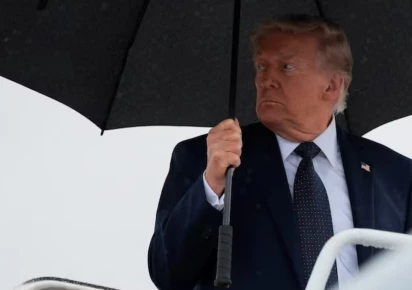
WASHINGTON: US intelligence officials had doubts about the credibility of an alleged Iranian threat against President Donald Trump that triggered an extraordinary security operation during his departure from Türkiye last month, according to a Washington Post report.

The revelation adds a new twist to the dramatic episode in which Trump was secretly moved from an aircraft at Ankara airport and flown to Britain aboard a smaller military jet while another aircraft was used as a decoy.

The Washington Post, citing current and former US officials familiar with the intelligence, reported that CIA analysts did not consider information provided by Israel sufficiently compelling. The analysts reportedly communicated their reservations to officials in the Trump administration.

The intelligence was described by one US official as Israeli-derived rather than US-generated and assessed with “low confidence”, according to the report. The CIA has declined to comment publicly.

Despite the doubts, the US Secret Service decided that the potential danger justified extraordinary precautions. Trump’s security team has faced several serious incidents during his presidency and officials have stressed that they were unwilling to take unnecessary risks.

The unusual operation unfolded after Trump attended the NATO summit in Ankara on July 8. According to reports, the president was initially expected to leave Türkiye aboard Air Force One. Instead, he was covertly transferred to a C-32A military aircraft through an airport catering truck.

Trump and a small group of close aides then travelled to Britain’s Mildenhall air base, with fighter jets providing protection. Meanwhile, the regular presidential aircraft continued as part of a carefully planned deception.

The operation has attracted considerable attention because it involved not only a change of aircraft but also secrecy from journalists and some senior officials travelling with the presidential delegation. The Washington Post reported that close Trump aides Dan Scavino, Natalie Harp and Walt Nauta accompanied him during the covert transfer, while no Cabinet officials did.

The White House has defended the decision, saying Trump faces numerous threats, including threats linked to Iran, and that the Secret Service’s primary responsibility is protecting the president.

Trump himself said the decision to use another plane was made by the Secret Service and that he followed its instructions. Reuters also reported that US officials considered the threat serious enough to warrant the covert aircraft switch.

The intelligence dispute has nevertheless raised broader questions about the information shared between Israel and Washington. Some current and former US intelligence officials reportedly believe Israeli reporting can sometimes be intended not only to warn American leaders but also to influence policy decisions.

The episode comes amid heightened tensions between Washington, Israel and Iran, making intelligence assessments particularly sensitive. It also highlights the difficult balance between acting quickly on potential threats and determining how reliable those threats actually are.

For the Trump administration, the incident has now become more than a story about an unusual plane switch. It has raised questions about intelligence credibility, presidential security and the influence of foreign-provided information on US decision-making.
Similar Posts

  • | |

    Palwasha accuses PML-N of Kashmir election rigging

    Pakistan Peoples Party (PPP) Senator Palwasha Khan has criticised the Pakistan Muslim League-Nawaz (PML-N) over the recent political developments in Kashmir. Khan said those who had won what she called a “fixed match” in Kashmir should not lecture others about the public mandate. In a statement, the PPP senator alleged that attempts were made to manipulate the electoral process in Kashmir. She claimed that re-polling was conducted repeatedly in some areas. According to Khan, these actions were part of an alleged attempt to influence the election results. She said the PPP had formally raised objections over the process. Khan said her party had submitted complaints to the relevant authorities. She added that the complaints were supported by evidence. The PPP senator also made allegations against PML-N candidates who won seats in Kashmir. She claimed that some successful candidates could not even visit their own constituencies. Khan said the political situation in Kashmir should be judged on the basis of facts on the ground. She rejected what she described as attempts to present the election results as a clear reflection of public opinion. She also turned her criticism towards the political situation in Punjab. Khan said Lahore should not be treated as a reflection of the entire province. “Lahore is not the whole of Punjab,” she said. The PPP leader urged political leaders to move beyond Lahore and assess the situation in other parts of Punjab. She said the realities outside the provincial capital were different. Khan also claimed that people in Punjab were living under fear because of the Criminal Case Department, or CCD. She said the situation had created concern among citizens. The senator criticised the alleged use of the CCD and said the PPP would oppose any move that could increase its role in Kashmir. “We will not allow Kashmir to be handed over to the CCD,” Khan said. Her statement comes amid political tensions over the election process in Azad Jammu and Kashmir. Political parties have continued to exchange allegations over polling, re-polling and the credibility of election results. Khan’s remarks reflect the PPP’s wider criticism of the political situation and alleged electoral irregularities. The party has called for its complaints and evidence to be properly examined by the relevant authorities.

  • Grenade Found Near Thai Base in Sisaket as Border Talks End Without Deal

    SISAKET – Thailand’s Second Army Region has moved to reassure the public after a 40‑millimeter grenade was fired from Cambodia into Kantharalak district in Si Sa Ket province on Thursday morning, highlighting continued tension along the border despite ongoing diplomatic efforts. Thailand Protests to Cambodia After Mortar Incident, Vows Proportional Response The grenade was discovered […]

  • Man Throws Fermented Fish at Election Commission in Bizarre Protest

    BANGKOK — A man was detained Wednesday after hurling bags of fermented fish at the Election Commission (EC) headquarters in a symbolic protest against what he described as the agency’s “rotten” performance, according to Thai Rath. People’s Party Demands Recounts in 10 Constituencies Amid Allegations of Irregularities The suspect, former tennis instructor, arrived at the […]

  • | | |

    Iran calls Kurdistan drone attack a ‘false-flag?…

    TEHRAN: Iranian Foreign Minister Abbas Araghchi has condemned a drone attack targeting the office of the Kurdistan Regional Government’s prime minister in Iraq, while warning Kurdish authorities to remain alert to what he described as possible “false-flag” operations. The remarks came after two drones targeted the office of Kurdistan Region Prime Minister Masrour Barzani in Erbil on Monday. Kurdish authorities said the attack caused no casualties, although the incident has added to concerns over the increasingly tense security environment in northern Iraq. Araghchi said nothing justified what he called a reckless attack and urged Iran’s Kurdish neighbours to be cautious of attempts to create divisions and discord between neighbouring countries. In a statement posted on social media, the Iranian foreign minister said Kurdish communities and officials should remain vigilant against operations designed to provoke tensions. He also referred to Iran’s past support for Kurdish people during conflicts with Saddam Hussein’s government and the Islamic State group. The comments came as questions remained over who was responsible for the latest attack. The Kurdistan Regional Government’s security agency said the drones originated from Iranian territory, according to Reuters. Iranian officials, however, have not directly accepted responsibility for the strike. Instead, Tehran has highlighted the possibility that the attack could have been carried out as a “false-flag” operation aimed at damaging relations between Iran and Iraq’s autonomous Kurdish region. The attack has further complicated an already sensitive regional security situation. Erbil has experienced repeated drone incidents in recent months amid the wider confrontation involving Iran, the United States and Israel. In July, several drones were intercepted over the city, with local authorities reporting no casualties. Kurdistan Region President Nechirvan Barzani has also condemned the latest attack, describing the incident as unacceptable and calling for Iraq’s federal government to fulfil its responsibility to protect the region’s security and stability. The latest confrontation comes as Iraqi Kurdistan attempts to avoid being drawn deeper into wider regional hostilities. The region’s strategic location and close ties with Western partners have repeatedly made it a sensitive point in the broader Middle Eastern conflict. With competing claims surrounding the drone attack, the incident is likely to increase diplomatic pressure on Baghdad, Erbil and Tehran to prevent further escalation and clarify responsibility for attacks on Kurdish territory.

  • | | |

    US-Iran strikes pause as diplomacy gains ground

    The United States and Iran have temporarily halted their latest military strikes, creating a fresh opportunity for diplomatic efforts to end the growing conflict. The pause followed nearly two weeks of repeated US airstrikes and Iranian retaliatory attacks. US President Donald Trump ordered a halt to further bombing, while Tehran also suspended its military response for the time being. The development has raised hopes that Washington and Tehran could return to negotiations. However, officials on both sides have warned that the situation remains fragile and could deteriorate quickly if military action resumes. US Ambassador to the United Nations Mike Waltz said the decision was intended to provide more space for diplomacy. He indicated that Washington wanted negotiations to have a chance before considering further military escalation. Reports from US media also suggested that concerns about the availability of missile-defence systems played a role in the decision. American officials have reportedly been assessing supplies of Patriot interceptors and other defensive weapons amid fears that a prolonged conflict could put additional pressure on US military resources. The pause has also encouraged regional mediation. Pakistan and Qatar have reportedly increased communication between Washington and Tehran as they seek to help both sides reach an understanding. Sources familiar with the diplomatic efforts said a joint proposal calls on the United States and Iran to return to positions held before July 9. The move could create conditions for the resumption of direct or indirect negotiations. Iranian officials confirmed that messages were still being exchanged with Washington through intermediaries. Tehran has also continued discussions with Oman regarding the Strait of Hormuz. Despite the diplomatic activity, the conflict remains highly volatile. Fighting has spread beyond direct US-Iran confrontations, affecting regional shipping, military bases and Gulf states. Iranian military officials have warned that the conflict could expand if American strikes restart. At the same time, Yemen’s Houthi movement claimed attacks on Saudi energy facilities following Saudi strikes against Houthi positions. Saudi air defences reportedly intercepted ballistic missiles and a drone over Yanbu. Another incident was reported in the Strait of Hormuz, where an oil tanker was said to have exploded after hitting a naval mine outside an Iranian-designated shipping route. Iranian authorities had not immediately confirmed the incident. Iranian Foreign Minister Abbas Araghchi rejected claims that Tehran was responsible for the latest escalation between Yemen and Saudi Arabia. He also offered Iran’s assistance in facilitating dialogue between the Houthis and Saudi Arabia.

  • | | | |

    Iran rules out US talks until demands are met

    Iran has ruled out direct negotiations with the United States for now, saying Washington must first comply with the terms of an interim agreement reached in June. Iranian Foreign Minister Abbas Araghchi said on Sunday that Tehran and Washington were not holding direct talks. He said messages were still being exchanged through intermediaries. Araghchi also reiterated Iran’s position on the Strait of Hormuz. He said the strategic waterway would not reopen simply because Iran and Oman reached an agreement on shipping arrangements. According to Iranian reports, Tehran and Muscat are close to finalising an understanding on a temporary shipping route. However, Iran says the route can only be used after other conditions are met. The Strait of Hormuz has remained at the centre of the wider conflict. Iran has repeatedly linked its reopening to demands directed at Washington. Iranian officials have called for an end to US threats and military action. They have also demanded the lifting of sanctions and blockades and the release of Iranian assets. Iran’s Revolutionary Guard has separately warned that the strait will remain closed until Tehran’s conditions are accepted. The force accused its opponents of shifting their focus toward reopening the vital waterway. The strait is one of the world’s most important energy routes. A significant share of global oil and gas shipments normally passes through it. Oman, meanwhile, said discussions with Iran over arrangements for shipping through the waterway had been positive and constructive. Muscat also urged all sides to avoid actions that could undermine the negotiations. Iranian President Masoud Pezeshkian has suggested that the current situation could provide an opportunity for an agreement. He said Iran remained united and strong despite the ongoing conflict. The diplomatic uncertainty comes as tensions continue to affect commercial shipping in the region. The United Arab Emirates said Iran had attacked a vessel linked to its state-owned oil company while it was travelling through the Strait of Hormuz. No injuries were reported. The United Kingdom Maritime Trade Operations agency also reported that a vessel caught fire after being struck by an unidentified projectile. The fire was later brought under control, with no environmental damage reported. Iranian authorities have not immediately commented on the individual incident. Saudi Arabia reports fires at energy facilities Tensions have also spread across the Gulf. Saudi Arabia said firefighters had extinguished a blaze at an Aramco facility in Jizan. The Saudi Energy Ministry said there were no fatalities. Yemen’s Houthi movement claimed responsibility for an attack on the site, saying it had used a drone in response to alleged Saudi strikes in Yemen. A separate explosion was also reported in the industrial area of Jubail. Regional sources said gas facilities were targeted and that a fire broke out. The exact cause remained unclear. It was not immediately established whether the incidents in Jizan and Jubail were connected. US defence industry ordered to increase weapons production Meanwhile, the United States has asked its defence industry to accelerate weapons production amid shortages linked to the war with Iran. US Deputy Defence Secretary Steve Feinberg reportedly instructed defence companies to submit plans aimed at speeding up deliveries and increasing production of critical military equipment. The demand comes amid reports of pressure on US ammunition supplies, including stocks of Patriot missile interceptors. The Trump administration has maintained that the United States has substantial weapons reserves and that additional supplies are being manufactured and delivered. The conflict has also triggered threats from armed groups in the region. The leader of Iraq’s Harakat Hezbollah al-Nujaba, Akram al-Kaabi, has threatened retaliation for US-Saudi strikes on sites belonging to Iraq’s Popular Mobilisation Forces. The group has warned that further military action could lead to a response. Iranian military officials, meanwhile, have claimed that the United States and Israel failed to achieve their objectives against Iran. They have praised the country’s military preparedness and vowed to continue resisting pressure. With the Strait of Hormuz still closed and negotiations remaining indirect, the prospect of restoring normal shipping remains uncertain. Iran insists that reopening the waterway depends on Washington accepting its conditions. The United States, meanwhile, has linked the lifting of its blockade to Iran fulfilling commitments under any future agreement.

Leave a Reply

Your email address will not be published. Required fields are marked *