
sindh high court
| |

Sindh High Court rejects disqualification plea aga…

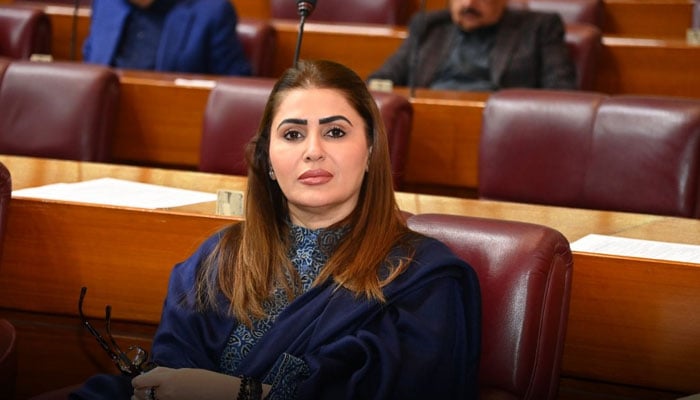
The Sindh High Court has dismissed a petition seeking the disqualification of Pakistan Peoples Party leader and National Assembly member Shazia Marri over an alleged fake degree.

The court announced its decision after the case remained pending for around 13 years.

The petition was declared not maintainable and subsequently rejected.

The court said the High Court does not have constitutional authority to disqualify a member of Parliament.

According to the court, such matters must be dealt with through the relevant constitutional and electoral forums.

The court also noted that a similar objection had previously been raised during the 2018 general elections.

The matter was taken before an election tribunal at that time. The Election Commission later rejected the objection concerning Marri’s degree in 2022.

An appeal against the tribunal’s decision was subsequently filed before the Supreme Court.

The Supreme Court dismissed the appeal in 2023 after it was withdrawn.

During the latest proceedings, Marri’s lawyer argued that the degree issue had already been examined by the Election Commission.

He told the court that evidence relating to the qualification had been presented before the commission.

The lawyer maintained that the Election Commission had already rejected the petition concerning Marri’s degree.

The court also discussed the constitutional requirements for disqualification.

It observed that a person cannot be disqualified simply through a constitutional petition.

The court said the authority to determine whether a person meets the required constitutional standards rests with the appropriate judicial and electoral forums.

It further stated that the courts cannot declare an individual truthful and trustworthy outside the constitutional procedure provided for such matters.

The judges also referred to previous orders of the Supreme Court while determining the maintainability of the petition.

Based on these considerations, the court concluded that the petition could not be entertained.

The decision brings an end to a legal challenge that had remained pending for more than a decade.

The case had focused on allegations concerning Marri’s educational qualification. However, the Election Commission had already rejected the related objection.

The latest ruling also reinforces the distinction between the powers of the High Court and those of election tribunals and other constitutional forums in matters involving parliamentary eligibility.

The court’s decision means that the petition seeking Marri’s disqualification has been dismissed without granting the requested relief.

Similar Posts

  • | | | |

    Makkah pact cements Pakistan-Türkiye-Saudi defenc…

    The newly signed defence agreement between Pakistan, Saudi Arabia and Türkiye marks a significant step towards formalising their longstanding security and strategic cooperation, while establishing a framework focused on collective defence and regional stability. The trilateral partnership brings together three countries with strong historical, political, economic and defence ties. Their cooperation has grown over decades and is now being shaped into a more structured security framework amid a rapidly changing regional environment. The agreement comes as conflicts, emerging security threats and evolving forms of warfare continue to reshape the strategic landscape. Supporters of the pact say closer coordination among the three countries can contribute to regional stability and strengthen their ability to respond collectively to security challenges. Focus on defence and deterrence The agreement has been described as defensive rather than offensive. Its central principle is collective security, under which an armed attack against one member is considered a threat to all three. The arrangement is aimed at strengthening deterrence and reducing the possibility of conflict by demonstrating that aggression against one country could trigger a coordinated response from the other two. The framework is not intended to target any particular country, according to the explanation of the agreement. Instead, it seeks to promote peace, stability and security through stronger defence cooperation. Complementary strengths Pakistan, Saudi Arabia and Türkiye bring different strategic capabilities to the partnership. Pakistan contributes extensive military experience and defence expertise, including experience in managing complex security challenges. Saudi Arabia brings its strategic position in the region, economic strength and political influence. Türkiye contributes advanced defence technology, a growing defence industry and substantial industrial capabilities. Together, these capabilities could provide the three countries with a broader platform for strategic coordination and defence preparedness. The partnership could also encourage greater cooperation in areas such as military coordination, intelligence sharing, defence technology and strategic planning. Pakistan’s regional role The agreement also highlights Pakistan’s expanding engagement with different regional and global actors. Islamabad maintains strategic and diplomatic relations with Saudi Arabia and Türkiye while also engaging Iran, China, the United States and other international partners. This network of relationships could allow Pakistan to play a constructive role in regional diplomacy and help facilitate communication among countries with differing interests. The effectiveness of the trilateral framework, however, will depend on how consistently the three countries translate the agreement into practical cooperation. Not a NATO-style alliance The partnership has also been described as not a Muslim NATO and not a mechanism for providing nuclear protection to its members. Instead, it is presented as a defensive arrangement designed to strengthen collective deterrence and security cooperation while supporting regional peace. The agreement effectively formalises much of the strategic cooperation that Pakistan, Saudi Arabia and Türkiye have developed over the years.

  • Cambodian Drones Spotted Near Thai Oil Rigs as Border Conflict Widens

    BANGKOK – Cambodian drones have been observed near Thai oil installations in the Gulf of Thailand, marking a concerning expansion of hostilities as fierce border clashes between Thai and Cambodian forces enter their twelfth consecutive day. Thai Military Destroys Cambodian Rocket Arsenal, Intensifies Naval Blockade Lieutenant Priyada Buasomboon, assistant spokesperson for the Royal Thai Navy, […]

  • Suvarnabhumi Airport Steps Up Ebola Screening For Arrivals From Congo And Uganda

    BANGKOK, Thailand — The Department of Disease Control has established enhanced screening checkpoints at Suvarnabhumi Airport to monitor passengers arriving from the Democratic Republic of the Congo and Uganda, following the Ministry of Public Health’s classification of both nations as high-risk zones for Ebola transmission. Thailand Intensifies Hantavirus Screening For Travelers From South America Health […]

  • |

    Rubina Ashraf urges greater awareness of postpartum depression

    Rubina Ashraf, one of Pakistan’s most respected television veterans, recently spoke about the importance of recognizing postpartum depression and supporting women through pregnancy and motherhood. Appearing on a morning television show, the actress shared her thoughts on the emotional and psychological challenges many women experience before and after childbirth, emphasizing that these struggles deserve greater awareness and compassion. Having spent decades in the entertainment industry as an actress, director, and producer, Rubina has earned widespread recognition for her memorable performances in dramas such as Pas-e-Aaina, Tapish, Kasak, Do Bol, Khuda Aur Muhabbat 3, and Iqtidar. She also received praise for directing the acclaimed drama serial Ruswai. Beyond her successful career, Rubina is a devoted mother of two, and her daughter, Nawal Tariq, has also established herself as an actress in Pakistan’s television industry. During the conversation, Rubina highlighted how discussions around postpartum depression were almost nonexistent in previous generations. She explained that society traditionally viewed childbirth as a routine responsibility for women, often overlooking the immense physical and emotional changes they experienced. According to Rubina, people now need to understand that pregnancy is far more than a physical process. She said that a woman undergoes significant transformations in her body, skin, hormones, and emotions, making the journey both physically demanding and mentally exhausting. While pregnancy is often associated with happiness and excitement, it can also bring anxiety, stress, and emotional vulnerability. She stressed that pregnancy-related anxiety and postpartum depression are genuine medical and psychological conditions rather than signs of weakness. Rubina noted that many women silently struggle because their emotional health is ignored or misunderstood. Without proper care and emotional support, these feelings can develop into severe depression, affecting both the mother and her family. The actress urged families to become more aware of these challenges and encouraged them to provide women with understanding instead of judgment. She explained that a pregnant woman should not be expected to manage every household responsibility while dealing with the physical and emotional demands of pregnancy. Instead, she needs kindness, patience, and reassurance from those around her. Rubina particularly emphasized the crucial role of husbands during this period. She said that a husband’s support should begin during pregnancy and continue after childbirth, as these months can be among the most difficult in a woman’s life. Emotional encouragement, practical help, and compassion can make a significant difference in a mother’s mental well-being and recovery. She added that expecting mothers often feel overwhelmed because they are trying to balance multiple responsibilities while their bodies and emotions are constantly changing. Without a supportive environment, these pressures can become unbearable. Rubina’s heartfelt remarks have resonated with many viewers, drawing attention to the importance of maternal mental health. As awareness of postpartum depression continues to grow, her message serves as a reminder that emotional well-being is just as important as physical health during pregnancy and after childbirth. By encouraging empathy, open conversations, and stronger family support, she hopes more women will receive the care they need during one of the most life-changing phases of their lives.

  • | |

    Seven professors questioned in attack case at Fede…

    Seven professors of the Federal Urdu University’s Gulshan Campus in Karachi have been issued notices in connection with an attempted attack on the university’s security in-charge. Police said the notices were issued under Section 160 of the Code of Criminal Procedure. The professors have been asked to appear and record their statements regarding the incident. Police clarified that none of the seven professors has been nominated as an accused in the case. The development has, however, triggered a protest among university teachers. Faculty members objected to the inclusion of the seven professors in the investigation. They said the professors hold positions in the teachers’ association representing both campuses of the university. According to the protesting teachers, the professors have been actively raising issues concerning employees’ rights for several months. The teachers said their campaign focuses on unpaid salaries, housing ceiling allowances and pension-related matters. They alleged that the professors were being targeted because they had raised their voices over these issues. The protesters rejected any attempt to link the teachers’ rights campaign with the attack case. They demanded that the investigation should remain fair and should not be used to pressure university employees. The teachers also said their struggle for pending financial benefits would continue. They specifically referred to 27 months of housing ceiling allowances, along with salary and pension-related demands. The faculty members called for the matter to be handled according to law. They also urged authorities to ensure that teachers are not unnecessarily harassed during the investigation. Police, meanwhile, maintained that the notices were issued only to record statements related to the incident. The issuance of notices does not mean that the professors have been formally accused in the case. The investigation into the attack on the university’s security in-charge is continuing. Authorities are expected to examine the circumstances surrounding the incident and determine whether further action is required. The dispute has also highlighted ongoing tensions between university employees and the administration over unresolved financial and service-related matters.

  • | |

    Achakzai urges PM to appoint new chief election co…

      ISLAMABAD: National Assembly Opposition Leader Mahmood Khan Achakzai has urged Prime Minister Shehbaz Sharif to initiate the process of appointing a new Chief Election Commissioner (CEC) and fill the vacant positions of two Election Commission of Pakistan (ECP) members from Sindh and Balochistan. Achakzai made the request in a letter addressed to Prime Minister Shehbaz Sharif on August 10. The opposition leader, who also heads the Tehreek Tahafuz Ayeen-i-Pakistan (TTAP) and serves as chairman of the Pakhtunkhwa Milli Awami Party, asked the premier to give immediate attention to what he described as an important constitutional responsibility concerning the composition of the country’s electoral watchdog. According to Achakzai, the official terms of the Chief Election Commissioner and the ECP members representing Sindh and Balochistan expired on January 26, 2025. He stressed that the vacant positions should be filled without further delay to ensure the commission continues to function effectively. The opposition leader argued that the timely appointment of officials to these constitutional positions was essential for maintaining the ECP’s operational continuity, institutional independence and credibility. In his communication, Achakzai referred to relevant provisions of the Constitution that outline the procedure for appointing the Chief Election Commissioner and members of the Election Commission. He cited Article 213(2A) under which the prime minister is required to consult the leader of the opposition in the National Assembly before forwarding three candidates for the post of CEC to a parliamentary committee. The committee then considers the proposed names before making the appointment through the constitutional process. Achakzai also referred to Article 218(2)(b), arguing that the appointment of ECP members from the provinces is subject to the same constitutional principle of consultation between the prime minister and the opposition leader. The opposition leader consequently called on Prime Minister Shehbaz to hold a formal meeting with him so that both sides could consult and agree on suitable candidates for the vacant constitutional positions. The demand comes against the backdrop of a prolonged delay in completing the composition of the electoral body. It is worth recalling that Prime Minister Shehbaz Sharif had previously invited former National Assembly Opposition Leader Omar Ayub for consultations regarding the appointment of a new Chief Election Commissioner. The invitation was extended in June last year as part of the constitutional process for filling the position. However, the parliamentary situation subsequently changed after the National Assembly removed Omar Ayub and several other Pakistan Tehreek-e-Insaf (PTI)-backed leaders from important parliamentary positions. The move followed their disqualification by the Election Commission of Pakistan in connection with the May 9 cases in August last year. As a result, the consultation process concerning appointments to key positions within the ECP remained stalled. Achakzai’s latest letter has brought renewed attention to the issue, with the opposition leader emphasising that the vacant positions should be filled through the constitutional procedure and without further delay. The appointment of a CEC and provincial ECP members is considered crucial for ensuring the electoral watchdog remains fully functional and retains public confidence. Achakzai has therefore sought an immediate consultation process with the prime minister to resolve the matter and complete the appointments in accordance with the Constitution.

Leave a Reply

Your email address will not be published. Required fields are marked *