shehbaz orders scientific
| | |

PM Shehbaz orders scientific system to assess tax …

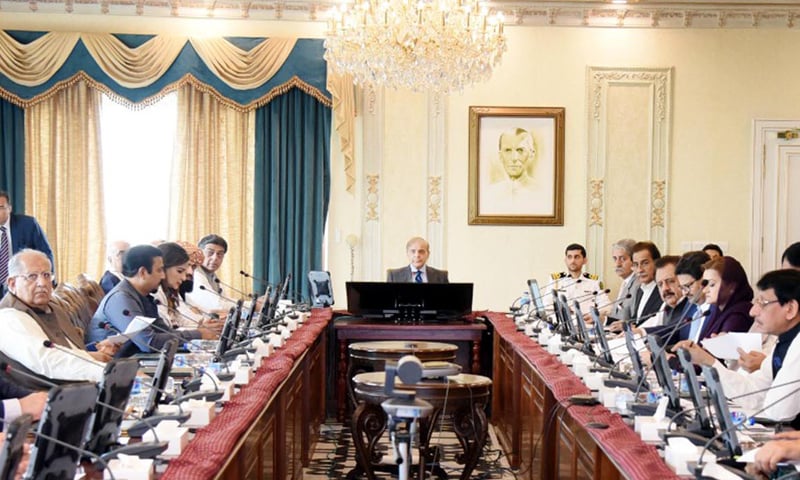
Prime Minister Shehbaz Sharif has directed the Federal Board of Revenue (FBR) to develop a scientific and comprehensive method to assess tax potential in different sectors of the economy.

The new system is aimed at improving tax collection. It will also help identify sectors with untapped revenue potential. The government wants to strengthen tax administration and reduce tax evasion.

The prime minister issued the directives during a meeting on FBR reforms in Islamabad on Wednesday.

He directed the FBR to work with the power sector to identify businesses and individuals involved in the informal economy. Authorities will also identify those suspected of avoiding taxes.

Shehbaz instructed officials to take legal action against people and businesses found involved in tax evasion.

The prime minister said improvements in the FBR’s monitoring system were already producing results. He pointed out that sugar production data had matched FBR records for the first time in Pakistan’s history.

He described the development as an important sign of improved monitoring and tracking.

Shehbaz praised FBR Chairman Rashid Mahmood Langrial and his team for their efforts. He also appreciated taxpayers and businesses that were following tax laws.

The prime minister said the government had provided maximum possible support to export-oriented and domestic industries. He said the government would continue facilitating businesses while ensuring compliance with tax regulations.

He directed the FBR chairman and senior officials to spend the first week of every month in Karachi. They will meet business representatives and address their concerns.

Shehbaz also ordered the expansion of digital production monitoring.

He directed officials to make tracking systems operational in the textile, beverages, steel, poultry, edible oil and ghee, and tyre sectors by December.

He also stressed that appointments and transfers within the FBR must be made strictly on merit.

The prime minister praised the new system for evaluating officers. He said merit and transparency must remain central to FBR reforms.

He directed authorities to prepare a list of high-performing officers. The best-performing officials will be considered for awards on Independence Day.

Shehbaz also ordered an immediate third-party audit of customs bonded warehouses.

The audit will examine the warehouses and identify possible irregularities. Officials will then be required to take corrective measures where necessary.

The meeting was informed about progress on production tracking systems and human resource reforms.

Officials said tracking systems were already fully operational in the sugar, cement, tobacco, tiles and fertiliser sectors.

Work in five additional sectors was also nearing completion. These sectors have an estimated tax potential of more than Rs700 billion.

Officials said tracking systems were also being developed for nine other production sectors.

These sectors are estimated to have an additional tax potential of around Rs560 billion.

The prime minister directed authorities to complete indirect tax tracking across the production sector by the end of the year.

The meeting also reviewed reforms in the FBR’s workforce.

Newly recruited officers are receiving specialised training. Existing officers are also undergoing training.

The programmes have been designed around merit and performance. Officials said the training modules were aligned with international standards and Pakistan’s tax requirements.

A new performance evaluation system has also been introduced.

Under the system, high-performing officers can receive recognition. Officials who fail to meet performance standards can face penalties.

The government has also appointed 957 third-party auditors. The move is intended to improve transparency and strengthen tax-related processes.

Recruitment of 280 goods evaluators is also under way. The evaluators will work under the customs faceless assessment system.

The meeting also discussed measures to reduce unnecessary tax disputes.

A Case Scrutiny Committee is being established for this purpose. The committee will determine whether tax cases should proceed based on their merits.

Officials also provided an update on Alternative Dispute Resolution Committees.

By June 2026, 152 out of 377 applications had been resolved within 90 days. The process resulted in the recovery of Rs54 billion in tax revenue.

Digital reforms also reviewed

Prime Minister Shehbaz Sharif separately reviewed progress on the national digital vision.

He ordered immediate measures to make the newly established Sky47 AI national central data centre available to federal government institutions.

The prime minister said the initiative would help modernise government services.

He said citizens would eventually be able to use a single digital identity to access multiple public services.

These services could include government document verification, banking, healthcare and transfers.

The prime minister said a central national data centre would bring information from federal institutions together.

He said this would reduce the need for separate data centres. It could also help save public resources.

Shehbaz said the national digital vision was important for building a more integrated society.

He highlighted three key areas of the programme. These include the digital economy, digital citizen services and digital government services.

He directed authorities to initially focus on health, agriculture, utilities, housing and small and medium-sized enterprises.

The aim is to ensure that citizens begin receiving improved digital services as quickly as possible.

Officials said digital implementation was already under way in agriculture, food, health, energy, housing and SMEs.

Work has also started in 14 additional priority sectors.

The housing component will introduce a central identification number for public and private properties.

The SME component will create an integrated system of unique legal identities for businesses.

The government believes these measures can improve transparency and economic activity.

Shehbaz also ordered an early meeting of the National Digital Commission.

The meeting will include key stakeholders. Provincial governments will also be consulted.

The commission was established under the Digital Nation Pakistan Act 2025. It is chaired by the prime minister and includes the chief ministers of all provinces.

The prime minister said consultation with federal and provincial institutions was essential for effective implementation.

He also stressed the importance of international standards and global best practices.

Similar Posts

  • |

    Mushfiqur breaks Bangladesh record before Australia Test

    SYDNEY: Bangladesh’s veteran wicketkeeper-batter Mushfiqur Rahim created a unique record before even taking the field in his first Test match in Australia, adding another milestone to an already remarkable international career. Mushfiqur entered the Australia Test having already played 103 Test matches, making him the most experienced player ever to feature in a Test in Australia for the first time. The achievement underlined the longevity of his career. While most players make their first appearance in a country relatively early in their Test journey, Mushfiqur reached the landmark after more than a century of matches. Before him, the record among Bangladeshi players belonged to fellow batter Mominul Haque, who had played 78 Tests before making his first Test appearance in Australia. Mominul now moves to second place on the list, while Mushfiqur’s 103-match experience puts him well ahead of the previous mark. The Bangladesh veteran’s achievement also eclipsed a record previously held by former Sri Lankan captain Marvan Atapattu. Atapattu played his first Test in Australia in 2004 after appearing in 73 Tests, making him the most experienced player to make a first Test appearance in the country at the time. Mushfiqur’s milestone therefore represents another significant chapter in a career that has made him one of Bangladesh’s most accomplished Test cricketers. However, the Bangladesh star’s achievement in Australia is not the biggest record of its kind in Test cricket. That global record belongs to England fast-bowling great James Anderson, who had played an extraordinary 175 Tests before making his first Test appearance in Pakistan. Mushfiqur’s milestone nevertheless stands out as a remarkable testament to his consistency and longevity. At 103 Tests, he arrived in Australia not as a newcomer to Test cricket, but as one of Bangladesh’s most experienced players — making his first Test in the country a historic occasion before the match had even begun.

  • | |

    Iran vows to withstand sweeping new US sanctions

    TEHRAN: Iran has said it is fully prepared to deal with the latest expansion of US economic sanctions, as Washington launches what it describes as a major campaign to cut Tehran off from international financial and trade networks. Iranian Economy Minister Ali Madanizadeh said the government had anticipated the new measures and prepared a long-term strategy to limit their impact. He said Tehran had its own economic tools and expected to continue commercial relations with countries willing to trade with Iran. The remarks came after US Treasury Secretary Scott Bessent announced a broad package of sanctions targeting Iran’s financial connections and revenue sources. Washington said the measures were designed to put further pressure on Tehran and force it to choose between greater international isolation and a return to normal economic relations. Bessent described the campaign as an unprecedented financial offensive against Iran. He said the United States would target networks and channels allegedly used by Tehran to generate revenue and bypass existing sanctions. The new measures cover several sectors, including digital assets, technology, gold, aviation and shipping. The US Treasury also announced sanctions against dozens of entities, individuals and vessels allegedly connected to Iran’s economic activities. Washington warned governments, banks and businesses that continue dealing with Iran that they could also face consequences. Bessent said the administration would move quickly against entities that continued to support Tehran’s financial networks. Iran, however, rejected the pressure campaign and said it expected to maintain economic relations with key trading partners. China has also criticised the latest US measures, describing unilateral sanctions as illegitimate. Beijing said economic pressure would not resolve disputes and stressed that it would protect its own economic interests. China is particularly important to Iran because it remains a major buyer of Iranian oil. Analysts say the effectiveness of the latest sanctions will depend heavily on whether countries such as China enforce Washington’s restrictions. Experts have also questioned how much additional pressure the new measures can place on Iran’s energy sector. Some analysts argue that existing restrictions and disruptions to oil exports have already significantly affected Tehran’s energy revenues. The confrontation is also affecting global energy markets. Oil prices have risen sharply since the conflict began, raising concerns about inflation and fuel costs in several countries. Iran has warned that it could take further action against regional oil exports if the conflict continues. Tehran has also issued warnings to vessels seeking to pass through the Strait of Hormuz, a strategically important waterway through which a significant share of global oil and gas shipments normally travels. The latest sanctions come after months of escalating pressure between Washington and Tehran. The United States has repeatedly sought to use economic measures to force Iran to change its policies, while Tehran has continued to reject what it calls unilateral American pressure. The economic consequences are also being felt in the United States. Higher oil prices have pushed gasoline costs above $4 per gallon in parts of the country, adding to concerns over household expenses ahead of the November midterm elections. For Iran, the latest US campaign presents another major economic challenge. However, Tehran’s response indicates that it intends to rely on existing trade relationships, particularly with countries that oppose unilateral US sanctions, to keep its economy functioning.

  • |

    Afghan resistance launches armed campaign against Taliban

    The United Front of Afghanistan has announced the launch of an armed campaign against the Afghan Taliban, marking what it describes as a new phase in its efforts to challenge the Taliban-led administration. The group’s leader, General Sami Sadat, also appealed to the United States, NATO and other members of the international community for political support. In a video message, General Sadat said the resistance movement had formally begun military operations in Kandahar. He described the campaign as an effort to free Afghanistan from Taliban rule and restore stability to the country. Sadat said the group’s military activities are not limited to targeting the Taliban. He claimed that United Front fighters are also operating against Al-Qaeda, Daesh (ISIS) and the Tehreek-e-Taliban Pakistan (TTP), saying these organisations pose a serious threat to Afghanistan and the wider region. He stressed that the resistance movement does not seek conflict with neighbouring countries. According to Sadat, the group’s objective is to establish peaceful relations with Afghanistan’s neighbours and promote regional cooperation. He argued that the Taliban’s policies have created security concerns for neighbouring states, while the United Front aims to contribute to long-term regional stability. General Sadat also pledged that his forces would conduct all military operations in accordance with international law. He said the movement would respect humanitarian principles during its campaign and insisted that it would not seek permission from any foreign country before carrying out its operations. Calling for international engagement, Sadat urged the global community to provide political backing to the resistance movement. He appealed to the United States, NATO and other governments to support what he described as the Afghan people’s struggle for freedom, saying the international community should stand on the “right side of history.” The announcement comes amid continuing political and security tensions in Afghanistan, where anti-Taliban resistance groups have periodically claimed attacks against Taliban positions, particularly in northern and central parts of the country. Despite these claims, the Taliban remain in control of most of Afghanistan and continue to reject the legitimacy of armed opposition groups.

  • |

    Indonesia earthquake death toll reaches 54

    Rescue teams in eastern Indonesia are preparing to intensify operations after a powerful earthquake killed at least 54 people and damaged hundreds of homes across East Nusa Tenggara. Authorities said the search for people who may still be trapped under collapsed structures would continue on Monday. Rescue officials are also preparing helicopters for aerial surveillance and equipment to remove people from damaged buildings. The earthquake has been followed by nearly 1,600 aftershocks in the affected province, according to local officials. A magnitude 5.6 tremor was also recorded in the region on Monday morning, adding to fears among residents who have been reluctant to return to their homes. The disaster has disrupted Independence Day celebrations across parts of Indonesia. Thousands of residents have been evacuated and many are staying in temporary shelters, tents and other open areas because of concerns about further tremors. Indonesia’s disaster management agency said the earthquake had damaged about 500 houses. Landslides also blocked roads in several areas, including Sikka and Manggarai, making it more difficult for emergency teams to reach affected communities. Survivors have reported shortages of basic necessities, including clean water, food and medical assistance. In one affected village, residents said children had developed diarrhoea because of poor access to safe drinking water. Some injured and vulnerable residents are being treated at makeshift medical facilities. Health authorities are preparing emergency field hospitals and say specialist doctors, including neurosurgeons and orthopaedic surgeons, are needed to treat people suffering from head injuries and broken bones. Authorities are also preparing aircraft to transport food, tents and other relief supplies to communities cut off by damaged roads and landslides. Rescue officials said there were no confirmed reports of missing people at the time of their latest update. However, search teams are continuing to inspect damaged areas to ensure that no survivors remain trapped beneath the rubble. The earthquake has deeply affected local communities, with many residents prioritising safety over the country’s Independence Day celebrations. Some families have moved to higher ground after fearing that further tremors could trigger additional hazards. Indonesia has experienced several major earthquakes in recent years. The latest disaster is being described as the country’s deadliest since a devastating 2022 earthquake in West Java claimed hundreds of lives. With aftershocks continuing and access to some areas still difficult, emergency authorities are focusing on rescue operations, medical treatment and the delivery of essential supplies to affected communities.

  • |

    AI manipulation claimed in PARC hiring; 105 candidates still waiting

    Islamabad: The Senate Standing Committee on National Food Security erupted in controversy today as concerns over recruitment at the Pakistan Agricultural Research Council (PARC) were aired with unprecedented intensity. Senators claimed that the federal research body may have violated constitutional equity, leaving candidates from Sindh and Balochistan sidelined while Punjab and Khyber Pakhtunkhwa dominated appointments. At the heart of the storm are 230 vacant posts at PARC. Although the posts were advertised nationwide and tested through the third party Candidates Testing Services (CTS), only 125 candidates have received appointment letters, leaving 105 hopefuls in limbo. Senator Poonjo Bheel voiced sharp criticism, accusing PARC of sidelining smaller provinces, potentially breaching Article 38(g) of the Constitution. “Appointments have disproportionately favored Punjab and KP,” he warned, “while Sindh and Balochistan candidates are deprived of their due share.” PARC representatives defended their process, noting that a few Sindh candidates were appointed purely on merit and promising interviews for remaining Sindh and Balochistan candidates in the coming week. Yet, the Committee remained unconvinced. Senators stressed that results should be announced simultaneously across all provinces, warning that staggered releases could create perceptions of bias. The session took an even more sensational turn when officials revealed allegations of a coordinated propaganda campaign against PARC. Officials claimed that artificial intelligence (AI) may have been used to manipulate recruitment results, prompting the Committee to recommend immediate show cause notices for any employees involved in such activities. The Chairman directed PARC to submit a detailed list of the appointing authorities responsible for each recruitment decision and a comprehensive record of the 105 pending candidates’ interviews. The Committee demanded transparency and accountability to prevent further distrust in the nation’s premier agricultural research body. The Committee’s stern message made it clear: “Merit alone cannot justify provincial inequity, and any manipulation digital or human will not be tolerated.” The meeting was attended by Senators Rahat Jamali, Shahadat Awan, and Poonjo Bheel, with the agenda moved by Senator Shahadat Awan deferred due to the absence of the Federal Minister and Secretary.

  • | |

    Justice Babar Sattar told to vacate official house

    Justice Babar Sattar has been directed to vacate his official residence in Islamabad after the cancellation of its government allotment following his transfer to the Peshawar High Court. According to an official notice issued by the Registrar of the Islamabad High Court, Justice Sattar has been given 30 days to hand over the residence. The notice states that the Estate Office cancelled the allotment of the government house on July 3 after his transfer from the Islamabad High Court to the Peshawar High Court. The document explains that the one-month notice period began on July 3, the same day the official accommodation was withdrawn. Justice Sattar has been instructed to vacate the residence within that period in accordance with government rules governing official housing for judges transferred to another high court. The move follows Justice Sattar’s transfer to the Peshawar High Court, where he is expected to perform his judicial duties after leaving the Islamabad High Court. Sources familiar with the matter said that after the transfer, Justice Sattar did not apply for or obtain an official residence in Peshawar. Instead, he reportedly decided to continue staying in the government house allotted to him in Islamabad. The notice highlights that the cancellation of the residence allotment was carried out by the Estate Office, making the continued occupation of the house subject to the expiry of the notice period. The registrar’s office formally communicated the decision to ensure compliance with the applicable administrative procedures. The development comes as part of the routine administrative process that follows the transfer of judges between high courts. Under the existing rules, official accommodation is generally linked to the judge’s place of posting, and transferred judges are required to vacate residences allocated at their previous station once the prescribed notice period expires.

Leave a Reply

Your email address will not be published. Required fields are marked *