manipulation claimed parc
|

AI manipulation claimed in PARC hiring; 105 candidates still waiting

Islamabad: The Senate Standing Committee on National Food Security erupted in controversy today as concerns over recruitment at the Pakistan Agricultural Research Council (PARC) were aired with unprecedented intensity. Senators claimed that the federal research body may have violated constitutional equity, leaving candidates from Sindh and Balochistan sidelined while Punjab and Khyber Pakhtunkhwa dominated appointments.

At the heart of the storm are 230 vacant posts at PARC. Although the posts were advertised nationwide and tested through the third party Candidates Testing Services (CTS), only 125 candidates have received appointment letters, leaving 105 hopefuls in limbo. Senator Poonjo Bheel voiced sharp criticism, accusing PARC of sidelining smaller provinces, potentially breaching Article 38(g) of the Constitution. “Appointments have disproportionately favored Punjab and KP,” he warned, “while Sindh and Balochistan candidates are deprived of their due share.”

PARC representatives defended their process, noting that a few Sindh candidates were appointed purely on merit and promising interviews for remaining Sindh and Balochistan candidates in the coming week. Yet, the Committee remained unconvinced. Senators stressed that results should be announced simultaneously across all provinces, warning that staggered releases could create perceptions of bias.

The session took an even more sensational turn when officials revealed allegations of a coordinated propaganda campaign against PARC. Officials claimed that artificial intelligence (AI) may have been used to manipulate recruitment results, prompting the Committee to recommend immediate show cause notices for any employees involved in such activities.

The Chairman directed PARC to submit a detailed list of the appointing authorities responsible for each recruitment decision and a comprehensive record of the 105 pending candidates’ interviews. The Committee demanded transparency and accountability to prevent further distrust in the nation’s premier agricultural research body.

The Committee’s stern message made it clear: “Merit alone cannot justify provincial inequity, and any manipulation digital or human will not be tolerated.”

The meeting was attended by Senators Rahat Jamali, Shahadat Awan, and Poonjo Bheel, with the agenda moved by Senator Shahadat Awan deferred due to the absence of the Federal Minister and Secretary.

Similar Posts

  • |

    Sistrology face backlash over Spider-Man movie outfits

    Spider-Man fever has reached Pakistan, but a recent appearance by popular YouTube sisters Sistrology has sparked an online debate over fashion and modesty. With Tom Holland returning as Peter Parker in the latest Spider-Man film, Spider-Man: Brand New Day, the superhero has once again become a global pop culture sensation. The film has dominated conversations worldwide, drawing huge crowds to cinemas and inspiring fans to celebrate the iconic Marvel character in different ways. The excitement has also been felt in Pakistan, where moviegoers have flocked to theatres to watch the superhero adventure. As the craze continues to grow, many fans have embraced the theme by wearing Spider-Man-inspired outfits and accessories during cinema visits. Among those joining the trend were the members of Sistrology, the popular Pakistani YouTube sisters known for sharing lifestyle content, vlogs, and family moments. The younger sisters recently attended a screening of the film dressed in Spider-Man-themed outfits, documenting the experience in a vlog that quickly gained traction across social media platforms. While many viewers enjoyed the fun and playful costumes, others reacted negatively after clips from the vlog began circulating online. The sisters’ appearance soon became the subject of widespread discussion, with social media users expressing mixed opinions about their clothing choices. Critics argued that the outfits were not suitable and questioned whether they aligned with local cultural values. Some users claimed the costumes were too revealing, while others suggested the sisters should have opted for more modest attire. A number of comments focused on the contrast between international pop culture trends and traditional expectations surrounding public appearances in Pakistan. Several social media posts criticizing the vlog quickly went viral. One user questioned the absence of modesty, while another described the outfits as inappropriate. Others used humour and wordplay to mock the costumes, creating memes and jokes that spread across various platforms. Despite the criticism, the sisters also received support from fans who defended their right to express themselves through fashion. Supporters argued that the costumes were inspired by a globally popular superhero and were intended purely for entertainment. Many also pointed out that dressing according to a movie theme is a common practice at cinemas around the world and should not automatically become a source of controversy. The incident has once again highlighted how quickly social media can turn a lighthearted moment into a national discussion. Public figures and influencers often find themselves under intense scrutiny, with even casual fashion choices becoming topics of debate. As of now, Sistrology have not publicly responded to the criticism surrounding their Spider-Man-themed outfits. However, the discussion continues online, with users divided between those who believe the sisters crossed a line and those who feel they are being unfairly judged for simply participating in a global movie trend. The episode reflects the growing influence of social media in shaping public opinion, where viral moments can spark conversations about entertainment, culture, fashion, and personal expression within just a few hours.

  • PILDAT report highlights stronger Senate lawmaking

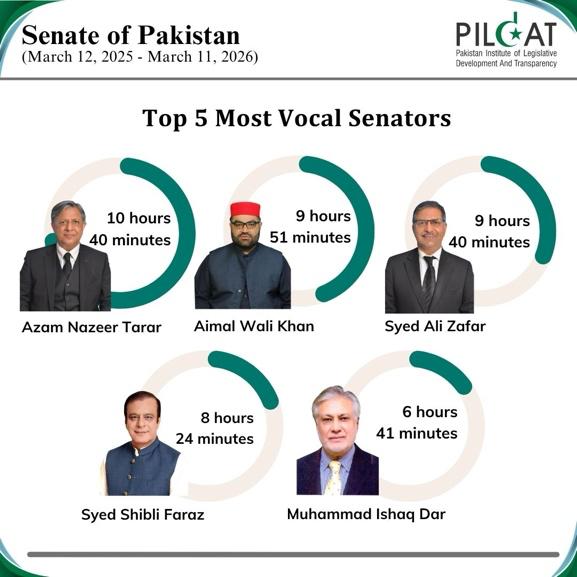
    ISLAMABAD: The Pakistan Institute of Legislative Development and Transparency (PILDAT) has reported a significant increase in legislative activity in the Senate during the 2025–26 parliamentary year, while warning that persistent institutional weaknesses continue to undermine the effectiveness of the upper house. According to PILDAT’s annual review of Senate performance, the House passed a total of 97 bills during the year, comprising 47 government bills and 50 private members’ bills. This represents a substantial increase from the 51 bills enacted during the previous parliamentary year. The report notes a marked revival in private members legislation alongside increased government-sponsored lawmaking. The Senate also reduced its reliance on presidential ordinances. Only six ordinances were laid before the House during the year, compared with 16 in the previous session, reflecting greater emphasis on parliamentary legislation. Although the Senate held 64 sittings, one fewer than the previous year’s 65, the total duration of proceedings increased considerably. Senators met for approximately 159 hours, compared with 117 hours in 2024–25, indicating longer debates and heightened legislative activity. Despite this improvement, the report highlights declining attendance among lawmakers. Average attendance fell to 57.6 per cent, down from 62 per cent a year earlier. While disruptions caused by quorum shortages became less frequent, members’ participation remained inconsistent throughout the parliamentary year. PILDAT also raised concerns over the performance of parliamentary leadership. The Leader of the House recorded an attendance rate of only 31 per cent, while the office of the Leader of the Opposition remained vacant for five months and 15 days following the removal of Senator Shibli Faraz on 5 August 2025. Senator Raja Nasir Abbas assumed the role on 20 January 2026. Among individual lawmakers, Senator Azam Nazeer Tarar, Federal Minister for Law, Justice and Human Rights, was the most active participant in debates, speaking for 10 hours and 40 minutes during Senate proceedings. He was followed by Senator Aimal Wali Khan, who spoke for 9 hours and 51 minutes, and Senator Syed Ali Zafar, who contributed 9 hours and 40 minutes. Former opposition leader Senator Shibli Faraz spoke for 8 hours and 24 minutes, while Leader of the House Muhammad Ishaq Dar recorded 6 hours and 41 minutes of speaking time. One of the defining developments of the parliamentary year was the passage of the 27th Constitutional Amendment, which introduced significant changes to the judicial structure, the constitutional interpretation mechanism and matters relating to military command. PILDAT expressed concern that the amendment was passed with exceptional haste, limiting opportunities for detailed parliamentary scrutiny and debate. The report also identifies a major institutional gap arising from the prolonged absence of representation from Khyber Pakhtunkhwa. Eleven Senate seats from the province remained vacant for nearly 23 months, from February 2024 to January 2026, because of delays in elections and legal disputes. According to PILDAT, this adversely affected the Senate’s federal character and representative composition. Further institutional strain emerged after opposition members resigned from Senate standing committees, weakening parliamentary oversight and reducing opportunities for bipartisan cooperation. On matters of national security, however, the Senate demonstrated political unity. During the Pakistan–India crisis in May 2025, the House unanimously adopted a resolution reflecting cross-party consensus on issues of national importance. The report also notes a substantial increase in the Senate’s financial allocation. The institution’s budget rose from Rs7.242 billion in 2024–25 to Rs9.055 billion in 2025–26, representing an increase of approximately 25 per cent. Consequently, expenditure per senator also increased, reaching Rs90.55 million. While acknowledging the Senate’s stronger legislative output and reduced dependence on ordinances, PILDAT concludes that improvements in member attendance, parliamentary oversight, institutional continuity and legislative scrutiny remain essential to strengthening the effectiveness of Pakistan’s upper house.

  • |

    IRI, NACTA team up to promote sectarian harmony

    Islamabad: The Islamic Research Institute (IRI) of the International Islamic University Islamabad (IIUI) and the National Counter Terrorism Authority (NACTA) have joined hands to combat violent extremism, promote inter-sectarian harmony and strengthen peacebuilding efforts across Pakistan. The two institutions signed a Memorandum of Understanding (MoU) on Friday at a ceremony attended by senior officials. Professor Dr Ahmed Saad Alahmed, Acting Rector and President of IIUI, and Mr Jawad Ahmad Dogar, PSP, National Coordinator of NACTA, signed the agreement on behalf of their respective organisations. The MoU follows several months of consultations and meetings between the two sides. The discussions identified areas for cooperation and established a long-term framework for joint initiatives. Both institutions also nominated focal persons to coordinate the partnership, while the draft agreement went through legal review before receiving final approval. Speaking at the ceremony, Professor Dr Ahmed Saad Alahmed highlighted the importance of cooperation between universities and national institutions in addressing major social challenges. He said universities have a key role in producing credible research, encouraging balanced religious discourse and providing practical policy recommendations that support national unity and social cohesion. Mr Jawad Ahmad Dogar described IRI as one of Pakistan’s leading centres for Islamic scholarship and policy research. He said the partnership would combine academic expertise with practical national experience to develop initiatives that promote tolerance and help prevent violent extremism. The collaboration has already produced its first major initiative. On July 9, 2026, IRI and NACTA jointly organised a pilot seminar titled **“Inter-Sectarian Harmony: Past Efforts and Future Roadmap.”** The event brought together scholars, policymakers, religious leaders and practitioners to discuss ways to improve sectarian understanding and develop lasting mechanisms for religious harmony. The two institutions are now preparing a major joint programme for August 2026, which will focus on academic dialogue, policy engagement and community outreach. The partnership also supports the government’s broader policy to establish Countering Violent Extremism (CVE) Centres at higher education institutions across the country. Under the MoU, IRI and NACTA will work together on research, training workshops, educational resources and capacity-building programmes to help universities establish and effectively operate CVE Centres. The agreement also covers joint research projects, policy studies, conferences, seminars, faculty development, curriculum support, publications and other capacity-building activities. The two sides will continue to engage researchers, policymakers, religious scholars, educators and practitioners to address emerging threats of violent extremism through research-based strategies. IRI reaffirmed its commitment to providing a national platform for Islamic scholarship and policy research, while NACTA expressed its resolve to strengthen cooperation with academic institutions to help build a peaceful, inclusive and resilient Pakistan.

  • |

    West Indies opt to bat first as Pakistan drop Mohammad Abbas

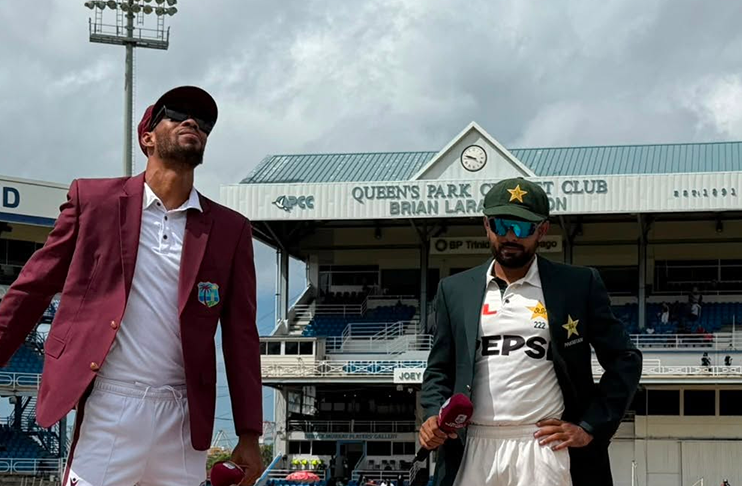
    West Indies won the toss and chose to bat first against Pakistan in the second Test at the Queen’s Park Oval in Trinidad on Sunday. The hosts went into the match with an unchanged playing XI from the series opener. Pakistan, meanwhile, made four changes to their lineup for this fixture. Pacer Mohammad Abbas was among those dropped, with captain Babar Azam citing the pitch and match conditions as the reasoning behind the call. Two players were handed their maiden Test caps for this match. Ubaid Shah and Awais Zafar both made their debuts for the side. Alongside them, Abdullah Shafique and Sajid Khan returned to the playing eleven after being left out previously. On the flip side, a few key names were missing from Pakistan’s squad this time around. Aamer Jamal and Khurram Shahzad were both left out of the XI. Captain-in-waiting Shan Masood also remained unavailable due to injury, adding to the selection headaches facing the team management. West Indies currently hold a 1-0 lead in the two-match series. They sealed that advantage with a 90-run win over Pakistan in the opening Test, played at the Brian Lara Cricket Academy. The stakes in this second Test are significant for the hosts. A win, or even a draw, would be enough to hand West Indies their first Test series victory over Pakistan in 26 years. Their most recent series win against Pakistan dates back to 2000, making this a rare opportunity for the Caribbean side to end a long wait. For Pakistan, the changes reflect an attempt to find the right balance after their defeat in the first Test. The inclusion of two debutants suggests the team management is looking to inject fresh energy into the squad, while also adjusting the bowling attack to better suit local conditions. West Indies fielded Tagenarine Chanderpaul, Brandon King, Kavem Hodge, Shai Hope (wk), Amir Jangoo, Justin Greaves, Roston Chase (capt), Jomel Warrican, Shamar Joseph, Kemar Roach, and Jayden Seales for this Test. Pakistan’s playing eleven featured Azan Awais, Imam-ul-Haq, Abdullah Shafique, Babar Azam (capt), Mohammad Rizwan (wk), Salman Ali Agha, Awais Zafar, Ali Usman, Sajid Khan, Mohammad Ali, and Ubaid Shah. With both sides fielding largely settled top orders, the outcome of this Test could go a long way in shaping the final result of the series.

  • |

    Russian missile attack kills nine in Kyiv

    KYIV: At least nine people were killed and 28 others injured after Russian ballistic missile strikes hit Ukraine’s capital, Kyiv, on Saturday morning, Ukrainian officials said. The attack caused heavy damage in several areas of the city. Multiple explosions were reported as missiles struck residential areas and other locations. Emergency teams rushed to the affected sites to rescue people and control fires. Kyiv Mayor Vitali Klitschko said the capital came under a major missile attack. He said several explosions were heard across the city, while fires broke out and some areas faced power disruptions. Officials said the Darnytskyi district was among the worst-hit areas. At least seven people were killed there, while 14 others were injured. Two children were among those wounded in the strike. Another missile strike hit the Solomyanskyi district, killing two people and injuring eight others. A five-storey residential building was partially destroyed, trapping some residents inside. Rescue workers carried out operations to search for survivors and clear the damaged structure. The attack also affected the area around the Lithuanian embassy. Lithuania’s Foreign Ministry said a missile landed nearby, damaging windows and spreading debris inside the embassy compound. No casualties were reported among diplomatic staff. The latest strikes are part of an increase in Russian missile attacks on Kyiv in recent weeks. Ukrainian officials say Moscow has intensified the use of ballistic missiles, creating greater pressure on the country’s air defence systems. President Volodymyr Zelensky has repeatedly called for additional air defence support, especially Patriot missile interceptors, which Ukraine says are essential for stopping ballistic missile attacks. Zelensky raised the issue during his recent meeting with US President Donald Trump in Washington. He urged greater support for Ukraine’s air defence capabilities as Russian attacks continue. Trump said discussions over Ukraine’s request to produce Patriot interceptors are still ongoing. However, he expressed concerns about sharing advanced US military technology and said such decisions require careful consideration. Ukraine has faced shortages of Patriot systems as Russian air attacks have increased. Kyiv says these systems remain among the few weapons capable of intercepting high-speed ballistic missiles. Meanwhile, Ukraine has continued launching retaliatory strikes against Russian targets. Ukrainian officials say their operations are aimed at disrupting military supply routes and damaging facilities linked to Russia’s war efforts.

  • | | |

    SC orders Imran’s transfer to Shifa Hospital

    The Supreme Court has directed authorities to transfer Pakistan Tehreek-e-Insaf founder Imran Khan from Adiala Jail to Shifa International Hospital for medical assessment and treatment. The order was issued by a three-member bench headed by Justice Shahid Waheed. Justice Naeem Akhtar Afghan and Justice Ishtiaq Ibrahim were also part of the bench. The court was hearing petitions related to Imran’s medical treatment, access to his personal doctors and meetings with family members. The bench also ordered authorities to submit Imran’s complete medical record before the next hearing. Justice Waheed questioned why the court had been provided with only a summary instead of the full medical file. The judge said the court wanted the complete record to properly assess Imran’s health condition. The matter came under discussion after a medical report submitted by Adiala Jail authorities highlighted concerns about Imran’s health. Justice Waheed noted that the reports indicated abnormalities in his pulse and heart condition and suggested that his vital organs could be affected. The bench also discussed a recommendation for angiography. Justice Afghan asked whether the procedure could be performed inside the jail. The Islamabad advocate general told the court that angiography could be carried out at a hospital outside the prison. PTI lawyer Uzair Bhandari raised concerns about the cause of an alleged blood clot and requested access for Imran’s personal physicians. He sought permission for Dr Asim Yusuf and Dr Faisal Sultan to meet Imran. The court discussed the qualifications of the doctors proposed for the visit and noted that no formal challenge had been made to the doctors who had already examined the former premier. The court also addressed the issue of media statements following meetings with Imran. Bhandari assured the bench that family members and doctors would not speak to the media after meeting the PTI founder. The Islamabad advocate general said an earlier undertaking regarding media interactions had allegedly been breached. The matter is also pending before the Islamabad High Court. Senior PTI lawyer Salman Akram Raja argued that responsibility should not automatically be placed on others if an undertaking had been violated. Justice Waheed warned that if contempt proceedings were initiated against officials for violating court directions, similar action could also be considered against lawyers or other individuals who breached court orders. The bench said the PTI and Imran’s family would have to provide an undertaking that no media briefing would take place after meetings. Justice Afghan also urged the PTI to avoid turning Imran’s medical condition into a political dispute. The court separately examined restrictions on meetings between Imran and his sisters. Justice Waheed said meeting family members was a fundamental right and should not be treated as a special favour. Authorities told the court that Imran had met his sisters 48 times during the past three years. The court ordered officials to submit complete details of all those meetings. It also sought records concerning Imran’s communication with his sons, including call detail records. The bench further directed authorities to provide comprehensive information about the cases against Imran. The court wants details of cases in which he is an under-trial prisoner, cases resulting in convictions and matters where sentences have been suspended. Adiala Jail officials were summoned to appear before the court at the next hearing. The court also questioned the implementation of Islamabad High Court directions concerning meetings with Imran. The Islamabad advocate general said the matter was pending before the high court in an intra-court appeal. The hearing was adjourned until after the summer vacation. Medical report submitted to court A two-page medical report submitted by the Adiala Jail superintendent provided details of Imran’s treatment and health monitoring during his imprisonment. The report said Imran had received treatment from ophthalmologists in Islamabad and Rawalpindi for central retinal vein occlusion, an eye condition diagnosed previously. According to the report, his affected eye had shown significant improvement and had almost returned to normal vision. The report also contained a summary of 39 medical examinations conducted by various specialists between November 4, 2023 and August 10, 2026. Several government doctors examined Imran during this period. Jail authorities said records of the consultations had been maintained. Medical officers at the jail also monitored his food and fluid intake three times a day and conducted regular health checks. The report stated that Imran and his wife had been meeting every Tuesday under jail rules. A total of 84 such meetings had reportedly taken place.

Leave a Reply

Your email address will not be published. Required fields are marked *