rawalakot election possible
| |

Rawalakot election possible on August 20 or 21 if …

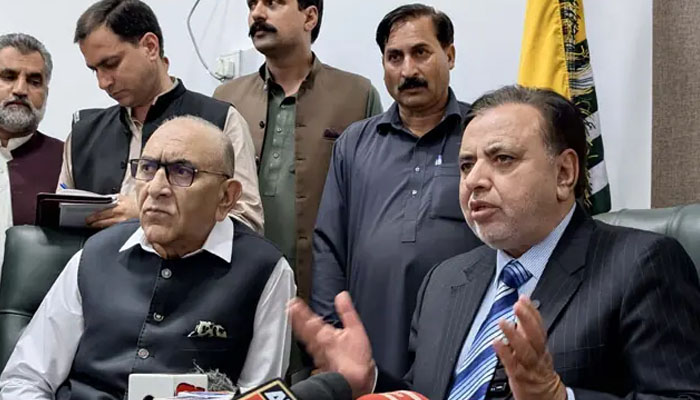
Azad Jammu and Kashmir (AJK) Chief Election Commissioner Ghulam Mustafa Mughal has said that elections in Rawalakot could be held on August 20 or 21 if the ongoing protest is resolved within the next three to four days.

Speaking to the media in Muzaffarabad, Mughal said polling in Bagh and Haveli was scheduled to take place first due to security concerns. He said security personnel had already arrived in the two districts, while polling material was being transported under the supervision of the military.

He added that eight security personnel would be deployed at each highly sensitive polling station to ensure the safety of voters and election staff.

The chief election commissioner said efforts were also under way to restore internet services in Bagh and Haveli on August 9 and 10.

Mughal said the Election Commission expected to be in a position to announce the polling date for Rawalakot within the next seven days. However, the final schedule would depend on the resolution of the ongoing protest.

“If the protest is resolved within three or four days, elections in Rawalakot can be held on August 20 or 21,” he said.

Responding to allegations made by political leaders, Mughal said the Election Commission could not engage in a war of words with politicians.

He said the commission would provide the facts once the electoral process had been completed and would determine whether any irregularities had occurred and who was responsible.

Similar Posts

  • |

    Bobby Deol wants out of the villain box after ‘Animal’ success

    Bobby Deol is opening up about being typecast as a villain following his career resurgence. His comeback gained major momentum after hit roles in “Aashram” and “Animal.” Speaking at the Jagran Film Festival, the 57-year-old actor revealed he’s been offered several negative roles recently. He admitted he’s now consciously turning many of them down to avoid getting boxed into a single image. Deol explained that actors often keep getting offered similar roles once a particular type of character brings them major success. He said that’s simply how the industry tends to operate. His post-comeback career has largely centred around dark, morally grey characters. It began with his role as a fraudulent godman in “Aashram” and continued with his widely praised villainous turn in “Animal.” Since then, he’s taken on similar roles in projects including “Hari Har Veera Mallu,” “Kanguva,” “Daaku Maharaj,” “Alpha” and “Jana Nayagan.” The pattern has left him closely associated with antagonist roles across recent years. Despite that string of successes, Deol said he is actively working to branch out into different kinds of projects. He explained that he understands why actors get pulled toward roles tied to their biggest hits, but he is determined to keep experimenting further. He revealed he recently wrapped a film called “Bandar,” describing it as a distinctly different kind of project from his recent work. Deol added that even within villain roles, there’s plenty of range to explore, since antagonists can carry very different tones and shades. He said he genuinely enjoys playing those varied versions of darker characters. Deol also confirmed he is set to appear in a few upcoming web series, which he says will offer something noticeably different from his recent filmography. On the work front, Deol is next set to appear in “Teen Kauwe,” a Hindi spy thriller series co-starring Ishaan Gupta, Fatima Sana Shaikh and Pavail Gulati. The show is currently in production and is scheduled to premiere on Amazon Prime Video on October 2, 2026.

  • | |

    Overseas Pakistanis welcome proposal for creation …

      Overseas Pakistanis have welcomed the proposal to create new provinces in the country, describing it as a positive step toward improving administrative efficiency, strengthening governance and bringing public institutions closer to citizens. Rajah Nasir Hussain, a representative of overseas Pakistanis and a prominent businessman from Gujar Khan, expressed his support for the proposal . He said the idea of creating seven provinces should be considered alongside the establishment of an eighth province comprising Islamabad and the Potohar region. According to Hussain, the creation of new provinces could help address administrative challenges and improve the delivery of public services. He stressed, however, that any decision regarding the creation of new provinces should be made through constitutional amendments and broad political consensus. He said the issue should not be treated as a matter of political rivalry or regional competition. Instead, it should be viewed as an administrative reform aimed at improving governance and ensuring that citizens in different parts of the country receive better access to state institutions and public services. Hussain also highlighted the important role played by overseas Pakistanis in the national economy. He said millions of Pakistanis living and working abroad contribute significantly to the country through remittances. The funds sent by overseas Pakistanis provide vital support to Pakistan’s economy and help strengthen the country’s financial system. He noted that overseas Pakistanis continue to make economic contributions despite living outside the country. Their remittances support families, increase foreign exchange inflows and contribute to economic stability. In his view, their role should therefore be recognised not only in economic terms but also through greater representation in the country’s administrative and political framework. Hussain argued that the government and political leadership should explore new mechanisms through which overseas Pakistanis can participate more effectively in national affairs. He said their experience of living and working in different countries gives them exposure to modern administrative systems, business practices and governance models that could potentially benefit Pakistan. He further suggested that overseas Pakistanis should have greater opportunities to contribute to policy discussions concerning economic development, investment, governance and administrative reforms. Their participation, he said, could help policymakers understand international practices and identify approaches that may be adapted to Pakistan’s circumstances. Regarding the proposed new provinces, Hussain emphasised the importance of consultation among all stakeholders. He said political parties, provincial governments, civil society, constitutional experts and representatives of the affected regions should be involved in the discussion before any final decision is taken. He maintained that the creation of provinces should be based on administrative requirements, population, geographical considerations, economic viability and the interests of local communities rather than short-term political objectives. The proposal to consider Islamabad and Potohar as an eighth province, he said, should also be examined within this broader framework. Such a move, if supported by constitutional and political consensus, could potentially improve administrative management and representation in the region. Hussain reiterated that overseas Pakistanis support reforms aimed at strengthening the country’s administrative structure. He said the debate over new provinces provides an opportunity to consider broader governance reforms while ensuring constitutional procedures and national consensus. He concluded that overseas Pakistanis should be regarded as important stakeholders in Pakistan’s future. Given their economic contributions and national role, developing effective mechanisms for their political and administrative representation should be considered a priority alongside wider institutional reforms.

  • |

    Balochistan flood resilience project faces delays despite housing support progress

    QUETTA: Implementation of a major World Bank-backed flood resilience programme in Balochistan is facing significant delays, with slow progress on infrastructure, climate services and housing reconstruction raising concerns about the project’s ability to meet its targets before the scheduled completion date. The Integrated Flood Resilience and Adaptation Project (P180323), launched in the aftermath of the devastating 2022 floods, has seen mixed results. While more than 74,000 affected households have received the first tranche of financial assistance for housing reconstruction, several key components of the project remain substantially behind schedule. According to the World Bank’s latest Implementation Status and Results Report, overall implementation progress has been downgraded to “Moderately Unsatisfactory”, while the project’s development objective continues to carry a “Moderately Satisfactory” rating. The overall risk associated with the project remains high. The programme was approved in May 2023 with the broader objective of helping flood-affected communities restore livelihoods, regain access to essential services and strengthen their ability to withstand future climate-related disasters. Infrastructure work gains momentum The project includes several major components covering community infrastructure, resilient housing, hydro-meteorological and climate services, as well as institutional strengthening and project management. The World Bank reported some improvement in the community infrastructure component following the appointment of a dedicated project director and the strengthening of the Project Implementation Unit. Detailed engineering designs and bidding documents are now close to completion, while procurement activities have begun. Despite these developments, the project has yet to achieve any of the three development-objective-linked output indicators associated with the component. The gap reflects the difference between preparatory work and actual delivery of infrastructure on the ground, with authorities still required to translate procurement and planning progress into completed projects for flood-affected communities. Climate services remain behind schedule Progress has also been reported in the climate-services component following the appointment of a new deputy project director and the award of a contract for Automatic Weather Stations (AWS). However, several critical steps remain outstanding. The onboarding of the system integrator has yet to be completed, while a number of important procurement activities are still pending. The project aims to strengthen Balochistan’s ability to monitor weather conditions and provide timely warnings to communities exposed to floods and other climate-related hazards. Under the programme, the authorities are targeting the installation of 110 Automatic Weather Stations and the operationalisation of four weather radars. As of July 2026, none of the targeted weather radars had become operational. One positive development has been the establishment of a hydrological modelling-based early warning system for hill torrents in Balochistan, which could improve preparedness in areas vulnerable to sudden flooding. Housing component performs better The strongest performance has been recorded under the resilient housing component. More than 74,000 households have received the first tranche of housing assistance, providing financial support to families whose homes were damaged or destroyed by the 2022 floods. However, the World Bank has identified several risks that could affect further progress. These include a decision by the Project Steering Committee to limit beneficiary coverage, a funding shortfall affecting other eligible households, unresolved complaints and grievances, and communication difficulties with beneficiaries. The World Bank warned that these issues could undermine confidence in the programme and affect its ability to reach the intended beneficiaries. The physical reconstruction figures also show that considerable work remains. By July 2026, only 30,226 housing units had been restored or reconstructed against the project’s target of 97,000 homes by December 2028. This means authorities will need to significantly accelerate reconstruction during the remaining implementation period if the target is to be achieved. Essential services target remains distant The project also aims to restore access to essential services for flood-affected communities. By July 2026, around 214,217 people had regained access to at least one essential service. However, the eventual target is 1.5 million people, indicating a substantial gap between current achievements and the programme’s planned outcome. Similarly, the project has yet to register progress against its target of improving climate resilience for 1.8 million people. The figures suggest that while financial assistance and preparatory activities have moved forward, the broader resilience-building objectives are yet to translate into measurable results on the required scale. Irrigation and flood protection work yet to deliver The restoration of flood-damaged irrigation systems is another major area where implementation remains slow. The project has a target of restoring irrigation infrastructure covering approximately 50,000 hectares. A similar target has been set for improving flood-protection infrastructure over an area of 50,000 hectares. However, as of July 2026, no achievement had been recorded against either target. The lack of progress is particularly significant given the importance of irrigation to livelihoods in Balochistan, where agriculture and livestock remain major sources of income for many communities. Restoring damaged irrigation networks is also critical to rebuilding economic activity in areas affected by the 2022 floods. Financing constraints add pressure Financial challenges are adding another layer of difficulty to implementation. The project has a revised allocation of approximately $214.03 million under the IDA-73330 facility. Of this amount, around $113.97 million, equivalent to 62.61%, has been disbursed, while approximately $68.05 million remains undisbursed. In addition, a separate $32 million IDA-78980 facility remains completely undisbursed. The financing position means authorities have both resources and time constraints to manage as they seek to accelerate implementation. Bridging funding gaps for eligible beneficiaries and ensuring timely utilisation of available financing will be crucial to maintaining momentum during the remaining project period. Grievances and communication concerns The World Bank has also highlighted unresolved grievances and communication shortcomings as risks to the housing component. For a project involving thousands of flood-affected households, effective communication is essential to ensure beneficiaries understand eligibility criteria, payment arrangements, construction requirements and complaint-resolution procedures. Unresolved grievances could not only delay implementation but also create dissatisfaction among communities that expected assistance following the 2022 floods. Authorities will therefore need to strengthen communication channels and grievance mechanisms alongside accelerating physical reconstruction. Limited time remains The Integrated Flood Resilience and Adaptation Project is scheduled to close on December 31, 2028.

  • | |

    Pakistan enters AI era with inauguration of larges…

    Pakistan has taken a major step towards becoming a regional digital technology hub with the inauguration of Sky47 Karakoram-01, the country’s largest AI-ready data centre and cloud platform, at Capital Smart City near Islamabad. The facility was jointly inaugurated by Prime Minister Muhammad Shehbaz Sharif and Chief of Army Staff and Chief of Defence Forces, Field Marshal Syed Asim Munir, during a ceremony attended by federal ministers, senior government officials, business leaders, technology experts and representatives of the IT sector. Developed by Sky47 in collaboration with the Habib Rafiq Group, the state-of-the-art facility has been designed to deliver artificial intelligence computing, cloud services, secure data hosting, cybersecurity and high-performance computing infrastructure. The project is expected to strengthen Pakistan’s digital economy by enabling businesses, financial institutions, government organisations and technology companies to securely host and process data within the country while supporting the rapid growth of AI applications. The project also reinforces Capital Smart City’s ambition to become Pakistan’s premier destination for data centres, cloud computing and advanced technology investment. With its modern infrastructure, strategic location and dedicated technology zones, the city is positioning itself as a future hub for digital innovation and AI-led development. Addressing the inauguration ceremony, Prime Minister Shehbaz Sharif described Sky47 as a landmark project that would help shape Pakistan’s future and strengthen the country’s digital capabilities. He said the successful completion of the project within a short period reflected extraordinary commitment, professional expertise and determination. The Prime Minister said projects such as Sky47 were essential for building a dynamic, progressive and technologically advanced Pakistan. Referring to Pakistan’s recent achievements, he said that when the nation confronts challenges with determination, optimism and resilience, it is capable of accomplishing historic milestones. He described the project as an important guarantee for Pakistan’s future and said it would provide robust digital security for the country. He also paid tribute to Field Marshal Syed Asim Munir for his visionary leadership and acknowledged the support of technology partner ZTE, Federal Minister for Information Technology Shaza Fatima Khawaja, the Ministry of IT and all stakeholders involved in making the project a reality. The Prime Minister announced that similar state-of-the-art facilities would also be developed in Karachi and Lahore and called for government institutions to make full use of the new infrastructure. The Habib Rafiq Group, under the leadership of Zahid Rafiq, has played a pivotal role in delivering the project and expanding Capital Smart City’s vision beyond real estate into technology-led infrastructure. Industry observers believe the initiative will help attract further domestic and international investment in artificial intelligence, cloud computing and digital services. Speaking at the ceremony, Federal Minister for Information Technology Shaza Fatima Khawaja said the inauguration of Sky47 marked the beginning of a new era of artificial intelligence in Pakistan. She said the project would open the door to a new phase of economic growth by enabling the country to make better use of its digital resources, skilled workforce and data-driven innovation. She added that the future global AI race would depend on the secure, efficient and intelligent use of data. Sky47 Chief Executive Officer Hassan Abbas said there are around 12,000 data centres worldwide but only 22 in Pakistan, highlighting the country’s significant growth potential. He said Pakistan’s e-commerce sector is expanding by around 25 to 30 per cent annually and that Sky47 would provide a strong foundation for the country’s digital economy. The Sky47 data centre has the capability to support artificial intelligence, machine learning and high-performance computing while providing cloud computing, secure data hosting and enterprise digital services. It is also expected to play an important role in safeguarding sensitive national and commercial information. The inauguration is being viewed as one of Pakistan’s most significant technology milestones in recent years, reflecting the country’s ambition to build sovereign digital infrastructure and reduce reliance on overseas data hosting. Supporters of the initiative describe it as a major breakthrough achieved under the leadership of Prime Minister Shehbaz Sharif, with the support of Field Marshal Syed Asim Munir, and an important step towards positioning Pakistan as a regional hub for artificial intelligence, cloud computing and next-generation digital technologies.

  • |

    Spirit controversy deepens over Deepika Padukone’s exit

    The controversy surrounding Spirit has gained fresh attention following new claims made by Pranay Reddy Vanga, brother of filmmaker Sandeep Reddy Vanga, regarding the discussions that took place before Deepika Padukone’s departure from the Prabhas-led film. Pranay recently addressed the matter in an interview, offering his version of the events surrounding Deepika’s exit. According to him, the disagreement was not limited to one issue but involved several factors, including remuneration, scheduling and other matters that emerged during discussions between the actress and the production team. He claimed that Sandeep Reddy Vanga had been in talks with Deepika for nearly 18 months and had strongly wanted her to be part of the project. However, after discussions between both sides, the filmmakers eventually decided to move forward with another actress. Pranay also alleged that remuneration became an important part of the negotiations. He claimed that Deepika had sought a percentage of the film’s profits as part of her deal, saying that she had demanded a 10 percent share in the movie’s profits. According to him, the financial implications of the request were considered before the team decided to explore other casting options. The filmmaker’s brother also spoke about the issue of confidentiality surrounding the project. He claimed that the story and character had been discussed with Deepika during the development stage but alleged that details from those private conversations later became public. His remarks added another dimension to the controversy, particularly because the film’s casting discussions had already attracted considerable attention. Another major point linked to Deepika’s departure was reportedly her working schedule. Earlier reports suggested that the actress had requested an eight-hour working shift for the project. The issue became part of the wider discussion surrounding working conditions and schedules in the Indian film industry. Deepika had previously defended her position on professional working hours, making it clear that she did not believe her expectations were unreasonable. Her comments further fueled conversations about the demands placed on actors and the importance of maintaining healthy working conditions during film productions. The controversy intensified further after Sandeep Reddy Vanga appeared to respond to the situation through a social media post. Although he did not directly name Deepika, the filmmaker expressed disappointment over confidential conversations between filmmakers and actors being made public. Sandeep emphasized the trust involved when he narrates a story to an actor and referred to an “unsaid NDA” between them. His comments were widely interpreted as a reference to the discussions surrounding Spirit and the information that had emerged following Deepika’s exit. Following her departure, Triptii Dimri was brought on board as the female lead opposite Prabhas. Her inclusion officially marked a major change in the film’s casting and shifted attention toward the new pairing. Directed by Sandeep Reddy Vanga, Spirit remains one of the most anticipated upcoming Indian films, with Prabhas in the lead role and Triptii Dimri as the female protagonist. The film is currently scheduled for release in March 2027. The developments surrounding Deepika’s exit have continued to generate discussion among cinema audiences, with the reported disagreements over remuneration, scheduling and confidentiality adding further interest to the project even before its release.

  • |

    Communal violence kills three in Nepal

    Nepal’s Prime Minister Balendra Shah has appealed for peace and restraint after deadly clashes between Hindu and Muslim communities in the country’s southern region left three people dead and prompted authorities to impose curfews in several districts. In his first major national address since taking office in March, Shah urged citizens to remain calm and reject violence, calling on political leaders, religious groups, civil society and the media to work together to preserve national unity. “I appeal to everyone to exercise patience and help restore peace, harmony and brotherhood,” the prime minister said, while assuring the public that the government would conduct a fair and transparent investigation into the violence. The unrest began earlier this week in Sunsari district near the Indian border after a dispute reportedly erupted during a Hindu religious procession. The disagreement centered on loud music and the display of religious flags, which escalated into violent clashes between members of the Hindu and Muslim communities. Police intervened to disperse the crowds and opened fire during the confrontation. Two people were killed in the initial violence, according to officials. A third person later died during a protest in the neighbouring Siraha district despite a curfew being in force. Following the violence, authorities imposed strict curfews in Sunsari and nearby districts to prevent further unrest. Security forces have been deployed across the affected areas, while police remain on high alert to protect public property and maintain law and order. Police officials said security personnel are attempting to restore normalcy while using the minimum level of force necessary to prevent additional clashes. Authorities also warned against the spread of misinformation that could further inflame tensions. The government has pledged to identify those responsible for the violence and bring them before the courts. Officials said the investigation would be conducted impartially and that anyone found involved in the unrest would face legal action.

Leave a Reply

Your email address will not be published. Required fields are marked *