spirit controversy deepens
|

Spirit controversy deepens over Deepika Padukone’s exit

The controversy surrounding Spirit has gained fresh attention following new claims made by Pranay Reddy Vanga, brother of filmmaker Sandeep Reddy Vanga, regarding the discussions that took place before Deepika Padukone’s departure from the Prabhas-led film.

Pranay recently addressed the matter in an interview, offering his version of the events surrounding Deepika’s exit. According to him, the disagreement was not limited to one issue but involved several factors, including remuneration, scheduling and other matters that emerged during discussions between the actress and the production team.

He claimed that Sandeep Reddy Vanga had been in talks with Deepika for nearly 18 months and had strongly wanted her to be part of the project. However, after discussions between both sides, the filmmakers eventually decided to move forward with another actress.

Pranay also alleged that remuneration became an important part of the negotiations. He claimed that Deepika had sought a percentage of the film’s profits as part of her deal, saying that she had demanded a 10 percent share in the movie’s profits. According to him, the financial implications of the request were considered before the team decided to explore other casting options.

The filmmaker’s brother also spoke about the issue of confidentiality surrounding the project. He claimed that the story and character had been discussed with Deepika during the development stage but alleged that details from those private conversations later became public. His remarks added another dimension to the controversy, particularly because the film’s casting discussions had already attracted considerable attention.

Another major point linked to Deepika’s departure was reportedly her working schedule. Earlier reports suggested that the actress had requested an eight-hour working shift for the project. The issue became part of the wider discussion surrounding working conditions and schedules in the Indian film industry.

Deepika had previously defended her position on professional working hours, making it clear that she did not believe her expectations were unreasonable. Her comments further fueled conversations about the demands placed on actors and the importance of maintaining healthy working conditions during film productions.

The controversy intensified further after Sandeep Reddy Vanga appeared to respond to the situation through a social media post. Although he did not directly name Deepika, the filmmaker expressed disappointment over confidential conversations between filmmakers and actors being made public.

Sandeep emphasized the trust involved when he narrates a story to an actor and referred to an “unsaid NDA” between them. His comments were widely interpreted as a reference to the discussions surrounding Spirit and the information that had emerged following Deepika’s exit.

Following her departure, Triptii Dimri was brought on board as the female lead opposite Prabhas. Her inclusion officially marked a major change in the film’s casting and shifted attention toward the new pairing.

Directed by Sandeep Reddy Vanga, Spirit remains one of the most anticipated upcoming Indian films, with Prabhas in the lead role and Triptii Dimri as the female protagonist. The film is currently scheduled for release in March 2027.

The developments surrounding Deepika’s exit have continued to generate discussion among cinema audiences, with the reported disagreements over remuneration, scheduling and confidentiality adding further interest to the project even before its release.
Similar Posts

  • |

    Narine’s quiet advice helped Tariq silence the noise on his action

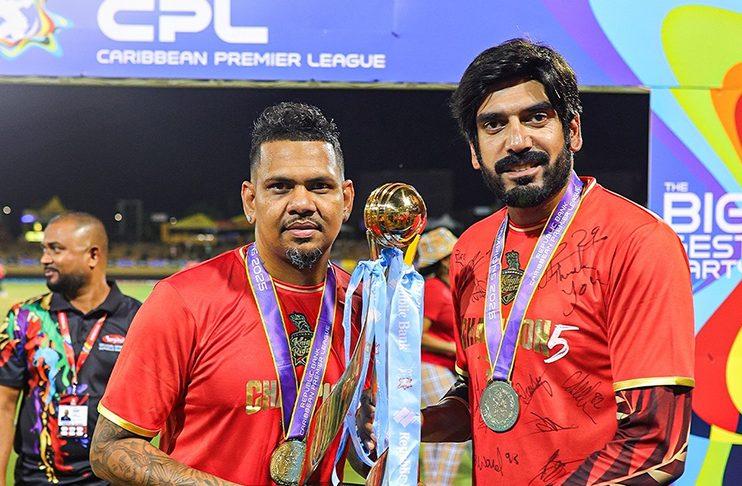
    Pakistan spinner Usman Tariq has shared how a call from West Indies great Sunil Narine helped him push through one of the toughest stretches of his career, as questions swirled around the legality of his bowling action. Tariq broke into international cricket last year, earning his debut against South Africa after a string of impressive performances for Trinbago Knight Riders in the Caribbean Premier League. Since then, his unconventional action has become a talking point almost every time he takes the ball. The 28-year-old has repeatedly had to defend himself, after both England batter Tom Banton and Australian all-rounder Cameron Green appeared to signal suspicion over a possible throw during separate matches. ICC regulations allow bowlers to straighten their arm by up to 15 degrees mid-delivery, and Tariq maintains he stays well within that limit. He puts the unusual look of his action down to the natural structure of his elbow rather than anything illegal. He made a similar point earlier this year while playing in the ILT20, explaining that his elbow simply does not allow him to straighten his arm fully, regardless of how his action might appear from the outside. The debate resurfaced ahead of Pakistan’s blockbuster clash with India at the ICC Men’s T20 World Cup 2026, when parts of the Indian media suggested he was being held back from earlier games purely to keep him fresh for that one fixture. The theory did not hold up for long, since Tariq had already featured in Pakistan’s second T20I against Australia before the tournament, and he went on to play his part throughout the World Cup. Speaking with former Pakistan batter Fawad Alam, Tariq revealed that Narine had called him directly during the most intense period of criticism. According to Tariq, the two spoke for close to 30 minutes, with Narine telling him to tune out the noise, stay consistent with his cricket, and remember that critics were only targeting him because they struggled to counter his bowling. Tariq’s action has been reported twice across his career, and both times he was cleared after review. The most recent clearance followed testing at an ICC-accredited biomechanics laboratory, where he bowled 24 deliveries for analysis before being given the green light to continue.

  • | | | | |

    Iran warns countries helping US they could also be…

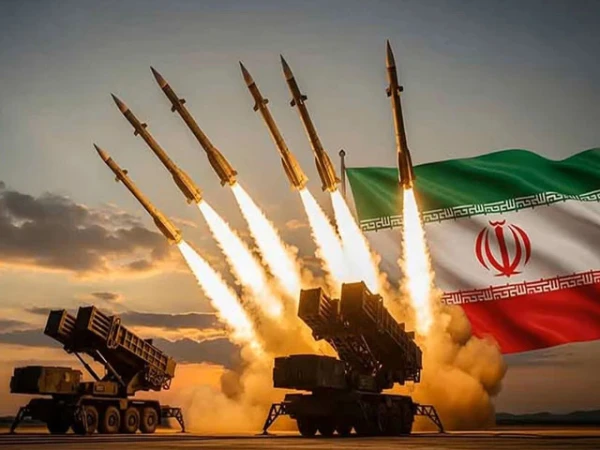
    TEHRAN/BISHKEK: Iran has issued a stern warning to countries that may support any future US military action against the Islamic Republic, saying states that assist or facilitate such operations could also face consequences and be held responsible under international law. The warning came as Iranian officials claimed that a US missile strike targeted a naval headquarters belonging to the Islamic Revolutionary Guard Corps (IRGC) in the country’s northern Gilan province, although the allegation has not been independently verified. Speaking at a regional meeting in Bishkek, Iranian Foreign Minister Abbas Araghchi said any country participating in, assisting or enabling military aggression against Iran would bear legal and political responsibility under international law. “Those who cooperate with or facilitate any act of aggression against Iran will be held accountable,” Araghchi said, adding that Tehran reserves the right to take all necessary measures to defend its sovereignty and national security. His remarks underscore the increasingly confrontational rhetoric between Tehran and Washington amid heightened regional tensions and fears of further military escalation. Meanwhile, Iran’s state news agency IRNA quoted Gilan Deputy Governor Ali Bagheri as saying that US missiles struck an IRGC Navy headquarters located in the coastal area of Zibakenar early Friday morning. According to Iranian officials, the attack damaged equipment inside the military installation. However, authorities said there were no immediate reports of casualties and did not provide additional operational details about the extent of the damage. The United States has not officially responded to Iran’s allegations, and no independent sources have confirmed that such a strike took place. The competing claims come as tensions between the two longtime rivals continue to intensify following a series of military confrontations and accusations exchanged in recent weeks. Regional security analysts warn that increasingly aggressive statements from both Tehran and Washington could further complicate the security environment across the Middle East, particularly if neighboring countries become involved in the dispute. Experts say Iran’s latest warning appears aimed at discouraging regional allies from providing logistical, intelligence or military support to any potential US operation. Such statements also signal Tehran’s intention to broaden accountability beyond direct military participants should hostilities escalate. Diplomatic efforts to reduce tensions have so far produced little visible progress, while both sides continue to exchange sharp warnings and accusations. With neither Washington nor Tehran showing signs of softening their positions, concerns remain that the already fragile regional security landscape could deteriorate further, increasing the risk of a broader confrontation involving additional regional actors.

  • |

    Pakistan pushes for renewed US and Iran talks under Islamabad agreement

    Pakistan has reaffirmed its commitment to helping revive negotiations between the United States and Iran, saying it is making every possible effort to bring both sides back to the framework established under the Islamabad memorandum of understanding signed last month. Officials believe renewed dialogue remains the best path to easing tensions in the Middle East and restoring regional stability. Speaking at the Foreign Office’s weekly media briefing on Thursday, spokesperson Tahir Andrabi said Pakistan remains concerned about the fragile security situation in the region despite a brief period of relative calm in recent days. He said the temporary reduction in violence had raised hopes for a lasting ceasefire, but recent developments have shown that the situation remains highly unstable. Andrabi stressed that Pakistan continues to support diplomacy as the only practical solution to the conflict. He said Islamabad welcomes every effort aimed at maintaining the pause in hostilities and encouraging both Washington and Tehran to return to negotiations. According to him, Pakistan remains actively engaged with all relevant parties and will continue supporting diplomatic initiatives. He added that discussions are still taking place to restore stability, particularly around the Strait of Hormuz, one of the world’s most important energy shipping routes. Pakistan, he said, is working to encourage both countries to resume talks under the Islamabad memorandum of understanding while also following the commitments outlined in the Pakistan Qatar joint statement issued on June 22. The Foreign Office urged both the United States and Iran to exercise restraint and honour their commitment to restart technical level discussions. Andrabi said continued dialogue is essential to resolving outstanding disputes and preventing another escalation that could threaten regional peace and global energy supplies. The Islamabad memorandum of understanding was signed on June 18 after weeks of diplomatic efforts. The agreement was intended to reopen the Strait of Hormuz and create conditions for ending the wider conflict that began following US and Israeli strikes on Iran earlier this year. Under the understanding, both sides had agreed to continue negotiations over the following two months. However, tensions returned on July 7 when Iran launched attacks on commercial vessels in the Strait of Hormuz, including a Qatari liquefied natural gas tanker. Tehran accused Washington of violating the agreement, leading to renewed US military strikes on Iranian targets. Since then, the conflict has expanded, with Houthi forces in Yemen imposing a naval blockade affecting Saudi Arabia and increasing pressure on another key maritime route. Violence has continued to spread across the region. On Wednesday, explosions were reported at a natural gas export facility in Egypt, while a US owned floating storage vessel was reportedly struck by a drone. At the same time, the United States and Saudi Arabia carried out joint operations against Iran backed armed groups in Iraq following attacks on American troops and Saudi energy infrastructure. After several days without major military action, the United States also launched fresh strikes against Iranian targets on Thursday in response to attacks on American bases in Jordan. During the briefing, Andrabi also rejected a recent documentary produced by Germany’s international broadcaster Deutsche Welle about Pakistan’s nuclear programme. He described the report as misleading and said it relied on outdated claims, speculation, and one sided sources. The spokesperson argued that the documentary failed to accurately reflect the history and purpose of Pakistan’s nuclear programme. He said responsible journalism requires balanced reporting and careful verification, adding that publishing unsupported allegations could damage the broadcaster’s credibility. He maintained that Pakistan has a strong command and control system for its nuclear assets, supported by legal, technical, and institutional safeguards that meet international standards. According to Andrabi, these arrangements have been recognised by independent experts. Responding to questions about India’s decision to block social media accounts belonging to Pakistan Television and other Pakistani platforms, Andrabi criticised the move, calling it another example of restrictions on independent media. He said the Indian government was attempting to limit access to alternative viewpoints while promoting an official narrative. He also urged the international community to take notice of what he described as shrinking space for free expression and media freedom in India.

  • |

    Private sector gets record Rs1.138 trillion loans in FY2025-26

    Pakistan’s private sector secured bank financing worth Rs1.138 trillion during the fiscal year 2025-26, marking the highest level of private-sector credit in the last four years, according to Adviser to the Finance Minister Khurram Shahzad. In a statement, Shahzad said the sharp increase in lending reflects improving economic conditions, stronger business confidence, and the government’s efforts to encourage investment and industrial growth. He noted that private-sector credit expanded by approximately 15 percent during the fiscal year compared to the previous year. The adviser highlighted that greater access to financing has played a key role in supporting business expansion and productive economic activities across the country. He added that around 89 percent of the newly disbursed loans were directed toward major productive sectors, including manufacturing, wholesale and retail trade, and agriculture. According to Shahzad, the manufacturing sector alone received fresh financing of Rs657 billion, enabling industries to expand production capacity, modernize operations, and meet growing market demand. He said the significant flow of funds into manufacturing demonstrates renewed confidence in Pakistan’s industrial sector. He further stated that increased financial support for the trade and agriculture sectors has contributed to higher production, stronger commercial activity, and improved investment by private businesses. Enhanced credit availability, he said, is helping enterprises expand operations, create employment opportunities, and strengthen overall economic performance. Shahzad described the record lending as a positive indicator of the country’s economic recovery, saying that rising private-sector borrowing reflects improving investor sentiment and greater confidence in Pakistan’s financial system. He added that sustained access to bank financing would remain essential for maintaining economic momentum, boosting productivity, and supporting long-term, sustainable growth.

  • | |

    Shaandaar brings a different kind of story to Pakistani television

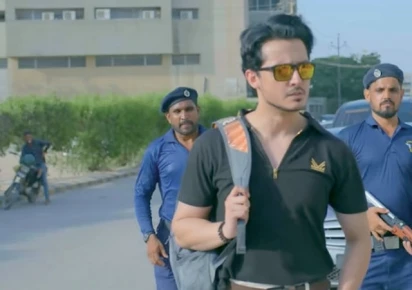
    Pakistani television dramas tend to follow familiar patterns. Family feuds, romantic misunderstandings, domestic conflicts. Shaandaar, the new crime thriller airing on Express Entertainment, has made a deliberate choice to go somewhere different, and the early response suggests audiences are ready for exactly that. The 16-episode drama, directed by Wajahat Rauf, draws inspiration from several real-life roadside killing cases that have sparked public debate and outrage in Pakistan. It is not a dramatisation of any single incident. Instead, the story brings together elements from different cases involving violence, privilege and the kind of power that can sometimes make consequences disappear. The question it keeps returning to is one that many Pakistanis have asked in real life: what happens when the powerful believe they are beyond accountability? For Ahsan Afzal Khan, who plays the central character Salar, the project offered something rare. “A script picked by Mr Wajahat Rauf already gives you the impression that something different is coming,” he told The Express Tribune. He described the opportunity to work in this genre as one of the main reasons he signed on. “There are very few such stories. We were getting a chance to do something different, a crime thriller genre.” Salar is not easy to like. He is privileged, arrogant and narcissistic. He looks down on others and misuses his influence. But Khan was careful to distinguish between understanding a character and excusing one. “I hope people relate to the human side of Salar, but not to his entire personality,” he said. He also pushed back on the idea that characters can be neatly sorted into good and bad. “No negative character is a bad person, and no positive character is a good person. We are all layered somewhere.” His explanation for how someone becomes Salar is rooted in how they were raised and what they absorbed along the way. “Did we face bullying? What did we face? All of that is incorporated into your mind. You are reacting as a defence mechanism.” Beneath the arrogance, there is a human being shaped by something. But those origins do not erase the damage. The drama is designed to move quickly. Khan described it as “fast-paced, gritty and dark,” but said the tone is not relentlessly heavy. “There is a light mood too, then slowly it gets darker and darker. There are social messages and a lot of things.” He said he watches the episodes with his family and finds himself wanting to see the next one. “It keeps you interested. It is not dragged.” That pace appears to be connecting with a younger audience. “Teenagers and Gen Z are enjoying this drama a lot,” Khan said. He also noted that viewers who usually prefer international content have expressed interest in the series, which says something about how far Shaandaar’s tone and subject matter depart from what Pakistani television typically offers. The ensemble cast includes Shamoon Abbasi, Shahzad Sheikh, Areeka Haq, Ali Dayan, Laila Wasti and Ahsan Afzal Khan. Together they inhabit a world where privilege and power create consequences that ordinary people cannot escape, and where the same actions carry very different costs depending on who commits them. It is a world many Pakistani viewers will recognise without needing it explained.

  • | |

    From Glasgow to the heart of UK power

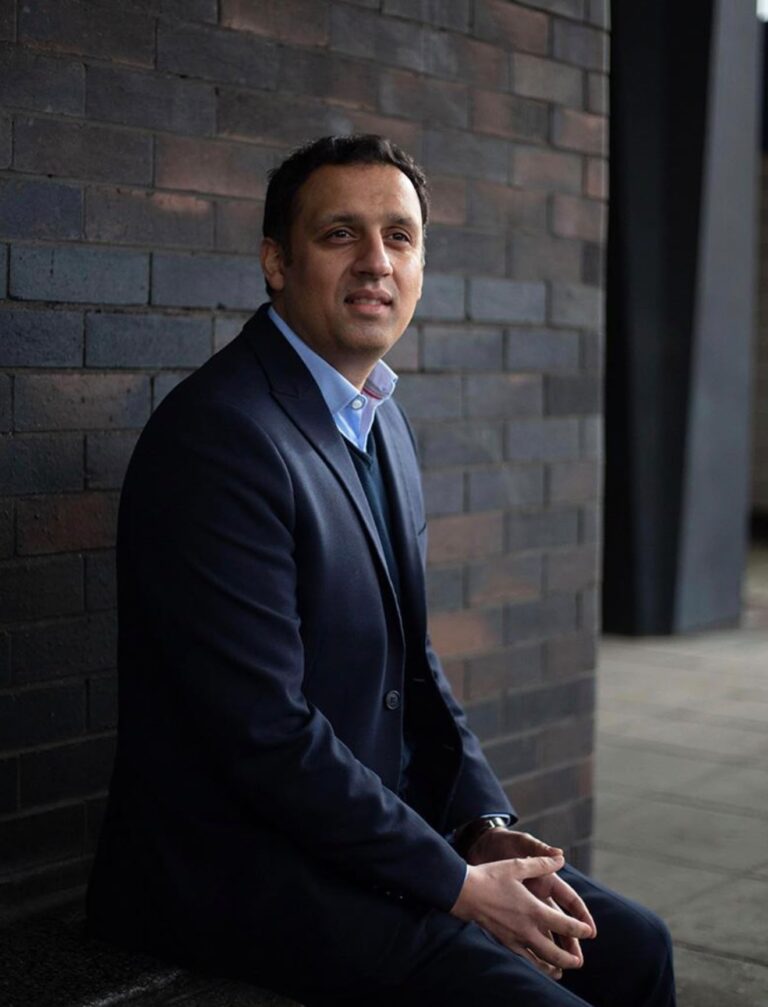
    How Anas Sarwar challenged a Prime Minister, reshaped Labour politics and rose to become a UK minister Anas Sarwar’s journey from a young Scottish politician carrying the weight of a famous political surname to one of the most senior ministers in the British government has reached a defining moment. His appointment as Minister of State for Business, Innovation, Science and Trade, alongside his elevation to the House of Lords, marks one of the most significant political achievements by a British politician of Pakistani heritage in recent decades. The appointment also underlines the confidence Prime Minister Andy Burnham has placed in Sarwar, entrusting him with a department central to the government’s ambitions for economic growth, scientific research, innovation and international trade. A FAMILY THAT MADE HISTORY Politics has long been part of the Sarwar family story. Anas Sarwar is the son of Mohammad Sarwar, who made British political history in 1997 by becoming the first Muslim and the first MP of Pakistani origin elected to the House of Commons. Mohammad Sarwar later went on to serve as Governor of Punjab, Pakistan’s largest province, giving the family a unique political legacy spanning both Britain and Pakistan. Although his father’s achievements opened doors for greater representation of British Pakistanis in politics, Anas Sarwar has spent much of his career building his own political identity through perseverance, resilience and leadership. A POLITICAL CAREER BUILT ON RESILIENCE A qualified dentist by profession, Sarwar entered Parliament after winning Glasgow Central in 2010. His political career has been shaped by both success and setbacks. Following Labour’s electoral collapse in Scotland in 2015, Sarwar emerged as one of the party’s most recognisable figures during one of its darkest periods. He served as Deputy Leader of Scottish Labour before unsuccessfully contesting the party leadership. Rather than retreating from frontline politics, he rebuilt his standing within the party and was elected Leader of Scottish Labour in 2021. Tasked with reviving a party that had suffered years of decline, Sarwar focused on rebuilding Labour’s organisation, reconnecting with voters and restoring its credibility as Scotland’s principal opposition party. THE MAN WHO FIRST CHALLENGED STARMER Sarwar’s reputation as an independent political figure was cemented during Labour’s leadership crisis when he became the first senior Labour politician to publicly call for Keir Starmer to resign. At a time when many senior figures remained publicly loyal, Sarwar openly argued that Labour required a change in leadership. Political observers viewed his intervention as a turning point that encouraged wider debate within the party over Starmer’s future. In the weeks that followed, pressure on the Prime Minister intensified, ultimately culminating in Starmer’s resignation and the election of Andy Burnham as Labour leader and Prime Minister. Today, the politician who first publicly challenged Starmer has become one of the key members of Burnham’s ministerial team—an illustration of how dramatically Labour’s political landscape has changed. A KEY ROLE IN GOVERNMENT Sarwar’s appointment as Minister of State for Business, Innovation, Science and Trade places him at the centre of one of the government’s most important departments. His responsibilities will include supporting business investment, promoting innovation, advancing scientific research, strengthening Britain’s industrial strategy and expanding international trade—areas regarded as crucial to the UK’s long-term economic future. His elevation to the House of Lords enables him to take up ministerial office while bringing his tenure as Leader of Scottish Labour to an end, triggering a contest to choose his successor. POLITICAL SIGNIFICANCE Political commentators believe the appointment carries significance far beyond a routine cabinet reshuffle. For Prime Minister Andy Burnham, it brings an experienced political strategist into a department central to delivering economic growth. For Scottish Labour, it marks the departure of the leader who steadied the party during a challenging period and leaves a significant leadership vacancy. For Britain’s Pakistani community, Sarwar’s promotion represents another landmark in the growing influence of British Pakistanis at the highest levels of national politics. COLLEAGUES SEE A RESILIENT LEADER Labour colleagues have publicly described Sarwar as a disciplined and pragmatic politician who remained committed to rebuilding Scottish Labour despite difficult electoral circumstances. Political observers argue that his appointment reflects years of persistence, resilience and organisational leadership rather than a sudden political promotion. Critics, meanwhile, have questioned his move from frontline Scottish politics to the unelected House of Lords, arguing that Scottish Labour loses one of its most experienced leaders at a crucial political moment. A NEW CHAPTER Anas Sarwar now moves from leading Labour in Scotland to helping shape Britain’s economic future from the heart of government. His appointment completes a political journey that began in Glasgow, was forged through years of electoral battles and internal party struggles, and has culminated in one of the most influential ministerial positions in Westminster. From following in the footsteps of his father, Mohammad Sarwar, to becoming the first senior Labour figure to challenge Keir Starmer’s leadership and now joining Andy Burnham’s Cabinet, Anas Sarwar’s rise reflects one of the most remarkable political stories in contemporary British politics.

Leave a Reply

Your email address will not be published. Required fields are marked *