four held punjab
|

Four held in Punjab cyber harassment crackdown

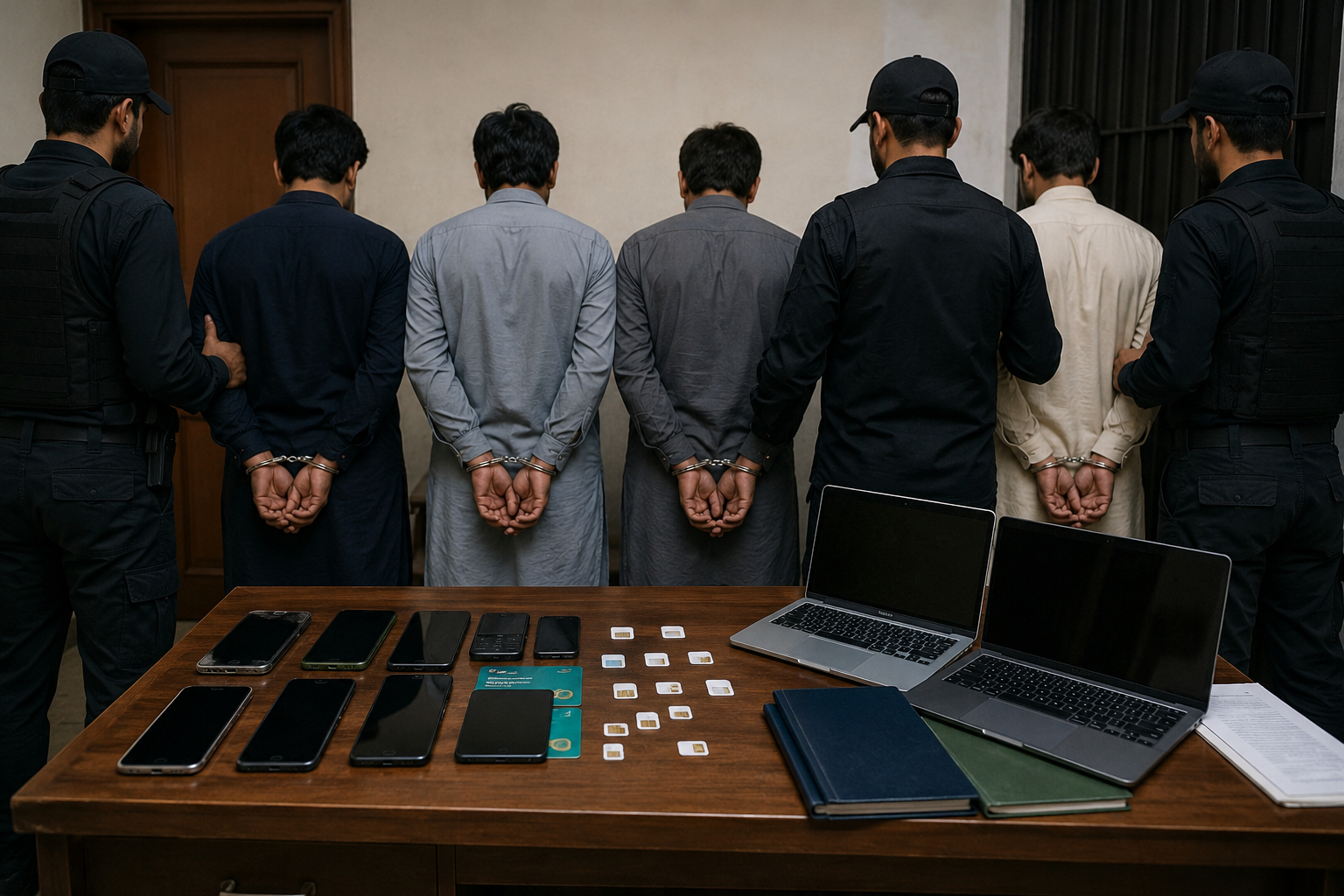
LAHORE: The National Cyber Crime Investigation Agency (NCCIA) has intensified its crackdown on people involved in online harassment, blackmail and the misuse of women’s private images across Punjab, arresting four suspects in separate operations in Lahore, Gujranwala, Multan and Faisalabad.

The operations followed special directives from NCCIA Punjab Director Muhammad Ali Wasim. Investigators also seized mobile phones, SIM cards, WhatsApp accounts and other digital evidence that could help establish the suspects’ involvement in the alleged offences.

In Lahore, NCCIA officials arrested a suspect identified as Qaiser for allegedly harassing and blackmailing a woman. According to investigators, the suspect repeatedly pressured the woman to marry him and threatened to circulate her photographs to other people if she refused. Officials have launched further investigations to determine the full extent of his activities.

In Gujranwala, the agency arrested Muhammad Muzammil and Ali Asghar in connection with an alleged blackmailing case. Investigators said Muzammil obtained a woman’s private photographs and used them to threaten her. He allegedly warned that he would send the material to her newly married husband and disrupt her marital life unless she met his demands.

The investigation found that the suspect allegedly demanded money from the woman, after which around Rs2 million was transferred to a bank account linked to Ali Asghar. During the operation, officials recovered three mobile phones, a WhatsApp account linked to a UK-based number and other digital material. Investigators are examining the devices and accounts to identify any additional communications or victims.

In Multan, NCCIA officials arrested Muhammad Tanveer for allegedly obtaining and distributing a woman’s private material through multiple WhatsApp accounts. Investigators said the suspect later used the material to harass the woman and her family. Officials recovered a mobile phone, a SIM card and a WhatsApp account allegedly used to circulate the material.

In Faisalabad, NCCIA officials arrested Khair Hayat over an alleged blackmailing case. Investigators said the suspect, along with his associates, demanded Rs500,000 from a woman in exchange for deleting her private photographs and other material. The suspect allegedly threatened and blackmailed the woman while demanding payment. Officials recovered a mobile phone during the operation and are examining it for further evidence.

NCCIA Punjab Director Muhammad Ali Wasim said the agency would continue taking strict action against individuals who use digital platforms to harass, threaten or blackmail women. He said investigators were examining the digital evidence recovered from the suspects and would pursue further leads emerging from the investigations.

The latest operations highlight the growing focus of law-enforcement agencies on cyber-enabled harassment and blackmail, particularly cases involving the misuse of private images and social media accounts. The NCCIA is also working to trace digital communications and financial transactions that could reveal links between the arrested suspects and other individuals involved in such activities.

Similar Posts

  • | | |

    Pakistan seeks to revive Iran-US mediation efforts

    ISLAMABAD: Pakistan is making fresh diplomatic efforts to revive its role as a mediator between Iran and the United States. Interior Minister Mohsin Naqvi travelled to Tehran on Tuesday for talks with senior Iranian officials. During his visit, he met Iranian Foreign Minister Abbas Araghchi and President Masoud Pezeshkian. The visit is aimed at keeping Pakistan’s mediation channel active. Islamabad is seeking progress on the Islamabad Memorandum of Understanding (MoU), which emerged from earlier efforts to ease tensions between Iran and the United States. Naqvi was received in Tehran by Iranian Interior Minister Eskandar Momeni. He later held discussions with Araghchi on bilateral relations and regional developments. Pakistan’s diplomatic efforts had slowed after Oman became more directly involved in talks concerning arrangements for navigation through the Strait of Hormuz. However, recent contacts between Oman and Iran appear to have created an opportunity for Islamabad to renew its broader mediation initiative. A diplomatic source said Pakistan wants to follow up on the Islamabad MoU and encourage both sides to return to a wider diplomatic process. The situation around the Strait of Hormuz remains particularly sensitive. The waterway is vital for international energy and trade routes. Iran has maintained that the Islamabad MoU remains the key framework for resolving the wider dispute. Tehran has also linked the full reopening of the Strait of Hormuz to implementation of the commitments contained in the agreement. Iran and Oman have been discussing arrangements for safer passage through the strategic waterway. Their discussions include possible shipping routes and mechanisms for managing navigation. However, Tehran has indicated that any understanding with Oman would initially address technical matters. It would not necessarily represent a complete resolution of the wider dispute. Iran has also called for concrete assurances from Washington before moving towards the next stage of negotiations. Tehran wants guarantees that can be verified rather than verbal commitments. Pakistan has continued to encourage dialogue between the two sides. Defence Minister Khawaja Asif also indicated that Washington and Tehran could be moving closer to an understanding. He said recent signals suggested that the two countries were again moving towards a possible peace arrangement or deal. Meanwhile, Pakistan has invited Iranian Foreign Minister Araghchi and Iranian Parliament Speaker Bagher Ghalibaf to visit Islamabad. Iranian officials have said the visit would take place at an appropriate time. Naqvi’s trip to Tehran is therefore significant because Islamabad is maintaining direct engagement instead of waiting for the Iranian delegation to visit Pakistan. During his meeting with President Pezeshkian, Naqvi described Pakistan-Iran relations as strong and longstanding. He conveyed Islamabad’s intention to further strengthen ties with Tehran. Pezeshkian also stressed the importance of bilateral relations. He said stronger cooperation between Pakistan and Iran could serve their national interests and contribute to regional stability. The discussions come amid broader diplomatic and security developments in the region. Pakistan recently signed a trilateral defence agreement with Saudi Arabia and Turkiye. Islamabad has maintained that the arrangement is defensive and is not directed against any country. Deputy Prime Minister and Foreign Minister Ishaq Dar also discussed the agreement with his Iranian counterpart. He briefed Araghchi on its objectives and stressed its focus on strategic cooperation and regional peace. At the same time, US President Donald Trump has adopted a tougher tone towards Iran’s negotiating team. Trump described Iranian negotiators as difficult and accused them of making commitments privately and later presenting them differently in public. He also warned that Iran’s economic problems and inflation were becoming increasingly difficult to sustain. Trump said Washington could continue applying economic pressure on Tehran. He also suggested that the United States could take stronger measures if necessary. The contrasting positions underline the difficulties facing diplomatic efforts. Pakistan is now attempting to keep communication channels open with Tehran while encouraging a broader political process involving Iran and the United States.

  • |

    Two arrested in Rs220m Karachi heist

    Police have arrested two suspects in connection with a Rs220 million theft in Karachi, apprehending them from Jhang after tracing their alleged involvement in a series of criminal activities across Punjab and Sindh. According to the spokesperson for the DIG Operations, police arrested suspect Mehtab along with his relative, Abdul Rehman, during an operation in Jhang. The spokesperson said Mehtab has 18 previous cases of theft and burglary registered against him. Investigators have also linked him to a major robbery in Karachi’s Saddar area in April, in which valuables worth around Rs220 million were reportedly stolen. Police said the two suspects had allegedly carried out thefts in several other cities, including Jhang, Faisalabad and Rahim Yar Khan. During the arrest operation, officers recovered a 9mm pistol and ammunition from Abdul Rehman, according to police. Authorities also recovered stolen property from the suspects that allegedly belonged to a theft case registered at Islamabad’s Ramna Police Station. Police are continuing their investigation to determine the suspects’ involvement in other criminal cases and to trace any additional stolen property.

  • | |

    Doctors reject FBR POS system, warn of public prot…

    Islamabad: The Pakistan Medical Association Punjab has warned the Federal Board of Revenue that doctors could launch legal action, protests and even withdraw medical services if the proposed Point of Sale system is imposed on private healthcare establishments. PMA Punjab President Dr Kamran Saeed Sheikh said the medical community was ready to fight the issue through courts, public protests, banners and awareness campaigns if its concerns were not addressed. He said the doctors could also consider token strikes or withdrawal of services. The warning came during a press conference at the National Press Club, where the PMA Punjab provincial council met in Islamabad. Doctors from different parts of Punjab discussed the FBR initiative concerning POS systems and the requirements linked to Section 175C. Dr Kamran Saeed Sheikh said doctors were not refusing to pay taxes. He stressed that the medical profession should not be treated like an ordinary business because healthcare is an essential public service. According to Dr Kamran Saeed Sheikh, the proposed system could create additional technical and financial difficulties for doctors and ultimately increase the cost of healthcare for ordinary patients. He also raised concerns about patient privacy. He said information about a patient’s illness, visits and expenses must remain confidential and should not be exposed through systems that could allow unnecessary access or monitoring. The PMA Punjab president said private healthcare providers were already paying taxes on several areas, including electricity, equipment, water, gas and buildings. He argued that adding more technical requirements could take doctors away from their main responsibility of treating patients. Dr Kamran Saeed Sheikh also warned that doctors were already leaving Pakistan and that healthcare establishments in some areas were closing rather than opening. He said further administrative pressure could make the situation worse. The PMA leadership said it had already held two meetings with the FBR and had also sent written communications explaining its position. According to Dr Kamran Saeed Sheikh, the discussions had not produced the result the doctors wanted. He said the medical community was prepared to keep all legal and democratic options open. “We will fight legal battles, go to court and protest,” Dr Kamran Saeed Sheikh said during the briefing. He also warned that doctors could come onto the streets and consider withdrawal of services if the issue was not resolved. Dr Maqsood Zahid, President Elect of PMA Punjab, also questioned whether POS technology was suitable for medical services. He argued that healthcare was different from selling ordinary products because doctors provide services that can be required at any time, including emergencies during the night. He said doctors could not stop treating an emergency patient simply because a machine was not working or an internet connection had failed. Dr Maqsood Zahid said many patients also receive treatment without paying the full amount. Some patients receive services at half rates, while others are treated free of charge. He questioned how such cases would be properly reflected through a system designed mainly around payment records. He gave the example of a hospital in Mian Channu, Khanewal, where doctors reportedly deal with many patients without charging them. He said that out of 100 patients, around 60 could be treated without receiving even a single penny, making a simple payment based system difficult to apply to real medical practice. The doctors also argued that medical treatment cannot be measured in the same way as the sale of a retail product because the cost and complexity of treatment can change from patient to patient. Dr Maqsood Zahid said the medical community was willing to discuss a suitable tax formula with the government if a system could be designed according to the realities of medical practice. The PMA representatives said doctors across the country were being represented in discussions on the issue. They said representatives from Sindh, Khyber Pakhtunkhwa, Balochistan, Karachi, Islamabad and Punjab had participated in consultations. The PMA also raised the problem of smaller clinics in remote areas. Doctors argued that poor internet services, electricity problems, shortage of technical workers and maintenance costs could create serious difficulties for clinics outside major cities. Dr Muzaffar Niazi said doctors would not accept a situation in which the medical profession was treated like a normal retail business. He said doctors were prepared to pursue legal action, demonstrations, public awareness campaigns and other forms of protest. The PMA leadership also stressed that it was not against taxation itself. Dr Maqsood Zahid said doctors were law abiding citizens and accepted that taxes were necessary to run the country. The main demand was for the government to develop a system that recognised the special nature of healthcare and did not place unnecessary financial and administrative pressure on doctors or patients. The PMA Punjab had already formally raised the issue with the FBR. In a letter dated January 20, 2025, Dr Kamran Saeed Sheikh, President PMA Punjab, asked the FBR Chairman to defer the installation of POS systems in private healthcare establishments. The letter warned that additional administrative, technical and financial requirements could increase the cost of healthcare and reduce the time available for doctors to provide medical treatment. It also pointed to problems such as unreliable electricity and internet services, shortage of technical staff and difficulties faced by small and medium sized clinics. PMA Punjab also warned in the letter that additional pressure on private healthcare could discourage young doctors and female doctors from starting private practices in remote and less developed areas and could contribute to further brain drain from Pakistan. The letter was also copied to the President of Pakistan, Prime Minister, Governor Punjab, Federal Minister for Finance and Revenue, Chief Minister Punjab, Speaker Punjab Assembly, provincial health ministers and the Chairman Punjab Health Care Commission. The PMA leadership has now made clear that the dispute is no longer limited to a technical discussion over a machine. Doctors say the issue involves taxation, patient privacy, the cost of healthcare and the ability of small clinics to continue providing services. If the disagreement remains unresolved,

  • | |

    MLO removed after lapses in Mir Raza autopsy

    Authorities have removed Medico-Legal Officer Dr Osama from his post following an inquiry into serious shortcomings in the initial post-mortem examination of businessman Mir Raza Ali. Officials said the doctor has been directed to appear before the relevant authorities as part of an inquiry into the alleged procedural lapses. The action comes after questions were raised over the accuracy and completeness of the initial medico-legal examination. The case came under renewed scrutiny after a dispute emerged between police investigators and the Karachi police surgeon over shortcomings in the original medico-legal report. The family subsequently approached a Karachi court, seeking a fresh examination of the body. The court later permitted the exhumation of Mir Raza Ali. A second autopsy conducted after the exhumation reportedly found evidence indicating that the businessman had sustained a gunshot injury to the back. The new medical examination identified two gunshot holes in his clothing, along with several other injuries. Medical findings also reportedly included marks of violence, injuries to the feet, a fracture and a roughly 12-centimetre injury to the right thigh, as well as a deep injury and fracture around the jaw. A separate chemical examination has also added new dimensions to the investigation. According to the report, particles consistent with acid were detected on the victim’s shirt, while material associated with gunshot residue was also found. The report further indicated that efforts may have been made to conceal the victim’s identity and that fingerprints were not detected on his hands. Family lawyer Jibran Nasir has previously raised questions about the initial investigation, including the absence of an X-ray and the failure to establish the cause of death in the first examination. He has also alleged that acid burns may have damaged the victim’s face. The family has urged investigators to examine CCTV footage, digital records and other forensic evidence. Questions have also been raised over the handling of the victim’s mobile phone, smartwatch and surveillance recordings from locations linked to the case. Investigators are now examining additional evidence and locations connected to the death. Authorities have also moved to obtain the victim’s mobile data records and conduct geofencing around the relevant crime scene. The new probe team is also coordinating with the National Cyber Crime Investigation Agency to determine whether Mir Raza had received threats before his death. Mir Raza’s family has said it is cooperating with investigators and has provided information about several suspicious individuals and locations. His father, Mir Hussain, has expressed hope that the newly constituted investigation team will establish the facts and take the case to its logical conclusion.

  • |

    Petroleum Levy collection hits record Rs1.57 trill…

    Pakistan’s petroleum levy collection reached a record Rs1.567 trillion during the fiscal year 2025-26, exceeding both the government’s target and the International Monetary Fund’s (IMF) projection, according to sources. The government also collected an additional Rs50.16 billion as Climate Support Levy during the fiscal year, adding further revenue from petroleum products. Sources said petroleum levy collections increased by Rs347.24 billion compared with the previous fiscal year. The total collection stood nearly Rs100 billion above the government’s target of Rs1.468 trillion for FY2025-26. The collection also surpassed the IMF’s estimate. The global lender had projected petroleum levy revenues of around Rs1.546 trillion for the fiscal year, meaning the actual collection exceeded the projection by approximately Rs21 billion. Petroleum levy revenues have continued to rise sharply in recent years. The government collected Rs1.220 trillion in FY2024-25, compared with Rs1.019 trillion in FY2023-24. In FY2022-23, petroleum levy collection stood at around Rs580 billion. The latest figures reflect the government’s growing reliance on petroleum-related revenues to strengthen its fiscal position and meet revenue requirements under its economic programme. At present, the government charges a petroleum levy of Rs80 per litre on petrol, while high-speed diesel carries a levy of Rs77.28 per litre. In addition, the government imposes a separate Climate Support Levy of Rs5 per litre each on petrol and diesel. The record collection comes as the government continues to seek higher revenues while managing fiscal pressures and meeting commitments under its agreement with the IMF. The increased levy revenue provides additional funds for the federal budget but also adds to the overall cost burden on consumers through petroleum prices.

  • | |

    DSP among three killed in Balochistan attacks

    Three people, including a deputy superintendent of police (DSP), were martyred in separate attacks across Balochistan, officials said. The incidents were reported in Barkhan, Kech and Chagai districts. A truck driver was also injured during one of the attacks. Six labourers were abducted in Kech. Meanwhile, five trailers and two gas bowsers were set on fire in Chagai. In Barkhan, DSP Rakhni Murid Bugti was killed when armed men opened fire on his police vehicle. The incident occurred near Khatta Chowki on Tuesday evening. The DSP was reportedly patrolling the area when the attackers targeted his vehicle. Police, Frontier Corps (FC), Counter-Terrorism Department (CTD) personnel and other security forces reached the area after the attack. The security personnel launched a search operation to trace the attackers. Authorities also increased security around the area. Another deadly incident occurred near Kalatak in Turbat, the district headquarters of Kech. According to officials, armed men stopped a vehicle carrying seven labourers on Monday night. The attackers opened fire on the vehicle. Javed Khan, a resident of Swabi district in Khyber-Pakhtunkhwa, was killed in the attack. The attackers then abducted the other six labourers. Four of those abducted belong to Punjab, while two are from Khyber-Pakhtunkhwa. A passer-by was also caught in the crossfire. Abdul Razzaq, a resident of Solband, was killed in the incident. Police and security agencies launched a search operation after receiving information about the abduction. Efforts were underway to locate and recover the missing labourers. In another incident, armed men blocked the N-40 highway in Chagai during the same night. The highway connects Quetta with Taftan and is an important route in the region. The attackers reportedly blocked the road at Padag. They also opened fire outside a roadside hotel. The assailants later set five trailers and two gas bowsers on fire. A truck driver sustained injuries during the firing. Law enforcement personnel reached the area soon after the attack. Police and other security agencies launched a search operation to locate those responsible. Investigators also cordoned off the affected area and began collecting evidence.

Leave a Reply

Your email address will not be published. Required fields are marked *