pdma warns flood
| |

PDMA warns of flood risk as monsoon rains continue

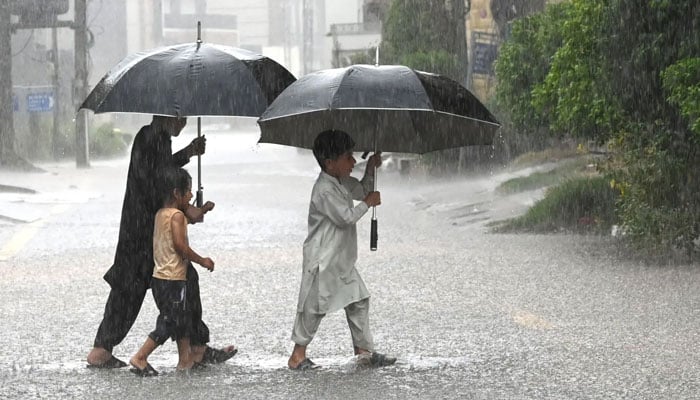
LAHORE: The Punjab Disaster Management Authority (PDMA) has issued a fresh warning about possible flooding in several parts of the province as the fourth spell of monsoon rains is expected to continue until August 5.

The authority said that water levels in most of Punjab’s major rivers remain within the normal range. However, low and moderate flooding has been reported at a few locations, prompting authorities to remain on high alert.

According to the latest monitoring report, the Chenab, Jhelum, Ravi and Sutlej rivers are flowing normally. In contrast, the Indus River is experiencing low-level flooding at the Kalabagh and Chashma stations due to an increase in water discharge.

Officials also reported moderate flooding at Nala Palkhu near Wazirabad, while low-level flooding has been observed in Nala Basantar and Nala Bein in Narowal district. Water flow in the hill torrents of Dera Ghazi Khan, however, remains within safe limits.

The PDMA warned that continued rainfall in the upper catchment areas could raise water levels in eastern rivers and seasonal streams over the next few days. Authorities are closely monitoring the situation and have directed district administrations to stay prepared for any emergency.

PDMA Director General Saif Anwar said there is a possibility of urban flooding in major cities, including Lahore, Rawalpindi, Gujranwala, Gujrat, Sialkot, Faisalabad and Multan, if heavy rainfall continues.

He also cautioned that hilly areas such as Murree and the Galiyat region could face landslides because of persistent rain.

Residents living near riverbanks, seasonal streams and other flood-prone areas have been advised to relocate to safer places without delay. Rescue and emergency teams have been instructed to remain on standby to respond to any developing situation.

The Punjab government has established flood relief camps in vulnerable areas to provide shelter and assistance to affected families if required. Authorities have also urged the public to follow official advisories and avoid unnecessary travel during periods of heavy rainfall.
Similar Posts

  • Pakistan discovers lithium in underground brine

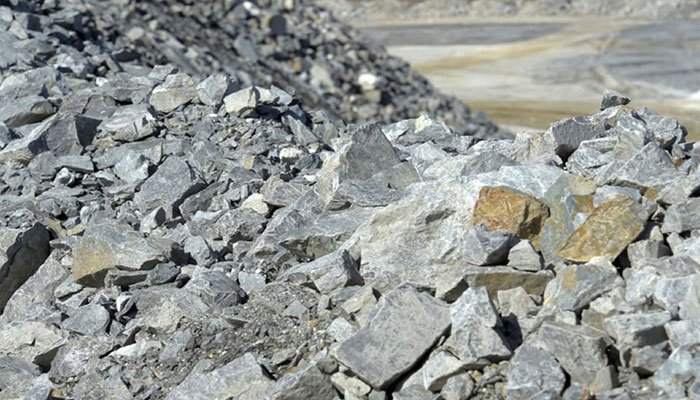
    Islamabad – Oil and Gas Development Company Limited (OGDCL) has achieved a major scientific milestone by confirming the presence of lithium in underground formation water (brine) in Pakistan for the first time. The concentration is reported to be comparable to that found in some of the world’s well-known lithium-bearing geothermal brines. According to sources, the discovery was made during advanced geochemical analysis of formation water obtained from a successfully tested high-temperature geothermal well under OGDCL’s pilot geothermal program. Senior OGDCL officials told The News that this is the first discovery of its kind in Pakistan. With this achievement, Pakistan has joined the list of countries exploring geothermal brine as a potential source of lithium. Lithium is considered a critical mineral in the global transition to clean energy. It is an essential component in electric vehicle (EV) batteries, large-scale energy storage systems and a wide range of advanced technologies.

  • | | | |

    Iran rules out US talks until demands are met

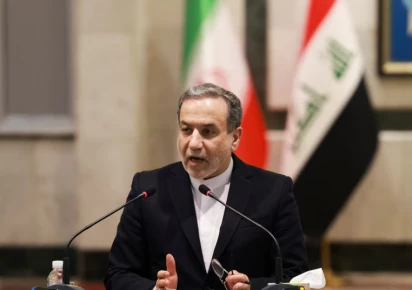
    Iran has ruled out direct negotiations with the United States for now, saying Washington must first comply with the terms of an interim agreement reached in June. Iranian Foreign Minister Abbas Araghchi said on Sunday that Tehran and Washington were not holding direct talks. He said messages were still being exchanged through intermediaries. Araghchi also reiterated Iran’s position on the Strait of Hormuz. He said the strategic waterway would not reopen simply because Iran and Oman reached an agreement on shipping arrangements. According to Iranian reports, Tehran and Muscat are close to finalising an understanding on a temporary shipping route. However, Iran says the route can only be used after other conditions are met. The Strait of Hormuz has remained at the centre of the wider conflict. Iran has repeatedly linked its reopening to demands directed at Washington. Iranian officials have called for an end to US threats and military action. They have also demanded the lifting of sanctions and blockades and the release of Iranian assets. Iran’s Revolutionary Guard has separately warned that the strait will remain closed until Tehran’s conditions are accepted. The force accused its opponents of shifting their focus toward reopening the vital waterway. The strait is one of the world’s most important energy routes. A significant share of global oil and gas shipments normally passes through it. Oman, meanwhile, said discussions with Iran over arrangements for shipping through the waterway had been positive and constructive. Muscat also urged all sides to avoid actions that could undermine the negotiations. Iranian President Masoud Pezeshkian has suggested that the current situation could provide an opportunity for an agreement. He said Iran remained united and strong despite the ongoing conflict. The diplomatic uncertainty comes as tensions continue to affect commercial shipping in the region. The United Arab Emirates said Iran had attacked a vessel linked to its state-owned oil company while it was travelling through the Strait of Hormuz. No injuries were reported. The United Kingdom Maritime Trade Operations agency also reported that a vessel caught fire after being struck by an unidentified projectile. The fire was later brought under control, with no environmental damage reported. Iranian authorities have not immediately commented on the individual incident. Saudi Arabia reports fires at energy facilities Tensions have also spread across the Gulf. Saudi Arabia said firefighters had extinguished a blaze at an Aramco facility in Jizan. The Saudi Energy Ministry said there were no fatalities. Yemen’s Houthi movement claimed responsibility for an attack on the site, saying it had used a drone in response to alleged Saudi strikes in Yemen. A separate explosion was also reported in the industrial area of Jubail. Regional sources said gas facilities were targeted and that a fire broke out. The exact cause remained unclear. It was not immediately established whether the incidents in Jizan and Jubail were connected. US defence industry ordered to increase weapons production Meanwhile, the United States has asked its defence industry to accelerate weapons production amid shortages linked to the war with Iran. US Deputy Defence Secretary Steve Feinberg reportedly instructed defence companies to submit plans aimed at speeding up deliveries and increasing production of critical military equipment. The demand comes amid reports of pressure on US ammunition supplies, including stocks of Patriot missile interceptors. The Trump administration has maintained that the United States has substantial weapons reserves and that additional supplies are being manufactured and delivered. The conflict has also triggered threats from armed groups in the region. The leader of Iraq’s Harakat Hezbollah al-Nujaba, Akram al-Kaabi, has threatened retaliation for US-Saudi strikes on sites belonging to Iraq’s Popular Mobilisation Forces. The group has warned that further military action could lead to a response. Iranian military officials, meanwhile, have claimed that the United States and Israel failed to achieve their objectives against Iran. They have praised the country’s military preparedness and vowed to continue resisting pressure. With the Strait of Hormuz still closed and negotiations remaining indirect, the prospect of restoring normal shipping remains uncertain. Iran insists that reopening the waterway depends on Washington accepting its conditions. The United States, meanwhile, has linked the lifting of its blockade to Iran fulfilling commitments under any future agreement.

  • |

    Pakistan’s trade deficit widens 26% in July as imports surge

    ISLAMABAD: Pakistan’s trade deficit increased by 26% during the first month of the fiscal year 2026-27, mainly driven by a sharp rise in imports, according to the latest data released by the Pakistan Bureau of Statistics (PBS). The widening gap between imports and exports highlights growing pressure on the country’s external trade position at the beginning of the new fiscal year. Imports increased by around 19% in July, with higher purchases recorded across several major categories, including food products, machinery, transport equipment, textiles, agricultural inputs and metals. According to the PBS data, the country’s food import bill reached $805.4 million in July 2026, equivalent to more than Rs224 billion. The increase reflects continued reliance on imported food products and essential raw materials to meet domestic demand. Among food items, imports of milk, cream and food products prepared for infants rose by 25% to $18.7 million. Pakistan also imported significant quantities of spices, soybeans, palm oil and pulses during the month. Sugar imports were also recorded during July, with the country importing around 112 metric tonnes, adding to the overall food import bill. Machinery imports rise sharply Machinery emerged as one of the major contributors to the increase in the import bill. Machinery imports jumped by 41% to $1.31 billion during July compared with the corresponding period. The increase covered a wide range of equipment used in key sectors of the economy. Imports included machinery for power generation, offices, textile manufacturing, agriculture, construction and telecommunications. The rise in machinery imports could indicate increased demand for equipment and investment-related goods across different industries, although it also contributed significantly to the expansion of the overall trade gap. Vehicle imports register strong growth Imports of transport equipment, including vehicles, also witnessed substantial growth during the month. The import bill for the category increased by 40% to $420 million. The increase in vehicle and transport-related imports added further pressure to the country’s import expenditure, particularly as several other major import categories also recorded double-digit growth. Textile-related imports increase Pakistan’s textile sector also recorded higher imports during July. Imports of textile-related products, including raw cotton, increased by 15% to $680 million. The rise in raw cotton and other textile inputs indicates continued demand from the country’s large textile manufacturing and export industry. Since the textile sector remains a major contributor to Pakistan’s exports, higher imports of production inputs can also be linked to industrial activity. Agricultural inputs and chemicals Imports of agricultural machinery, equipment and chemicals increased by 23%, taking the combined import bill for the category to more than $1 billion. The increase comes as demand remains high for inputs and equipment required by the agriculture sector. Higher imports of such goods can support domestic production but simultaneously add to the country’s foreign exchange requirements. Metals import bill also rises The country also witnessed a significant increase in imports of metals, including gold, iron and steel. Imports under the category increased by around 23%, while the import bill for precious metals alone crossed $730 million. The broad-based rise across food, machinery, transport, textiles, agricultural inputs and metals suggests that the increase in imports was not confined to a single sector. The latest figures indicate that controlling the trade gap will remain an important challenge for policymakers during the new fiscal year. While higher imports of machinery, industrial inputs and agricultural equipment may support economic activity, a sustained increase in imports without a corresponding rise in exports could place additional pressure on Pakistan’s external account.

  • |

    Pakistan seeks $1.3 billion Chinese loan refinancing to strengthen forex reserves

    Pakistan has formally approached China to refinance a $1.3 billion commercial loan, as the government continues efforts to strengthen the country’s foreign exchange reserves and meet its external financing obligations. According to officials familiar with the matter, negotiations between Pakistani and Chinese authorities are currently in progress to finalise the terms and conditions of the refinancing arrangement. Once the discussions are completed, the funds are expected to be disbursed later this month. The anticipated inflow is expected to provide much-needed support to Pakistan’s foreign exchange reserves, which remain under pressure due to significant external debt repayments and ongoing financing requirements. The refinancing would also help ease short-term liquidity pressures while supporting the country’s broader macroeconomic stability. Sources revealed that Pakistan repaid approximately $2.2 billion in external debt during July, including the settlement of the $1.3 billion Chinese commercial loan. The government’s request for refinancing is aimed at replacing the repaid amount, ensuring that reserve levels remain stable without placing additional strain on the country’s external account. The move comes as Islamabad continues to pursue a strategy of securing rollover agreements and refinancing facilities from friendly countries and international partners to meet its debt servicing commitments. Maintaining adequate foreign exchange reserves has remained a key priority for economic managers as Pakistan seeks to strengthen investor confidence and sustain financial stability. Economic experts believe that successful refinancing of the Chinese loan would provide temporary relief to the country’s external financing position while allowing policymakers greater flexibility in managing upcoming debt obligations. Officials said talks with Chinese financial institutions are progressing positively, although the final timeline will depend on the completion of documentation and agreement on financing terms. The refinancing request also reflects Pakistan’s ongoing efforts to manage its external debt profile prudently amid global economic uncertainties and higher financing costs in international markets.

  • | |

    AJK polls begin with 19,000 security personnel

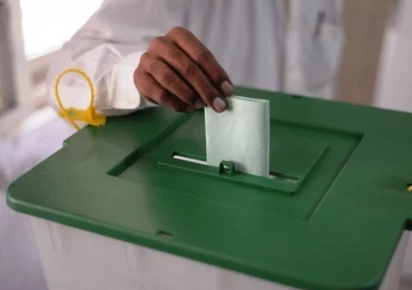
    The first phase of the Azad Jammu and Kashmir (AJK) Legislative Assembly elections is being held today across the Mirpur division, with authorities completing extensive arrangements for polling and security. The first phase covers Mirpur, Bhimber and Kotli districts. Officials said all polling material has been delivered to the designated polling stations ahead of voting. AJK Chief Secretary Khushal Khan and Election Commission Secretary Raja Muhammad Shakeel said the authorities were committed to ensuring free, fair and transparent elections. They urged voters to exercise their democratic right peacefully. They also warned that strict action would be taken against anyone attempting to disrupt polling or create a law and order situation. Officials advised voters and political workers to avoid spreading or believing unverified information circulating on social media. They said all stakeholders must follow the election code of conduct. The AJK elections are being conducted in three phases. Polling in the Mirpur division is taking place today. The second phase will be held in Muzaffarabad on August 2, followed by the third phase in Poonch on August 10. Security has been significantly increased across the three districts. Mirpur police authorities said a detailed security plan has been prepared to protect voters, election staff and polling stations. Mirpur SSP Khurram Iqbal said security forces have adopted a three-layer strategy. Polling stations have been divided into highly sensitive, sensitive and normal categories. Security personnel and resources have been assigned according to the level of risk. The district has also been divided into 56 security sectors. Each sector is being supervised by a deputy superintendent of police. Monitoring and rapid-response teams will remain active throughout the voting process. Authorities have also prepared additional contingency arrangements to deal with emergencies. A second response force will be available if required, while a third security layer will operate under zonal commanders. More than 1.4 million registered voters are expected to participate in the first phase across 13 constituencies. Authorities have established 2,454 polling stations containing 3,701 polling booths. Around 3,500 election officials have been assigned duties for the polling process. Voting will take place from 8am to 5pm. The 13 constituencies include four in Mirpur district, three in Bhimber and six in Kotli. Of the total polling stations, 1,965 have been classified as sensitive or highly sensitive. More than 19,000 security personnel have been deployed across the division. The force includes around 17,000 police officers, while approximately 2,100 army personnel will remain available as a backup force. A total of 288 candidates are contesting the 13 seats. The main political competition is expected to involve the Pakistan Muslim League-Nawaz, Pakistan Peoples Party and Istehkam-e-Pakistan Party, along with several influential independent candidates. Authorities have appealed to voters, candidates and political workers to cooperate with security personnel and maintain peace throughout polling.

  • | |

    Six non-local workers killed in Kech

    Six non-local workers have been killed by militants linked to Fitna al-Hindustan in the Nasirabad area of Kech district, Balochistan, according to security sources. The sources said militants initially abducted six workers and killed another worker, identified as Javed, on July 27. The attackers later killed all six abducted workers, bringing the total number of victims in the incident to seven. The deceased workers have been identified as Muhammad Arshad, Muhammad Taimur, Muhammad Parvez, Muhammad Wazir, Muhammad Amjad and Muhammad Yahya. According to security officials, four of the victims came from Punjab, while two belonged to Khyber Pakhtunkhwa. The workers had reportedly been employed on development projects in Balochistan. Their deaths have raised fresh concerns about the security of workers from outside the province who travel to Balochistan for employment and infrastructure projects. Security sources also recalled a separate incident in Mashkel, Balochistan, where militants recently killed five non-local workers. The victims in that attack were also reportedly working on development-related projects. The latest killings come amid continued security challenges in parts of Balochistan, where militants have repeatedly targeted civilians, security personnel and workers involved in development activities. Security forces have been conducting operations against militant groups in various parts of the province.

Leave a Reply

Your email address will not be published. Required fields are marked *