بلوچستان

  • | |

    Six non-local workers killed in Kech

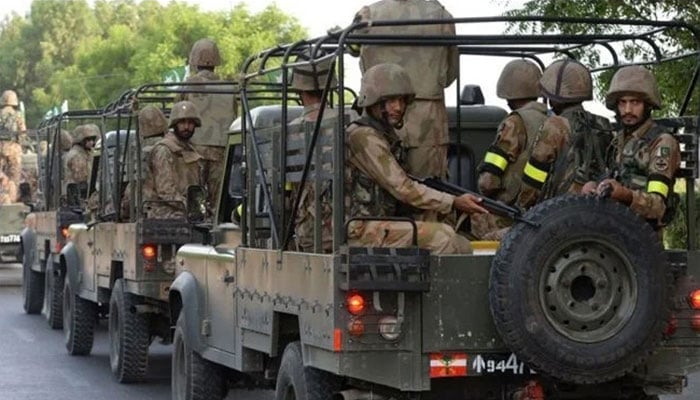
    Six non-local workers have been killed by militants linked to Fitna al-Hindustan in the Nasirabad area of Kech district, Balochistan, according to security sources. The sources said militants initially abducted six workers and killed another worker, identified as Javed, on July 27. The attackers later killed all six abducted workers, bringing the total number of victims in the incident to seven. The deceased workers have been identified as Muhammad Arshad, Muhammad Taimur, Muhammad Parvez, Muhammad Wazir, Muhammad Amjad and Muhammad Yahya. According to security officials, four of the victims came from Punjab, while two belonged to Khyber Pakhtunkhwa. The workers had reportedly been employed on development projects in Balochistan. Their deaths have raised fresh concerns about the security of workers from outside the province who travel to Balochistan for employment and infrastructure projects. Security sources also recalled a separate incident in Mashkel, Balochistan, where militants recently killed five non-local workers. The victims in that attack were also reportedly working on development-related projects. The latest killings come amid continued security challenges in parts of Balochistan, where militants have repeatedly targeted civilians, security personnel and workers involved in development activities. Security forces have been conducting operations against militant groups in various parts of the province.

  • | | |

    Violence against Balochistan’s people is  futil…

    QUETTA: Balochistan Chief Minister Mir Sarfaraz Ahmed Bugti has criticised extremist elements for attempting to draw the Baloch population into a cycle of violence, saying attacks on infrastructure ultimately hurt ordinary citizens and undermine the province’s development. Speaking at the inauguration of the “Rasool-e-Rahmat (PBUH)” calligraphy exhibition, Bugti said the destruction of bridges, roads and commercial transport directly affects livelihoods and restricts economic opportunities for local communities. The chief minister said the provincial government would organise an international calligraphy exhibition, “Bayan-ul-Marsoos”, in Quetta next year, bringing together prominent artists and calligraphers from Turkey and other parts of the Islamic world. He said such international cultural events would help project Balochistan as a peaceful region with strong cultural and artistic traditions. He added that hosting major programmes around Pakistan’s Independence Day would also demonstrate the province’s potential to the international community. Discussing regional and international developments, Bugti said Pakistan’s growing cooperation with Saudi Arabia and Turkey reflected an evolving geopolitical landscape. He maintained that the defence cooperation was aimed at promoting security and peace rather than aggression. Bugti also expressed confidence in Pakistan’s future, praising the leadership of Prime Minister Shehbaz Sharif, President Asif Ali Zardari and Chief of Army Staff General Asim Munir. He said no force could stop Pakistan from moving towards what he described as a decisive victory.

  • | | |

    5 terrorists killed in Panjgur operation

    Security forces have killed five suspected terrorists, including a key commander of Fitna al-Hindustan, during an intelligence-based operation in Balochistan’s Panjgur district, according to security sources. The operation took place in the Sarkini and Chhedgi areas of Panjgur under Operation Radd-ul-Fitna 3. Security forces conducted the raid after receiving intelligence about the presence of armed militants in the area. According to the sources, the operation resulted in the death of Fitna al-Hindustan commander Wazir, son of Jamal, along with four other militants. The security forces also recovered four motorcycles, machine guns, other heavy weapons and a large quantity of ammunition from the militants’ possession. Security sources said the militants had allegedly been involved in a range of criminal and terrorist activities, including extortion, kidnapping, robbery and attacks against traders and local residents. Their activities had created fear and insecurity among people in the area. Following the successful operation, security forces have launched a clearance operation in the surrounding areas to locate and eliminate other members of the militant network. Officials said the security operation would continue until the area was fully cleared of remaining threats. Interior Minister Mohsin Naqvi praised the security forces for their successful intelligence-based operation in Panjgur and commended their professional capabilities. Naqvi said the country’s security personnel remained a source of pride for the nation and were working to eliminate terrorism from Balochistan. He said the entire nation stood united against terrorism and supported the security forces in their efforts to restore peace and stability. The latest operation comes as security forces continue intelligence-led actions against militant groups across Balochistan as part of broader counterterrorism efforts.

  • | |

    Counter-terror operations in Balochistan neutralize 12 militants

    Security forces in Pakistan have eliminated 12 high-risk terrorists during two separate operations across the southwestern province of Balochistan. According to official statements issued by the Inter-Services Public Relations (ISPR), the media wing of the Armed Forces of Pakistan, the targeted anti-terror engagements took place in the districts of Washuk and Mastung as part of an intensified campaign against extremist elements operating within the region. The military reported that these synchronized Intelligence-Based Operations (IBOs) were initiated following precise tracking and surveillance of insurgent networks. The operations represent a significant operational success for law enforcement and defense personnel working to dismantle armed groups attempting to compromise regional stability. Key Highlights of the Counter-Terror Operations District Washuk: Initial tracking detected hostile movement in the area, leading to a swift operational response that resulted in six terrorists being neutralized. District Mastung: A subsequent targeted raid triggered an intense exchange of gunfire, during which six additional terrorists were eliminated and a major militant hideout was completely dismantled Total Impact: 12 terrorists killed, operational infrastructure destroyed, and significant cache of weapons and logistics seized. Breakdown of the Intelligence-Based Raids The first phase of the counter-terrorism effort unfolded in Washuk district, where security agencies identified suspicious tactical movements by a group of armed insurgents. Acting on real-time intelligence, military units deployed swiftly to intercept the suspects. Upon confronting the militants, a heavy firefight ensued, ending with the death of six terrorists before they could execute planned sabotage activities in the district. Shortly thereafter, a second high-stakes operation was executed in the Mastung district. Intelligence agencies pinpointed an active sanctuary utilized by militants as a staging ground for planning attacks against civilians and security personnel. As forces surrounded the hideout, the cornered insurgents opened fire in a desperate attempt to break through the security perimeter. The security forces responded with decisive tactical force, eliminating six militants on the spot and neutralizing the immediate threat. Following the gun battle, search teams thoroughly cleared the facility, recovering military-grade weaponry, ammunition, and explosives, while destroying the infrastructure used to harbor illegal insurgents. Strategic Significance and Broader Context The ISPR emphasized that these successful engagements reflect the unwavering commitment of the armed forces to cleanse the country of foreign-funded terrorism. Military officials reaffirmed that anti-terror operations will persist relentlessly until all hostile networks, their safe havens, and their local facilitators are completely eradicated across Pakistan.   Authorities have urged local communities to remain vigilant and cooperate with law enforcement agencies as comprehensive intelligence gathering and mop-up activities continue throughout the region.

  • | | |

    Security forces reportedly foil infiltration attem…

    Pakistani security forces reportedly thwarted an attempted infiltration by armed militants in the Kharan district of Balochistan, according to local media reports citing official sources. The incident highlights the ongoing security challenges in the region, where authorities continue to conduct operations against militant groups. According to the reports, security personnel responded promptly after detecting suspicious movement in the area. The reported response allegedly forced the militants to retreat before they could achieve their objectives. Officials quoted in the reports described the operation as an example of the security forces’ continued vigilance and rapid response capabilities. The reports further claim that militants have increasingly relied on online propaganda and misinformation campaigns alongside their activities on the ground. According to the cited sources, images and videos are sometimes used to spread misleading narratives on social media. These assertions have not been independently verified. Media reports also stated that indiscriminate firing and shelling during the incident allegedly injured five civilians, including children. If confirmed, the reported injuries underscore the risks faced by local communities living in areas affected by security operations and militant activity. Authorities are expected to investigate the circumstances surrounding the incident and provide further updates. Balochistan has experienced security challenges for many years, with periodic clashes involving security forces and armed groups. The region remains strategically significant due to its geography and infrastructure, making stability a priority for both provincial and federal authorities. Security agencies continue to emphasize intelligence-based operations aimed at preventing attacks while protecting civilian populations. Developments in conflict-affected regions often evolve quickly, and initial reports may change as additional information becomes available. Independent verification and official statements are essential for establishing an accurate account of events. Readers are encouraged to follow updates from credible news organizations and official government sources as the situation develops. The reported incident in Kharan serves as a reminder of the complex security environment in Balochistan. While authorities emphasize their commitment to maintaining peace and public safety, continued transparency, verified reporting, and timely communication remain vital to ensuring that the public receives accurate and reliable information during rapidly unfolding events.

  • | | | |

    Pakistani folklore

    Pakistani folklore is a vibrant web regional oral traditions, Sufi mystical allegories, and tribal epics across Punjab, Sindh, Balochistan, Khyber Pakhtunkhwa, and the northern mountain valleys. Punjab: Sufi Metaphors & Tragic Romances Punjabi folklore is dominated by tragic love stories (Kissa) that doubled as spiritual allegories for divine love (Ishq-e-Haqiqi). Heer Ranjha is immortalized by the poet Waris Shah. This narrative details the doomed union between Heer, a noblewoman, and Ranjha, an outcast flute player turned jogi. In case of Sohni Mahiwal, Sohni crosses the volatile Chenab River nightly using an baked earthenware pot (gharra) to meet her lover Mahiwal. One night, her sister-in-law replaces the vessel with unbaked clay. This  dissolves mid-stream, leading to Sohni’s tragic drowning. Mirza Sahiban is tale of romance, familial duty, and betrayal. The story culminated in Sahiban breaking Mirza’s arrows to protect her brothers. This act leads to Mirza’s demise. Sindh: The Seven Queens (Satt Surmyun) Sindhi lore centers around seven heroic women celebrated in Shah Abdul Latif Bhittai’s monumental Sufi compendium, the Shah Jo Risalo. Sassi (Sassi Punhun) searches the Makran desert for her abducted lover, Punhun, until the earth swallows her. Marui (Umar Marui) was abducted by King Umar. She refuses wealth and palace luxuries to remain faithful to her desert village. Moomal (Moomal Rano) operates the enchanted palace of Kak Mahal, tests suitors with magical illusions, and loses Rano to misunderstanding. Balochistan: Tribal Epics & Renunciation Baloch folklore prioritizes chivalry, tribal honor, and ascetic devotion. Hani and Sheh Mureed: The legendary hero Mureed sacrifices his marriage to Hani due to a bound oath given to Mir Chakar Rind. Mureed becomes a wandering dervish, becoming an archetype of ultimate devotion. Lulla and Granaz: Tales celebrating battlefield bravery, hospitality, and tribal allegiance. Khyber Pakhtunkhwa & Northern Valleys: Pashtun & Mountain Legends Adam Khan and Durkhanai: A Pashto romance where music plays a central role. Adam Khan’s soulful mastery of the Rabab brings the lovers together against social friction. Prince Saiful Muluk & Badri-ul-Jamal: Set in the high-altitude Kaghan Valley, a Persian prince falls in love with a fairy princess at Lake Saiful Muluk, giving the actual alpine lake its legendary name.