
security forces reportedly
| | |

Security forces reportedly foil infiltration attem…

Pakistani security forces reportedly thwarted an attempted infiltration by armed militants in the Kharan district of Balochistan, according to local media reports citing official sources. The incident highlights the ongoing security challenges in the region, where authorities continue to conduct operations against militant groups.

According to the reports, security personnel responded promptly after detecting suspicious movement in the area. The reported response allegedly forced the militants to retreat before they could achieve their objectives. Officials quoted in the reports described the operation as an example of the security forces’ continued vigilance and rapid response capabilities.

The reports further claim that militants have increasingly relied on online propaganda and misinformation campaigns alongside their activities on the ground. According to the cited sources, images and videos are sometimes used to spread misleading narratives on social media. These assertions have not been independently verified.

Media reports also stated that indiscriminate firing and shelling during the incident allegedly injured five civilians, including children. If confirmed, the reported injuries underscore the risks faced by local communities living in areas affected by security operations and militant activity. Authorities are expected to investigate the circumstances surrounding the incident and provide further updates.

Balochistan has experienced security challenges for many years, with periodic clashes involving security forces and armed groups. The region remains strategically significant due to its geography and infrastructure, making stability a priority for both provincial and federal authorities. Security agencies continue to emphasize intelligence-based operations aimed at preventing attacks while protecting civilian populations.

Developments in conflict-affected regions often evolve quickly, and initial reports may change as additional information becomes available. Independent verification and official statements are essential for establishing an accurate account of events. Readers are encouraged to follow updates from credible news organizations and official government sources as the situation develops.

The reported incident in Kharan serves as a reminder of the complex security environment in Balochistan. While authorities emphasize their commitment to maintaining peace and public safety, continued transparency, verified reporting, and timely communication remain vital to ensuring that the public receives accurate and reliable information during rapidly unfolding events.
Similar Posts

  • |

    Walking through time: A personal journey inside Na…

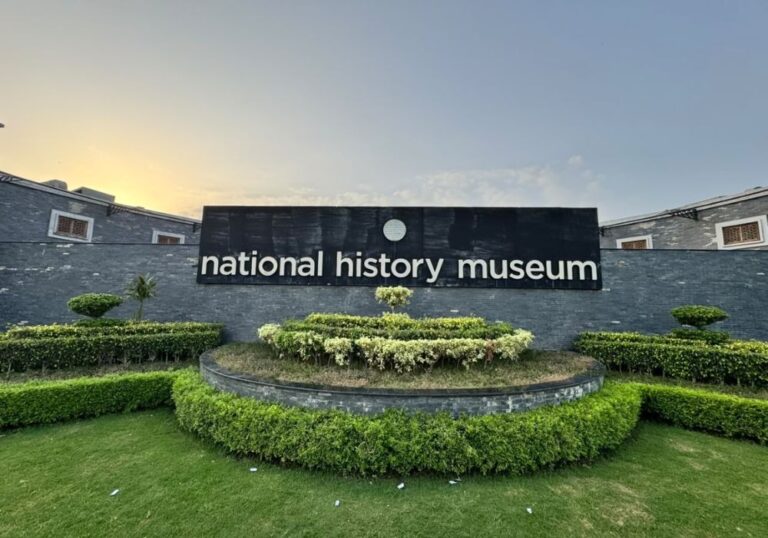
    The rain had just stopped when I reached Lahore’s National History Museum. The roads were quieter than usual, the air felt fresh and, for the first time in weeks, I wasn’t in a hurry. I had postponed this visit for years, ever since a brief stop during my internship at the Lahore Museum left me wishing for more time. This Sunday, I finally had it. I have also realised something over the past few weeks. Waiting for friends before exploring new places often means never going at all. So I decided to spend the afternoon on my own, following nothing except curiosity. As I entered the museum, Floor Supervisor Tabish welcomed me and arranged a guided tour with Muhammad Shamsher, a PhD scholar in History who also serves as one of NHM’s guides. His explanations never sounded like a lecture. Instead, he connected historical events with the people behind them, making every gallery feel like part of one continuing story. Growing up, I believed museums were places where objects sat behind glass while visitors quietly read information panels. That idea came from childhood visits to museums in Islamabad, Taxila and Harappa, and later from my internship at Lahore Museum. The National History Museum challenged that idea completely. Through digital displays, sound, projection and interactive exhibits, history became something to experience rather than simply observe. Every gallery encouraged visitors to slow down and become part of the story unfolding around them. One exhibit that caught my attention focused on the making of Minar-e-Pakistan. Like many Pakistanis, I had always admired the monument without knowing much about the person who designed it. The museum introduced architect Nasreddin Murat-Khan and displayed photographs that offered a glimpse into the creative process behind one of Pakistan’s most recognisable landmarks. It reminded me how often we celebrate monuments while forgetting the people who imagined them. The journey then moved towards Partition, where history became deeply personal. The restored railway carriage, once part of the North Western Railway, stood quietly inside the gallery. Visitors could step inside and experience a virtual reality presentation recreating the migration of 1947. I had watched countless documentaries and films about Partition, but sitting inside that carriage created an entirely different feeling. The sounds, voices and uncertainty surrounding the experience made history feel much closer than any textbook ever could. The museum then shifted from the birth of Pakistan to the challenge of building a new country. One gallery recreated the early government offices established after independence. I found myself studying old files, furniture and official records, imagining the enormous responsibility carried by those tasked with running a newly created nation. Nearby, early Pakistani passports were displayed inside glass cases. Different in design from today’s passports, they represented the same hope of a country beginning to define its identity. Another section I found especially engaging was Camera from the Past. Visitors could stand before a vintage-style camera and have their photograph taken, creating a small connection between the present and the past. The gallery also highlighted photographer Aziz Ahmed Azmi, whose images documented Pakistan’s early years. Looking at his work, I realised that photographs often become history long after the moment they capture has passed. Perhaps the gallery where I spent the most time was Popular Culture. Having studied Mass Communication with a specialisation in Theatre, Film and Television and continuing to work in journalism, I naturally found myself drawn towards the colourful Lollywood posters and displays celebrating Pakistan’s cinematic heritage. Reading about Azra, the country’s first colour film, and Zinda Laash, Pakistan’s first horror film, reminded me how rich our film history is, even if many younger audiences know little about it today. Before leaving, I also explored Husn-e-Hunar, an exhibition celebrating Pakistan’s traditional craftsmanship. Alongside literature, music and cultural displays, it served as a reminder that a nation’s identity is shaped not only by political events but also by its artists, craftsmen and storytellers. When I stepped back outside, I realised I had spent far longer inside the museum than I had planned. I didn’t leave with pages of notes or dozens of photographs. Instead, I left with a greater appreciation for how history can be presented when museums invite visitors to participate rather than simply observe. The National History Museum doesn’t just preserve Pakistan’s past. It encourages visitors to pause, ask questions and discover the stories that continue to shape the country today.

  • |

    Women’s T20 Asia Cup 2026 likely to be held in UAE

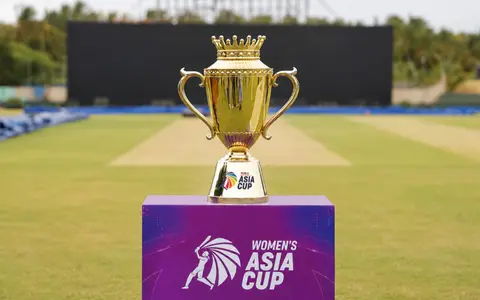
    DUBAI: The Women’s T20 Asia Cup 2026 is expected to be staged in the United Arab Emirates, with participating teams reportedly being informally notified about the tournament window ahead of the official announcement by the Asian Cricket Council (ACC). According to cricket media reports, the ACC is expected to confirm both the venue and the complete schedule in the coming days. The tournament is likely to run from August 28 to September 13, featuring eight of Asia’s leading women’s cricket teams. The competing nations are expected to include Pakistan, India, Sri Lanka, Bangladesh, Nepal, Malaysia, Thailand and hosts UAE, promising an exciting contest as teams battle for continental supremacy ahead of future ICC events. The UAE has emerged as the frontrunner to host the tournament due to its world-class cricket infrastructure, favorable playing conditions and extensive experience in organizing major international events. Several global tournaments have previously been held in the Emirates, making it a reliable venue for multinational competitions. The tournament is expected to showcase some of Asia’s biggest women’s cricket stars, with traditional rivals Pakistan and India likely to attract significant attention if they meet during the competition. Meanwhile, the Board of Control for Cricket in India has already announced India’s squad for the tournament. Veteran batter Harmanpreet Kaur will continue to lead the Indian side as captain, reflecting the board’s confidence in her leadership and experience. Other participating teams are also expected to finalize and announce their squads in the coming weeks as preparations gather pace. With the official schedule still awaited, anticipation continues to build among cricket fans across Asia. The Women’s Asia Cup is regarded as one of the region’s premier tournaments and provides teams with valuable international competition while helping them prepare for upcoming global events. If confirmed, the UAE will once again become the center of Asian cricket, hosting another high-profile tournament that promises thrilling matches, emerging talent and intense regional rivalries.

  • |

    Apple plans smart glasses with future health and fitness features

    Apple is reportedly working on a new generation of smart glasses that could eventually become an important part of its health and fitness ecosystem. Although the first version of the wearable device is expected to focus on core smart features, the company is said to have a long-term vision of transforming future models into personal health and wellness companions. Apple is exploring ways to expand its health-focused product lineup beyond the Apple Watch. The company is believed to be developing advanced fitness and wellness features for its upcoming wearable devices, allowing users to monitor their health more conveniently throughout the day. Apple has previously experimented with integrating fitness technology into its Vision Pro headset. The original concept involved a dedicated version of Apple Fitness+ that would let users participate in guided workout sessions while the headset tracked their body movements in real time. This system was designed to analyze posture, movement, and exercise performance, providing users with more accurate feedback during workouts. Reports also suggested that Apple had developed sophisticated body-tracking technology capable of monitoring users’ physical movements with a high level of precision. The feature was intended to enhance fitness training by measuring exercise form and movement patterns. However, despite the promising technology, Apple ultimately decided not to introduce these fitness capabilities with the Vision Pro. The main reason behind this decision was the headset’s weight. While Vision Pro offers advanced mixed-reality experiences, its relatively heavy design made it uncomfortable for prolonged physical activity. Wearing the headset during exercise was considered impractical, leading Apple to postpone its fitness ambitions for the device. Rather than abandoning the idea altogether, Apple appears to be shifting its focus toward lighter wearable products, particularly its upcoming smart glasses. These glasses are expected to provide a more comfortable platform for delivering health and fitness experiences without the limitations posed by a bulky headset. To support these efforts, Apple is reportedly recruiting specialists with expertise in health technology, spatial computing, and wearable devices. Recent job postings indicate that the company is looking for professionals who can help create innovative wellness and fitness experiences for future vision-based products. The hiring efforts suggest Apple remains committed to expanding the capabilities of its wearable ecosystem. Industry analysts have also indicated that Apple may incorporate heart-rate monitoring technology into future smart glasses. The sensor technology is expected to be similar to the heart-rate monitoring features reportedly being developed for upcoming AirPods models. If implemented successfully, these sensors could allow users to monitor key health metrics without relying solely on the Apple Watch. Although Apple has not officially confirmed the features or launch timeline, reports suggest that these advanced health capabilities are still under development. As a result, they are unlikely to appear in the first generation of Apple smart glasses. Instead, Apple is expected to introduce these fitness and wellness functions gradually in future versions of the device as the technology matures. While consumers may need to wait several years before these advanced features become available, Apple’s continued investment in wearable health technology highlights its ambition to build a broader ecosystem that seamlessly combines everyday convenience with personal health monitoring.

  • | |

    Govt withdraws controversial telecom amendment bil…

    ISLAMABAD: The government on Thursday withdrew the Pakistan Telecommunication (Re-organization) (Amendment) Bill, 2026, from the Senate amid concerns raised by opposition lawmakers and stakeholders in the telecom sector. The withdrawal motion was moved on the Senate floor by Minister of State for Interior Talal Chaudhry on behalf of the Minister for Information Technology and Telecommunication. The proposed legislation sought to introduce amendments to the existing legal and regulatory framework governing Pakistan’s telecommunications sector. However, the bill had faced criticism in recent weeks, with opposition members and industry representatives expressing reservations over several of its provisions. No specific reason for withdrawing the bill was disclosed during the Senate proceedings. However, government sources indicated that the legislation could be brought back before Parliament after further consultations with relevant stakeholders and consideration of their concerns. The Pakistan Telecommunication (Re-organization) Act provides the legal framework for the structure, licensing and regulation of the country’s telecom sector. With the bill withdrawn, the existing telecom regulatory framework will remain unchanged for the time being.

  • | |

    KP unveils massive 1.4m-tree plantation drive

    The Khyber-Pakhtunkhwa government has set an ambitious target of planting 1.4 million saplings in a single day as part of its Independence Day celebrations. K-P Information and Public Relations Minister Shafi Jan said the large-scale plantation drive would be conducted across the province on August 14. He described the initiative as a major step towards expanding green cover and promoting environmental protection. The minister said extensive plantation activities would be carried out across a large area in Speen Khak, with teams taking part in the campaign to meet the record target. Shafi Jan, in his Independence Day message, said August 14 was a historic occasion that reminded the nation of the sacrifices made during the Pakistan Movement. He paid tribute to the leaders who struggled for the creation of Pakistan and those who sacrificed their lives for the country. He urged citizens to renew their commitment to building a stronger, stable, prosperous and sovereign Pakistan. According to him, national development requires collective responsibility, discipline and a continued commitment to the country’s future. The minister also highlighted the role of young people in national development. He said the younger generation should follow the ideals of Allama Iqbal and contribute towards making Pakistan more self-reliant and progressive. The provincial government has introduced a digital monitoring mechanism to improve transparency in the plantation campaign. The Ehsaas Shajarkari Web Portal will be used to identify suitable plantation locations through GPS technology. The portal will also help authorities monitor plantation activities and maintain a consolidated record of the saplings planted during the campaign. Officials will be able to track plantation sites and assess progress through the digital system. Shafi Jan said the initiative was being undertaken under the direction of K-P Chief Minister Sohail Afridi. He expressed confidence that the province would achieve its target and establish a significant plantation milestone on Independence Day.

  • |

    Imran Khan returns to Bollywood after 10 years

    Imran Khan is stepping back into the spotlight. After ten years away from acting, he has confirmed his return with a brand-new Netflix film. He broke the news himself in a recent interview. He said he just finished shooting his first movie in a decade. The film is called Adhure Hum Adhure Tum. It is expected to premiere on Netflix later this year. Khan described the film as a mature romantic comedy. He said it reflects where he is in life today, rather than trying to relive his earlier on-screen image. Fans have waited a long time for this. His last major role was in Katti Batti back in 2015, where he starred alongside Kangana Ranaut. He also appeared briefly in Happy Patel: Khatarnak Jasoos. Even so, neither project gave fans the kind of lead performance they associate with him, the kind seen in Jaane Tu…Ya Jaane Na and Mere Brother Ki Dulhan. For this new chapter, Khan will star alongside young actor Gurfateh Pirzada. He is also reuniting with director Danish Aslam, someone he has worked closely with in the past. Speaking about the collaboration, Khan said it felt like a natural next step for both of them. He compared it to picturing what the characters from Break Ke Baad might be doing fifteen years later. He pointed out how much life experience he and Aslam now share. Aslam has since gotten married. Khan has been through a divorce. That shared growth, he said, shaped the story they wanted to tell. He also called the project deeply personal. It was not driven by pressure to make a comeback, he explained, but by a genuine creative pull and the chance to work with people he trusts. As for timing, Khan confirmed filming has already wrapped. The film is currently in post-production. He said the release date will depend on when Netflix finalizes its schedule. Indian media outlets have already labelled this one of Bollywood’s most anticipated returns. That reaction is not surprising, given how long fans have hoped to see Khan back in a leading role after all these years.

Leave a Reply

Your email address will not be published. Required fields are marked *