maryam orders fire
| |

Maryam orders fire safety checks at Rawalpindi hos…

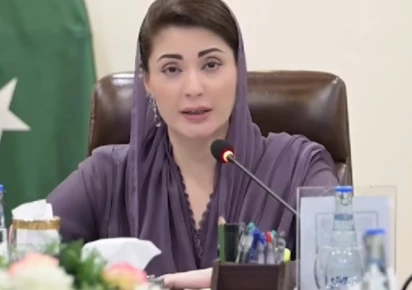
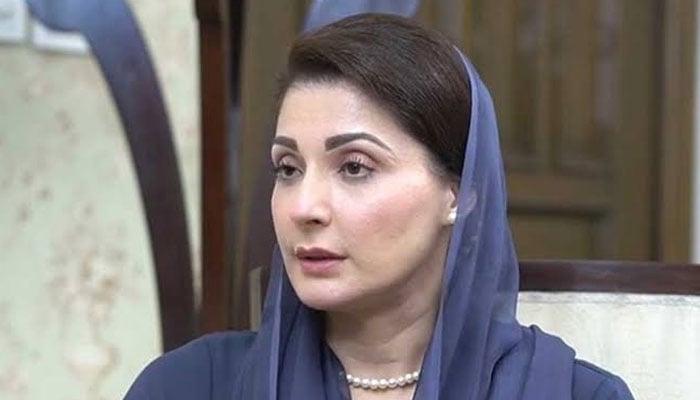
RAWALPINDI: Punjab Chief Minister Maryam Nawaz has ordered authorities to ensure complete fire safety arrangements at all government hospitals in Rawalpindi.

The chief minister has also sought a detailed report from Rawalpindi Deputy Commissioner Nadeem Nasir about the safety arrangements at government hospitals across the city.

The directive comes amid growing concerns over fire safety at healthcare facilities following the deadly fire at the Pakistan Institute of Medical Sciences (PIMS) in Islamabad.

Deputy Commissioner Nadeem Nasir said authorities would ensure the installation of proper fire safety systems in all government hospitals.

He said work had already started on the installation of fire hydrants at hospitals. The facilities will also be checked to ensure that emergency arrangements are functional and accessible.

On the deputy commissioner’s instructions, the Additional Deputy Commissioner visited government hospitals along with Rescue teams.

The teams inspected the hospitals and reviewed their existing fire safety arrangements. They also examined the facilities required to respond to an emergency.

Officials are focusing on three key areas. These include fire alarms, fire hydrants and emergency exits.

The administration has been directed to ensure that fire alarms are operational and that hydrants are available at appropriate locations.

Emergency exits are also being checked to ensure that patients, attendants and hospital staff can leave buildings quickly during an emergency.

The deputy commissioner said the safety of patients was the administration’s top priority.

He warned that no negligence would be tolerated in implementing fire safety measures.

The inspection campaign is aimed at identifying weaknesses before they lead to a major incident. Authorities are also expected to take corrective measures wherever deficiencies are found.

Government hospitals handle large numbers of patients every day. Many patients are also critically ill and cannot be moved quickly during an emergency.

Officials therefore consider functional fire prevention and evacuation systems essential for protecting patients and medical staff.


Similar Posts

  • Senate questions OPF MD’s Rs1m salary and appointment

    Islamabad: A controversy has emerged over the appointment of the Managing Director of the Overseas Pakistanis Foundation (OPF) after Senator Aimal Wali Khan raised serious questions in the Senate Standing Committee on Cabinet Secretariat regarding the selection process, salary package and background of the appointed official. During the meeting chaired by Senator Rana Mahmood ul Hassan, Senator Aimal Wali Khan questioned the appointment of the OPF Managing Director and demanded complete details from the concerned authorities. Senator Aimal Wali Khan said that while the government has discussed the financial difficulties faced by ordinary citizens, concerns arise when senior government positions receive very high salaries. He pointed out that the Prime Minister had publicly stated that a person can manage monthly expenses with Rs8,000, while an individual appointed in OPF was receiving a salary of Rs1 million per month. He further informed the committee that another individual had been appointed in OPF with a monthly salary of Rs2.5 million, raising questions about government pay structures and appointment policies. The senator also raised questions regarding the nationality and background of the OPF Managing Director. He alleged that the appointed individual does not possess a Pakistani National Identity Card and is a British citizen by birth. He also questioned how a person who had faced conviction by the National Accountability Bureau (NAB) could receive another government appointment. Following these concerns, the Senate Committee took notice of the matter and directed the relevant authorities to provide complete details regarding the appointment of the Managing Director of Overseas Pakistanis Foundation. The committee stressed that appointments in public institutions must follow transparency, accountability and proper procedures to maintain public confidence. Responding to questions regarding government appointments, officials of the Establishment Division informed the committee that suitable candidates are not available for certain specialised positions, which creates difficulties in filling important posts. Senator Aimal Wali Khan also criticised the broader culture of retaining officials in important positions despite long periods of inability to perform duties. He remarked that some individuals continue to hold positions even when they are unable to actively perform their responsibilities. The matter was discussed during a meeting of the Senate Standing Committee on Cabinet Secretariat held at the Establishment Division under the chairmanship of Senator Rana Mahmood ul Hassan. The meeting was attended by Senators Saadia Abbasi, Abdul Qadir, Dilawar Khan, Aimal Wali Khan and Saleem Mandviwalla, along with the Secretary Cabinet Division and Secretary Establishment Division. The committee directed authorities to submit the required information so that the issue of public appointments, governance and institutional reforms could be reviewed in detail in upcoming meetings.

  • | | |

    Israel strikes southern Lebanon, Hezbollah Command…

    BEIRUT: A fragile ceasefire in southern Lebanon is facing another major test after Israeli strikes killed at least 11 people, including civilians, according to Lebanese officials and international media reports. Israel said the attacks targeted Hezbollah positions and claimed to have killed a senior commander. The Israeli military said it had targeted Hezbollah infrastructure in southern Lebanon and claimed that a Hezbollah commander, identified in reports as Abu Hassan, was killed. Israeli officials have described the strikes as a response to Hezbollah activity in the area. Lebanese officials, however, said civilians were among those killed in the attacks. Reports said three children and two women were among the victims, while several others were wounded. One of the strikes reportedly hit a home in the village of Ansar, where members of the same family were killed. The latest violence comes despite a ceasefire intended to prevent a renewed escalation between Israel and Hezbollah. The continued strikes have raised fresh fears that the fragile truce could unravel. Lebanon’s leadership has condemned the attacks, warning that continued military action could undermine efforts to restore stability along the border. The escalation also comes amid unresolved disputes over Hezbollah’s weapons and Israel’s military presence in southern Lebanon. With tensions still high, residents in affected communities remain fearful that another cycle of violence could begin.

  • | | |

    12 militants killed in Balochistan intelligence op…

    Pakistan’s security forces killed 12 suspected militants during two intelligence-based operations carried out in separate districts of Balochistan as part of the ongoing counterterrorism campaign, the Inter-Services Public Relations (ISPR) said on Thursday. According to the military’s media wing, the operations were conducted on August 5 and 6 in Washuk and Mastung districts under the third phase of Operation Rad-ul-Fitna, which targets militant groups allegedly backed by hostile foreign elements. The ISPR said the first operation was launched on August 5 after intelligence agencies detected the movement of six suspected militants in Washuk district. Security forces swiftly moved to the area and engaged the suspects in a targeted operation. Following an exchange of fire, all six militants were killed. A second intelligence-based operation was conducted on August 6 in Mastung district after security forces received information about the presence of armed militants. The ISPR said another six suspected militants were killed during an intense firefight. Security personnel also destroyed a militant hideout during the operation. The military stated that both operations were based on credible intelligence and were part of continuous efforts to eliminate militant networks operating in Balochistan. It added that security forces carried out the missions with precision, preventing the militants from escaping. According to the ISPR, the operations form part of Pakistan’s broader counterterrorism strategy being implemented under Azm-e-Istehkam, the national security initiative approved by the Federal Apex Committee under the National Action Plan. The military reaffirmed that Pakistan’s armed forces, together with law enforcement agencies, will continue intelligence-led operations across the country to eliminate terrorism and dismantle militant infrastructure.

  • | |

    PTI Chairman says Imran Khan’s hospital transfer…

      Pakistan Tehreek-e-Insaf (PTI) Chairman Barrister Gohar Ali Khan has said that the plan to transfer the party’s founder, Imran Khan, to a hospital was changed at the last moment, claiming that significant progress had already been made towards arranging the transfer. Speaking to the media at Dahagal Naka on Adiala Road in Rawalpindi, Gohar said the party’s efforts had been disrupted at the final stage. He expressed regret that Imran Khan could not receive treatment at Shifa International Hospital, saying it would have been a positive development if the former prime minister had been treated there. However, Gohar said he was not disappointed and would make another attempt to ensure that the party founder received appropriate medical treatment. He stressed that political dialogue and communication should not be abandoned, saying that efforts to maintain contact must continue. The PTI chairman clarified that all discussions held so far had focused solely on Imran Khan’s health. He also rejected a video circulating on social media that purportedly showed a meeting between him and Imran Khan, describing the footage as fake. Gohar urged political leaders and other stakeholders not to politicise Imran Khan’s health or turn the issue into a matter of political rhetoric. He maintained that the Supreme Court’s orders regarding the PTI founder’s treatment should have been implemented. According to Gohar, Imran Khan’s medical treatment was a straightforward matter and there was no justification for preventing his transfer. He said whoever stopped the transfer or changed the plan at the last moment had made the wrong decision. He acknowledged that the PTI also had concerns about Imran Khan’s security but said the government had never informed the party that security concerns were preventing his transfer to Shifa International Hospital. Gohar further said the party’s core and political committees had already made their position clear through official statements, asking supporters and party workers not to go to Shifa Hospital. Instead, Imran Khan was transferred to the Pakistan Institute of Medical Sciences (PIMS). However, Gohar claimed that the required treatment was not provided there either. He maintained that the Supreme Court’s directions could still be implemented if the relevant authorities were willing to act on them. The PTI chairman also revealed that the party’s petition had been assigned a case number in the Supreme Court and that a request had been submitted for an early hearing. He said the united opposition would now adopt a joint strategy in both the National Assembly and the Senate. Addressing allegations that the PTI had violated court orders, Gohar rejected the claim, saying the party had not disobeyed any Supreme Court directive. He clarified that Imran Khan’s sister had spoken publicly and confirmed that he had been taken to PIMS. Gohar said the PTI’s contempt petition was intended to seek implementation of the Supreme Court’s orders. He described it as a civil contempt matter rather than an attempt to challenge the court. He also mentioned that Noorain Niazi had been pleased after meeting Imran Khan the previous Tuesday. Gohar concluded by saying that Imran Khan’s health and security remained the party’s primary concerns. He also stressed the importance of opposition parties remaining united, arguing that reforms were urgently needed in the judiciary, Election Commission and provincial affairs.

  • | |

    Rs3.2 million salary under fire: Senate questions …

    Islamabad: “Serious questions have been raised about the National Electric Power Regulatory Authority (NEPRA) after Senator Aimal Wali Khan questioned why the Chairman NEPRA continues receiving a monthly salary of Rs3.2 million despite concerns regarding his office attendance and official responsibilities.” The issue was raised during a meeting of the Senate Standing Committee on Cabinet Secretariat chaired by Senator Rana Mahmood ul Hassan at the Establishment Division. Senator Aimal Wali Khan questioned the performance and accountability of senior government officials, saying that important positions should not continue without effective participation and responsibility. While discussing NEPRA, Senator Aimal Wali Khan stated that the Chairman NEPRA had remained ill only a few weeks after his appointment and was not attending office regularly, yet continued receiving his full salary. He questioned whether public funds should continue to be spent on positions where official duties are not being performed and demanded accountability regarding the matter. The committee took note of the concerns raised by Senator Aimal Wali Khan and discussed the importance of transparency and responsibility in government institutions. During the wider discussion on public sector appointments and governance issues, Senator Aimal Wali Khan criticised the practice of keeping individuals in important positions despite their inability to perform official duties. He remarked that some people continue holding positions even when they are unable to actively carry out responsibilities, raising questions about institutional efficiency and accountability. The committee stressed that senior positions in government bodies must be linked with performance, transparency and public responsibility. The issue comes at a time when regulatory institutions such as NEPRA play a major role in Pakistan’s electricity sector, including matters related to power regulation, tariffs and consumer interests. The committee directed relevant authorities to provide required information so that matters related to public appointments, governance and institutional reforms could be examined in detail.

  • | | |

    Audit reveals Rs47bn electricity overbilling

    A government audit has uncovered an alleged Rs47 billion electricity overbilling scandal, raising serious concerns over billing practices by power distribution companies (DISCOs). The findings were presented before a subcommittee of the Public Accounts Committee (PAC), where officials said inflated electricity bills were issued to hundreds of thousands of consumers. Audit officials informed the committee that 278,649 consumers received excessive electricity bills in a single month. According to the findings, the overbilling involved nearly 904 million electricity units, creating a major financial burden for households and businesses across the country. The audit report stated that the Lahore Electric Supply Company (LESCO) accounted for the largest share of the overbilling, with consumers allegedly charged around Rs45 billion beyond actual consumption. The Peshawar Electric Supply Company (PESCO) was identified as the second-largest contributor, with overbilling estimated at Rs1.56 billion. Officials told lawmakers that the inflated bills were mainly caused by incorrect meter readings and misuse of authority by field staff responsible for recording electricity consumption. They alleged that overbilling was used to hide electricity theft, transmission losses and inefficiencies within the distribution system. Consumers who regularly paid their bills were reportedly charged extra, while refunds were usually made only after formal complaints were submitted. The Power Division informed the committee that reforms are being introduced to improve the billing system. Smart electricity meters and transformer-based metering technology are being installed in different regions to reduce human error and improve transparency. Officials said these measures have already helped reduce complaints of overbilling in areas where the new system has been implemented. Members of the Public Accounts Committee expressed concern over the scale of the issue and questioned how many similar cases had gone unnoticed. They said the reported figures likely represent only the cases detected through audits, while many more consumers may have suffered from incorrect billing without being aware of it. Lawmakers highlighted the financial difficulties faced by ordinary citizens because of inflated electricity bills. They said many families had been forced to borrow money or sell personal belongings to pay their electricity charges, adding that such practices have increased public frustration over rising utility costs. The committee was also informed that disciplinary action had been taken against officials found responsible for irregularities. According to the management of LESCO, stronger anti-theft operations and stricter monitoring have significantly reduced electricity theft and eliminated overbilling in its service area. Several officers, including an executive engineer and multiple sub-divisional officers, have been dismissed over misconduct. During the same meeting, another audit report highlighted alleged financial irregularities in the Hyderabad Electric Supply Company (HESCO). The report claimed that Rs1.06 billion was misappropriated through payments made to ghost employees and retired staff, with investigators pointing to possible collusion among officials involved in financial administration.

Leave a Reply

Your email address will not be published. Required fields are marked *