| | | |

Petrol pump owners announce nationwide strike over…

The All Pakistan Petrol Pumps Owners Association (APPPOA) has announced a nationwide strike beginning Wednesday night after negotiations with the government over the proposed daily petroleum pricing mechanism ended without an agreement.

The decision was announced following talks between representatives of the association and a government delegation led by Petroleum Minister Ali Pervaiz Malik. The discussions focused on the government’s plan to introduce daily fuel price adjustments, but both sides failed to reach a consensus.

Speaking after the meeting, APPPOA leaders said the proposed pricing system was unacceptable and would seriously affect the financial stability of petrol pump owners across the country. They argued that the new mechanism would create uncertainty for businesses already operating on narrow profit margins.

Association officials said nearly 15,000 petrol pumps across Pakistan are expected to remain closed if the strike goes ahead, warning that the shutdown could disrupt fuel supplies nationwide.

Vice Chairman Nauman Ali Butt said petrol dealers wanted petroleum prices to continue being revised on a monthly basis rather than daily. He also pointed out that dealers’ commissions had not been increased for the past three years despite rising operating costs.

APPPOA Chairman Humayun Khan said petrol pump owners were already facing financial pressure due to regulatory requirements, policies of oil marketing companies and increasing business expenses. He argued that daily price revisions would benefit oil marketing companies while placing additional risks on retail dealers.

According to the association, frequent price changes could create confusion in the market and make inventory management more difficult for petrol pump operators.

The association also criticised the government for introducing the policy without consulting key stakeholders. It urged authorities to suspend the daily pricing mechanism, increase dealers’ commissions and involve petrol pump owners in future policy decisions.

Meanwhile, the Pakistan Petroleum Dealers Association (PPDA) said it would hold a meeting of its executive committee on Wednesday to decide whether it would also join the nationwide strike.

PPDA representatives acknowledged that discussions with government officials and the Oil and Gas Regulatory Authority (OGRA) had taken place. They said OGRA officials sought additional time to review the concerns raised by dealers before making further recommendations to the government.

The government maintains that the new pricing mechanism is intended to improve transparency and ensure domestic fuel prices reflect changes in international oil markets more quickly. Under the proposed system, petroleum prices would be updated daily using a rolling average of global market prices.
Similar Posts

  • | |

    Customs seize $55,000 from Dubai-bound family

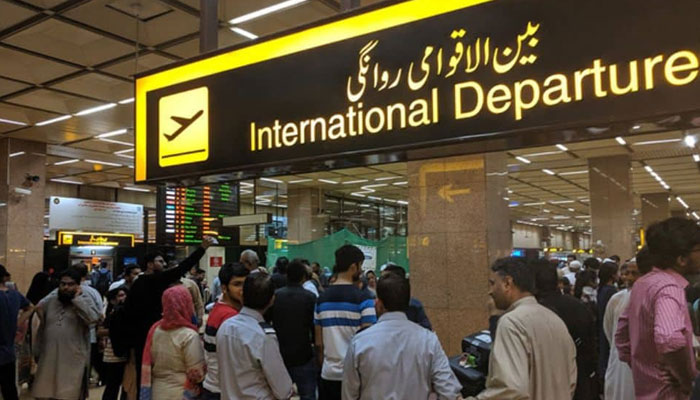
    KARACHI: Customs authorities have recovered a large amount of foreign currency from six passengers travelling from Karachi to Dubai. According to officials, the passengers belonged to the same family. Authorities recovered $55,000 in US currency and Rs950,000 in Pakistani cash from them. Officials said the passengers were carrying foreign currency above the limit permitted by the State Bank of Pakistan. The currency had also not been properly declared before their travel. The authorities took action under the Customs Act 1969 after the undeclared currency was discovered. Customs officials said the case involved six members of one family. The recovery was made during checks at the airport before the passengers could leave the country. Officials said the passengers had exceeded the permissible limit for carrying foreign currency abroad. They also failed to meet the required declaration procedures. Customs authorities stressed that travellers must comply with regulations governing the movement of foreign currency. Passengers carrying amounts above the permitted limits are required to follow the applicable declaration procedures. The incident has once again highlighted the importance of checks at international airports. Customs officials regularly monitor passengers and baggage to detect undeclared currency and other restricted items. Authorities said preventing currency smuggling remains a priority. They are maintaining strict checks to identify attempts to move large amounts of undeclared foreign currency out of Pakistan. Customs officials said they are following a zero-tolerance policy against currency smuggling. They added that action would be taken against anyone found violating the relevant laws. The recovered amount included both US dollars and Pakistani rupees. The officials did not provide further details about the intended use of the money or the identities of the passengers. The case also highlights the need for travellers to understand currency rules before leaving Pakistan. Failure to declare currency or carrying amounts beyond the permitted limits can lead to legal action under the applicable laws. Authorities are continuing proceedings in the case under the Customs Act 1969. The recovery is among the latest incidents showing the role of airport customs checks in preventing the illegal movement of currency. Officials said such measures are necessary to protect Pakistan’s financial system and enforce foreign exchange regulations. Customs authorities reiterated that passengers travelling abroad must comply with all currency declaration requirements. They said strict action would continue against attempts to move undeclared currency across Pakistan’s international borders.

  • |

    4.5-magnitude quake jolts Pakistan’s coast

      A 4.5-magnitude earthquake jolted Pakistan’s coastal region on Monday morning, with tremors recorded near Keti Bandar, according to the Pakistan Meteorological Department (PMD). The seismic activity occurred at around 8:31am, with the earthquake originating at a depth of approximately 40 kilometres beneath the surface. The PMD located the epicentre in the sea, around 156 kilometres southwest of Keti Bandar. The tremors were felt in parts of the coastal belt, prompting residents to remain alert. However, there were no immediate reports of casualties, injuries or significant damage to buildings and other infrastructure following the earthquake. The depth and offshore location of the earthquake likely reduced its impact on populated areas compared with a shallower quake occurring closer to land. Nevertheless, residents in coastal communities may have felt noticeable shaking depending on their distance from the epicentre. Seismic activity is not unusual in and around Pakistan’s coastal belt, which lies near tectonically active zones. Earthquakes in the region can occur beneath the Arabian Sea and along nearby fault systems. The meteorological department continues to monitor seismic activity and may issue further information if additional tremors or related developments are recorded. Authorities have also advised people to remain calm and follow official updates in the event of further seismic activity. No tsunami warning or major coastal emergency was reported in connection with the earthquake at the time of the initial report.

  • | |

    Six non-local workers killed in Kech

    Six non-local workers have been killed by militants linked to Fitna al-Hindustan in the Nasirabad area of Kech district, Balochistan, according to security sources. The sources said militants initially abducted six workers and killed another worker, identified as Javed, on July 27. The attackers later killed all six abducted workers, bringing the total number of victims in the incident to seven. The deceased workers have been identified as Muhammad Arshad, Muhammad Taimur, Muhammad Parvez, Muhammad Wazir, Muhammad Amjad and Muhammad Yahya. According to security officials, four of the victims came from Punjab, while two belonged to Khyber Pakhtunkhwa. The workers had reportedly been employed on development projects in Balochistan. Their deaths have raised fresh concerns about the security of workers from outside the province who travel to Balochistan for employment and infrastructure projects. Security sources also recalled a separate incident in Mashkel, Balochistan, where militants recently killed five non-local workers. The victims in that attack were also reportedly working on development-related projects. The latest killings come amid continued security challenges in parts of Balochistan, where militants have repeatedly targeted civilians, security personnel and workers involved in development activities. Security forces have been conducting operations against militant groups in various parts of the province.

  • | | |

    Fazl says Naqvi couldn’t speak without PM&#8…

    Jamiat Ulema-e-Islam (F) chief Maulana Fazlur Rehman has said Interior Minister Mohsin Naqvi could not have made recent remarks without consulting the prime minister, while calling for a national policy to address the country’s political and administrative challenges. Addressing a press conference in Quetta, Fazlur Rehman said there was no comprehensive national policy to improve the country’s current situation. He said the proposal to create new provinces should be considered carefully in light of Pakistan’s administrative structure and overall capacity. He said creating new provinces was not a bad idea in principle, but stressed that it was not a simple process and required serious consideration of the country’s political, constitutional and financial realities. The JUI-F chief alleged that new political debates were often introduced to divert public attention from pressing national issues. He urged Mahmood Khan Achakzai to convene a meeting of the joint opposition to discuss the country’s political situation. Fazlur Rehman said if such a meeting was not called, his party would organize a broader national-level conference to deliberate on the challenges facing the country. He warned that democracy could not flourish if governments continued to be formed according to individual preferences rather than the public mandate. He further said democratic institutions had weakened and Parliament was no longer functioning effectively. According to him, Pakistan must be governed strictly in accordance with the Constitution to restore public confidence. Calling for a fair and nationally inclusive policy, Fazlur Rehman said the country needed governance based on justice and equality. He also confirmed that JUI-F had decided not to join the government in Balochistan. Commenting on provincial politics, he said JUI-F remained the country’s largest public political movement and added that he had no knowledge of any proposal regarding Abdul Malik Baloch becoming the next chief minister of Balochistan.

  • |

    US says it will deepen security role in Asia

    The United States has rejected suggestions that it is reducing its involvement in Asia. A senior Pentagon official said Washington plans to strengthen its position in the Indo-Pacific and maintain what it considers a favourable balance of power in the region. US Undersecretary of Defense for Policy Elbridge Colby made the remarks during a speech in Manila on Monday. He said the United States was not leaving Asia. Instead, Washington was increasing its focus on the region. Colby also called on US allies and partners to take greater responsibility for their own defence. He said Washington wanted stronger partnerships rather than relationships based on dependence. According to Colby, the United States expects its regional allies to increase defence spending and strengthen their own military capabilities. He said greater responsibility from partner countries should not be interpreted as a sign that Washington is abandoning the region. Colby argued that stronger allies would contribute to stronger deterrence and help maintain regional stability. The Pentagon official said the US strategy includes maintaining a credible military presence along the First Island Chain. The strategic area stretches from Japan through Taiwan and the Philippines toward Borneo. It is considered important to US efforts to deter potential military threats in the Indo-Pacific. Colby said the United States was committed to maintaining a balance of power in the region. He also emphasised the need for allies to contribute more to regional security. His comments come amid continuing questions about the long-term US security commitment to Asia. Some regional governments and analysts have expressed concerns about whether Washington will remain as deeply involved in the Indo-Pacific as it has been in previous years. Colby sought to address those concerns by stressing that the United States intends to remain engaged. The Philippines is the first stop on Colby’s Southeast Asian tour. He is also scheduled to visit Indonesia, Thailand and Cambodia. The Philippines is a longstanding US treaty ally and has strengthened defence cooperation with Washington in recent years. The Pentagon official’s remarks are likely to be closely watched by US partners across the region. Washington is seeking to strengthen cooperation with allies while encouraging them to invest more heavily in their own defence. The approach reflects a broader US strategy of sharing the security burden with regional partners while maintaining a strong American military presence. Colby said the goal was to build capable partners rather than create countries that depend entirely on US protection. He maintained that stronger regional partners would make the overall US deterrence strategy more effective.

  • |

    Bangladesh President Shahabuddin resigns, cites serious health issues

    Bangladesh President Mohammed Shahabuddin has resigned from office after citing serious health concerns that he said were preventing him from fulfilling his constitutional responsibilities. The 76-year-old announced that he had recently been diagnosed with autonomic neuropathy, a medical condition that occasionally causes sudden loss of consciousness. He said continuing in office had become increasingly difficult because of his health and that stepping down was in the country’s best interest. Shahabuddin had been serving as Bangladesh’s president since April 2023. While the presidency is largely a ceremonial position, the office plays an important constitutional role as the country’s head of state and commander-in-chief of the armed forces. Following his resignation, the Speaker of the Jatiya Sangsad (Parliament) will assume the responsibilities of acting president until parliament elects a new head of state under constitutional procedures. His resignation comes at a crucial time for Bangladesh, which has undergone major political changes since the 2024 student-led uprising that led to the removal of former Prime Minister Sheikh Hasina from power. The country’s political landscape has since shifted significantly, with the Awami League facing legal restrictions and many of its leaders confronting legal challenges or remaining out of public view. Shahabuddin had been elected president in 2023 with the backing of the Awami League. His departure means another major political figure associated with the former ruling party has left public office during Bangladesh’s ongoing political transition. The government is now expected to begin the constitutional process of electing a new president. Until then, the acting president will perform all official duties to ensure the continuity of state affairs. Political observers say the selection of Bangladesh’s next president will be closely watched, as it comes during a period of political uncertainty and institutional reforms. The new appointment is expected to play an important symbolic role as the country prepares for future political and constitutional developments. In his resignation statement, Shahabuddin thanked the people of Bangladesh for their trust and support during his tenure. He expressed hope that the country would continue on a path of peace, democratic stability and economic progress despite the current political challenges.

Leave a Reply

Your email address will not be published. Required fields are marked *