six policemen among
| | |

Six policemen among 15 martyred in Swat suicide bl…

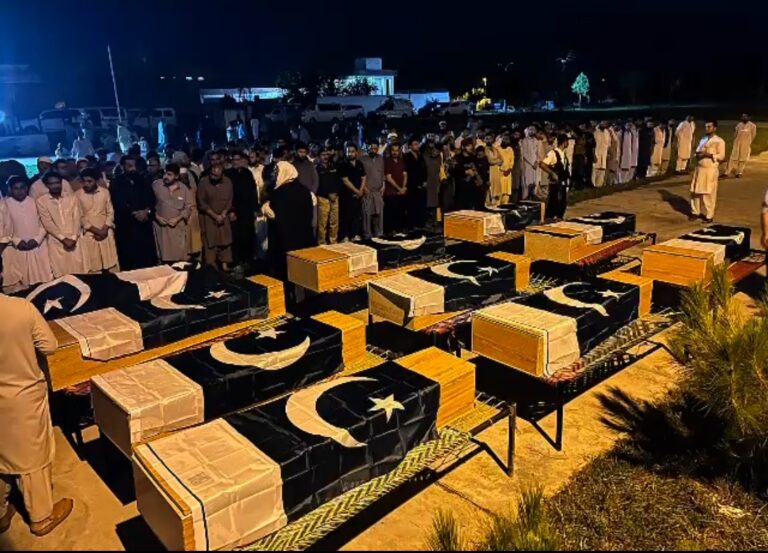
At least 15 people, including six police personnel, were killed in a suicide bombing near Kabal Police Station in Swat on Sunday, according to local administration and police officials.

Authorities said the attacker attempted to enter the police station but was intercepted by security personnel stationed at the entrance. After failing to gain access, the suicide bomber detonated the explosives near the main gate, triggering a powerful explosion that caused multiple casualties.

The blast occurred near Kabal Chowk, where a protest by local youths was also taking place at the time. The explosion spread panic throughout the area, with emergency teams and security forces rushing to the scene to launch rescue and relief operations.

Police officials said several people sustained injuries in the attack and were shifted to nearby hospitals for medical treatment. Authorities fear the number of casualties could rise as some of the injured remain in critical condition.

During the search operation, investigators recovered human remains from the blast site, including a severed head believed to belong to the suicide bomber. Forensic experts have collected evidence to help identify the attacker and determine the nature of the explosives used.

Security forces immediately cordoned off the area and launched a comprehensive search operation to ensure no further threats remained. Bomb disposal teams also inspected the site while investigators gathered evidence for the ongoing inquiry.

Officials said the timely action of police personnel prevented the attacker from entering the police station, a move they believe avoided even greater loss of life and damage.

The attack has once again highlighted the security challenges facing law enforcement agencies, which continue to remain on high alert amid renewed militant violence in parts of Khyber Pakhtunkhwa.

Similar Posts

  • | |

    Hangu operation kills terror attack mastermind

    Security forces have killed the alleged mastermind of the July 30 attack on the Khazina Banda police checkpost in Hangu, where nine police personnel lost their lives. A senior security official told  that the terrorist, identified as Amir Mauviya, was killed during an intelligence-based operation in Chapri Naryab, Hangu. According to security sources, Mauviya held a key position within Fitna-al-Khawarij in Kurram and faced charges in several other terrorism cases. Security forces have intensified operations against militants under Operation 11 Garaj. The July 30 attack on the Khazina Banda checkpost killed nine police officials, including a deputy superintendent of police, and injured 28 others. Police said terrorists attacked the post, triggering an exchange of fire in which 15 militants were killed. In a separate incident on Sunday, an improvised explosive device targeted a police van near Pir Zakorhi Bridge, close to the Peshawar-Islamabad motorway toll plaza. The blast caused minor injuries to two police personnel. Earlier, on July 29, a police officer lost his life and four terrorists were killed during an operation in Matta tehsil of Swat. The latest incidents come days after a deadly attack on a joint police checkpost in Tank district, where 15 people, including 14 security personnel and a government official, were martyred. According to the military’s media wing, security forces killed 12 attackers after thwarting their attempt to breach the checkpost. One terrorist vehicle packed with explosives also struck the perimeter wall, causing significant damage. Khyber Pakhtunkhwa continues to face a growing threat from militant attacks. The Pakistan Institute for Conflict and Security Studies reported that security personnel deaths in terrorism-related incidents across KP, excluding the merged districts, rose from 12 in June to 38 in July. Terrorist deaths also increased from 37 to 108 during the same period, while civilian fatalities dropped from 26 to seven.

  • | | |

    Pakistan celebrates Eid Milad-un-Nabi with religio…

    ISLAMABAD: Eid Milad-un-Nabi (PBUH), marking the birth anniversary of the Holy Prophet Muhammad (PBUH), is being observed across Pakistan with deep religious devotion, respect and enthusiasm. The day began with a gun salute, while mosques, streets, public buildings and residential areas have been illuminated and decorated to mark the occasion. Special Milad gatherings, Naat recitations and religious programmes are being held in cities and towns across the country. In Karachi, streets and neighbourhoods have been adorned with colourful lights, while models of the Holy Kaaba and Masjid al-Nabawi (PBUH) have been displayed at several locations. Religious gatherings and processions are also being organised in different parts of the city. Lahore has also been decorated for the occasion, with mosques, homes, roads and government buildings illuminated. Special prayers are being offered for Pakistan’s peace, progress and prosperity. The city’s main procession is scheduled to begin from Railway Station Chowk. In Peshawar, devotees are arranging Naat Khawani and Milad gatherings to pay tribute to the Holy Prophet (PBUH), while Quetta has also been illuminated for the celebrations. The main gathering in Quetta is scheduled to take place at Bacha Khan Chowk. Islamabad is witnessing similar celebrations, with the capital decorated with lights and religious gatherings being organised at mosques. Devotees are expressing their love and reverence for the Holy Prophet (PBUH) through prayers, Naat recitations and processions. The main Eid Milad-un-Nabi procession in Karachi is scheduled to leave Shaheed Masjid in Kharadar at 2:30pm. It will pass through New Memon Mosque before concluding at Gulzar-e-Habib Mosque around Asr prayer time. Processions and religious programmes are also being held in other cities. To facilitate the celebrations, K-Electric has announced that no load-shedding will be carried out across Karachi on the occasion of Eid Milad-un-Nabi.

  • | |

    Ghazi University, PMD and World Bank strengthen Hi…

    Dera Ghazi Khan: PMD, World Bank and Ghazi University Join Hands to Strengthen Hill Torrent Monitoring and Disaster Preparedness in Dera Ghazi Khan by establishment of State-of-the-Art Automatic Weather Station. A Major Milestone Towards Strengthening Weather Forecasting, Hill Torrent Monitoring and Community Resilience in Dera Ghazi Khan Ghazi University, Dera Ghazi Khan, has taken a significant step towards strengthening weather monitoring, disaster preparedness and climate resilience in the region through the establishment of a state-of-the-art Automatic Weather Station (AWS) under the World Bank-supported Modernization of Hydromet Services of PMD in Pakistan Project (MHSP). The initiative, being implemented by the Pakistan Meteorological Department (PMD) with support from the World Bank, aims to modernize Pakistan’s hydrometeorological observation network, enhance forecasting capabilities and improve climate service delivery. The project is expected to play a vital role in strengthening early warning systems and disaster preparedness, particularly in areas vulnerable to extreme weather events and climate-related hazards. The proposed Automatic Weather Station at Ghazi University will provide real-time, high-resolution meteorological data, significantly contributing to weather forecasting and the monitoring of weather conditions associated with hill torrents in Dera Ghazi Khan. Given the region’s vulnerability to flash floods and hill torrents, the installation represents an important step towards improving early warning capabilities and protecting communities, livelihoods and infrastructure. Under Phase-I of the MHSP, a total of 110 Automatic Weather Stations are being installed across Pakistan, including 25 stations in Punjab. These stations will expand the country’s real-time weather observation network and provide reliable meteorological data to support forecasting, research, disaster risk reduction and climate-resilience planning. A project team recently visited Ghazi University, Dera Ghazi Khan, where it held a meeting with the Vice Chancellor, Prof. Dr. Ashfaq Ahmad. During the visit, the team conducted a comprehensive assessment of the proposed site, finalized the location for installation of the Automatic Weather Station, and signed a Memorandum of Understanding (MoU), formally designating Ghazi University as an AWS installation site. The visiting delegation comprised Mr. Hassan Shafiq, Environment & Social Safeguards Consultant, World Bank; Dr. M. Yasir, Hydrology Consultant; Mr. Abdul Aziz, Director, Regional Meteorological Centre Lahore, Pakistan Meteorological Department; and Mr. Sajid Hussain, Meteorologist, PMD. The delegation was accompanied by Dr. Sagheer Atta, Director ORIC, Ghazi University. Speaking on the occasion, Vice Chancellor Prof. Dr. Ashfaq Ahmad expressed the university’s strong commitment to supporting the initiative and emphasized the importance of establishing an Automatic Weather Station at Ghazi University. He stated that the facility would not only strengthen real-time weather monitoring and forecasting in Dera Ghazi Khan but would also significantly enhance the monitoring and early warning of hill torrents, helping improve disaster preparedness and protect local communities from potential hazards. He described this contribution as an important form of community service, particularly for vulnerable populations in the hill-torrent-prone areas of the region. The station will also create valuable opportunities for research, academic collaboration, student training and practical learning in meteorology, hydrology, climate science and related disciplines.

  • |

    Trump approves landmark US-Saudi nuclear pact

    US President Donald Trump has approved a landmark civilian nuclear agreement with Saudi Arabia, marking a major step in expanding strategic cooperation between the two countries. The proposed deal is expected to remain in effect for 30 years and is valued at tens of billions of dollars. The agreement is designed to support the development of Saudi Arabia’s civilian nuclear energy program while giving American companies a leading role in building the kingdom’s nuclear infrastructure. It is expected to create significant investment opportunities for US firms and strengthen long-term energy cooperation between Washington and Riyadh. Under the proposed framework, American companies could participate in constructing nuclear facilities across Saudi Arabia. The agreement also allows for the possibility of building a uranium enrichment plant in the kingdom if future joint studies by both governments determine that such a project is necessary. US officials say the deal will enable Washington to remain closely involved in the development of Saudi Arabia’s nuclear program. They believe this cooperation will help ensure that the kingdom’s nuclear activities remain focused on peaceful civilian purposes. The Trump administration is expected to submit the agreement to the US Congress in the coming days. The pact is being introduced under Section 123 of the US Atomic Energy Act of 1954, which provides the legal framework for civilian nuclear cooperation between the United States and foreign countries. Once submitted, Congress will have about 90 days to review the agreement. If lawmakers do not reject it during the review period, the agreement will automatically enter into force. Blocking the deal would require Congress to pass a joint resolution with enough votes to override a possible presidential veto. According to officials familiar with the proposal, the agreement does not include the “Gold Standard,” a condition that permanently bars partner countries from enriching uranium or reprocessing spent nuclear fuel. These activities can potentially be used in the production of nuclear weapons. The proposed agreement also reportedly does not include the International Atomic Energy Agency’s Additional Protocol. This protocol allows international inspectors to conduct broader inspections and monitor undeclared nuclear facilities. Its absence has raised concerns among some non-proliferation experts and lawmakers. US officials, however, insist that the agreement contains strong safeguards required under American law. They stress that the deal does not obligate the United States to transfer sensitive uranium enrichment technology or nuclear fuel cycle capabilities to Saudi Arabia. Instead, it establishes a legal pathway for future civilian cooperation while requiring separate approvals for any advanced technology transfers. The agreement follows earlier discussions between senior US and Saudi officials, who signed a preliminary framework last year to expand cooperation in the peaceful use of nuclear energy. The proposal has generated debate in Washington. Several Democratic lawmakers, along with some Republicans, have argued that stronger safeguards should be included before the agreement is approved. They believe stricter restrictions are necessary to reduce the risk of nuclear weapons proliferation in the Middle East. Saudi Arabia has repeatedly stated that its nuclear program is intended to meet growing energy demands and diversify the country’s energy resources. However, Crown Prince Mohammed bin Salman has previously said that if Iran were to acquire a nuclear weapon, Saudi Arabia would also seek similar capabilities. His remarks have fueled international concerns about a possible regional nuclear arms race.

  • | |

    Jordan Stephens breaks silence on ‘very tough’…

    Jordan Stephens has spoken publicly for the first time about his reported split from Jade Thirlwall, admitting that navigating heartbreak while under the spotlight has been far from easy. The 34-year-old Rizzle Kicks musician addressed the situation during the latest episode of the Miss Me? podcast, where he co-hosts alongside broadcaster Miquita Oliver. Although Stephens did not go into detail about the end of the relationship, he acknowledged that the past few weeks have been emotionally challenging and said he still has not fully processed everything.  “It’s been very tough,” Stephens admitted, explaining that he feels uncomfortable seeing his private life become a topic of public discussion. He said that while he values being honest with listeners, there are limits to what he is willing to share, especially when another person’s privacy is involved.  Reports of Stephens’ breakup with former Little Mix star Jade Thirlwall emerged last week, with several outlets claiming the couple quietly ended their six-year relationship earlier this year. According to reports, the decision was mutual, and the pair remain on good terms despite going their separate ways. Neither Stephens nor Thirlwall has officially confirmed the details of the split beyond Jordan’s recent comments.  During the podcast, Stephens reflected on the difficulty of experiencing heartbreak in the public eye. He said that relationships are deeply personal and that having strangers speculate about them can make an already painful experience even harder to navigate. While he hinted that he may speak more openly in the future, he stressed that now is not the right time because emotions are still raw.  Stephens and Thirlwall began dating in 2020 after connecting during the COVID-19 lockdown. Over the years, they became one of British pop culture’s most admired couples, often supporting each other’s careers while keeping much of their relationship away from the spotlight. They also collaborated creatively, with Stephens contributing to Thirlwall’s solo music following Little Mix’s hiatus.  Rumors of trouble in their relationship grew after fans noticed the couple had not appeared together publicly for several months. Social media users also pointed out that photos and videos featuring one another had been removed from their accounts, adding to speculation before reports of the split surfaced.  Despite the attention surrounding his personal life, Stephens made it clear that he is focused on healing and moving forward. His candid comments offered a rare glimpse into the emotional impact of life after a long-term relationship while highlighting the challenges celebrities face when deeply personal moments become public conversation. For now, both Stephens and Thirlwall appear to be concentrating on their respective careers, leaving fans to respect their privacy as they navigate the next chapter of their lives. 

  • |

    7 in 10 Afghan women report poor mental health

    Restrictions imposed on women and girls in Afghanistan have sharply reduced their participation in public life, with more than half of surveyed women saying they now leave their homes only once or twice a month, according to a new UN Women assessment. The findings were released as Afghanistan approaches the fifth anniversary of the Taliban’s return to power in August 2021. UN Women said Afghanistan remains the only country where girls are barred from secondary education and women are prohibited from attending universities. The agency said the restrictions have increasingly affected women’s freedom of movement, education, employment and access to public life. More than half of the women surveyed reported leaving home no more than twice a month. Nearly three-quarters said they did not feel safe going outside without a male guardian, commonly referred to as a mahram. UN Women said the restrictions have also contributed to growing concerns about women’s mental health. Around seven out of 10 women surveyed described their mental health as either “bad” or “very bad”. Respondents cited social isolation, reduced opportunities and limited access to support networks among the factors affecting their wellbeing. The UN agency said Taliban authorities have introduced more than 100 decrees affecting women and girls since returning to power. It described the measures as creating a system of discrimination and said Afghanistan had become an extreme global example of restrictions on women’s rights. The Taliban maintain that their policies respect women’s rights under their interpretation of Islamic law and Afghan culture. Education remains heavily restricted The restrictions on education have affected millions of Afghan girls. UNESCO estimated that about 2.4 million girls have been prevented from attending secondary school since the Taliban returned to power. Women and girls have also been excluded from university education, limiting their opportunities to pursue professional careers and higher education. UN Women said recent measures had further weakened legal protections available to women. According to the agency, rules introduced this year reduced legal equality between men and women, strengthened the authority of men within marriage and created additional difficulties for women seeking divorce. Women largely excluded from workforce Economic participation remains another major challenge. UN Women reported that only about 7% of Afghan women are employed, compared with approximately 84% of men. The agency said the restrictions on education and employment were limiting women’s ability to earn income, develop careers and contribute to the country’s economy. The findings were based on a door-to-door survey involving 2,190 people conducted between February and March 2025. The agency also conducted telephone interviews with 2,811 people between April and May 2025. UN Women warned that continued restrictions could further isolate women and deepen the social and economic consequences of excluding half of Afghanistan’s population from public life. The Taliban government has not immediately responded to requests for comment on the latest findings.

Leave a Reply

Your email address will not be published. Required fields are marked *