violence against balochistans
| | |

Violence against Balochistan’s people is  futil…

QUETTA: Balochistan Chief Minister Mir Sarfaraz Ahmed Bugti has criticised extremist elements for attempting to draw the Baloch population into a cycle of violence, saying attacks on infrastructure ultimately hurt ordinary citizens and undermine the province’s development.

Speaking at the inauguration of the “Rasool-e-Rahmat (PBUH)” calligraphy exhibition, Bugti said the destruction of bridges, roads and commercial transport directly affects livelihoods and restricts economic opportunities for local communities.

The chief minister said the provincial government would organise an international calligraphy exhibition, “Bayan-ul-Marsoos”, in Quetta next year, bringing together prominent artists and calligraphers from Turkey and other parts of the Islamic world.

He said such international cultural events would help project Balochistan as a peaceful region with strong cultural and artistic traditions. He added that hosting major programmes around Pakistan’s Independence Day would also demonstrate the province’s potential to the international community.

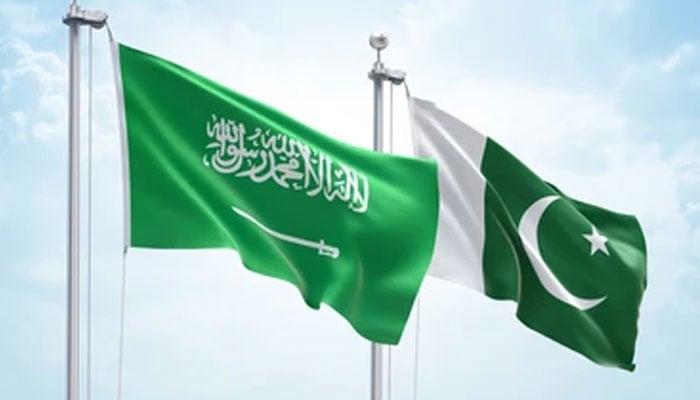
Discussing regional and international developments, Bugti said Pakistan’s growing cooperation with Saudi Arabia and Turkey reflected an evolving geopolitical landscape. He maintained that the defence cooperation was aimed at promoting security and peace rather than aggression.

Bugti also expressed confidence in Pakistan’s future, praising the leadership of Prime Minister Shehbaz Sharif, President Asif Ali Zardari and Chief of Army Staff General Asim Munir. He said no force could stop Pakistan from moving towards what he described as a decisive victory.

Similar Posts

  • | |

    Documentary film on the struggle for Joint Elector…

    By Yassar Talib Aiman Zameer Lahore: The Centre for Social Justice (CSJ) held a screening of its documentary film, A Separation Refused, highlighting the Movement for the Restoration of the Joint Electorate in Pakistan, at a local hotel in Lahore. The 20-minute documentary film, by the award-winning the producer and director, CSJ and Dawood Akhtar Murad, traces the culmination of the world unique Separate Electorate system in Pakistan’s history and the movement for the restoration of the Joint Electorate in Pakistan especially during the 1990s to 2001. The film chronicles the efforts of civil society organizations, political leaders, faith communities, and human rights advocates who campaigned for equal citizenship and inclusive democratic participation for religious minorities. Using historical accounts and personal testimonies, the film illustrates how sustained advocacy contributed to democratic reforms and continues to inspire efforts towards equality, pluralism, social cohesion, and the protection of constitutional rights. Featuring over a dozen interviews, it brings together insights from Hina Jilani, Cardinal Joseph Coutts, Dr. Charles Amjad Ali, Dr. Yaqoob Bangash, and other prominent voices offering diverse perspectives youth, clergy and a parliamentarian. The even also premiered a song Hum Juda Nahein (We Are Not Separate) that expressed the The screenings were followed by an interactive panel discussion explored the progress made towards equal citizenship and the continuing challenges to the democratic participation of religious minorities in Pakistan. The panelists, Wajahat Masood a public intellectual and Peter Jacob, answered the questions while the academic Faaria Khan moderated the discussion. While addressing the participants, Wajahat Masood, said that democracy is based on the principle of equal citizenship and that the categorization of citizens into majorities and minorities reflects a constitutional anomaly. Referring to the Separate Electorate system, he noted that institutionalizing such divisions weakened democratic systems and undermined the principle of equal political participation. In response to a question on the rationale behind the documentary, Peter Jacob, Executive Director CSJ, said that the importance of the movement warranted a careful reading of the history. He noted that the film was developed to preserve authentic accounts of the struggle for the restoration of the Joint Electorate and to address competing interpretations of history and misunderstandings. He also emphasized the need for constitutional reforms to strengthen equal citizenship. He called for a review of Articles 41 and 91 of the Constitution, to remove precondition of religious affiliation for the offices of the President and Prime Minister. Moreover, implementation of Article 22(1) of the constitution of Pakistan that guarantees unbiased education. In the open discussion, participants emphasized that the message of documentary film highlighting constitutional rights, democratic inclusion, should be screened more widely through universities, arts councils, mainstream media, and other public platforms to encourage informed dialogue and greater public awareness. They further stressed that equal citizenship is not solely the concern of religious minorities but a shared national responsibility, and called for greater participation and support from the majority community in future advocacy and dialogue. At the end the participants reaffirmed a shared commitment to advancing constitutional rights, equal citizenship, participatory democracy, and peaceful coexistence through collective action.

  • | |

    Heavy rain floods Rawalpindi, Islamabad as Nullah …

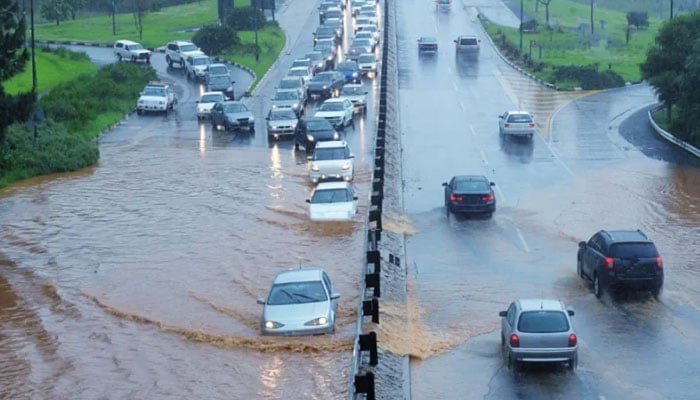
    Heavy rain continued in Rawalpindi and Islamabad. Several low-lying areas were flooded after hours of intense rainfall. Water levels in Nullah Lai rose sharply. The situation has created concerns about possible flooding in areas located along the waterway. According to the Managing Director of the Water and Sanitation Agency (WASA), the water level at Katarian reached 20 feet. Warning sirens were sounded around Nullah Lai as a precaution. The water level at Gawalmandi Bridge was also recorded at 17 feet. Authorities are closely monitoring the situation as more rainfall is expected in the region. Residents living along the banks of Nullah Lai were advised to leave their homes immediately. The administration has urged people in vulnerable areas to move to safer locations. Several parts of Rawalpindi were affected by the heavy rain. Pirwadhai was among the areas that came under water. Roads and streets in low-lying localities were also affected. Rain was also reported in other parts of Punjab. Gujrat and Sialkot received thunderstorms and heavy showers. The weather conditions remained unstable in several cities. The Pakistan Meteorological Department has forecast rain in different parts of Punjab from August 17 to 20. Authorities have warned that heavy rainfall could increase the risk of urban flooding. The weather department had already issued an alert for the sixth spell of monsoon rains across Punjab. The spell is expected to bring rain to several areas. Officials have advised residents to remain alert. People living near Nullah Lai and other vulnerable waterways have been urged to follow official instructions. Authorities are also monitoring water levels and drainage systems. Emergency measures are being taken in areas where the risk of flooding is higher. Residents have been advised to avoid unnecessary travel during heavy rainfall. They have also been urged to stay away from flooded roads, drains and fast-flowing water.

  • | |

    Saudi diplomat takes charge in Islamabad

    Senior Saudi diplomat Major General (Retired) Rajeh Al-Buqami will take charge as Saudi Arabia’s new ambassador to Pakistan, succeeding Nawaf bin Saeed Al-Malki. The appointment marks a new phase in Saudi-Pakistan diplomatic relations, with Al-Buqami expected to strengthen cooperation and further deepen the longstanding ties between the two brotherly countries. Al-Buqami formally took the oath of office alongside several other Saudi ambassadors appointed to represent the Kingdom in various friendly and brotherly countries. The appointments reflect Saudi Arabia’s ongoing efforts to reinforce its diplomatic engagement and expand relations with partner nations. The new ambassador is expected to focus on advancing bilateral cooperation in areas of mutual interest and maintaining the close diplomatic and strategic relationship between Saudi Arabia and Pakistan.

  • | |

    Mehar Bano’s fake death prank reel receives backlash

    A reel that actress and writer Mehar Bano posted while on a trip to northern Pakistan has gone viral for all the wrong reasons, with many viewers finding the premise of the video deeply unfunny and some expressing genuine alarm before realising it was staged. Mehar Bano, known for her bold screen presence and her work across Pakistani dramas and films, was on vacation with a group of friends when they decided to create a prank reel built around the concept of her fake death. The video was filmed in the style of a breaking Pakistani news report, with Mehar lying motionless on a rock while her friends played the roles of reporters and devastated family members lamenting that their holiday had been ruined by her sudden passing. The production was deliberately styled after the kind of dramatic live television reporting that Pakistani news channels are known for, clearly intended as satire. The internet, however, was not amused. The backlash was immediate and pointed. Comments flooded in from viewers who found the death prank concept distasteful rather than clever. “I actually thought she died,” wrote one person, capturing the alarm that the video initially triggered before its prank nature became clear. Another was far blunter in their assessment, writing simply, “What a third class act.” A third commenter expressed their reaction without ambiguity: “I did not find this funny.” The response reflects a broader sensitivity in Pakistani digital culture around death-related humour, particularly when it is framed as breaking news. For a country where audiences have frequently received genuinely distressing news about public figures through social media and news channels, a video that mimics that format as a prank occupies uncomfortable territory. What the creators of the reel may have seen as a piece of satirical comedy landed for many viewers as something that was using a format associated with real loss and real grief for the sake of social media engagement. The criticism also reflects something about the evolving relationship between Pakistani celebrities and their online audiences. There is a growing expectation that public figures, particularly those who occupy cultural space as artists and writers, should bring a certain level of thoughtfulness to the content they share publicly. For those who follow Mehar Bano and appreciate her work, the reel felt like a misalignment between the intelligence they associate with her and the specific choice she made here. Mehar Bano has not publicly responded to the backlash or addressed the criticism of the reel at the time of writing. The video remains shared on her Instagram account, where the comment section continues to reflect the divided reaction it has generated.

  • |

    Erdogan says Makkah defence pact could expand across region

    ANKARA: Turkish President Recep Tayyip Erdogan has said the vision behind the Makkah Joint Defence Agreement between Türkiye, Saudi Arabia and Pakistan extends beyond the three signatories and could eventually include other regional countries. Erdogan said the agreement was designed to strengthen collective security and promote lasting peace, stability and prosperity in the region. He stressed that the pact was not directed against any particular country. Speaking in an interview with an Arab newspaper, Erdogan said the three countries wanted to create a broader regional framework based on cooperation, mutual trust and collective responsibility. He said countries that support peace, stability and prosperity should be able to join the framework in the future. According to Erdogan, the agreement is based on the principle of collective deterrence. A security threat against one member would be treated as a concern for the other members. He said the arrangement could also encourage joint defence-industry projects and greater cooperation against terrorism. Erdogan argued that regional countries should take greater responsibility for addressing their own security challenges rather than relying on solutions imposed from outside the region. He described the agreement as the outcome of long-running consultations among the participating countries and said it reflected changing conditions in the region. The Turkish president also rejected the idea that the pact was simply a response to tensions between the United States and Iran. He said its broader objective was to establish a durable mechanism for regional security. Focus on Gulf security Erdogan said the agreement could contribute to stability in the Gulf, which he described as vital to international trade and the global economy. He highlighted the importance of energy supplies, maritime routes and trade links passing through the region. He also expressed concern over tensions surrounding the Strait of Hormuz, warning that prolonged disruption there could have consequences for economies around the world. Erdogan called for restraint and continued diplomatic engagement to ensure the waterway remains safe for international shipping. He said Türkiye preferred dialogue and negotiations over military escalation and believed diplomatic efforts were essential to resolving disputes in the region and beyond. The Makkah agreement formalises growing strategic cooperation between Pakistan, Saudi Arabia and Türkiye. The three countries describe the arrangement as defensive and aimed at strengthening collective deterrence rather than creating an offensive military bloc. Erdogan said stronger cooperation between Ankara and Riyadh would also contribute to regional stability. He pointed to expanding ties in defence, trade, investment, energy and tourism. Prime Minister Shehbaz Sharif has described the trilateral agreement as an extension of Pakistan and Saudi Arabia’s existing defence cooperation. Pakistan and Saudi Arabia had earlier signed a strategic mutual defence agreement under which aggression against either country would be treated as aggression against both. The latest trilateral framework builds on those longstanding security ties and introduces Türkiye into a wider mechanism for defence cooperation.

  • | |

    Rs120bn PRI subsidy ends as banks take over costs …

    Islamabad: The government has stopped providing the Pakistan Remittance Initiative subsidy, which reached Rs120 billion, saying the country’s financial difficulties make it impossible to continue the support under the current budget. Banks have agreed to absorb the related costs themselves to keep overseas Pakistanis sending money through official channels. The development puts the spotlight on the future of Pakistan’s remittance system, which depends heavily on money sent home by Pakistanis working abroad. The government had previously used subsidies to help banks facilitate these transfers, but curtailed that support last year. The Governor of the State Bank of Pakistan informed the Senate Standing Committee on Finance and Revenue that the government had initially provided subsidies to banks under the Pakistan Remittance Initiative to facilitate remittances from overseas Pakistanis. The total subsidy provided by the government reached Rs120 billion. However, the financial pressure on the government has now made it difficult to continue paying this amount. The subsidy could not be continued in the current budget because of prevailing fiscal constraints. Instead, banks have decided to bear the costs linked to facilitating remittances from their own resources. The decision means that banks will continue providing the service to overseas Pakistanis even though the government can no longer provide the previous level of financial support. The Pakistan Remittance Initiative was discussed by the committee during its meeting at Parliament House in Islamabad on August 25, 2026, under the chairmanship of Senator Saleem Mandviwalla. The committee considered the government’s decision important because remittances sent by Pakistanis living and working abroad are a major source of foreign currency for the country. The State Bank told the committee that banks decided to continue bearing the associated costs so that the flow of remittances would not be disrupted. The committee appreciated the banks’ decision but also decided to examine their actual performance. Selected banks will therefore be invited to the committee’s next meeting to explain their performance and contribution to the remittance sector. The move comes at a time when the government is facing tight financial conditions and has been forced to reduce or reconsider spending commitments. The end of the Rs120 billion subsidy raises an important question about how the remittance system will operate in the longer term if banks continue to carry the costs without government support. For millions of Pakistanis working overseas, remittances are an important way of supporting families at home. These transfers help families pay for everyday needs and also bring foreign currency into Pakistan. The government’s decision does not mean that the remittance service has stopped. Instead, banks have agreed to continue facilitating transfers while paying the related costs themselves. The Senate committee has now moved to check whether banks are fulfilling this responsibility effectively and whether overseas Pakistanis are receiving proper services. The next meeting is expected to provide the committee with a clearer picture of how banks are handling the change after the withdrawal of the government subsidy. The key issue remains whether banks can continue carrying the financial burden while maintaining an efficient and reliable remittance system for overseas Pakistanis. The Rs120 billion figure also shows the scale of government support previously used to encourage and facilitate remittances through the formal banking system.

Leave a Reply

Your email address will not be published. Required fields are marked *