documentary film struggle
| |

Documentary film on the struggle for Joint Elector…

By Yassar Talib

Aiman Zameer

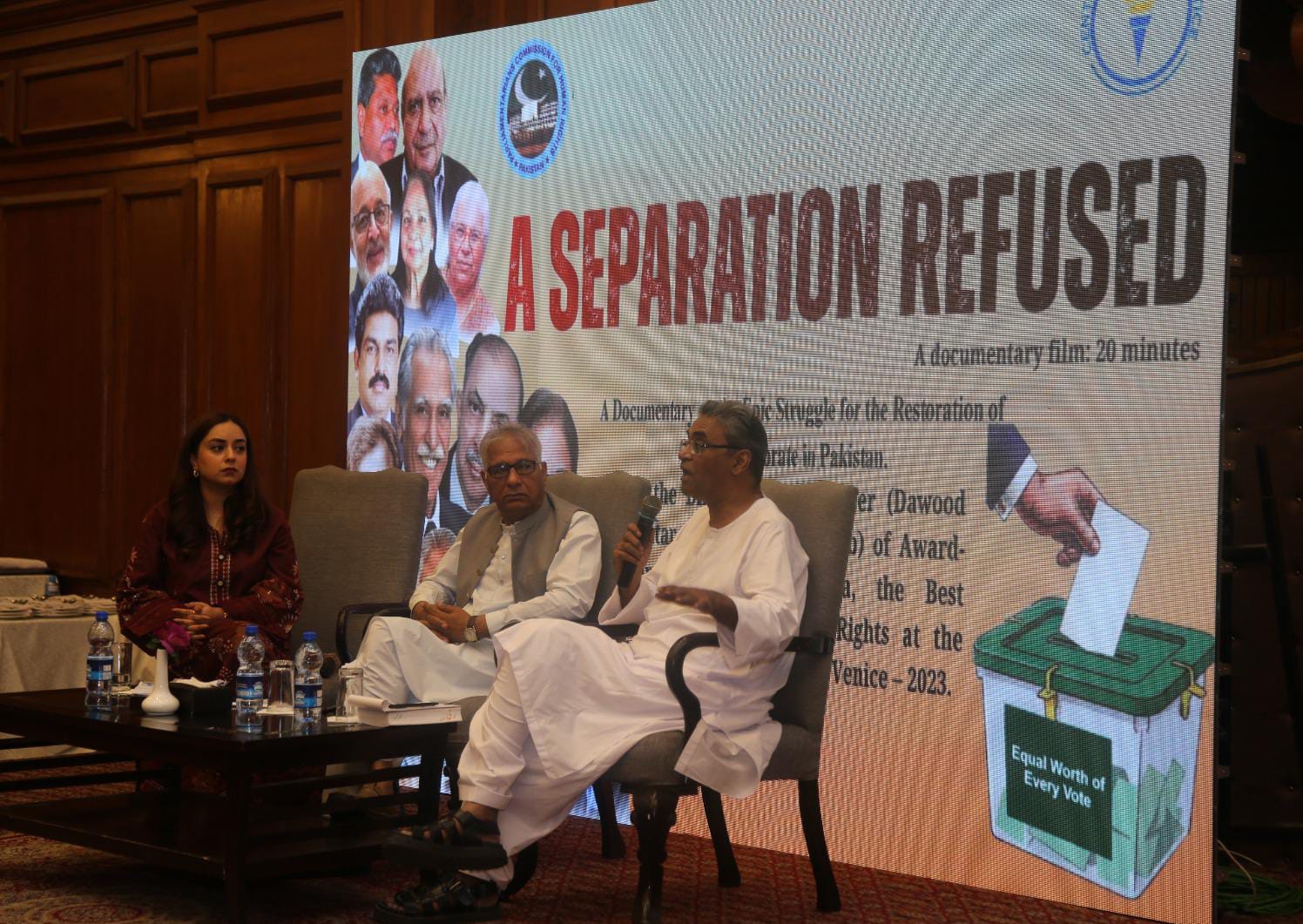
Lahore: The Centre for Social Justice (CSJ) held a screening of its documentary film, A Separation Refused, highlighting the Movement for the Restoration of the Joint Electorate in Pakistan, at a local hotel in Lahore.

The 20-minute documentary film, by the award-winning the producer and director, CSJ and Dawood Akhtar Murad, traces the culmination of the world unique Separate Electorate system in Pakistan’s history and the movement for the restoration of the Joint Electorate in Pakistan especially during the 1990s to 2001. The film chronicles the efforts of civil society organizations, political leaders, faith communities, and human rights advocates who campaigned for equal citizenship and inclusive democratic participation for religious minorities.

Using historical accounts and personal testimonies, the film illustrates how sustained advocacy contributed to democratic reforms and continues to inspire efforts towards equality, pluralism, social cohesion, and the protection of constitutional rights. Featuring over a dozen interviews, it brings together insights from Hina Jilani, Cardinal Joseph Coutts, Dr. Charles Amjad Ali, Dr. Yaqoob Bangash, and other prominent voices offering diverse perspectives youth, clergy and a parliamentarian.

The even also premiered a song Hum Juda Nahein (We Are Not Separate) that expressed the

The screenings were followed by an interactive panel discussion explored the progress made towards equal citizenship and the continuing challenges to the democratic participation of religious minorities in Pakistan. The panelists, Wajahat Masood a public intellectual and Peter Jacob, answered the questions while the academic Faaria Khan moderated the discussion.

While addressing the participants, Wajahat Masood, said that democracy is based on the principle of equal citizenship and that the categorization of citizens into majorities and minorities reflects a constitutional anomaly. Referring to the Separate Electorate system, he noted that institutionalizing such divisions weakened democratic systems and undermined the principle of equal political participation.

In response to a question on the rationale behind the documentary, Peter Jacob, Executive Director CSJ, said that the importance of the movement warranted a careful reading of the history. He noted that the film was developed to preserve authentic accounts of the struggle for the restoration of the Joint Electorate and to address competing interpretations of history and misunderstandings. He also emphasized the need for constitutional reforms to strengthen equal citizenship. He called for a review of Articles 41 and 91 of the Constitution, to remove precondition of religious affiliation for the offices of the President and Prime Minister. Moreover, implementation of Article 22(1) of the constitution of Pakistan that guarantees unbiased education.

In the open discussion, participants emphasized that the message of documentary film highlighting constitutional rights, democratic inclusion, should be screened more widely through universities, arts councils, mainstream media, and other public platforms to encourage informed dialogue and greater public awareness. They further stressed that equal citizenship is not solely the concern of religious minorities but a shared national responsibility, and called for greater participation and support from the majority community in future advocacy and dialogue.

At the end the participants reaffirmed a shared commitment to advancing constitutional rights, equal citizenship, participatory democracy, and peaceful coexistence through collective action.

Similar Posts

  • | |

    Stray dog attack on child at Punjab university cam…

      Lahore: A deeply unfortunate, alarming, and unacceptable incident occurred today at Punjab University when the young daughter of a university professor was attacked by stray dogs roaming freely on the university campus. The brutal attack left the child with approximately fifteen deep bite wounds on different parts of her body, requiring immediate medical attention. The tragic incident has caused immense shock, grief, and concern among the victim’s family as well as the entire university community. The Academic Staff Association (ASA) and the Joint Action Committee stated that they have repeatedly raised concerns over the growing stray dog population on the campus through both written communications and verbal representations over the past several months. According to the associations, they had consistently warned the university administration that the increasing number of stray dogs posed a serious threat to the lives and safety of students, faculty members, university employees, and their families. Despite numerous complaints and repeated demands for action, the administration allegedly failed to address the issue with the seriousness it deserved, displaying what the associations described as criminal negligence, indifference, and a lack of responsibility. They maintained that today’s tragic incident is a direct consequence of this continued inaction. The Academic Staff Association and the Joint Action Committee expressed profound disappointment over what they described as the misplaced priorities of the current university administration. Instead of focusing on resolving the institution’s fundamental issues, ensuring campus security, and protecting the welfare of the university community, the administration has allegedly remained preoccupied with retaliatory actions, harassment of faculty and employees, and unnecessary administrative conflicts. The associations argued that when an administration neglects its basic legal and administrative responsibilities, such unfortunate incidents become inevitable, and responsibility for the consequences rests with the concerned authorities. Strongly condemning the incident, the Academic Staff Association (ASA) and the Joint Action Committee have put forward the following demands: An immediate, transparent, and impartial inquiry should be conducted to determine responsibility for the incident and hold those accountable. The injured child and her family should be provided with every possible medical, administrative, and financial assistance. A comprehensive, effective, and permanent operation should be launched on an emergency basis to make the entire Punjab University campus safe from stray dogs. A clear, practical, and sustainable campus safety policy should be developed and implemented to ensure the protection of students, faculty members, employees, and their families. The Academic Staff Association and the Joint Action Committee further warned that if the university administration fails to take immediate and effective measures to permanently resolve the stray dog issue, and if any similar incident occurs in the future, they will reserve the right to pursue all available legal remedies against those responsible. These measures may include the registration of a First Information Report (FIR) and other legal proceedings against the relevant authorities for negligence. The associations urged the university administration to set aside personal preferences, retaliatory attitudes, and unnecessary disputes, and instead devote its full attention to addressing the university’s core challenges. They stressed that ensuring campus security and safeguarding the lives and property of students, faculty members, employees, and their families must remain the administration’s highest priority. The statement concluded by emphasizing that the protection of human life is the foremost responsibility of any institution, and any further negligence in fulfilling this duty would be entirely unacceptable.

  • Poultry industry linked to foodborne infections

    A new study warns that modern large scale chicken farming may be helping dangerous food poisoning bacteria spread more easily creating new risks for human health. Researchers from the Oxford University found that the rapid growth of industrial poultry farming has created ideal conditions for Campylobacter, a bacteria that causes food poisoning to grow spread and develop new traits. Campylobacter is one of the world’s leading causes of diarrhea and food poisoning. In the UK it causes around three and a half times more stomach illness cases each year than all other monitored foodborne bacteria combined. The researchers said the global chicken population has increased about sevenfold since the 1960s reaching around 31 billion birds. This growth has made it easier for bacteria carried by wild birds to spread among farm chickens. The team studied nearly 2,800 bacterial genomes collected from chickens and wild birds in 30 countries including the UK and the US between 1979 and 2024. Genetic analysis showed that the bacteria had developed changes linked to modern farming conditions. These included genes that help it resist antibiotics and survive more easily in large poultry farms. Researchers warned that rising antibiotic resistance is making Campylobacter infections harder to treat. The study’s lead author Sam Sheppard said the findings provide new evidence that human activities and environmental changes can increase the spread of infectious diseases. He added that understanding how bacteria evolve will be important for reducing future risks of animal to human diseases and antibiotic resistant infections.

  • | |

    PTI chairman barrister Gohar Says Noreen Niazi’s…

    Rawalpindi: Pakistan Tehreek-e-Insaf (PTI) Chairman Barrister Gohar Ali Khan has clarified that the recent statement made by Noreen Niazi regarding the “Battle of Truth” (Maarka-e-Haq) does not reflect the official policy of the party. Speaking to the media in Rawalpindi, Barrister Gohar emphasized that the remarks were Noreen Niazi’s personal views and should not be interpreted as PTI’s official position. During the media interaction, Barrister Gohar said that every Pakistani takes pride in the country’s success in what he described as the Maarka-e-Haq. He stressed that Pakistan’s defense is strong and capable of protecting the country from any external threat. According to him, the nation remains united when it comes to safeguarding its sovereignty, and no enemy has the ability to defeat Pakistan. Addressing questions about Noreen Niazi’s comments, Barrister Gohar explained that, according to the information available to him, the interview in question had actually been recorded around three months ago. He stated that the remarks expressed during that interview represented Noreen Niazi’s personal opinion and not the official stance of Pakistan Tehreek-e-Insaf. He reiterated that the party’s policies are determined through its official leadership and decision-making process, not through individual statements. The PTI chairman further said that the party has consistently been trying to improve the overall political atmosphere in the country. He noted that political leaders should avoid reopening old controversies and instead focus on reducing tensions. According to Barrister Gohar, this is a time for restraint and reconciliation rather than confrontation. He remarked that everyone should avoid revisiting past disputes if the goal is to create a more stable political environment. Speaking about the current political climate, Barrister Gohar also referred to comments made by Jamiat Ulema-e-Islam (F) chief Maulana Fazlur Rehman. He pointed out that the senior politician had already clarified his earlier remarks. Barrister Gohar observed that, during emotional speeches, public figures may sometimes say things that they later need to explain. However, he added that if a statement is incorrect, it should be acknowledged as such regardless of who made it. He further emphasized that certain sensitive matters should not be discussed publicly if doing so could worsen the political situation. According to him, some issues are better left untouched in order to help the country move toward greater political stability and national harmony. He urged political leaders and stakeholders to exercise caution in their public statements and avoid comments that could increase tensions. Barrister Gohar also spoke about PTI’s position regarding the upcoming Azad Jammu and Kashmir (AJK) elections. He stated that, at present, the party’s official decision is to boycott the elections. However, he indicated that the decision is not necessarily final and could be reviewed if political conditions improve in the future. He revealed that there had been internal discussions within the party about reconsidering the boycott. According to Barrister Gohar, some members believed that PTI should revisit its decision and participate in the elections. Nevertheless, he explained that the party leadership could not reach a consensus on changing the existing policy. As a result, the decision to boycott the AJK elections remains in place for now. The PTI chairman concluded by reiterating the party’s commitment to promoting political stability and constructive dialogue. He stressed that while differences of opinion are a normal part of politics, all political actors should prioritize national unity and work toward creating an environment that supports peace, democratic processes, and institutional stability.

  • | | | |

    Trump warns Iran it has a ‘last chance’ to rea…

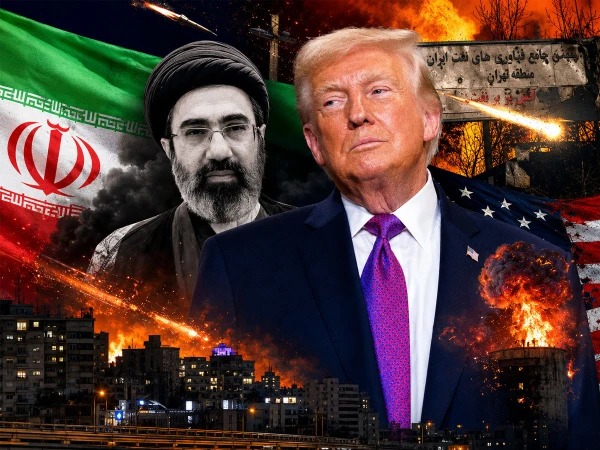
    US President Donald Trump has warned that Iran has a final opportunity to reach an agreement with the United States, saying he postponed planned military action to allow diplomacy one last chance. Speaking to reporters at the White House, Trump said several Gulf countries had urged Washington to delay military strikes against Iran in the hope that negotiations could produce a diplomatic breakthrough. According to the US president, those requests led him to postpone military action once again. Trump stated that multiple regional governments had contacted his administration, asking that Iran be given another opportunity to negotiate. He described the current moment as Iran’s “last chance” to avoid further escalation and urged Tehran to seize the opportunity for a peaceful resolution. When asked why this latest diplomatic effort differed from previous attempts, Trump replied that he wanted to give Iran one final opportunity before what he described as “complete destruction.” However, he did not provide additional details about the conditions that could trigger military action or a specific timeline. Despite his warning, Trump expressed optimism that negotiations could move forward quickly. He said the first phase of a potential agreement would involve reopening the Strait of Hormuz to unrestricted maritime traffic by Tuesday, while the second phase would focus on ending Iran’s nuclear program. The US president acknowledged that dismantling Iran’s nuclear program would not happen immediately and would require additional time to implement. He added that both the reopening of the Strait of Hormuz and measures related to Iran’s nuclear activities were included in a memorandum of understanding reportedly reached between the two sides in June. Trump’s remarks come amid renewed diplomatic efforts surrounding the long-running dispute over Iran’s nuclear program and regional security. Tensions between Washington and Tehran have remained high despite repeated attempts to revive negotiations. Earlier in the day, Trump also announced that talks with Iran were expected to take place. However, Iran has maintained that its current discussions are being conducted through Oman rather than in direct negotiations with the United States. The differing public statements highlight the continuing uncertainty surrounding the diplomatic process. No immediate response from Iranian officials was reported following Trump’s latest comments. It also remains unclear whether a formal agreement is close or whether the two sides have narrowed their differences on key issues, including nuclear activities and regional security. Observers say the coming days could prove significant as diplomatic contacts continue and both sides weigh the possibility of further negotiations against the risk of renewed confrontation in the region.

  • Obsession with cannibalism as the metaphor for love

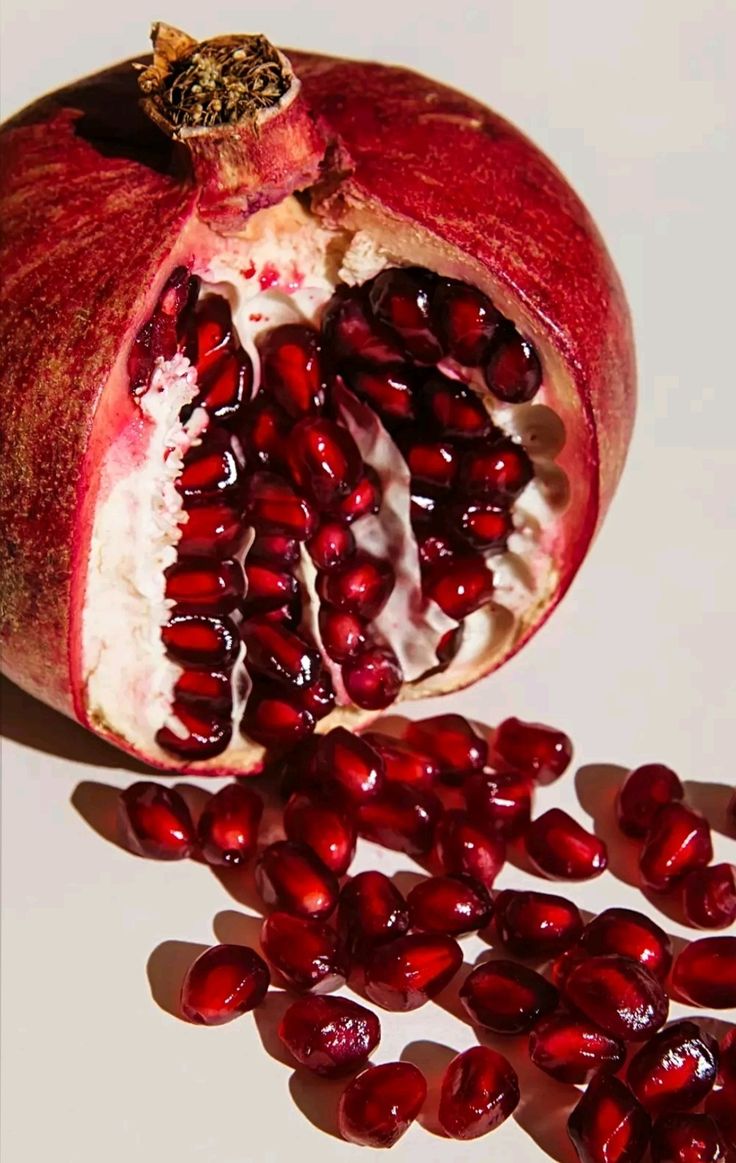
     Social media ecosystems have turned toward a darker trope to articulate the depths of romantic obsession: cannibalism. Curated mood boards are featuring imagery of raw meat, overripe pomegranates, and bloodied lovers. Viral poetry is explicitly framing consumption as intimacy. The internet has revitalized an ancient literary standard. But why has this unsettling imagery captured the imagination of so many digital creators today? If you scroll through modern aesthetic feeds, you will quickly encounter a redundant visual language centered on bodily devotion. The imagery often combines classical romance with motifs of physical destruction and ingestion. Visual art depicting lovers covered in blood or blurring the boundary between violence and affection. Photographs of bruised, overripe red fruits, notably pomegranates, bursting open. Mostly, the graphics are serving as vivid stand-ins for human flesh and emotion. Stills from cinematic works featuring vampires and monsters. The act of biting or feeding is inextricably linked to passion. Images of cuts of raw meat juxtaposed against soft, romantic lighting. Verse that frames complete surrender as allowing oneself to be digested, bitten, or absorbed by a partner. A prime example of this sentiment comes from writer Azra T.’s poem ‘Fruit’: Peel your heart like a pomegranate. Offer it to him, palms outwards. Say ‘eat.’ Watch him come away stained red by you. You’re in his teeth. He’ll kiss you with that mouth. The poem depicts the core ethos of this aesthetic. Total self-offering, emotional vulnerability pushed to its absolute physical extreme, and a desire to permanently mark and be integrated into the person you love. The surge of cannibalism-as-love content feels distinctly accustomed to the melodrama of internet subcultures. However, it is far from a contemporary invention. The urge to frame love as an act of consumption has deep historical and cultural roots.  Why Is the Metaphor Resonating Now? This world is driven by digital interactions and transactional relationships. So, the urge to consume and be consumed represents a longing for absolute vulnerability. When someone invokes cannibalism in a romantic context, they aren’t expressing a literal desire for violence. Instead, they are grasping for a metaphor extreme enough to convey a few core human desires. To be ingested is to become a part of someone else forever. Their body will be physically reshaped by your presence. Traditional closeness still leaves a physical boundary between two individuals. Consumption erases that barrier entirely. Two become one in the most literal sense conceivable. Giving up oneself entirely to be possessed by another is the ultimate gesture of trust. Ultimately, the rise of the cannibalism-as-love highlights an overwhelming power of affection. By reaching for the extreme, internet culture finds a way to express what ordinary romantic language fails to capture. A devotion so grand, so terrifying, and so profound that it borders on the appetite.  

Leave a Reply

Your email address will not be published. Required fields are marked *