trump could resume
| | |

Trump could resume Iran strikes, US senator warns

US Republican Senator Jim Banks has warned that President Donald Trump could order fresh military strikes against Iran if Tehran does not quickly agree to end its nuclear programme and reopen the Strait of Hormuz.

Speaking to Fox News, Banks said the Trump administration still prefers a diplomatic solution but expects Iran to return to negotiations and reach an agreement soon. He warned that if Iranian leaders refuse to come back to the negotiating table, the United States could resume heavy military attacks.

According to Banks, the decision to delay further strikes does not represent weakness or a retreat by Washington. Instead, he said, Trump has given Tehran another opportunity to pursue a peaceful settlement and avoid further escalation.

The senator also claimed that divisions exist within Iran’s leadership over how to respond to US pressure. He described the situation as a struggle between hardline military figures and elements within the ruling establishment who may favour negotiations.

Banks argued that some Iranian officials now recognise the scale of America’s military capabilities and the potential consequences of continued confrontation. He said the pressure from the United States has created a situation in which parts of Iran’s leadership may be more willing to reach an agreement.

The Republican senator’s remarks come amid heightened tensions over Iran’s nuclear programme and the strategic Strait of Hormuz, a vital global energy route. Any prolonged disruption in the waterway could have significant consequences for international oil supplies and global markets.

Banks maintained that Washington’s objective remains to push Iran toward a deal while keeping military action as an option. His comments suggest that the Trump administration could increase military pressure if diplomatic efforts fail to produce progress in the near future.

Similar Posts

  • |

    3 killed, 25 injured in Ukraine drone strike on Russia

    Three people were killed and 25 others injured after Ukrainian drones struck Russia’s Belgorod region, according to Russian authorities. Officials said the drone attack took place overnight, targeting areas in and around Belgorod. Emergency teams responded to the affected locations and began rescue and relief operations following the strikes. The latest attack comes amid continued fighting between Russia and Ukraine, with both sides carrying out frequent drone and missile strikes against targets across the border. Meanwhile, Russia has launched an attack on Ukraine’s strategic port city of Odesa. Ukrainian President Volodymyr Zelenskyy confirmed the Russian strike, saying the attack caused damage to the Odesa port. Zelenskyy condemned the assault and said the continued attacks on civilian and critical infrastructure demonstrated the intensity of the ongoing conflict. The strikes on Belgorod and Odesa highlight the continued escalation of cross-border attacks as the war enters another phase of sustained military confrontation.

  • Profiling Iran’s new wartime security and military command

    Following intense regional conflict involving the United States and Israel, Iran’s Supreme Leader has restructured top security and defense establishment. The new decrees assign trusted and seasoned veterans to lead critical institutions. The list includes the Supreme National Security Council (SNSC), the General Staff of the Armed Forces, the Islamic Revolutionary Guard Corps (IRGC), the IRGC Navy and the Basij paramilitary organization. Mohsen Rezaei will be Head of the Supreme National Security Council (SNSC) His role is of Secretary and Supreme Leader’s Representative to the SNSC (replacing Mohammad Baqer Zolqadr). He’s from Khuzestan province. Rezaei was active in anti-Pahlavi underground movements prior to 1979. He also spent time in prison under the Shah’s regime. He studied mechanical engineering before being named the first formal commander of the IRGC in 1981 at age 27. His expertise includes leading  IRGC through the eight-year Iran-Iraq War (1980–1988), remained at its helm until 1997. He subsequently served as secretary of the Expediency Council until 2021 and was Vice President for Economic Affairs under Ebrahim Raisi (2021–2023). Sanctioned by the US Treasury in 2020, Rezaei steps into the SNSC post following Zolqadr’s reassignment as political adviser. Maj. Gen. Ali Abdollahi will be Chief of the General Staff of the Armed Forces He is appointed as Chief of the General Staff, the supreme military coordinating body for both the regular military (Artesh) and the IRGC. He belongs to northern Gilan province. Abdollahi fought as an IRGC commander in the 1980s and later served as deputy to Aerospace commander Mohammad Baqer Qalibaf between 1987 and 1991. He has served as a senior law enforcement official in the early 2000s, governor of Semnan and Gilan provinces during Mahmoud Ahmadinejad’s presidency, and deputy interior minister for security. Prior to this elevation, he commanded the Khatam al-Anbiya Central Headquarters. He succeeds Abdolrahim Mousavi.  Brig. Gen. Kioumars Heydari will be  Deputy Chief of the General Staff He is assigned the position of Deputy Chief of the General Staff (replacing Mohammad-Reza Gharaei Ashtiani). He’s from Kermanshah province. Heydari brings an extensive career in the regular military (Artesh) rather than a pure IRGC background. He initially enlisted as a volunteer Basiji during the Iran-Iraq War before formally joining the army in 1984. He has ccommanded egional army headquarters. He also served as deputy coordinator and later commander of the Army Ground Forces (2016–2025), and was appointed deputy commander of the Khatam al-Anbiya Central Headquarters. He has been sanctioned by OFAC, the European Union, and the United Kingdom. Maj. Gen. Ahmad Vahidi as Commander-in-Chief of the IRGC Vahidi will be Top Commander of the Islamic Revolutionary Guard Corps (succeeding Mohammad Pakpour). He is a native of Fars province. Vahidi joined the IRGC shortly after the 1979 Revolution and served on the front lines against Iraq. Vahidi headed IRGC intelligence during the Iran-Iraq War and later became the first commander of the elite Quds Force. He has extensive political experience, having served as deputy defense minister, defense minister, interior minister, and president of the National Defence University. He was serving as deputy IRGC commander before being promoted to lead the Guard Corps.  Maj. Gen. Mostafa Izadi as Deputy Commander of the IRGC Izadi will be Deputy Commander of the IRGC (replacing Ahmad Vahidi). A four-decade veteran of the Guard Corps who commanded forces in Kurdistan Province as well as the Hamzeh Sayyed al-Shohada and Najaf Ashraf headquarters during the Iran-Iraq War. He has served in several post-war positions include IRGC deputy operations chief, IRGC Ground Forces commander, deputy chief of the General Staff of the Armed Forces (1993–2006), and head of the Cyber and Emerging Threats Headquarters at Khatam al-Anbiya. Rear Adm. Ali Ozamaei as Commander of the IRGC Navy He will be Commander of the IRGC Naval Forces (succeeding Alireza Tangsiri). Originally from Hormozgan province, Ozamaei entered service during the Iran-Iraq War before transferring into the naval branch. He has served as deputy commander of the 1st Naval District and spent over a decade (2012–2025) commanding the 5th Naval District in Bandar Lengeh along the Persian Gulf. He was deputy navy commander before stepping into the top naval post during high-stakes maritime tensions surrounding the Strait of Hormuz. Hossein Taeb as Commander of the Basij Organisation He will be the head of the Basij Volunteer Paramilitary Force (succeeding Alireza Soleimani). He was born in Tehran, Taeb joined the IRGC in the aftermath of the revolution. Hossein Taeb has formerly served as IRGC deputy for cultural affairs, commander of the Basij, and spent over a decade (2009–2022) as head of the powerful IRGC Intelligence Organisation. He was later assigned as an advisor to the IRGC commander and is subject to US State Department sanctions.

  • | | | | |

    Hlun Solo’s Death Devastates Fans, We Explain Why He Was The Exact Opposite of Most Influencers and YouTubers and Why He Was So Beloved by Thais

    Thailand/Georgia His real name was Bowornthat Pengsuk, born in 1999 in Kalasin province in northeastern Thailand, he grew up in modest circumstances. After his father died, he was raised primarily by his grandmother, who focused on education and practical values. He attended local schools that offered scholarships and support, then worked factory jobs in Bangkok, […]

  • |

    Benjamin Netanyahu rejects Donald Trump’s 15-point peace plan for Gaza amidst high-stakes diplomatic rift

    A high-stakes rift has emerged between Washington and Jerusalem following Israeli Prime Minister Benjamin Netanyahu’s explicit rejection of Donald Trump’s 15-point proposal for Gaza, with Israel insisting on maintaining a military presence until Hamas is fully disarmed. Under the framework put forward by Trump’s Board of Peace last month, terms were outlined for the reduction or withdrawal of military personnel and weapons across specified zones. Hamas responded by stating that relinquishing its arsenal remains conditional upon Israel ending all forms of aggression and withdrawing its forces from Gaza entirely. Despite an agreement reached last October to pause hostilities in the territory, Israeli strikes inside Gaza have continued. Addressing a cabinet meeting on Sunday, Netanyahu stated that Israel rejects the 15-point document. He stressed that the Israeli military will not execute any troop withdrawals until Hamas undergoes genuine disarmament, adding that forces will continue to counter active threats to safeguard personnel and citizens. Although Trump previously hailed the initiative as a major milestone toward lasting regional stability after Hamas indicated acceptance of a demilitarisation strategy, Netanyahu emphasised that disarmament must precede any Israeli pullback, warning against what he described as a fictitious disarmament process. Netanyahu is engaged in crucial discussions with American officials regarding next steps, marking another hurdle for Trump’s Gaza peace initiative originally unveiled in September last year. The proposed plan centres on establishing a Board of Peace tasked with overseeing the demilitarisation of Hamas, supervising the exit of Israeli troops, and directing reconstruction efforts throughout Gaza.

  • |

    Constitution, rule of law and strong defence key to Pakistan’s future, says Senator Abdul Qayyum

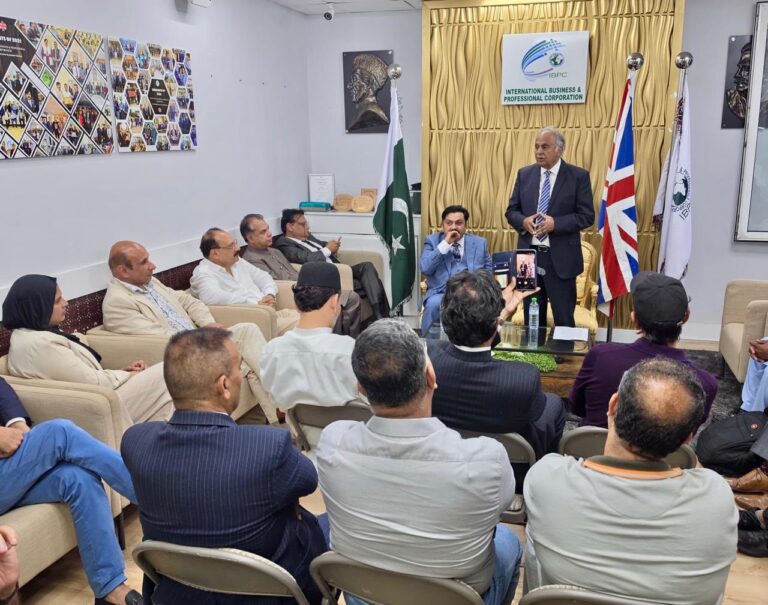
    LONDON:  Constitutional supremacy, the rule of law, a vibrant economy and a strong defence are the four pillars that will safeguard Pakistan’s sovereignty and ensure its long-term stability, former Chairman of the Senate Standing Committee on Defence Production Senator Lt Gen (R) Abdul Qayyum HI(M) said in London. Addressing a Pakistan Independence Day reception organised by the International Lawyers Club UK (ILCUK) in London to mark Pakistan’s 79th Independence Day, the President of the Pakistan Ex-Servicemen Society (PESS) said Pakistan’s independence was won through “immense sacrifices, visionary leadership and the constitutional struggle led by Quaid-e-Azam Muhammad Ali Jinnah.” “Among the greatest blessings of Allah Almighty is living as free citizens of an independent and sovereign Pakistan,” he said, adding that the country’s freedom “is not merely inherited but has to be continuously protected through unity, discipline and national resolve.” Paying tribute to Pakistan’s Armed Forces, Senator Abdul Qayyum said the military had repeatedly defended the country’s sovereignty and territorial integrity against external aggression, terrorism and hybrid threats. “Our Armed Forces have successfully confronted external aggression, terrorism and various hybrid threats because of the determination of our people and the sacrifices, professionalism and courage of our soldiers,” he said. “The nation takes pride in its internationally respected Armed Forces, which have repeatedly defended Pakistan’s sovereignty and territorial integrity.” He warned that Pakistan continued to face a range of internal and external challenges, including terrorism, foreign-sponsored insurgency, disinformation campaigns, sectarianism and political polarisation. He stressed that operations against terrorists and armed militants should be viewed as a constitutional responsibility of the state rather than political repression. “Action against armed militants, terrorists and those working against the state should not be misconstrued as repression, but rather as the constitutional responsibility of the state to protect the lives and property of its citizens,” he said. While acknowledging the importance of democratic freedoms, Senator Abdul Qayyum said freedom of expression must be exercised responsibly. “Freedom of expression and difference of opinion should never come at the expense of national security,” he said, adding that unity between the people, constitutional institutions and the Armed Forces remained “the strongest guarantee of Pakistan’s sovereignty, stability and democratic future.” Highlighting the historic contribution of lawyers to the Pakistan Movement, he said the legal fraternity had played a decisive role in achieving independence through constitutional means. He urged lawyers and barristers to continue defending the Constitution, upholding the rule of law and strengthening democratic institutions. Turning to Pakistan’s future priorities, the senator called for strict adherence to constitutional governance, separation of powers, an independent judiciary and impartial accountability. He also advocated comprehensive industrial and agricultural reforms, greater investment in education, science, research and artificial intelligence, modernisation of Pakistan’s defence capabilities and stronger border security. Referring to criticism of the military, Senator Abdul Qayyum said retired servicemen, pensioners of second-line forces and civilians associated with the defence sector stood firmly behind the Armed Forces. “Those who demonise this sacred institution in the national and international media do no service to the country,” he said, urging the media to report responsibly and avoid undermining institutions responsible for safeguarding Pakistan’s security. Concluding his address, Senator Abdul Qayyum called on Pakistanis at home and abroad to renew their commitment to strengthening national institutions, rebuilding the economy, educating future generations and honouring the sacrifices of the nation’s martyrs. “I am confident that through unity, collective effort and by placing national interests above political differences, Pakistan will emerge stronger, more resilient and more prosperous in the years ahead,” he said.

  • |

    Armenian church leader stands trial in standoff with government

    The trial of Catholicos Karekin II, head of the Armenian Apostolic Church, and six senior clerics has commenced in Armenia over accusations of defying a civil court order. The proceedings were halted almost immediately when the presiding judge recused himself due to a conflict of interest involving defence counsel. The case marks an unprecedented legal challenge to the church leadership, stemming from a civil order to temporarily reinstate a defrocked bishop who aligned with Prime Minister Nikol Pashinyan. Pashinyan has repeatedly called for the resignation of Karekin II and accused the church of acting as a proxy for foreign powers, specifically Russia. Church officials and human rights advocates argue the prosecution is politically motivated and violates the constitutional separation of church and state.

Leave a Reply

Your email address will not be published. Required fields are marked *