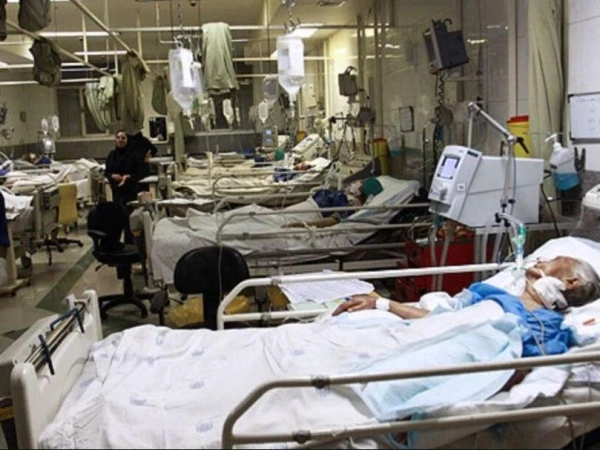
pti chairman barrister
| |

PTI chairman barrister Gohar Says Noreen Niazi’s…

Rawalpindi: Pakistan Tehreek-e-Insaf (PTI) Chairman Barrister Gohar Ali Khan has clarified that the recent statement made by Noreen Niazi regarding the “Battle of Truth” (Maarka-e-Haq) does not reflect the official policy of the party. Speaking to the media in Rawalpindi, Barrister Gohar emphasized that the remarks were Noreen Niazi’s personal views and should not be interpreted as PTI’s official position.

During the media interaction, Barrister Gohar said that every Pakistani takes pride in the country’s success in what he described as the Maarka-e-Haq. He stressed that Pakistan’s defense is strong and capable of protecting the country from any external threat. According to him, the nation remains united when it comes to safeguarding its sovereignty, and no enemy has the ability to defeat Pakistan.

Addressing questions about Noreen Niazi’s comments, Barrister Gohar explained that, according to the information available to him, the interview in question had actually been recorded around three months ago. He stated that the remarks expressed during that interview represented Noreen Niazi’s personal opinion and not the official stance of Pakistan Tehreek-e-Insaf. He reiterated that the party’s policies are determined through its official leadership and decision-making process, not through individual statements.

The PTI chairman further said that the party has consistently been trying to improve the overall political atmosphere in the country. He noted that political leaders should avoid reopening old controversies and instead focus on reducing tensions. According to Barrister Gohar, this is a time for restraint and reconciliation rather than confrontation. He remarked that everyone should avoid revisiting past disputes if the goal is to create a more stable political environment.

Speaking about the current political climate, Barrister Gohar also referred to comments made by Jamiat Ulema-e-Islam (F) chief Maulana Fazlur Rehman. He pointed out that the senior politician had already clarified his earlier remarks. Barrister Gohar observed that, during emotional speeches, public figures may sometimes say things that they later need to explain. However, he added that if a statement is incorrect, it should be acknowledged as such regardless of who made it.

He further emphasized that certain sensitive matters should not be discussed publicly if doing so could worsen the political situation. According to him, some issues are better left untouched in order to help the country move toward greater political stability and national harmony. He urged political leaders and stakeholders to exercise caution in their public statements and avoid comments that could increase tensions.

Barrister Gohar also spoke about PTI’s position regarding the upcoming Azad Jammu and Kashmir (AJK) elections. He stated that, at present, the party’s official decision is to boycott the elections. However, he indicated that the decision is not necessarily final and could be reviewed if political conditions improve in the future.

He revealed that there had been internal discussions within the party about reconsidering the boycott. According to Barrister Gohar, some members believed that PTI should revisit its decision and participate in the elections. Nevertheless, he explained that the party leadership could not reach a consensus on changing the existing policy. As a result, the decision to boycott the AJK elections remains in place for now.

The PTI chairman concluded by reiterating the party’s commitment to promoting political stability and constructive dialogue. He stressed that while differences of opinion are a normal part of politics, all political actors should prioritize national unity and work toward creating an environment that supports peace, democratic processes, and institutional stability.
Similar Posts

  • | | | |

    Imran Khan shifa hospital transfer: PTI announces …

    Pakistan Tehreek-e-Insaf (PTI) has decided to approach the Supreme Court with a contempt of court petition if former prime minister and PTI founder Imran Khan is not transferred to Shifa International Hospital by Thursday night. According to PTI sources, the party is waiting for implementation of the Supreme Court’s order regarding Imran Khan’s Shifa Hospital transfer. If no progress is made by the deadline, the party plans to file the contempt petition on Friday morning. The Supreme Court had ordered on August 18 that Khan, who remains imprisoned, be transferred to Shifa International Hospital in Islamabad for medical assessment and treatment. The court also directed the formation of a medical board, including specialists and Khan’s personal physician. The order came amid continuing concerns surrounding Khan’s health and access to medical treatment. The court also issued directions concerning family meetings and communication with his son. The government, however, challenged the decision. On August 19, it filed a review petition arguing that the order to move Khan to a private hospital should be reconsidered. The government has maintained that existing prison and legal procedures should be followed regarding treatment of prisoners. The legal dispute intensified on Thursday when the Supreme Court Registrar’s Office returned the government’s review petition after raising objections. Sources said the government intends to address the objections and submit the petition again. PTI has maintained that the Supreme Court’s order should be implemented without delay. Party representatives have warned that failure to comply with the directive could lead to contempt proceedings against the officials responsible for implementation. The developing situation has created another legal and political confrontation between PTI and the government. The next several hours could determine whether the matter is resolved administratively or moves into another round of proceedings before the Supreme Court. For now, PTI’s position is clear: if Imran Khan is not shifted to Shifa International Hospital by Thursday night, the party says it will seek legal action through a contempt of court petition on Friday morning.

  • | | |

    DPM Dar boosts Pakistan-ADB partnership

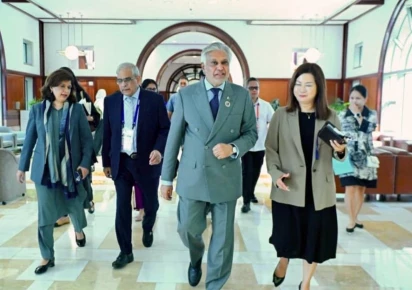
    Deputy Prime Minister and Foreign Minister Ishaq Dar visited the headquarters of the Asian Development Bank (ADB) in Manila on Wednesday to review the bank’s partnership with Pakistan and discuss ways to strengthen future cooperation. The visit took place on the sidelines of the 33rd ASEAN Regional Forum Ministerial Meeting, where Pakistan is participating in a series of high-level diplomatic engagements with regional and international partners. Upon his arrival at the ADB headquarters, Dar was welcomed by senior officials of the bank. He signed the visitors’ book before holding discussions on the institution’s evolving development agenda and its ongoing collaboration with Pakistan. The meeting focused on expanding cooperation in several important sectors, including infrastructure, energy, climate resilience, education, economic reforms and sustainable development. Both sides also discussed future opportunities to support Pakistan’s economic growth and development priorities. Dar later attended a working luncheon hosted by Pakistan’s Executive Director to the ADB, Nashita Mohsin. The event was attended by Pakistani professionals serving in senior leadership positions across different departments of the bank. During the interaction, Dar appreciated the contributions of Pakistani professionals working at the ADB. He said their expertise and leadership have strengthened the institution’s work while enhancing Pakistan’s image at the international level. He also congratulated Nashita Mohsin on assuming her responsibilities as Pakistan’s Executive Director to the Asian Development Bank and expressed confidence that she would further strengthen Pakistan’s engagement with the institution. On the sidelines of the ASEAN forum, Dar also met Bangladesh’s Foreign Minister Khalilur Rehman. The two leaders reviewed the positive momentum in bilateral relations and discussed ways to expand cooperation between the two countries. Both sides welcomed the steady improvement in diplomatic ties and appreciated the growing engagement in trade, communication and people-to-people contacts. They noted that the launch of direct flights earlier this year has further improved connectivity and created new opportunities for cooperation. The two ministers reaffirmed their commitment to maintaining the positive momentum in bilateral relations and agreed to continue close engagement in areas of mutual interest. Dar and Rehman also exchanged views on regional and international developments, including issues affecting South Asia and broader global challenges. They emphasized the importance of dialogue and cooperation in promoting regional peace, stability and economic development. Earlier, Dar arrived in Manila with a Pakistani delegation to participate in the 33rd ASEAN Regional Forum Ministerial Meeting. During the visit, he is expected to attend the forum’s plenary session and hold several bilateral meetings with foreign ministers from participating countries. The ASEAN Regional Forum brings together foreign ministers and senior diplomats from ASEAN member states and major global powers to discuss regional security, economic cooperation, energy security, food security, geopolitical developments and other international issues. Representatives from the United States, China, Japan, India, Australia, South Korea, Russia, the United Kingdom and the European Union are also participating in the meeting.

  • |

    Houthi blockade threatens Saudi oil exports to Asia

    Saudi Arabia’s oil exports to Asia are facing fresh uncertainty after Yemen’s Houthi movement announced a blockade targeting Saudi ports in the Red Sea, raising fears of major disruptions to global energy supplies and higher oil prices. The impact became evident after two oil tankers carrying nearly 2.8 million barrels of Saudi crude reversed course in the Red Sea instead of continuing through the Bab al-Mandeb Strait. The vessels had departed from the Saudi port of Yanbu and were originally bound for Asian markets. The latest development has created concerns over the security of Saudi Arabia’s alternative export route. For months, the kingdom relied heavily on its Red Sea pipeline network and Yanbu terminal to bypass disruptions in the Strait of Hormuz, where regional tensions have significantly reduced shipping traffic. With Bab al-Mandeb now under threat, Saudi Arabia’s backup route is also facing serious challenges. Energy analysts warn that this could restrict oil exports, tighten global supplies and increase pressure on international crude prices. Asian countries are expected to suffer the greatest impact because they depend heavily on Middle Eastern oil. Around six million barrels of crude oil pass through Bab al-Mandeb every day on their way to Asian markets, with Saudi Arabia accounting for nearly two-thirds of that volume. India is considered the most vulnerable, as more than half of its crude oil imports travel through the Red Sea route. Pakistan is also among the affected countries, with around 36 percent of its crude imports passing through Bab al-Mandeb. Other major importers exposed to disruptions include the Philippines, South Korea, Japan, Taiwan and China. To avoid conflict zones, shipping companies are evaluating a much longer route through Egypt’s Suez Canal, the Mediterranean Sea and around Africa’s Cape of Good Hope before heading towards Asia. Although this route bypasses both the Strait of Hormuz and Bab al-Mandeb, it comes with significant drawbacks. The journey could take more than twice as long, extending delivery times by several weeks. Longer voyages would also increase fuel consumption, insurance costs and freight charges, making crude oil more expensive for buyers. Logistical challenges further complicate the situation. Most Saudi crude from Yanbu is transported on Very Large Crude Carriers (VLCCs), which are too large to pass through the Suez Canal when fully loaded. Operators would need to either transfer part of the cargo through Egypt’s SUMED pipeline or use smaller tankers, both of which would add time and operational costs. Energy experts believe these limitations could reduce Saudi Arabia’s export capacity even if alternative shipping routes remain available. Some refiners in Asia have already started preparing for longer supply routes, while shipping companies are adjusting vessel schedules in anticipation of prolonged disruptions. Analysts also warn that if instability continues in both the Strait of Hormuz and Bab al-Mandeb, the consequences could extend beyond shipping. Higher transportation costs, tighter crude supplies and increased demand for oil tankers could push global oil prices above the $100-per-barrel mark. Alternative supplies from countries such as Russia, the United States and Venezuela may help ease shortages, but those options are limited by production constraints, longer shipping distances and higher transportation expenses.

  • | | | |

    Iran says US strikes kill 55, injure 645 as confli…

    TEHRAN: Iran’s Ministry of Health has claimed that at least 55 people were killed and 645 others injured in the latest wave of US military strikes across the country, as hostilities between Tehran and Washington continue to escalate. According to Iranian officials, the heaviest casualties were reported in the country’s southern and southwestern provinces, where several sites were allegedly targeted during the attacks. Iran’s state-affiliated Fars News Agency quoted a Health Ministry spokesperson as saying that the death toll had reached 55, while the number of injured had climbed to 645. The ministry described the strikes as among the deadliest incidents since the recent escalation in military tensions. Officials said Khuzestan Province suffered the highest number of casualties, followed by Hormozgan and Sistan and Baluchestan, where hospitals reportedly received dozens of wounded civilians following the attacks. The Health Ministry added that 586 of the injured have already been discharged after receiving treatment, while several others were treated for minor injuries and allowed to return home shortly afterward. According to the ministry, eight people remain hospitalized, with some expected to undergo additional surgeries due to the severity of their injuries. Iranian authorities condemned the attacks as an act of “American aggression” and called on the international community to respond to what they described as violations of international law. Officials urged global organizations to investigate the reported strikes and their humanitarian consequences. As of the time of publication, the United States had not issued an official response to the casualty figures released by Iran’s Health Ministry. The reported death toll and injury count have also not been independently verified, and international monitoring organizations have yet to confirm the claims. The latest figures come as military tensions between Iran and the United States continue to rise, fueling concerns about the humanitarian impact of the conflict and the risk of further regional instability. Security analysts warn that continued military exchanges could deepen the crisis across the Middle East, with civilians increasingly caught in the crossfire. They say the absence of verified information from independent sources makes it difficult to assess the full scale of the damage, but the competing claims from both sides underscore the rapidly evolving nature of the conflict. With diplomatic efforts showing little sign of progress, observers fear that further escalation could lead to additional civilian casualties and heightened security risks across the region, while the international community continues to monitor developments closely.

  • |

    North Korean hackers develop AI tools for cyberattacks

    SEOUL: A North Korean-linked hacking group has reportedly expanded its use of artificial intelligence to strengthen cyberattacks, automate operations and analyse stolen data. The group, identified as Kimsuky, has developed and collected a range of AI-related tools that could help its operators conduct attacks more efficiently, according to a South Korean cybersecurity company. The company said it discovered infrastructure linked to Kimsuky containing several programs designed to run and manage artificial intelligence models locally. These included Ollama, GPT4All and Msty. The hackers also appeared to be using retrieval-augmented generation technology. The system can help AI models search and process large collections of documents. Researchers said the use of locally operated AI models could allow the group to analyse sensitive information without sending data to external AI services. This could give hackers greater control over stolen material and reduce their reliance on third-party platforms. The investigation also uncovered AI agent development frameworks, speech-to-text software and an AI-assisted coding tool called Cursor. According to the cybersecurity firm, the findings indicate that Kimsuky may be moving beyond the simple use of generative AI for creating phishing messages. The group could now be seeking to integrate existing AI models into different stages of its cyber operations. These may include malware development, stolen-data analysis and attack automation. Researchers also identified documents related to finance and cryptocurrency on the infrastructure. Some of the files appeared to have been generated using artificial intelligence. The documents were designed to look like legitimate investment reports and other professional workplace material. Such files could potentially be used as decoys or to make malicious campaigns appear more credible. The findings have not been independently verified. However, cybersecurity researchers and government agencies have repeatedly linked North Korean state-backed groups to international cyber operations. North Korean cyber units have been accused of conducting espionage campaigns, stealing money and targeting cryptocurrency-related assets. Authorities in the United States and South Korea have previously warned about the activities of such groups. Kimsuky has long been associated with cyber-espionage operations targeting governments, organisations and individuals. The group has also been accused of gathering intelligence to support North Korea’s strategic interests. The latest findings point to a growing role for artificial intelligence in cyber operations. Security researchers have warned that AI tools can make phishing campaigns more convincing and help attackers process information and develop malicious software more quickly.

  • |

    Mustafa Zahid may return for ‘Awarapan 2’ remake track

    Nearly two decades after Tera Mera Rishta became one of the biggest hits from Awarapan, original singer Mustafa Zahid may be returning for the sequel. The Pakistani vocalist appears set to reunite with the franchise’s makers. According to a Mid-day report, the 41-year-old is reportedly in talks with producers Mukesh Bhatt and Vishesh Bhatt. The discussions center around a remake for Awarapan 2. The development is notable given Bollywood’s long-standing stance on Pakistani artistes since the 2016 Uri attack. That boycott was reaffirmed more recently, following the 2025 Pahalgam attack. Despite that backdrop, talks are reportedly moving forward. If the deal goes through, the song would reportedly be recorded in Dubai rather than India. A source close to the matter told the publication that this could mark one of the rare recent instances of a Pakistani playback singer working on a mainstream Hindi film. However, the track itself will not feature in Awarapan 2 directly, as its inclusion could create certification complications for the film. To work around that, the makers are said to be considering releasing the song exclusively through social media promotions, bypassing theatrical use entirely. Meanwhile, the film’s own trailer dropped on August 6, marking the franchise’s return after 19 years. Emraan Hashmi reprises his role as Shivam Pandit, now portrayed as older and more emotionally scarred. Disha Patani joins the cast as Zara, while Shabana Azmi takes on the role of antagonist Nafisa. The soundtrack brings together composers Mithoon, Jeet Gannguli and Amaal Malik, among others, with tracks like Ve Junoon and Yeh Awarapan already released. The trailer also includes a recreated version of Tera Mera Rishta, now sung by Saaj Bhatt and Subodhh Sharma. Original lyricist Sayeed Qadri has returned to pen the updated version of the track. Directed by Nitin Kakkar, Awarapan 2 is set for a worldwide release on August 14. The film will clash at the box office with Sunny Deol’s Batwara 1947, setting up a high-profile release-date showdown.

Leave a Reply

Your email address will not be published. Required fields are marked *