mustafa zahid may
|

Mustafa Zahid may return for ‘Awarapan 2’ remake track

Nearly two decades after Tera Mera Rishta became one of the biggest hits from Awarapan, original singer Mustafa Zahid may be returning for the sequel. The Pakistani vocalist appears set to reunite with the franchise’s makers.

According to a Mid-day report, the 41-year-old is reportedly in talks with producers Mukesh Bhatt and Vishesh Bhatt. The discussions center around a remake for Awarapan 2.

The development is notable given Bollywood’s long-standing stance on Pakistani artistes since the 2016 Uri attack. That boycott was reaffirmed more recently, following the 2025 Pahalgam attack.

Despite that backdrop, talks are reportedly moving forward. If the deal goes through, the song would reportedly be recorded in Dubai rather than India.

A source close to the matter told the publication that this could mark one of the rare recent instances of a Pakistani playback singer working on a mainstream Hindi film. However, the track itself will not feature in Awarapan 2 directly, as its inclusion could create certification complications for the film.

To work around that, the makers are said to be considering releasing the song exclusively through social media promotions, bypassing theatrical use entirely.

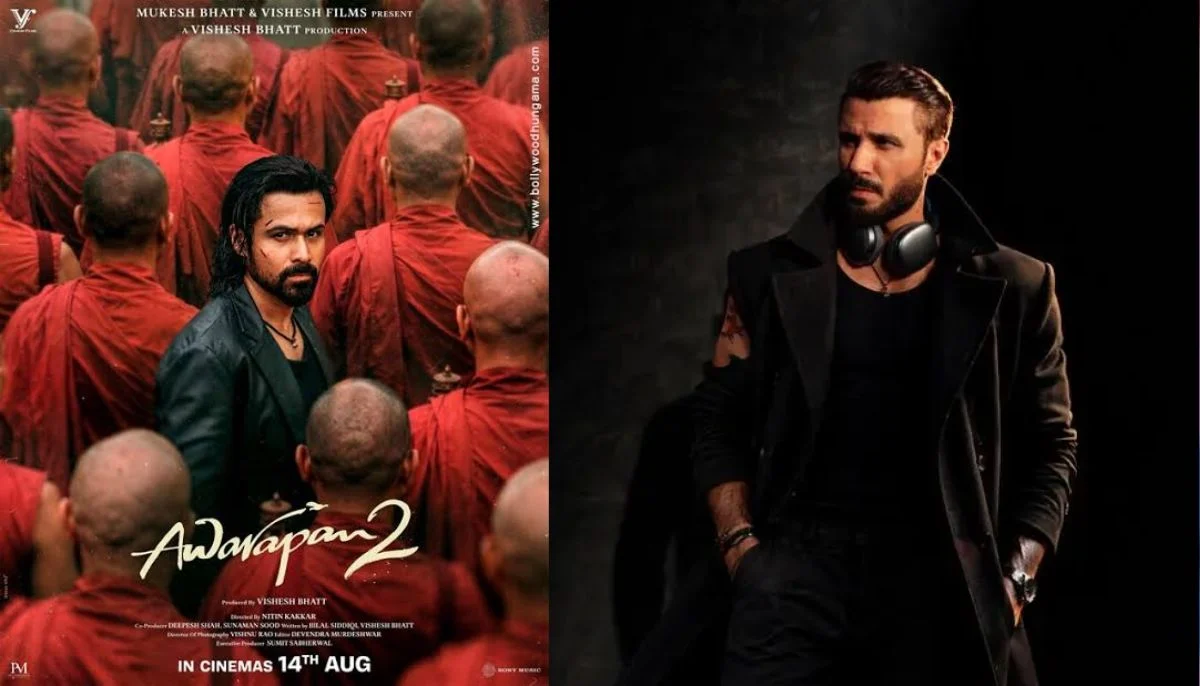
Meanwhile, the film’s own trailer dropped on August 6, marking the franchise’s return after 19 years. Emraan Hashmi reprises his role as Shivam Pandit, now portrayed as older and more emotionally scarred.

Disha Patani joins the cast as Zara, while Shabana Azmi takes on the role of antagonist Nafisa. The soundtrack brings together composers Mithoon, Jeet Gannguli and Amaal Malik, among others, with tracks like Ve Junoon and Yeh Awarapan already released.

The trailer also includes a recreated version of Tera Mera Rishta, now sung by Saaj Bhatt and Subodhh Sharma. Original lyricist Sayeed Qadri has returned to pen the updated version of the track.

Directed by Nitin Kakkar, Awarapan 2 is set for a worldwide release on August 14. The film will clash at the box office with Sunny Deol’s Batwara 1947, setting up a high-profile release-date showdown.

Similar Posts

  • | |

    DIG East Dr. Farrukh: A model of public-friendly p…

    Karachi: While addressing ABAD — the Association of Builders and Developers of Pakistan — on Wednesday, Inspector General Sindh Mr. Javed Alam Odho once again reaffirmed the commitment to resolve the Mir Raza murder case on merit and without pressure. He admitted mistakes had been made by the police department, but reassured that all measures would be taken to correct them. He also claimed that the crime rate in Karachi had dropped by 14 percent. He also urged for reforms and need of more professional training in Medico-legal system of police. But all those numbers and all those assurances fall flat in the face of one unresolved case. The fact that a builders’ association felt compelled to raise the Mir Raza issue speaks volumes. It is not ABAD’s mandate, yet its leaders did it anyway — because the mistrust between citizens and Karachi Police has grown too deep to ignore. That mistrust exists not because of a lack of competent leadership at the top, but because subordinate SSPs failed to deliver where it mattered most. A Meeting That Set the Standard  I saw this gap first-hand in my initial meeting with DIG East, Dr. Farrukh Ali Lanjhar. He came across as accessible, direct, and willing to listen — the kind of officer who says, “call me when you need me.” When I requested time from DIG East Dr. Farrukh Lanjhar for an interview, I expected a formal reply or a future date. Instead, he politely asked me to walk into his office and join him for a cup of tea. I was pleasantly surprised by the cordiality. I walked in expecting bureaucracy. What I found was courtesy, and a senior officer who was ready to resolve the issue of a female journalist without making her feel like a petitioner. Does the Police Force Lack Role Models?  The meeting was also a wake-up call. At the ASP/SP level, many officers still treat citizens as subjects of a colony and themselves as masters, not servants. I often wonder what fuels this snobbery and arrogance. Is it clearing the CSS? But given our quota system and an exam that has been reduced to testing memory and English rather than intellect or judgment, that in itself is no great achievement. If it were, every government department would be running like a multinational — either making huge profit or excelling in service delivery. Is it the training we inherited from the British Raj, designed to produce a ruling elite? Or is it the culture of imitating seniors who remain inaccessible and aloof? Yet we do have exceptions. DIG East Dr. Farrukh Lanjhar, DIG Traffic Pir Mohammad Shah, DIG CTD Capt. (R) Azfar Mahesar, DIG RRF Usman Ghani Siddiqui, DIG Amir Farooqui, SSP Qamar Jiskani, SSP Saud Magsi, SSP Zeeshan Siddiqui, and above all IG Sindh Javed Alam Odho. Within the same flawed system that all of us are part of, they choose to serve as public servants. The impression they leave is exactly what I witnessed the other day. Can’t they be role models? Because the legacy you leave either lives on or haunts you. We still remember good officers long after they retire, like former ADIG Hyderabad Range, Dr. Jameel. AIG Ameer Sheikh will be spoken of in those terms. Ten years from now, who else will be remembered with the same respect? There were many who were pharaohs of their time, but no one now remembers them with respect after they leave office. A Glimpse of Reforms in East  During our discussion, Mr. Lanjhar also spoke about the reforms he has pushed in East Zone. He said more than 1,000 personnel have been pulled out of desk pools and deployed in the field where they are actually needed. To enforce accountability, he has introduced biometric attendance to eliminate ghost employees. The zone is also moving toward an advanced facial recognition system to ensure that no one can mark false attendance and every officer on the roster is truly on duty. The Mir Raza Murder Case  When asked to comment on the Mir Raza murder case, which falls under his jurisdiction, he responded softly: “A new committee has been constituted,” he said, “and I do not wish to comment before its findings are made public.” However, he assured that he would address all queries once the committee submits its report. As we wrapped up a meeting that ran longer than expected, Dr. Farrukh Lanjhar spoke openly — about the shortcomings of the media, about his personal experiences across different districts and roles, and about the reforms needed to make police more public-friendly. Especially Thana culture, which he called the main “interface” of the police force. Before I left, he said simply: “Don’t you worry, Madam. We will remain in touch. You can call me whenever and wherever needed to resolve your issue.” It left me thinking. Often, just listening with patience to the complaint of the aggrieved party can bring down the temperature of frustration and distrust toward police. That is exactly what was missing in the initial handling of the Mir Raza murder case. The first inquiry committee, in which SSP East Zubair Sheikh was allegedly accused of incompetence and of pushing a suicide theory (by the family), failed on that count. He did not take into account the point of view of the victim’s parents. Neither he nor SSP SIU Samiullah Soomro were able to convey to the grieving family that the police were with them, and that they would do everything to ensure they got the justice they deserved. It was that simple. Had SSP East, Zubair Sheikh, treated it with the same seriousness that DIG East showed toward my complaint — on a far smaller scale — perhaps IG Sindh, Javed Alam Odho would not have had to stand before the media and accept mistakes on behalf of his force. That is why we have a full hierarchy in place. If every SSP did his job, including answering the

  • | |

    China lodges complaint after New Zealand’s W…

    China’s embassy in New Zealand has filed a formal complaint after Deputy Prime Minister Winston Peters told a Green Party lawmaker of Chinese descent to return to his own country during a heated parliamentary exchange. The clash unfolded Wednesday when Green Party member Lawrence Xu-Nan, who was born in the Chinese city of Tianjin but raised in New Zealand, asked Peters during a debate over the country’s Covid pandemic response whether he was vaccinated. Peters, who leads the populist NZ First party, responded by telling Xu-Nan he had arrived in the country only recently and should return home, adding a remark suggesting dishonesty in China that does not apply in New Zealand. He went on to describe New Zealand as a democracy, in contrast to what he implied Xu-Nan was used to, and told him to go back to where he came from. The remarks prompted an unusual public response from Chinese Ambassador to New Zealand Wang Xiaolong, who said on social media that he generally avoids commenting on domestic politics but suggested the statement revealed more about the speaker than anyone else. China’s embassy in Wellington confirmed it had lodged a complaint with New Zealand’s foreign ministry over what it called negative China related remarks from a New Zealand politician. Peters has stood by his comments, saying New Zealand’s democratic system protects free speech and rights that other countries restrict, at times through force. He said on social media that those offended by his remarks were welcome to the reality of living in New Zealand. New Zealand Prime Minister Christopher Luxon, whose National Party governs in coalition with Peters’ NZ First, criticized the remarks as inappropriate attention seeking behavior. This is not the first time Peters and his party, who hold significant influence as coalition partners in New Zealand’s fragmented political landscape, have faced accusations of racially charged rhetoric. Earlier this year, Peters’ deputy Shane Jones drew criticism for describing a free trade agreement with India as risking what he called a butter chicken flood. Last year, Peters and Jones faced backlash after Jones shouted at another lawmaker to send Mexicans home during a parliamentary debate, a comment aimed at a legislator who was actually born in the Philippines. Peters later told that lawmaker and Xu-Nan that they should show gratitude for being allowed to live in New Zealand. The episode adds to a pattern of controversies surrounding minor coalition partners in small parliamentary democracies, where kingmaker parties often wield outsized influence despite representing a smaller share of the electorate, occasionally straining diplomatic relationships in the process.

  • |

    Madhuri Dixit returns to TV as Marathi KBC host

    Madhuri Dixit is all set to make her much-awaited return to television, this time stepping into the role of a host after nearly 24 years. The Bollywood icon will be taking charge of Kon Honar Crorepati, the Marathi adaptation of the popular quiz show Kaun Banega Crorepati. The announcement marks an exciting new chapter for the 59-year-old actress, who has already built a strong connection with television audiences through her previous appearances as a judge and host. Madhuri expressed her excitement about joining the show, describing the opportunity as an honour and highlighting the programme’s ability to inspire people through knowledge, determination and ambition. According to Madhuri, Kon Honar Crorepati is not simply a quiz-based programme. She believes the show celebrates curiosity, aspirations, hope and the courage people show while chasing their dreams. As someone who proudly identifies with Maharashtra, she is especially excited about interacting with contestants, listening to their personal journeys and watching their dreams unfold on the iconic hot seat. The upcoming season will carry the tagline “Aata Khel Badalnar,” signalling that the game is about to take a new turn. With Madhuri at the centre of the show, viewers can expect a fresh hosting style and a different energy from previous seasons. Although many fans primarily know Madhuri for her celebrated film career, she is no stranger to television. She first stepped into hosting in 2002 with the matchmaking show Kahin Na Kahin Koi Hai. Her appearance came years before matrimonial reality programmes became a major part of Indian television. Madhuri later became a familiar face on reality television through her judging roles. She served as a judge on popular dance-based programmes including Jhalak Dikhhla Jaa and Dance Deewane, where her knowledge of dance and warm personality made her a favourite among viewers. The Kaun Banega Crorepati format, meanwhile, has traditionally been strongly associated with Amitabh Bachchan. The veteran actor has hosted almost every season of the original Hindi version since its launch in 2000. The major exception came during the third season, when Shah Rukh Khan took over as host. The Marathi version has also seen several prominent personalities in the host’s chair. Actors such as Sachin Khedekar and Swapnil Joshi, along with filmmaker Nagraj Manjule, have previously led different seasons of Kon Honar Crorepati. Madhuri’s appointment also makes history within the Indian Crorepati franchise. She becomes only the second woman to host a version of the format in India. Actress Radhikaa Sarathkumar previously hosted the Tamil edition. With one of Bollywood’s most recognisable stars now leading the Marathi edition, expectations are high for the upcoming season. Kon Honar Crorepati is scheduled to premiere soon on SonyLIV.

  • |

    Indonesia central bank chief resigns suddenly

    JAKARTA: Indonesia’s central bank governor Perry Warjiyo has unexpectedly stepped down, raising concerns among investors about the future independence of monetary policy and the stability of financial markets. President Prabowo Subianto accepted Warjiyo’s resignation on Monday. The government said the governor resigned for personal reasons. Destry Damayanti, a senior deputy governor at Bank Indonesia (BI), has been appointed interim governor. She has pledged to maintain continuity and ensure that the central bank continues carrying out its responsibilities. The surprise resignation came at a sensitive time for Indonesia’s economy. Bank Indonesia has faced growing pressure to support the government’s ambitious economic growth plans. The Indonesian rupiah has also faced significant pressure. It fell to a record low in June amid concerns over fiscal management and the independence of the central bank. Following news of Warjiyo’s departure, the rupiah weakened further. It fell as much as 0.36% to around 18,000 against the US dollar. Indonesia’s main stock index also moved between gains and losses during volatile trading. Analysts warned that the sudden leadership change could unsettle investors. Some economists said concerns could increase if the next permanent governor is seen as closely aligned with the government. They stressed that Bank Indonesia’s independence is important for maintaining investor confidence and stable monetary policy. Warjiyo submitted his resignation to the president on Saturday. Officials did not provide further details about his personal reasons. Warjiyo has spent decades at Bank Indonesia. He joined the institution in 1984 and was appointed governor for the first time in 2018. He was reappointed in 2023 for another five-year term. The appointment of his permanent successor will require both presidential and parliamentary approval. The president will nominate a candidate, who will then face a parliamentary suitability review before a final decision is made. The government has not yet submitted a permanent nomination. Officials have urged investors and other market participants to remain calm during the transition. They said the selection process would be conducted transparently and would not interfere with monetary policy or financial stability. Destry said the central bank would continue working to maintain rupiah stability and protect the country’s financial system. The leadership change comes after Indonesia introduced legislative changes affecting the central bank and other independent financial regulators. The new framework gives lawmakers greater authority to issue binding recommendations to these institutions. The changes have already raised questions about the level of Bank Indonesia’s independence. Credit rating agencies have also been monitoring developments surrounding the central bank’s mandate. Moody’s and Fitch previously highlighted concerns about changes to the institution’s role when they revised Indonesia’s credit outlook to negative. S&P Global Ratings, however, maintained a stable outlook this month. It said Bank Indonesia had maintained operational independence broadly comparable with other central banks in the region. Bank Indonesia has recently taken measures to support the rupiah and attract foreign investment. It unexpectedly kept interest rates unchanged last week while introducing new incentives aimed at encouraging capital inflows. The central bank had previously raised interest rates by a total of 100 basis points since May to support the currency. The latest resignation adds another layer of uncertainty for investors as the government seeks faster economic growth. Markets will now closely watch the selection of Warjiyo’s permanent successor. Investors are expected to assess whether the new leadership can maintain monetary stability while responding to the government’s economic priorities.

  • |

    Trump’s generic drug tariff plan puts US-India pharma ties to test

    A newly announced tariff schedule introduced by President Donald Trump targeting generic pharmaceutical imports is expected to significantly affect the deep trade relationship between the United States and India, which serves as the principal supplier of generic medicines to the American market. Indian drug manufacturers currently supply roughly half of all generic pharmaceuticals consumed in the United States, with the American market generating close to a third of India’s overall pharmaceutical export earnings. The scale of this commercial exposure means the newly outlined tariff timeline, despite featuring a two-year grace period, has immediately drawn close scrutiny from Indian pharmaceutical firms and market analysts due to the critical role US sales play in corporate revenues. The policy introduces additional uncertainty to a bilateral trade dynamic already strained by recent tariff disputes, raising the stakes for Indian manufacturers as they decide whether to commit capital toward expanding domestic manufacturing inside the United States or absorb steep import duties in the future. Trump outlined a phased tariff framework for generic medications entering the United States. Under this timeline, generic drug imports will continue to enter duty-free under a zero per cent tariff until August 1, 2028, marking a two-year transition window from the policy’s effective date. Following this grace period, a 100 per cent tariff will apply for one year, after which the import levy will rise to 200 per cent. Trump framed the escalated duties as a penal mechanism designed to compel foreign pharmaceutical companies to construct manufacturing facilities on American soil within the allotted timeframe, rather than remaining reliant on overseas production plants. He explicitly distinguished this new generic drug framework from the administration’s policy on branded and patented pharmaceuticals, stating that existing regulations for branded drugs would remain unchanged due to their ongoing success. Reports citing White House details indicate that the new generic tariffs will be executed under Section 232 trade authority, matching the legal foundation used for the administration’s earlier tariffs placed on branded pharmaceuticals in April. Trump also highlighted what he described as an unprecedented surge in new domestic pharmaceutical plant construction currently underway across the United States, presenting the new tariff schedule as a measure to reinforce an existing shift toward onshore manufacturing. The policy holds major implications for the broader American healthcare system and global exporters because generic medications account for nearly 90 per cent of all prescriptions filled in the United States. This action follows previous interventions in the pharmaceutical sector, including the 100 per cent tariff placed on branded drugs starting in October 2025, alongside a most-favoured-nation pricing push. That pricing policy led more than a dozen major pharmaceutical corporations, including Pfizer, Eli Lilly, and Novo Nordisk, to conclude agreements to reduce US drug prices in exchange for multi-year exemptions from import duties. For Indian drugmakers, the two-year transition window provides initial breathing room but lacks long-term security. Indian generic manufacturers now face the choice of allocating capital to construct or expand production facilities within the United States before the 2028 deadline, or facing severe cost disadvantages once the punitive tariffs take effect. Industry analysts expect to monitor whether major Indian drug companies will announce accelerated manufacturing investments in the United States over the coming months as the sector formulates its response.

  • | |

    Fake govt representative arrested in Lahore, NCCIA…

    LAHORE: The National Cyber Crime Investigation Agency (NCCIA) Lahore has arrested a man accused of impersonating government institutions and senior officials to influence officers and collect money through fraudulent promises. The suspect, identified as Faiz Ali Syed, was arrested on the special directions of NCCIA Punjab Director Muhammad Ali Wasim. Investigators said the suspect allegedly used fake identities and documents to approach officials and private individuals, claiming he could arrange government-related work and facilitate appointments in public departments in exchange for money. According to FIR No. 171/2026, Syed allegedly contacted officers through multiple WhatsApp numbers while presenting himself as a representative of prominent government institutions. Investigators also found that he used a fake green registration plate on a private vehicle to create an impression of official authority. A man dressed in a police uniform was also allegedly kept with him to reinforce the appearance of influence and official status. Three mobile phones were recovered from the suspect. Their preliminary examination reportedly uncovered WhatsApp conversations, official-looking correspondence and evidence of financial transactions linked to the alleged fraud. One of the WhatsApp accounts was reportedly labelled “Apex Court,” while conversations showed the suspect allegedly portraying himself as a member of an important state institution. Investigators also recovered several letters issued in the suspect’s name that contained claims regarding appointments to senior government positions. Further analysis of the mobile devices revealed communications suggesting that money was allegedly collected from individuals on the promise of getting their work done or securing favours through government departments. The NCCIA is investigating the case from several angles, including electronic fraud, forgery, impersonation of government institutions and financial deception. A detailed forensic examination of the recovered phones and other evidence is continuing, with investigators expecting further revelations as the probe progresses.

Leave a Reply

Your email address will not be published. Required fields are marked *