pha kurri road
| |

PHA Kurri Road crisis: 2023 promise still unfulfil…

Islamabad: A three year old promise to build an important access road for the PHA Officers Residencia Kurri Road has still not been fulfilled, leaving residents dependent on a narrow 12 foot road and a small bridge where rainwater can overflow and enter nearby homes.

The Senate Standing Committee on Housing and Works has now given the Capital Development Authority a fresh deadline of three months to build the 400 metre access road, after officials were confronted over why a commitment made in 2023 had not been implemented.

The issue became heated during the committee meeting when the PHA Kurri Road representative told senators that the CDA had given a written commitment in May 2023 to construct a dual 100 foot wide road extending towards the Head Start School.

Three years have passed since that commitment, but the road has not been built. The PHA representative further told the committee that the CDA later informed the court in writing that the road would be constructed within five months.

That promise also remained unfulfilled. According to the briefing, the existing road is only about 12 feet wide, and a small bridge along the route creates another serious problem during heavy rain. Water can overflow onto the bridge and, when wood and other material become trapped, the water flow can be blocked and pushed towards nearby houses.

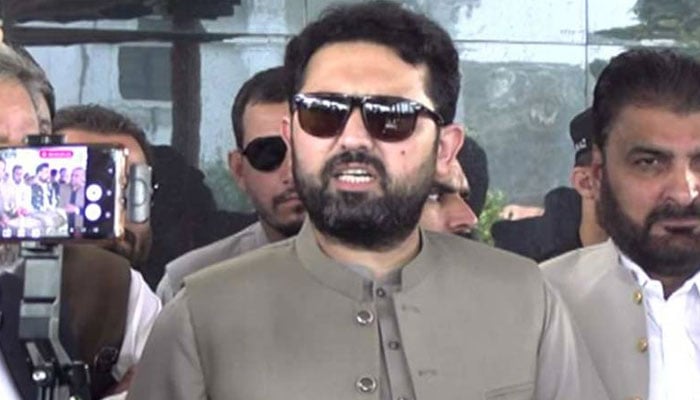
The committee chairman Senator Nasir Mehmood questioned the CDA representative about why the authority had not acted on its own written commitment.

The CDA Member Planning and Finance, Muhammad Umair, said the authority’s rules required the sponsors of a housing scheme to provide a 100 foot wide access approach.

He described the matter as disputed but said the road was about 400 metres long and that the authority could review the issue and work towards a final decision. The committee was not satisfied with the explanation.

The chairman ordered the CDA to construct the road within three months and provide the committee with a written commitment. The chairman also made it clear that the committee would return to the CDA after three months to check whether the road had actually been built.

The dispute became more serious when the Secretary Housing challenged the CDA’s interpretation of its own rules. He argued that the road existed before the PHA scheme and therefore represented the CDA’s existing right of way. He said that if there had been no road at all before the housing scheme was developed, PHA would have been responsible for acquiring land and constructing one.

But, he argued, this was an existing CDA road. The Secretary Housing also pointed out that the road leads towards a Head Start School used daily by children and their parents.

He told the CDA that even if the authority did not want to build the road for PHA, it should consider the needs of the school and the families using the route. He described the required road as only 400 metres long.

The CDA representative also raised the authority’s financial problems. He told the committee that the CDA had a salary bill of about Rs24 billion and faced major financial constraints. He warned that if the CDA began constructing roads on the rights of way of different private societies, other societies could also demand similar work.

The chairman rejected the delay and told the CDA that continued explanations could result in another six months passing without any work. He ordered the authority to complete the road within three months and submit its commitment in writing.

The road dispute is only one part of a much larger problem at the PHA Officers Residencia Kurri Road project. According to the Housing Secretary’s briefing, residents have been facing nine different issues, including problems involving a community centre, school, commercial shops, streetlights, water supply, encroachment, access roads and the creation of new plots.

The representative of PHA Officers Residencia told the committee that many of these problems had remained unresolved for about 10 years. The Housing Secretary personally visited the project despite heavy rains and examined the problems.

On the community centre, the Housing Ministry said there was no major obstacle to providing the required plot once the terms and conditions were agreed.

A school plot is also being processed. The ministry said documents had been prepared and a party would be brought in to operate a primary school at the site because a Head Start facility already exists nearby.

The commercial shops in Block C also faced a problem because no buyers came forward at the offered price. The Housing Secretary said the price would be revised, and the shops would be put up for auction again.

Streetlights remain another concern, with the ministry acknowledging financial problems but saying repairs would be carried out. Water supply is also being tested.

Under the arrangement explained to the committee, the contractor will operate the tube well for two weeks. If water reaches the houses properly, the system will be taken over. Any leakage found during the process will have to be repaired by the contractor.

The ministry expects this process to be completed within one month. The project also has a nine kanal illegal encroachment issue, but that matter is currently before the court. Another major issue involves proposals to create new plots in green areas.

PHA needs money to clear its liabilities, but the Housing Secretary said there was no desire to sell green areas simply to raise funds. Instead, he said his team would sit with PHA officials and find another way to clear the liabilities while protecting the green space.

The committee also discussed who should maintain the housing scheme once it is fully developed. PHA officials said the authority was already paying property tax and conservancy charges but lacked a proper maintenance arrangement for the society.

They requested that the CDA take over the scheme so that it would not be left without proper management. The Housing Secretary said government housing schemes are normally maintained by their own communities rather than being taken over by the CDA.

He suggested that residents could establish a management committee or company and operate the scheme through service charges. He also acknowledged that the residents were currently maintaining the area well, particularly its cleanliness and horticulture.

The committee directed PHA and the Housing Secretary to resolve the maintenance issue through mutual consultation. The Kurri Road controversy has therefore exposed a wider problem involving years of delays, disputes between government institutions, basic civic facilities and uncertainty over responsibility for infrastructure.
Similar Posts

  • |

    Kremlin claims capture of two key eastern Ukrainian villages

    Russian military forces have claimed control over two settlements in Ukraine’s eastern Donetsk region, according to statements released by the Russian Defence Ministry via state media. The ministry reported that its troops captured Vasyutinske, located near Kramatorsk, alongside Toretsk, situated southwest of Druzhkivka. Ukrainian authorities have not confirmed the loss of either location, and battlefield reports remain unverified independently. While frontlines across the 1,200-kilometre border have experienced minimal overall shifts in recent months, Russian forces continue an incremental westward push through the region. Ukrainian war-monitoring group DeepState reported additional Russian advances near Illinivka outside Kostiantynivka, as well as movements near Chasiv Yar, west of Bakhmut. The General Staff of the Ukrainian Armed Forces stated that its troops successfully repelled 24 individual assaults around Kostiantynivka and Illinivka. Russian commanders previously claimed control of Kostiantynivka, a statement contested by Ukrainian officials. Ukrainian President Volodymyr Zelenskiy did not address frontline shifts directly in his nightly address, but commended Ukrainian units engaged in heavy combat around Dobropillia, Kostiantynivka, and Kramatorsk.

  • | | |

    Pakistan seeks early refinancing of $1.3 billion C…

    ISLAMABAD: Pakistan has formally requested China to speed up the refinancing of a $1.3 billion commercial loan as Islamabad seeks to strengthen its foreign exchange reserves and ease pressure on its external financing position. According to sources, Pakistani authorities are currently holding discussions with their Chinese counterparts to complete the refinancing process at the earliest. The two sides are working to finalize the required terms, conditions, and procedural requirements. Officials expect the refinancing arrangements to conclude soon, with the funds likely to reach Pakistan within the current month if the remaining formalities are completed on schedule. Sources within the Ministry of Finance said the government expects the timely arrival of the funds to provide much-needed support to the country’s foreign exchange reserves. The refinancing would also help Pakistan manage its external debt obligations without placing additional pressure on its existing reserve position. Pakistan made external payments of around $2.2 billion in July, including the repayment of approximately $1.3 billion in Chinese commercial financing. The government now seeks to refinance the repaid amount to maintain liquidity and strengthen its financial position. The move comes as Pakistan continues to manage its external financing requirements and maintain adequate foreign exchange reserves to meet upcoming debt repayments and other international payment obligations. The successful completion of the refinancing deal with China would offer temporary relief to the country’s external account and support overall financial stability.

  • | |

    ‘Muslim world united’: Maryam hails Makkah pac…

    Punjab Chief Minister Maryam Nawaz has welcomed the joint defence agreement signed between Pakistan, Saudi Arabia and Türkiye, calling it a decisive moment in the history of the Muslim world. In a statement, Maryam said the agreement sent a strong message to the world from the holy city of Makkah that the Muslim world was united. She said the coming together of three major economic, military and political powers was a positive development for the entire Muslim Ummah. Maryam described the agreement as the beginning of a new chapter for the Islamic world. She said the pact would strengthen collective security and defence cooperation among the three countries. She praised Prime Minister Shehbaz Sharif and Field Marshal Asim Munir for standing alongside the Saudi and Turkish leadership, saying their efforts had raised the nation’s pride. “The agreement will not only strengthen the security of our borders but also raise the head of the Muslim Ummah with pride,” she said. Maryam added that the Makkah defence agreement had reinforced the message of unity among Muslim countries. The agreement was signed in Makkah by Saudi Crown Prince Mohammed bin Salman, Prime Minister Shehbaz Sharif and Turkish President Recep Tayyip Erdogan. According to the Foreign Office spokesperson, the agreement stipulates that an attack on any one of the three countries will be considered an attack on all three. The pact aims to strengthen their joint defence capabilities against any aggression and expand defence cooperation between Pakistan, Saudi Arabia and Türkiye.

  • | |

    Federal Cabinet Interference in CCI matters violat…

      Islamabad: The federal cabinet has no constitutional authority to decide matters reserved for the Council of Common Interests, a Senate sub committee has declared, warning that continued cabinet interference in electricity, petroleum, gas, railways, ports and regulatory bodies is damaging provincial rights and weakening constitutional protection for smaller provinces. The Senate Sub Committee on Devolution, chaired by Senator Barrister Zamir Hussain Ghumro, directed that matters falling under the CCI must not be taken to the federal cabinet. The committee said the Prime Minister should place such issues before the CCI and call its meetings frequently. According to the committee, Article 154 of the Constitution gives the CCI responsibility over subjects listed in Part II of the Federal Legislative List. The committee argued that these powers belong to the CCI rather than the federal cabinet. It said this constitutional arrangement was created to protect provinces from decisions dominated by the federal government. The committee particularly highlighted the position of smaller provinces. It noted that Punjab has 141 seats in the National Assembly while the other three provinces together have 122 seats. According to the committee, putting important provincial matters under the CCI provides protection against decisions based only on the strength of the majority in the National Assembly. The committee said the CCI should be reconstituted in a way that ensures equality among provinces. It also called for more frequent CCI meetings so important disputes between the federation and provinces are not left unresolved. The committee said the prices of electricity, petroleum, gas and medicines should be supervised and controlled through the CCI rather than the federal cabinet. It argued that federal executive authority must operate within the Constitution and that Article 154 gives the CCI authority over relevant subjects. The committee also said major national organisations and sectors connected with Part II of the Federal Legislative List should come under the CCI. These include Railways, Petroleum, Electricity, Ports and several regulatory bodies. The committee specifically named OGRA, NEPRA, PEMRA and PTA among institutions whose matters, in its view, should fall under the CCI framework. It said Planning and Development authorities and other bodies working in fields covered by Part II should also operate under CCI authority instead of federal cabinet control. The committee strongly objected to federal cabinet involvement in these areas. It said interference by the federal cabinet in CCI subjects was contrary to Article 97 read with Article 154 of the Constitution. One of the most serious issues discussed was the planned privatization of electricity distribution companies. The committee stated that the privatization of companies including IESCO, FESCO, LESCO, GESCO, SEPCO and HESCO cannot proceed without CCI approval from the Power Division or Privatization Commission. It argued that taking such decisions without the CCI would violate Articles 154 and 157 of the Constitution. The committee directed that the privatization of electricity distribution companies must be placed before the CCI. It also referred to the Supreme Court judgement in the Mian Nawaz Sharif case and said the CCI should be involved before such major decisions are taken. The committee rejected the federal government’s reliance on the Gadoon Amazai ruling regarding CCI meetings. It said Parliament had already addressed the issue of meeting frequency by requiring the CCI to meet at least once every three months or earlier when urgent matters arise. The committee therefore called on the Prime Minister to convene CCI meetings regularly. According to members, failure to use the CCI weakens the constitutional voice of provinces and allows issues affecting the entire federation to be decided through the federal cabinet. The panel also questioned several ministries, divisions and state owned bodies dealing with subjects it believes belong either to the provinces or the CCI. It said federal structures created around provincial or CCI subjects should be devolved or closed where required, without harming employees. Among the institutions and sectors the committee mentioned included Water Resources, Railways, Industries, Statistics, Petroleum, Inter-Provincial Coordination, Planning and Development and WAPDA. The committee also referred to regulatory bodies and other organisations whose functions, it said, should be examined according to the constitutional division of powers. Members said the purpose of the CCI was not simply to hold occasional meetings. They described it as a constitutional mechanism designed to allow the federation and provinces to jointly decide major national matters. The committee warned that bypassing the CCI could create mistrust between the provinces and the federal government. It said smaller provinces need the CCI to ensure they have a meaningful voice in decisions involving national resources, energy, infrastructure and regulation. The committee directed the federal government to amend its Rules of Business within 15 days so that matters falling under the CCI are handled according to the Constitution. It asked the government to submit a report explaining the changes made. The message from the committee was clear. Major decisions involving electricity, petroleum, gas, railways, ports, regulators and other CCI subjects should not be decided by the federal cabinet alone. The committee wants these matters taken back to the Council of Common Interests, with the Prime Minister required to use the constitutional forum regularly to protect provincial rights and build agreement between the federation and all four provinces.

  • | |

    US report urges Pakistan to open up budget and deb…

    WASHINGTON: Pakistan needs to improve transparency in its public finances and give Parliament and citizens earlier access to key budget and debt information, according to a new US State Department assessment. The department’s 2026 Fiscal Transparency Report said Pakistan had made progress in making financial information publicly available but still faced important gaps, particularly in the timely release of its proposed budget and disclosure of government liabilities. The report noted that Pakistan’s approved budget and year-end financial reports were easily accessible to the public, including online. However, it found that the government did not release its executive budget proposal within a reasonable timeframe. According to the assessment, publishing the proposed budget earlier would give lawmakers and the public more time to examine the government’s spending and revenue priorities before the document is formally approved. The report also raised concerns over limited public information about government debt, especially liabilities linked to major state-owned enterprises. Greater disclosure, it said, would help provide a clearer picture of the country’s financial position and allow Parliament to better assess potential fiscal risks. Despite these shortcomings, the US assessment acknowledged that Pakistan’s publicly available budget documents contained substantial information on planned government revenues and expenditures, including income from natural resources. Pakistan’s auditing system also received a largely positive assessment. The report said financial information was generally reliable and subject to review by the country’s supreme audit institution, which it found to have an appropriate level of independence under international standards. Audit findings were also made available to the public within a reasonable period. The report found that Pakistan had established legal procedures for awarding natural resource extraction contracts and licences and appeared to follow those rules in practice. It also noted that information on public procurement contracts was accessible and described the legal framework governing the country’s sovereign wealth fund as sound. The State Department identified three major areas where Pakistan could further strengthen fiscal transparency: releasing the executive budget proposal on time, providing more detailed information about government debt, including state-owned enterprise liabilities, and bringing military and intelligence budgets under adequate parliamentary or civilian oversight. Overall, the report did not portray Pakistan’s financial system as broadly opaque. Instead, it recognised several areas of progress while calling for stronger parliamentary scrutiny and greater disclosure of information that could help lawmakers and the public understand the country’s fiscal risks.

  • | |

    Pakistani passport ranks fourth weakest globally

    Pakistan’s passport has been ranked the fourth weakest in the world in the latest Henley Passport Index. The Pakistani passport stands at 101st place in the global ranking. Its holders can access 29 destinations without obtaining a visa in advance or through visa-on-arrival facilities. The Henley Passport Index evaluates passports based on the number of destinations their holders can enter without securing a visa before travelling. The index covers 199 passports and 227 travel destinations. The latest ranking shows that Pakistan’s passport remains ahead of only three passports. These belong to Iraq, Syria and Afghanistan. The ranking highlights the limited international mobility available to Pakistani passport holders compared with citizens of many other countries. Pakistan’s neighbouring countries have performed better in the latest index. China ranks 60th globally. India is placed at 81st. Iran stands at 96th. Despite its low overall ranking, Pakistani citizens can travel to several destinations without obtaining a visa before departure. Visa-free access is available for Pakistani passport holders to Barbados, the Cook Islands, Dominica, Haiti, Micronesia, Montserrat, Rwanda, St Vincent and the Grenadines, The Gambia, Trinidad and Tobago, and Vanuatu. Pakistani travellers can also obtain visas upon arrival in a number of countries. These include Burundi, Cambodia, the Comoro Islands, Djibouti, Guinea-Bissau, Madagascar, the Maldives, Mozambique, Nepal, Niue, Palau, Samoa, Senegal, Sierra Leone, Timor-Leste and Tuvalu. In addition, Pakistani citizens can obtain electronic travel authorisations for Kenya, Seychelles and Sri Lanka. The passport ranking is widely used as an indicator of international travel access. A higher position generally means that passport holders can enter more destinations without obtaining a visa in advance. Singapore continues to hold the strongest passport in the latest ranking. It tops the index with access to 192 destinations. Japan, South Korea and the United Arab Emirates share second place. Their passport holders can access 188 destinations. Sweden ranks third, with access to 187 destinations. The latest figures underline the significant gap between Pakistan and the countries at the top of the global passport ranking.

Leave a Reply

Your email address will not be published. Required fields are marked *