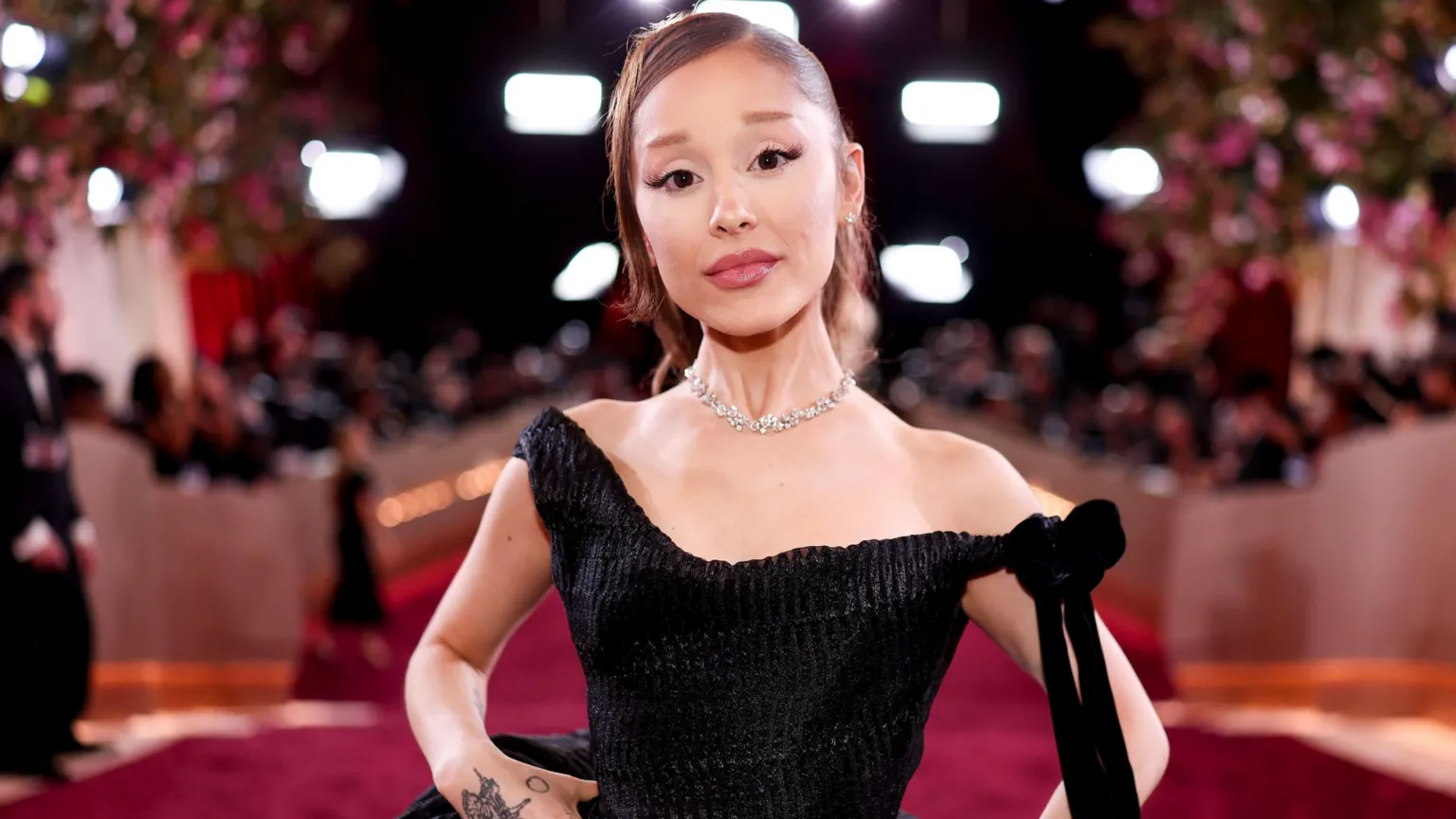
ariana grande step
| |

Ariana Grande to step back from public life after tour

Pop superstar Ariana Grande has announced that she will take a break from public appearances after completing her Eternal Sunshine world tour next month, citing the constant public attention and scrutiny surrounding her personal life and appearance.

According to her representatives, the singer has decided to step away from the spotlight to focus on her wellbeing after months of demanding performances and continuous media attention. They said Grande hopes to finish the tour in good health before taking a well-earned break from public-facing work.

Her decision also means she will no longer appear in the upcoming London revival of Stephen Sondheim’s acclaimed musical Sunday in the Park with George, which is scheduled to open at the Barbican Theatre in 2027. The production company confirmed her withdrawal and expressed full support for her decision, saying it respects her choice and wishes her the very best.

Grande was originally set to star alongside British actor Jonathan Bailey, her co-star in Wicked. Producers have confirmed that the production will continue as planned, although a replacement for her role has not yet been announced.

The singer has faced growing public discussion about her appearance in recent years, with speculation intensifying following the release of her new album Petal and its promotional campaign. Her team emphasized that she remains healthy and continues to deliver physically demanding performances throughout her tour.

Grande’s latest music video also appears to reflect the pressure she has experienced. In the video, she portrays a performer who is repeatedly criticized over her appearance and talent before ultimately confronting those judgments in a symbolic act against her critics.

The final concert of the Eternal Sunshine tour is scheduled to take place in London on September 1. After that performance, Grande plans to step away from the public eye for an unspecified period to focus on her personal wellbeing and life away from constant media attention.

Similar Posts

  • | |

    Danny Ramirez reveals biggest surprise about Aveng…

    Danny Ramirez has opened up about one of the most memorable parts of filming Avengers: Doomsday, revealing that the biggest surprise was not the blockbuster action or the star-studded cast, but the chance to reunite with one of his closest friends. Speaking to People magazine during San Diego Comic-Con on July 25, the actor reflected on his experience working on the highly anticipated Marvel film and described the atmosphere on set as unforgettable.  Ramirez reprises his role as Joaquin Torres, the new Falcon, in Avengers: Doomsday. The actor said returning to the Marvel Cinematic Universe was exciting on its own, but sharing the experience with longtime friend Lewis Pullman made it even more special. The two actors previously worked together on Top Gun: Maverick and have remained close ever since. According to Ramirez, reuniting on another major project felt like “summer camp,” with the cast enjoying a fun and supportive environment behind the scenes.  The actor explained that the chemistry among the cast members helped create a positive work atmosphere despite the enormous scale of the production. With Marvel bringing together heroes from the Avengers, Fantastic Four and X-Men franchises, Ramirez admitted it was surreal to see so many iconic characters sharing the same set. He said every day offered new surprises, making the experience unlike anything he had worked on before.  Ramirez also spoke about working alongside legendary performers such as Sir Patrick Stewart and Sir Ian McKellen. In another Comic-Con interview, he praised both actors for their professionalism and dedication, saying he learned a great deal simply by watching them perform. He noted that their decades of experience and command of storytelling inspired him to become a better actor.  Avengers: Doomsday is shaping up to be one of Marvel Studios’ biggest crossover events to date. Directed by Joe and Anthony Russo, the film features the return of several beloved MCU stars while introducing major characters from other Marvel franchises. Robert Downey Jr. will make his highly anticipated return to the Marvel universe, this time portraying the iconic villain Doctor Doom instead of Iron Man.  For Ramirez, however, the film’s biggest highlight was far more personal than any action sequence or special effect. He said reconnecting with Pullman reminded him of why he loves making movies, emphasizing the friendships that can grow through years of collaboration. That sense of camaraderie, he explained, made every day on set enjoyable and helped create lasting memories beyond the cameras.  As anticipation builds for Avengers: Doomsday, Ramirez’s comments have given fans a glimpse into the film’s positive behind-the-scenes atmosphere. While audiences are eagerly waiting to see Marvel’s biggest heroes unite on screen, the actor says the genuine friendships formed during production may be the most rewarding part of the entire journey. 

  • |

    93% admissions at top colleges go to private-schoo…

    Concern has been raised over the quality of education in Karachi’s government schools and the ability of their students to gain admission to the city’s leading government colleges. According to admission data, the overwhelming majority of students admitted to Karachi’s top 10 government colleges completed their matriculation from private schools. Despite these institutions being government colleges, around 93 out of every 100 students admitted to them are graduates of private schools, while only about seven come from government schools. Data obtained from the colleges shows that a total of 13,211 students were admitted to these institutions. Of them, 12,264 had completed their matriculation from private schools, while only 947 were graduates of government schools. This means that 92.8% of admissions were secured by students from private schools, while government school students accounted for just 7.2%. In other words, for every 100 students admitted to these government colleges, approximately 93 come from private schools and only seven from government schools. At Adamjee Government Science College, 613 students were admitted. Among them, 585 had completed matriculation from private schools, while only 28 came from government schools. Similarly, Government D.J. Sindh Science College admitted a total of 1,258 students. Of these, 1,214 were graduates of private schools and only 44 had studied at government schools. At Delhi Government Science College, 801 students were admitted. The figures show that 773 came from private schools, while only 28 were graduates of government schools. Government Boys College for Men, Nazimabad, admitted a total of 1,317 students. Of these, 1,257 had completed their matriculation from private schools, while only 60 came from government schools. The same trend is even more visible among government girls’ colleges. Government Sir Syed Girls College admitted 2,507 students. Among them, 2,266 had completed matriculation from private schools, while only 241 were graduates of government schools. At St Lawrence Government Girls College, 691 students were admitted. Of these, 631 came from private schools and only 60 from government schools. Similarly, at PECHS Government College for Women, 1,517 students were admitted. A total of 1,420 had studied at private schools, while only 97 had completed matriculation from government schools. At Khatoon-e-Pakistan Government College for Women, 2,107 students were admitted. Of these, 1,876 were graduates of private schools, while only 231 came from government schools. The figures for boys and girls at Government Degree College Malir Cantonment were also included. According to the data provided, 402 students were counted in the combined figures, while the reported breakdown listed 1,316 students from private schools and 86 from government schools. Meanwhile, Government Degree Boys and Girls College Stadium Road admitted a total of 998 students. Of these, 926 had completed matriculation from private schools, while only 72 were graduates of government schools. The situation at government girls’ colleges is similarly concerning. At Sir Syed Girls College, 2,266 students from private schools secured admission compared with only 241 from government schools. At PECHS Government College for Women, the ratio was 1,420 private-school graduates against 97 government-school graduates. At Khatoon-e-Pakistan Government College for Women, 1,876 private-school graduates were admitted compared with just 231 from government schools.

  • | |

    Public projects are people’s right, not a gift: …

    ISLAMABAD, July 26: Pakistan Peoples Party (PPP) Chairman Bilawal Bhutto Zardari has said that facilities and development projects built for the public should not be described as gifts. He said these projects are the people’s right. In a video statement, Bilawal said people were being told about promises involving buses, roads and airports. He welcomed every project aimed at improving public facilities. He said he would welcome every new bus service. He would also welcome every road, hospital and airport built for the people. However, Bilawal stressed that such facilities should not be presented as gifts to the public. He said the people have a right to better transport, healthcare, roads and other basic services. The PPP chairman said his party had also taken practical steps instead of making only promises. He claimed that around 3,000 new employment opportunities had been created through PPP initiatives. Bilawal also spoke about Mirpur Airport. He said he had personally worked to secure funds for the airport in the previous budget. He said the allocation was made during the budget process to support the airport project. He presented the initiative as part of efforts to improve facilities for the people of the region. Bilawal also criticised his political opponents while discussing development work in Azad Jammu and Kashmir. He said it appeared that Pakistan Muslim League-Nawaz leaders Nawaz Sharif and Maryam Nawaz were standing with their minister. The PPP chairman also referred to a stadium where his political opponents had recently addressed a gathering. He said the stadium was constructed during a previous PPP government. Bilawal said his focus was not limited to development projects. He said he wanted the people of Kashmir to receive their fundamental political and economic rights. He specifically mentioned the right to governance, ownership and employment. According to Bilawal, providing these rights to the people would be more important than announcing development projects as gifts. He said people should have ownership over the resources and development of their region. They should also have access to employment opportunities. Bilawal maintained that governments must fulfil their responsibilities towards citizens. Public infrastructure, he said, should be viewed as an entitlement. He added that roads, hospitals, transport services and airports are built using public resources. Therefore, they should not be used as political gifts.

  • | |

    Dar urges SCO action against Afghan terrorism

    Deputy Prime Minister and Foreign Minister Ishaq Dar has called on member states of the Shanghai Cooperation Organisation (SCO) to strengthen regional cooperation against terrorism, saying lasting peace and economic development cannot be achieved unless militant groups operating from Afghan territory are effectively eliminated. Addressing the SCO Council of Foreign Ministers’ meeting, Dar said Pakistan remains committed to regional peace and wants to see Afghanistan emerge as a peaceful, stable, regionally connected and economically prosperous country. He said a secure Afghanistan would benefit not only Pakistan but all SCO member states and the wider region. The foreign minister described terrorism originating from Afghan territory as one of the most serious security challenges facing Pakistan. He said militant organisations continue to use Afghan soil for recruitment, training and planning attacks, creating persistent threats to regional stability. Dar said Pakistan has suffered heavily from terrorism in recent years. According to him, more than 560 Pakistanis have lost their lives in over 2,000 terrorist incidents since the beginning of this year. He added that investigations into several attacks had also identified the involvement of Afghan nationals. He urged the SCO to play a more active role in addressing the security situation and called on the Afghan authorities to honour their international commitments against terrorism. He stressed that no country’s territory should be allowed to serve as a base for militant activities targeting neighbouring states. Speaking about the SCO, Dar said the organisation has developed into one of the region’s most important platforms for cooperation over the past 25 years. He noted that it now promotes collaboration not only in security but also in trade, economic development, connectivity, culture and regional stability. Looking ahead, Dar said the organisation should place greater emphasis on digital development, technological cooperation, innovation and energy security to meet future regional challenges and promote sustainable economic growth among member states. Turning to the Middle East, Dar reiterated Pakistan’s position that dialogue, diplomacy and mutual respect remain the only effective means of resolving international disputes. He said peaceful negotiations are essential for achieving lasting regional peace and preventing further conflict. He also highlighted Pakistan’s diplomatic efforts in facilitating dialogue between the United States and Iran. Dar said Pakistan played an important role in encouraging direct engagement between the two countries, leading to the signing of the Islamabad Memorandum of Understanding earlier this year. He described the agreement as a significant diplomatic achievement and encouraged the international community to build on the progress made through continued negotiations. On the sidelines of the SCO meeting, Dar held separate meetings with Kyrgyz President Sadyr Japarov and Chinese Foreign Minister Wang Yi. The discussions focused on strengthening bilateral relations, enhancing regional cooperation and expanding collaboration through multilateral organisations. During his meeting with Wang Yi, both leaders reviewed Pakistan-China relations and exchanged views on regional developments. The Chinese foreign minister appreciated Pakistan’s diplomatic efforts to promote regional peace and extended best wishes for Pakistan’s upcoming chairmanship of the SCO for 2026-27.

  • | | | |

    Iran’s supreme leader Mojtaba Khamenei names Bag…

    TEHRAN: Iran’s Supreme Leader Ayatollah Mojtaba Khamenei has reshuffled two key positions in the country’s security and political establishment, appointing Mohammad Bagher Zolghadr as his political adviser and former Islamic Revolutionary Guard Corps (IRGC) commander Mohsen Rezaei as his representative on the Supreme National Security Council (SNSC). The appointments were announced through messages attributed to Khamenei on social media on Sunday, according to reports, placing two veteran figures with extensive military and political experience in prominent roles at a sensitive moment for Tehran. In his message to Zolghadr, Khamenei cited his “valuable experience” while appointing him as a political adviser. Zolghadr has held several senior positions in Iran’s security establishment and previously served as secretary of the SNSC. The move follows Zolghadr’s departure from the council’s top administrative position. Reports said Rezaei has been appointed to replace him as secretary of the powerful security body, while also serving as Khamenei’s representative on the council. Rezaei is a veteran figure in Iran’s political and military establishment. He served as commander of the IRGC for much of the Iran-Iraq war era and has held a range of senior political positions. He has also previously run for Iran’s presidency. The latest appointments are drawing attention because the SNSC plays a central role in coordinating Iran’s defence, security and foreign-policy decisions. Although the council is formally chaired by President Masoud Pezeshkian, its work brings together senior political, military and security institutions. The timing of the reshuffle is particularly significant as Iran faces continuing pressure over regional security and negotiations surrounding the Strait of Hormuz. Recent diplomatic efforts have focused on arrangements for shipping through the strategically important waterway, making changes within Tehran’s security leadership especially closely watched. Both Zolghadr and Rezaei are associated with Iran’s security establishment and have extensive experience in military affairs. Analysts are therefore likely to watch closely for any indication that the appointments could affect Tehran’s approach to negotiations, regional security or relations with the United States. The reshuffle also strengthens the role of figures with longstanding links to the IRGC within the leadership structure. Rezaei had already served as a military adviser to Mojtaba Khamenei before taking on the latest assignment. For Zolghadr, the new position keeps him within the senior leadership circle despite his exit from the SNSC secretaryship. His experience in security and political affairs could allow him to continue playing a role in shaping policy from the Supreme Leader’s office. The appointments come at a critical time for Iran, with international attention focused on Tehran’s security posture and the future of the Strait of Hormuz. Whether the changes represent a broader adjustment in Iran’s negotiating strategy remains to be seen, but the elevation of two experienced security figures is likely to keep Tehran’s next moves under close scrutiny.

  • |

    US-backed Venezuela talks set to begin as Machado stays out of negotiations

    Negotiations aimed at reshaping Venezuela’s political system are expected to begin in the coming days with support from the United States, but the country’s most influential opposition leader, Maria Corina Machado, will not take part in the discussions. The talks are intended to lay the foundation for future democratic elections and political reforms following major changes in the country’s leadership. The dialogue will bring together representatives of Venezuela’s interim government and a faction of the opposition. Jorge Rodriguez, president of the National Assembly and an experienced negotiator, will head the government delegation. The opposition team will be led by Dinorah Figuera, who heads the opposition controlled National Assembly elected in 2015. That legislature continues to be recognised by the United States as Venezuela’s last democratically elected parliament. Sources familiar with the process said Washington encouraged Figuera to lead the opposition delegation because of her position within the 2015 assembly. The United States has backed her group’s efforts to reform Venezuela’s electoral authority and judicial system in preparation for future elections that it says should be free and transparent. Machado’s absence has attracted significant attention because she remains the country’s most popular opposition figure. The Nobel Peace Prize winner has been living mostly outside Venezuela after spending months in hiding following the disputed 2024 presidential election. She recently announced plans to return to Venezuela to assist communities affected by the devastating earthquakes that struck the country in June, despite concerns expressed by some US officials about the timing of her return. Reports suggesting that the Trump administration discouraged Machado from returning have been rejected by US President Donald Trump. Since the removal of former president Nicolas Maduro earlier this year, Machado has largely remained outside the political process promoted by Washington. US officials have argued that broader political support is needed to lead the country’s transition. According to people familiar with the negotiations, Machado was either informed about the talks shortly before they were announced or was never invited to join the delegation because she is not a member of the 2015 National Assembly. Despite her exclusion, she has said she will not obstruct any effort that genuinely advances democracy. Machado has stated that she will judge the success of the negotiations by whether they restore democratic institutions, release political prisoners and establish a clear path toward credible elections. Political analysts believe the negotiators face pressure to deliver meaningful progress quickly. They say any agreement must convince Venezuelans that the process is capable of producing real political change while addressing concerns over Machado’s absence from the discussions. The interim government is expected to use the negotiations to seek the removal of remaining US sanctions. Washington has previously eased restrictions on Venezuela’s oil, gas and gold industries after agreements aimed at improving electoral conditions. Officials hope further progress could lead to additional sanctions relief as part of a broader political settlement. Although the talks were initially scheduled to begin on August 1, sources close to both the government and the opposition said they are now expected to start on Sunday or Monday after the opposition delegation arrives in Caracas. Previous negotiations between the opposition and the former Maduro administration produced limited results. An agreement before the 2024 election promised fair competition and full opposition participation, but Machado was later barred from running. International observers and the United States questioned the election outcome, arguing that opposition candidates received the majority of votes while state institutions declared Maduro the winner. Some experts believe excluding Machado’s political movement leaves an important section of Venezuelan society without direct representation. However, they also note that divisions within the opposition have existed for years, making further splits unlikely. US Secretary of State Marco Rubio has said the United States supports an inclusive political process and believes Machado represents a significant part of Venezuelan society. He stressed that Washington’s role is to facilitate negotiations rather than control them. Opposition figures also say US involvement provides reassurance because many political leaders have previously faced arrests and legal action that they describe as politically motivated. They believe continued international support will be essential if the negotiations are to produce lasting democratic reforms.

Leave a Reply

Your email address will not be published. Required fields are marked *