iran tensions rise
| |

US, Iran tensions rise over new sanctions

The United States and Iran have stepped up their hostile rhetoric as Washington prepares to announce a new package of economic sanctions targeting Tehran and potentially countries that continue doing business with it.

US Treasury Secretary Scott Bessent is expected to outline the measures on Monday, with Washington describing them as among the toughest sanctions imposed on Iran. The measures could also affect major trading partners, including China, which remains a key buyer of Iranian oil.

Iran has rejected the planned sanctions, calling them an unlawful attempt by the United States to impose its authority beyond its borders. Iranian Foreign Ministry spokesperson Esmaeil Baghaei said secondary sanctions had no basis in international law.

US President Donald Trump has warned countries providing economic support to Iran that they could face consequences. He said Tehran wanted an agreement but had not yet accepted what Washington considers acceptable terms.

The confrontation comes as the war approaches its sixth month. Although the United States and Iran are not currently exchanging fire, diplomatic efforts to end the conflict remain stalled.

The situation has also severely disrupted shipping through the Strait of Hormuz, a critical route for global energy supplies. Ship-tracking data showed that only a handful of commercial vessels crossed the waterway on Thursday, while major crude oil and liquefied natural gas carriers remained largely absent.

Iran has nevertheless allowed several Iraqi oil tankers to pass through the strait after requests from Baghdad. The permission was reportedly discussed during the recent visit of Iranian Parliament Speaker Mohammad Bagher Ghalibaf to Iraq.

Oil flows through the waterway have fallen sharply from pre-war levels. US officials said an average of around 8 million barrels of oil a day was moving through the strait, compared with more than 20 million barrels before the conflict.

The disruption has contributed to higher oil prices and raised concerns about wider effects on the global economy.

US military operations have inflicted heavy damage on Iran’s military capabilities and economy, but Tehran still retains missile and drone capabilities that could threaten shipping and regional targets.

Washington has also yet to achieve some of its stated objectives, including fully determining the status of Iran’s nuclear programme and creating conditions for political change in Tehran. International nuclear inspectors have been unable to access Iran since 2025.

Iranian military officials have continued to threaten a strong response to any further attacks. However, President Masoud Pezeshkian has called for a diplomatic solution and an end to the conflict.

Iranian officials have also acknowledged the growing economic pressure. Ghalibaf warned that military strength alone would not be enough to sustain the country if economic activity, production and financial circulation continued to suffer.
Similar Posts

  • |

    Gold prices jump Rs3,000 per tola in Pakistan

    Gold prices continued their upward trend in Pakistan on Friday, with the price of the precious metal increasing by Rs3,000 per tola in line with gains in the international market. According to the All Pakistan Gems and Jewellers Association (APGJA), the latest increase pushed the price of one tola of gold to Rs430,436, marking another sharp rise in the local bullion market. The increase comes amid continued strength in global gold prices and growing demand for safe-haven assets. The association also reported an increase in the price of 10 grams of gold. Following a rise of Rs2,572, the price of 10 grams reached Rs369,029. Bullion dealers said local gold prices generally move in line with international market trends and are also influenced by fluctuations in the value of the Pakistani rupee against the US dollar. Any increase in global prices is usually reflected in domestic rates. In the international market, gold prices also recorded a significant gain. The price of the precious metal rose by $30 per ounce, taking it to $4,080 per ounce. The global increase provided further support to rising prices in Pakistan. Gold is widely regarded as a safe investment during periods of economic uncertainty and market volatility. As international prices continue to strengthen, local buyers and jewellers are closely monitoring market movements for further changes in bullion rates. Market analysts believe domestic gold prices will continue to follow international trends, with future movements depending on global economic conditions, investor demand and currency fluctuations. Buyers are expected to remain cautious as higher prices increase the cost of jewellery and investment purchases

  • |

    Gold prices reverse rally, fall by Rs3,500 per tola

    KARACHI: The recent upward trend in gold prices in Pakistan and international markets came to an end on Thursday, with domestic bullion rates witnessing a noticeable decline after a sharp rally over the past week. According to data released by the All Pakistan Sarafa Gems and Jewellers Association, the price of 24-carat gold dropped by Rs3,500 per tola, bringing the new price to Rs460,436 per tola. The decline was also reflected in the price of gold measured by weight. The price of 10 grams of 24-carat gold decreased by Rs3,001, settling at Rs394,749. The latest correction comes after a strong rally in the domestic bullion market. Gold had gained around Rs36,000 per tola over the previous seven days, highlighting the extent of the recent surge before Thursday’s decline. The local market also recorded a fall in silver prices. The price of silver declined by Rs175 per tola, taking its rate to Rs6,936. Global gold prices also decline The correction in Pakistan’s gold market coincided with a decline in international bullion prices. In the global market, gold fell by $35 per ounce, with the international price standing at around $4,380 per ounce. Market participants are closely monitoring developments in global financial markets, particularly movements in the US dollar, interest-rate expectations and economic data, which can influence investor demand for precious metals. Gold is generally considered a safe-haven asset, and its price can rise when investors seek protection from economic or geopolitical uncertainty. However, sharp gains can also prompt profit-taking, resulting in short-term corrections such as the one witnessed on Thursday. Despite the latest decline, gold prices remain significantly elevated after the substantial increase recorded during the past week. Traders and investors are expected to keep a close watch on international bullion movements and currency trends for further direction in the local market.

  • | |

    PTI march aims to reach Imran Khan, not secure rel…

    PESHAWAR: Khyber Pakhtunkhwa Chief Minister Sohail Afridi has said the Pakistan Tehreek-e-Insaf (PTI) long march planned for September 27 will focus on reaching party founder Imran Khan rather than demanding his immediate release. Speaking in an interview with private media, Afridi said he would personally lead the march and stressed that it would not be a one-day activity. He indicated that the participants would remain engaged in the movement rather than simply travelling to Islamabad and returning. Afridi said the decision to launch the march was taken after consultations with PTI leadership and representatives of the Tehreek Tahafuz Aain-e-Pakistan. He added that Aleema Khan, Imran Khan’s sister, would also participate in the campaign. Explaining the objective of the protest, the chief minister said the immediate goal was to gain access to Imran Khan, while any decision regarding his release would have to be made in accordance with the Constitution and the law. Afridi also addressed questions about announcing the march several weeks in advance. He said September 27 was selected after considering weather conditions and allowing sufficient time for preparations. The announcement comes as PTI continues to mobilise its supporters around the issue of Imran Khan’s imprisonment, with the party seeking greater political and legal pressure over his continued detention.

  • | | |

    Bangladesh moves toward talks with China to buy J-…

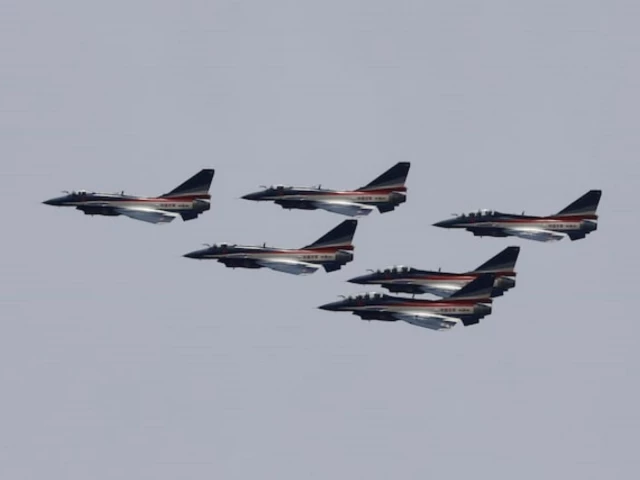
    Bangladesh is preparing to begin formal discussions with China over a possible purchase of J-10CE fighter jets and attack helicopters according to a government adviser. Prime Minister’s Information and Broadcasting Adviser Zahed Ur Rahman said Tuesday that a government committee is working on a draft agreement that could pave the way for negotiations with Beijing. The potential deal would represent one of Bangladesh’s largest defence purchases in recent years and could further strengthen the country’s military relationship with China. Beijing is already Bangladesh’s biggest supplier of defence equipment. The J-10CE fighter jet has received increased international attention since fighting between India and Pakistan in May 2025. Pakistan said its J-10CE aircraft were involved in shooting down Indian fighter jets during the clashes. India has disputed those claims. Ur Rahman said Bangladesh had observed reports about the aircraft’s performance during the conflict as it considers options to modernise its air force. Bangladesh is reportedly considering purchasing as many as 24 J-10CE fighter jets although officials have not confirmed the final number. Pakistan is currently the only confirmed foreign operator of the export version of the Chinese aircraft. The adviser did not reveal how many jets Bangladesh could ultimately purchase the expected cost of the agreement or when deliveries might begin. Those details, he said, would be decided during negotiations. The possible fighter-jet purchase comes as Bangladesh seeks to upgrade its military capabilities. The country has maintained close defence ties with China for years with Beijing supplying a wide range of military equipment. Over the past two decades, China has provided Bangladesh with warships, fighter aircraft, tanks and missile systems, making it Dhaka’s largest source of military hardware. If Bangladesh proceeds with the J-10CE acquisition, the move could further deepen defence cooperation between Dhaka and Beijing while giving Bangladesh a modern multirole fighter capable of performing air-to-air and air-to-ground missions.

  • |

    US war on iran costs $37.5bn so far: Pentagon

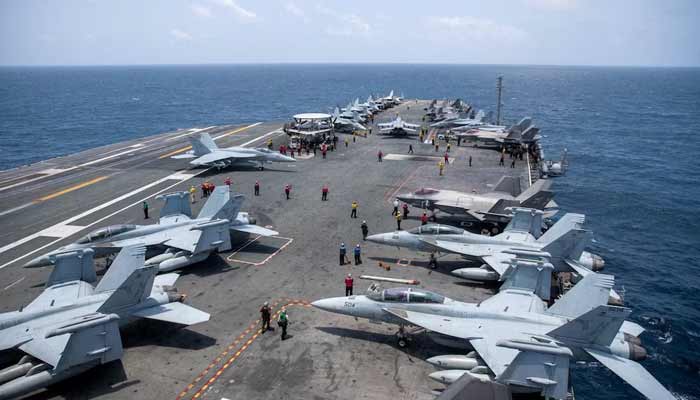
    The United States has spent 37.5 billion dollars on its war against Iran to date, US Defence Secretary Pete Hegseth told lawmakers at a Senate Appropriations Committee hearing in Washington, while calling on Congress to approve additional funding for the conflict. The statement comes six months ahead of midterm elections, where Democrats lead in public opinion polls and are attempting to link the unpopular war with broader economic affordability concerns. Hegseth stated that the 37.5 billion dollar figure covers specific operational aspects of the war as well as anticipated expenditures through September 30, though the exact calculations used by the Pentagon were not detailed. The funding request follows President Donald Trump’s call for nearly 90 billion dollars in supplemental funding last month, primarily for the Iran conflict, setting up legislative friction with lawmakers who express frustration over the war’s trajectory and communication. Both Democratic and Republican members of Congress criticised the administration for a lack of transparency since US and Israeli military operations against Iran began on February 28. Senator Patty Murray warned that the president’s severe threats against civilian infrastructure risk war crimes and a prolonged conflict, while Senator Kirsten Gillibrand criticised contradictory statements from the administration regarding the duration and scope of the war. Hegseth warned lawmakers that without an urgent influx of capital, military training operations would need to be curtailed. Chairman of the Joint Chiefs of Staff General Dan Caine acknowledged that while service members would receive their pay, the Pentagon could face challenges covering equipment maintenance and investments in future capabilities due to strains on its nearly 1 trillion dollar budget. In response, Hegseth urged Congress to approve not only the supplemental package but also a 1.5 trillion dollar defence budget for 2027, describing any failure to fund the department at that level as the single greatest threat to national security. The appeal for funds follows the breakdown of a fragile ceasefire earlier in the month, leading to daily reciprocal strikes between US and Iranian forces. US troop casualties have risen to 18 killed and approximately 430 injured, including 100 wounded since July 7, though the Pentagon noted that 96 per cent of those injured have returned to active duty. Meanwhile, President Trump has threatened to expand targets to include Iranian energy plants, bridges, the Kharg Island oil hub via ground forces, and the deep-underground Pickaxe Mountain nuclear-linked facility, stating that a strike on the mountain site would occur in the near future.

  • | | |

    Naqvi meets Araghchi in Tehran amid US-Iran mediat…

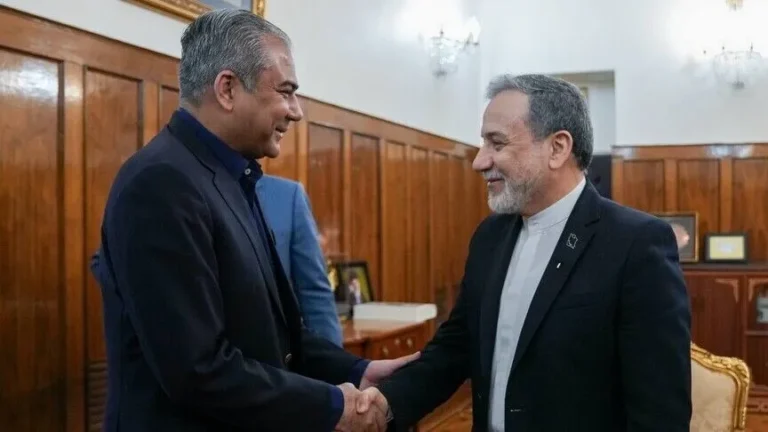
    Pakistan’s Interior Minister Mohsin Naqvi held talks with Iranian Foreign Minister Abbas Araghchi in Tehran on Tuesday as diplomatic efforts continue to ease tensions between Iran and the United States. The meeting focused on regional developments and matters of mutual interest. Iranian state media reported that the two ministers also discussed diplomatic and bilateral issues. The meeting took place against the backdrop of continuing efforts to find a diplomatic way forward in the US-Iran conflict. Pakistan has remained engaged with regional partners as part of efforts to support dialogue and reduce tensions. Iranian officials said Naqvi is expected to hold additional meetings with senior authorities during his visit to Tehran. Discussions are expected to cover bilateral relations, regional developments and issues affecting both countries. The visit also comes around a month after Iranian Interior Minister Eskandar Momeni visited Islamabad. During that visit, Pakistani and Iranian officials held discussions on bilateral cooperation and regional matters. Pakistan has maintained diplomatic contacts with both sides during the recent crisis. Islamabad has also sought to encourage dialogue as tensions between Tehran and Washington have increased. Pakistan, along with Qatar, previously played a role in diplomatic efforts aimed at bringing Iran and the United States closer to an understanding. These efforts contributed to a memorandum of understanding between the two sides in June. The latest meeting between Naqvi and Araghchi is therefore being viewed in the context of Islamabad’s broader diplomatic engagement with Tehran. Officials have not released detailed information about the specific issues discussed during Tuesday’s meeting. Further details are expected after Naqvi completes his scheduled engagements with Iranian officials.

Leave a Reply

Your email address will not be published. Required fields are marked *