world8217s tallest bridge
|

World’s tallest bridge features 300-meter artificial waterfall

China has completed several remarkable engineering projects in recent years but the Huajiang Grand Canyon Bridge stands out as one of the most extraordinary.

Often described as an engineering marvel, the bridge is not for the faint-hearted. Anyone with a fear of heights may find crossing it a nerve-racking experience.

The bridge is situated 625 meters (2,051 feet) above the ground and was opened to the public in September 2025 making it the world’s tallest bridge.

However, its height is not the only feature that makes it unique. The bridge also includes a spectacular artificial waterfall making it a major tourist attraction rather than just a transportation route.

Chinese authorities designed the bridge as both an infrastructure project and a tourist destination. Visitors can enjoy glass walkways, cafes inside the bridge towers and adventure activities such as bungee jumping.

The bridge’s most eye-catching attraction is its 300-meter-long artificial waterfall which creates a dramatic curtain of water. A laser lighting system has also been installed allowing the waterfall to put on a dazzling display at night.

According to local authorities, thousands of tourists visit the site every day. The bridge gained further recognition when Time magazine ranked it as the No. 1 destination in its list of the World’s Greatest Places for 2026.

Located in Guizhou Province in southwestern China, the Huajiang Grand Canyon Bridge was primarily built to reduce travel time across the mountainous region.

Guizhou’s rugged terrain previously made travel between many locations slow and difficult. Thanks to the new bridge, a journey that once took two hours can now be completed in about one minute.

Constructed from 20,000 tons of steel roughly equivalent to the amount used in three Eiffel Towers, the bridge stretches 9,482 feet (about 2,890 meters) in length. Construction began in January 2022 and the bridge officially opened to the public in September 2025.
Similar Posts

  • |

    Trump’s former lawyer Todd Blanche confirmed as US attorney general

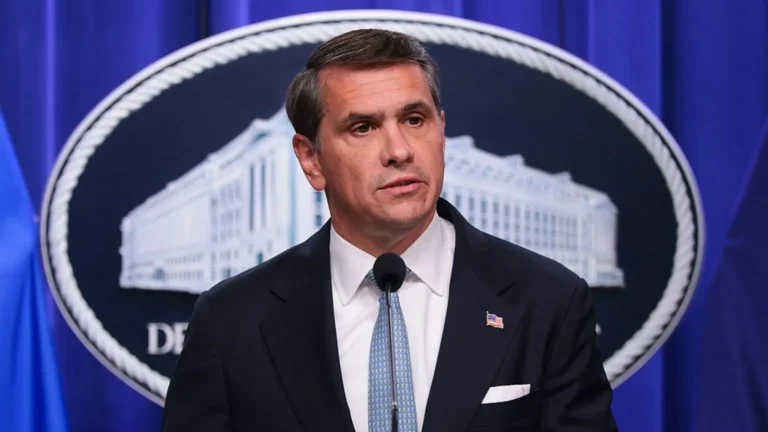
    Todd Blanche, a former personal attorney to US President Donald Trump, has been confirmed as the country’s attorney general after a closely contested Senate vote. Blanche secured confirmation by 50 votes to 49, with Republican Senators Susan Collins and Lisa Murkowski joining Democrats in opposing his nomination. Senator Bill Cassidy provided the crucial Republican vote in Blanche’s favour after saying he believed Blanche was the strongest candidate Trump was likely to nominate. The vote ended a prolonged dispute between the Trump administration and Senate Republicans over Blanche’s appointment. He had been serving as acting attorney general since April, after Pam Bondi was removed from the position. All Senate Democrats voted against Blanche’s confirmation. Several Republican lawmakers had questioned Blanche’s record and raised concerns about his involvement in a number of controversial matters. Among them was his handling of documents related to convicted sex offender Jeffrey Epstein and his role in developing Trump’s proposed $1.8 billion “anti-weaponization” fund. The proposed fund was intended to compensate people who claimed they had been politically targeted or persecuted by the government. However, critics, including Murkowski, warned that the scheme could potentially benefit people prosecuted for their involvement in the January 6, 2021 attack on the US Capitol. During his confirmation process, Blanche promised to abandon the proposed fund following opposition from Republican senators. Questions remain over whether that commitment would prevent the administration from introducing a similar programme under a different structure in the future. Murkowski said she opposed Blanche because she lacked confidence that he would be willing to challenge what she described as the administration’s worst impulses. She also expressed concern about the increasing politicisation of the Justice Department. Collins raised separate concerns over Blanche’s involvement in Trump’s $10 billion lawsuit against the Internal Revenue Service. Despite those reservations, she ultimately did not support his confirmation. Cassidy, meanwhile, said he trusted Blanche to provide Trump with independent and candid legal advice. He acknowledged that the president ultimately determines the direction of the Justice Department but argued that Senate confirmation would give Blanche greater authority to advise the administration and push back when necessary. Cassidy also said he did not want political disagreements to prevent the Justice Department from carrying out its responsibilities, particularly in combating violent crime. Blanche’s confirmation marks a significant development for the Trump administration, given his previous role as Trump’s personal lawyer. He was serving as deputy attorney general when he assumed the department’s temporary leadership in April.

  • |

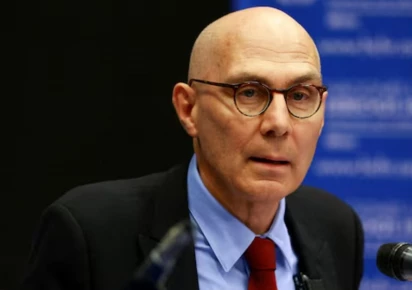
    UN extends Volker Turk’s term as Rights Chief

    The United Nations General Assembly has approved a second four-year term for UN High Commissioner for Human Rights Volker Turk. The decision was made despite strong opposition from the United States, Russia and Israel. The 193-member General Assembly voted overwhelmingly in favour of the extension. A total of 144 countries voted for the proposal. Ten opposed it, while 13 abstained. UN Secretary-General Antonio Guterres had proposed Turk for another full term. His current term is due to end in October. The vote came amid growing tensions between Washington and the United Nations. The US administration has reduced funding for several UN agencies. It has also withdrawn from a number of UN bodies. Washington had asked the General Assembly to delay the vote. US officials said more time was needed for consultations and review. The United States also warned that it could reconsider its relationship with the UN if the proposal was approved. US Representative for UN Management and Reform Jeff Bartos criticised the process before the vote. He said the decision did not allow enough time for discussion and oversight by member states. Bartos warned that the US could reassess its engagement, participation and funding of the United Nations. Despite the warning, most member states supported Turk. The European Union backed the extension. Several African and Latin American countries also voted in favour. China supported the proposal as well. Russia strongly opposed Turk’s reappointment. Russian Deputy Ambassador to the UN Dmitry Chumakov accused the rights chief of bias against Moscow. He also criticised Turk for making what Russia described as unfounded allegations against the country. Russia had proposed a shorter extension for Turk. Its plan would have kept him in the position only until the end of 2026. The General Assembly rejected that proposal by a large majority. Israel also opposed the decision. The Israeli Foreign Ministry criticised Guterres’ proposal and said the decision should have been left to the next UN secretary-general. Turk has faced criticism from several powerful countries because of his strong position on human rights issues. He has criticised Russia’s war in Ukraine. He has also raised concerns about Israel’s actions in Gaza. Turk has further called for investigations into deaths involving people held in US immigration custody. Human rights organisations have defended his position. They say the UN human rights chief must be able to challenge powerful countries when fundamental freedoms are threatened. The position has become increasingly important as conflicts and restrictions on civil liberties continue in different parts of the world. Turk is an Austrian lawyer. He has worked with the United Nations for decades. His UN career has included senior positions in Geneva. He has also served in field locations, including Kosovo. With the General Assembly’s latest decision, Turk will become the first UN human rights chief to serve two complete four-year terms. His reappointment is likely to keep human rights at the centre of international debate. It may also further test relations between the United Nations and countries that have opposed his approach.

  • Women are not safe in our city

    I want to draw attention to the safety problems faced by women in our city. Many women and girls are afraid to go to schools, colleges and educational centers because they do notfeel safe on the roads. Harassment crime and unsafe public places make it difficult for them to continue their education freely. The government should take serious steps to improve security. More police officers, CCTV cameras street lights and safe transportation should be provided. Strict action should also be taken against people who harass or threaten women. I hope the authorities will take immediate action so that women and girls can go to school and educational centers without fear.

  • | |

    Trump returns to White House correspondents’ din…

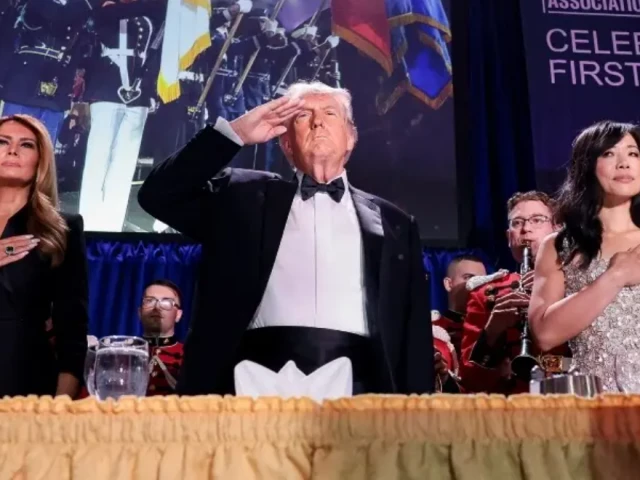
    United States President Donald Trump will address the White House Correspondents’ Association at a rescheduled gala on Friday, nearly three months after a shooting outside the Washington Hilton forced the cancellation of the April event. The black-tie dinner, now relocated to the Waldorf Astoria hotel, will take place under heightened security. Secret Service Director Sean Curran said an advance team had implemented a comprehensive plan, acknowledging the risk of hostile actors but stressing that the agency was treating the venue with the same rigor as any presidential site. The April 25 incident occurred as Trump and his cabinet were arriving. A man armed with a shotgun attempted to breach a security checkpoint and opened fire. Secret Service officer Victor Gonzales, credited with stopping the attack, was shot but survived thanks to his protective vest. Gonzales will be honored at Friday’s dinner, along with Hilton staff who assisted guests during the chaos. The suspect, Cole Allen, has pleaded not guilty to charges including attempted assassination of the president. Trump has argued the attack underscored the need for a $400 million ballroom under construction at the White House, saying future events held there would enhance presidential security. The correspondents’ dinner, a century-old Washington tradition, raises funds for journalism scholarships and celebrates the First Amendment. Trump is scheduled to deliver remarks, with entertainment provided by mentalist Oz Pearlman. This year’s event carries added weight. Trump has frequently clashed with the press, denouncing coverage as “fake news,” restricting access for outlets such as the Associated Press, and threatening to revoke broadcast licenses. Yet he has also given reporters more direct access than recent presidents, often taking questions in unscripted settings. Several journalism organizations have urged the WHCA to use the dinner to condemn what they describe as Trump’s attacks on press freedom. WHCA President Weijia Jiang said the gala would send a clear message: “Violence has no place in American life and a free press will not be intimidated into silence.”

  • | |

    DI Khan church still guards colonial memories

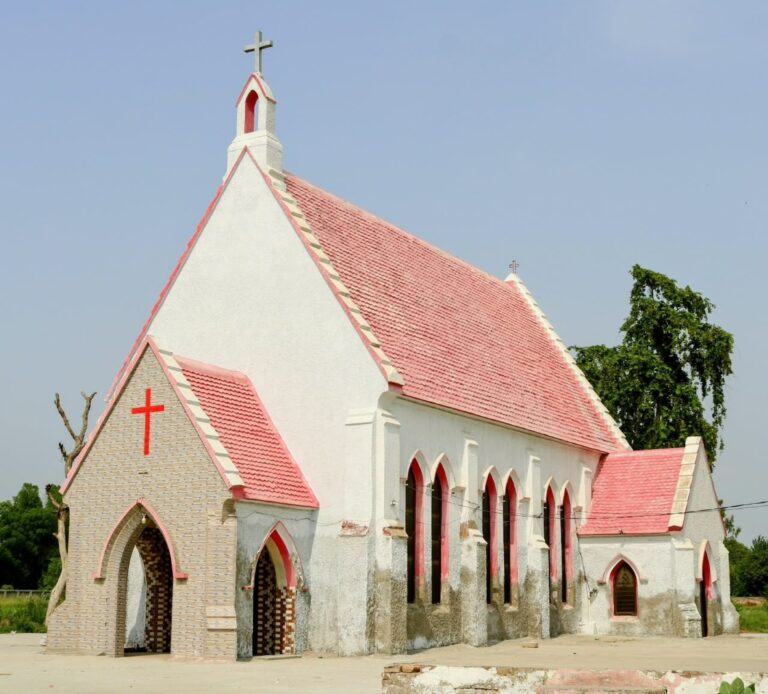
    There are some places we pass every day without realising how much history they hold. They remain untapped until some visitors put their eyes on them. During summer vacations, I travelled to Dera Ismail Khan, a district situated in southern Khyber Pakhtunkhwa. It takes six hours from Lahore to arrive in this historic city. During my stay there, I came across one such place that immediately captured my attention, and I thought to write about it. It was St Thomas Church, sacred place of worship for Christian community. A large cross standing at the entrance, old rusty walls, and an ambience of spiritualism. But the Church showcased more than that. Its walls contain historical accounts of colonial past, the military campaigns led by British soldiers in this area and a grave of one Lieutenant Governor of Punjab.   St Thomas Church was built in 1856 during British rule in the Indian subcontinent. It is one of the oldest churches in present-day Pakistan. It has survived political changes, the Partition of 1947, and the passing of time. Even today it stands as a symbol of the rich and diverse heritage of Dera Ismail Khan. The church is not only a place of worship but also a reminder that different faiths and communities have long been part of the history of this region. As we walked inside, we met the old priest and caretaker of the church named Chand. He welcomed us warmly and narrated the remarkable history of this place. There are memorials of British soldiers who lost their lives in this region during military campaigns. The priest stood in front of each tablet inscribed on the church wall and briefed about it. One memorial narrates the names, ranks and units of one hundred and 69 British military officers and other ranks who were killed or died due to injuries or disease in Waziristan military campaigns launched between 1919 to 1921.     Another memorial lists details of sixty-eight officers and other ranks who met a similar fate during the 1936-1938 Waziristan military campaigns. Similarly, one tablet erected by friends and fellow officers mourns the death of Herbert Walter Gee, ICS, deputy commissioner of Dera Ismail Khan, who died in 1901. There are other memorials as well, erected by colleagues in memory of the fallen officers. I thought that these names contain historical accounts year by year about what happened in this part of the world at that time. Every sentence of the Priest carried a new story, such as how the church has witnessed a lot of happenings through generations and that it still serves the small Christian community living in Dera Ismail Khan. As we stepped outside, believing our visit had come to an end, the priest said, “Wait. I have to show you one more thing.” He took me to the back of the building, where I saw a large white grave standing quietly among the dusty bushes. Here rests Lieutenant General Sir Henry Marion Durand (1812-1871). Durdand – a quite familiar name for the people of Pakistan and Afghanistan. Sir Durand was a career British military officer, diplomat, and administrator. He served in the East India Company Army, took part in several military campaigns, and later became the Lieutenant Governor of Punjab from 1870 to 1871. His son Sir Mortimer Durand is the one who drew the contours of the border between British India and Afghanistan in 1893. A man who once held such an important position now lies in silence behind an old church, while many people living nearby are unaware that his grave even exists. Henry Marion Durand died in 1871 at the age of 58 from a tragic accident. He was visiting Nawab of Tank Shahnawaz Khan along with his daughter when he fell from an elephant. The elephant was passing through the gateway by the town of Tank with the Nawab on the same elephant and an official (Chaprassy). The gate was too low to cross an elephant with howdah. The howdah struck the walls of crossing and the elephant got frightened resulting in the fall of Durand. He remained unconscious for a few days and never recovered. He was buried beside St. Thomas’ Church in Dera Ismail Khan. The British suspected some conspiracy into this incident. One of descendent of Nawab Shahnawaz Khan says that The British launched an enquiry into it. But the daughter of Durand gave testimony in favour of the Nawab that it was just an accident and there was no fault on his part. However, as a punishment, the British authorities stripped the powers of Nawab Shahnawaz Khan in 1875 and sent him to Lahore under strict watch. He passed away in 1881 while under surveillance. Standing beside the grave of Sir Henry Durand, I felt as if I had stepped into a forgotten chapter of history. The name engraved on the stone reminded me that many important events and personalities of the past remain connected to places that we often overlook. How easily history can fade from people’s memories, even when it is standing right in front of us. As I left St Thomas Church, I felt that I had walked through a chapter of history that few people ever get to read. Sir Henry Durand ruled Punjab from this soil, and his son later sat across a table in Kabul and drew the line that still separates Afghanistan and Pakistan today. That line appears in newspapers and political debates all the time. Yet the grave of the man whose name it carries lies quietly behind a church in Dera Ismail Khan.

  • |

     Why collectors pay millions for fractured porcelain

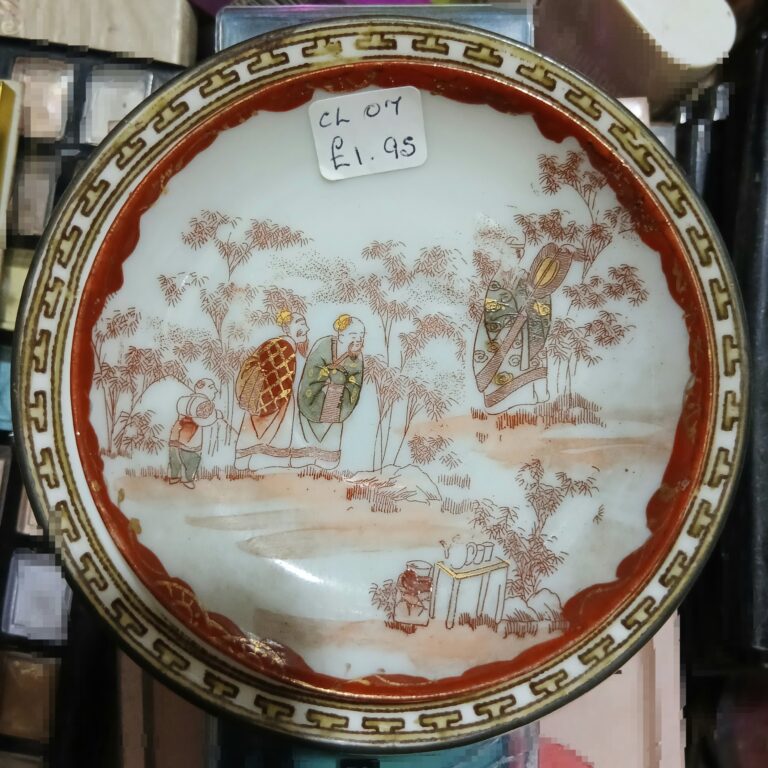
    There is a low-frequency hum inside an antique shop, an acoustic hush from dust and centuries of quiet survival. It is often the wounded object that commands the most reverence amidst the polished mahogany and gleaming silver. A spiderweb hairline fractured across the belly of a Qing dynasty jar; a cobalt Blue Willow plate stitched together with iron staples; a tea bowl held in delicate cohesion by golden veins of lacquer. In a modern economy obsessed with pristine surfaces and factory precision, these fractured ceramics defy logic. They do retain value despite their damage. Often, they derive their singular majesty precisely because they broke. The art market regularly bears witness to this quiet paradox. At major auction houses in London and New York, porcelain pieces bearing dramatic structural fractures, historic restorations or visible fractures routinely sell for astronomical sums. When a cracked 18th-century Chinese brush washer or a chipped Song Dynasty bowl is launched, purists do not turn away. Instead, connoisseurs see a vessel that has successfully negotiated with time. A pristine artifact can feel like an untouched relic in a glass museum case. A cracked ceramic, however, carries the irreplaceable friction of human history. This romantic obsession with fracture finds its deepest philosophical roots in the Japanese tradition of Kintsugi: literally, golden joinery. In 15th-century Japan, legend holds that the shogun Ashikaga Yoshimasa sent a damaged Chinese tea bowl back to China for repair. It returned bound by heavy and unsightly metal staples. Japanese craftsmen was displeased and sought a more poetic solution. He bonded the porcelain shards with Japanese lacquer dusting it with powdered gold. Rather than disguising the trauma, Kintsugi illuminated the break. This technique transformed a domestic accident into a radiant architecture of resilience. When collectors haunt dim antique parlors today for cracked celadon or worn earthenware, they are participating in a quiet rebellion against the disposable. We live in an era of engineered obsolescence where a small fracture on a smartphone screen renders the entire device wasted. Antique ceramics represent the opposite: fired earth that withstands centuries, absorbing the touch of generations, bearing scars as badges of longevity. A crack proves that the vessel was used, held, washed, dropped, mourned and salvaged. It shifts the object from a passive decoration to an active survivor. Even the historical methods of repair have become prized antiques in their own right. Before gold lacquer was widely available, 18th and 19th-century itinerant tinkerers repaired heirloom china using metal staples. They were drilling tiny holes on either side of a split and hammering in delicate bronze or iron rivets. To a contemporary eye, these industrial-looking stitches might seem like visual vandalism. Yet, to collectors of stapled china, those iron rivets are exquisite evidence of human ingenuity and resourcefulness from an era when nothing precious was ever casually thrown away.   Ultimately, the enduring value of cracked porcelain in antique shops lies in what it reflects about our own human condition. Perfection is intimidating, fragile and ultimately unfeeling. Rupture, on the other hand, is universal. When a buyer pays for a cracked jar, they are purchasing a physical manifestation of survival. They acquire a tangible reminder that broken things can be mended, that wounds can be highlighted with beauty and that time does not diminish value, but rather confers it.

Leave a Reply

Your email address will not be published. Required fields are marked *