
inflation fuels mental

Inflation fuels mental health crisis in Pakistan

Rising prices unemployment and ongoing financial pressure are not only reducing people’s buying power in Pakistan but are also affecting their mental and physical health.

Mental health experts say that money problems job insecurity growing debt, and uncertainty about the future are leading to higher rates of depression anxiety stress sleep problems irritability family conflicts high blood pressure and heart disease.

Clinical psychologist Fatima Tahir explained that when income is lower than household expenses people experience constant stress.  Over time this can develop into depression anxiety anger fear and hopelessness.

She warned that without timely mental health support these problems can also lead to physical illness social isolation and family disputes.

Psychiatrist and social worker Dr. Ayesha Imran Murtaza who has worked at Fountain House for more than 20 years said inflation unemployment poverty and financial hardship are major reasons behind the growing number of mental health cases in Pakistan.

She noted that people with low incomes are more likely to suffer from emotional trauma and mental illness because they often lack family support and cannot afford treatment.

According to her poverty and mental illness create a cycle in which each problem makes the other worse.

When patients cannot afford medicine their condition often worsens and if the family’s only breadwinner becomes ill the entire household is affected.

According to the Pakistan Psychiatric Society National Psychiatric Morbidity Survey (2019–2022) 32.3% of adults in Pakistan are living with a mental health disorder while 37.9% have experienced one at some point in their lives.

Anxiety stress and depression are the most common conditions with women low income groups and people living in cities being more affected.

The World Health Organization estimates that more than 24 million people in Pakistan need mental health services.

However the country faces a severe shortage of specialists. Pakistan has only around 300 to 340 psychiatrists meaning there is roughly one psychiatrist for every 700,000 to 800,000 people.

The country also has about 478 psychologists, 3,145 social workers and only 22 occupational therapists working in mental health care.

According to Prof. Wajid Ali Akhundzada, one in four young people and one in five children in Pakistan are dealing with mental health issues while around 10% of the population struggles with drug addiction.

He stressed that the number of mental health professionals and treatment facilities is far below the country’s growing needs making mental health a national priority.

Meanwhile the Punjab government is upgrading the Punjab Institute of Mental Health (PIMH) in Lahore to improve treatment and rehabilitation services.

The institute is expanding psychiatric care emergency services addiction treatment rehabilitation programs and professional training under one roof.

The government also plans to extend mental health services to district and tehsil level public hospitals so that more patients can receive treatment closer to home.
Similar Posts

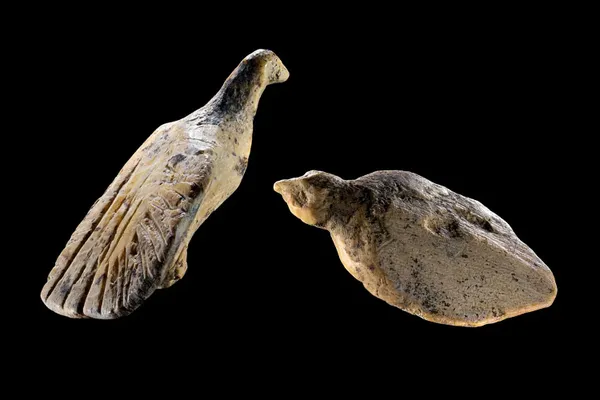
  • 40,000-Year-Old ivory birds discovered in a German cave

    Archaeologists have recently uncovered two thumbnail-sized sculptures of birds carved from mammoth ivory approximately 40,000 years ago. These delicate figurines, which have spent dozens of millennia buried in sediment, offer an intimate glimpse into the minds, environments, and creative capacities of our ancient ancestors during the Ice Age. The astonishing discoveries were made in the Hohle Fels Cave, a site deeply embedded in the Swabian Jura region of Germany. This location has long been celebrated as one of the most critical archaeological sites in the world for understanding early modern human culture in Europe. The newly found sculptures are extraordinarily small. Each measures less than a single inch in length and weighs merely a fraction of an ounce. It makes them roughly the size of an average human thumbnail. Despite their diminutive scale, the level of detail the prehistoric artist managed to achieve is nothing short of masterful. Rather than relying on abstract or highly stylized representations, the Ice Age carver recorded specific, anatomical observations. The figurines feature carefully incised markings that clearly delineate feathers, as well as distinctively carved eyes. One of the miniature sculptures portrays a bird with its wings fully spread, capturing a moment of dynamic movement, although a few fragments of its body have unfortunately been lost to time. Remarkably, this particular piece now holds the record as the smallest Ice Age artwork ever found in the region. The second figurine, which survived completely intact, depicts a bird in a resting posture. It appears to be lying down, a pose that researchers speculate might represent the animal tending to its eggs. Experts analyzing the avian features believe that at least one of the sculptures represents a ptarmigan, a robust bird belonging to the grouse family that would have been familiar to inhabitants of the harsh Ice Age landscape. While the identity of the second bird remains slightly less certain, it too could be a ptarmigan, or possibly a small bird of prey. Because the two ivory pieces were found just about five feet apart during the 2025 excavation season and share stylistic similarities, archaeologists strongly suspect they were crafted around the exact same time, quite possibly by the very same artist. The excavation was led by Nicholas Conard and a dedicated team from the University of Tübingen, who have been meticulously studying the Hohle Fels site for nearly three decades. The process of unearthing such fragile artifacts requires incredible patience. Researchers painstakingly remove layers of earth before washing and sifting the prehistoric sediment through extremely fine mesh screens. It was during this rigorous process that Elisa Luzi, a paleontologist at the university, first spotted one of the tiny birds. She described the profound emotional weight of the moment, emphasizing the sheer privilege of being the first human being to lay eyes on the carving in 40,000 years, and feeling an instant connection to the humanity of its maker. The Hohle Fels Cave These findings belong to the Aurignacian period, an epoch that coincides with the early settlement of Homo sapiens in Europe. The Hohle Fels Cave which is protected as a UNESCO World Heritage site has previously yielded some of the oldest known figurative art and musical instruments on the planet. The collection includes early bone flutes and the famous Venus of Hohle Fels. Exactly why these early humans took the time to carve such intricate, tiny birds remains a mystery. Researchers have proposed various theories, wondering if they were utilized as personal talismans meant to bring good fortune, or as cultural symbols associated with the specific identity of their owner. While we may never have a definitive answer regarding their prehistoric purpose, these thumbnail-sized masterpieces firmly remind us that the human desire to observe, create, and capture beauty is as ancient as humanity itself.  

  • |

    The Rise of Diseases

    The increasing number of diseases has become a serious concern in Pakistan. Dengue, malaria, hepatitis and many other illnesses are spreading due to poor sanitation polluted water air pollution and a lack of public awareness.   Hospitals are becoming overcrowded while many people cannot afford proper medical treatment. The government should improve healthcare facilities, ensure cleanliness, provide safe drinking water and conduct awareness campaigns on disease prevention.   Citizens also have a responsibility to maintain hygiene keep their surroundings clean and follow basic health precautions. Good health is the foundation of a strong nation. If immediate steps are not taken the rise of diseases will continue to threaten the well being of our people

  • Electricity Crisis: A Burden on the People

    Through the pages of your newspaper, I would like to draw attention to the serious electricity crisis in our area. Frequent and prolonged power outages have made daily life extremely difficut for students, workers shopkeepers and ordinary families. The lack of electricity affects education, businesses, hospitals and household activities. During hot weather the situation becomes even more difficult especially for children and elderly people. The authorities should take immediate steps to reduce unnecessary load-shedding, improve the power supply system and repair faulty infrastructure. A proper and fair schedule should also be followed so that people can plan their daily activities. Electricity is not a luxury it is an essential need in modern life. The concerned authorities must take effective action to provide a reliable electricity supply to the public

  • Woman dies after anti aging injection in New York

    A 27 year old woman in New York has died after receiving an anti aging injection at a private medical clinic raising serious concerns about unlicensed cosmetic treatments. According to foreign media reports the woman became critically ill shortly after the injection. An ambulance was called to take her to the hospital but she died before arriving. Police arrested 55 year old Luis Rojas Cabrera the man who gave the injection.  During questioning he admitted that he did not have a valid New York medical license to practice medicine. Authorities have charged him with practicing medicine without a license and putting another person’s life at risk through reckless actions. The suspect later appeared in a Bronx court. A judge allowed his temporary release but ordered him to surrender his passport until the post mortem report is completed. In court Cabrera said he is a licensed doctor in the Dominican Republic and also holds a medical assistant license in Puerto Rico.  He added that his application for a New York medical license is still under review. He also confirmed that the only license he currently holds in New York is as a cosmetologist not as a licensed physician.

  • How breakfast supports children’s mental health

    Health experts say that starting the day with a healthy breakfast is important for children’s energy growth and mental development.  However many children go to school without eating anything in the morning. This habit can affect their health mood and studies. Skipping breakfast is common among school going children. Some children do not feel hungry in the morning while others leave home without eating because they are in a hurry. Experts warn that this routine can lead to tiredness low energy poor concentration and irritability. According to Health line it is not only important what children eat for breakfast but also where and how they eat it.  Research suggests that regularly skipping breakfast or having breakfast outside the home may be linked to a higher risk of emotional and behavioral problems among children and teenagers. A spanish national health survey collected information from parents and guardians of 3,772 children between the ages of 4 and 14.  The study looked at their breakfast habits as well as their mental well being self esteem mood and anxiety levels. The findings showed that eating breakfast outside the home could have negative effects similar to skipping breakfast completely.  Experts believe that a balanced home prepared breakfast can support children’s physical growth as well as their mental and emotional well being. A nutritious breakfast may also help improve children’s memory attention and ability to learn.  These benefits can make it easier for them to stay focused in class and perform better at school. Experts advise parents to plan breakfast in advance if mornings are busy.  Some foods can even be prepared the night before. Most importantly parents should try not to send children to school on an empty stomach as a healthy breakfast can help them stay active, focused and ready to learn throughout the day.

  • How many squares can you spot?

    Most people enjoy solving puzzles but picture puzzles can be even more fun and challenging. Look carefully at the image and try to count how many squares are hidden in it. At first the puzzle may look simple but it can be surprisingly difficult even for people who are good at solving puzzles. To find the correct answer you need to pay close attention to every part of the picture. A little knowledge of geometry can also help. Remember a square is a shape with four equal sides. There are many small and large squares hidden in the image so counting them all is not as easy as it looks.  You may need to check the picture from left to right and then from top to bottom. If you are still confused don’t worry you are not alone.  The puzzle is designed to make you think carefully. After counting all the squares the total comes to 40. So, the answer is 40 squares.

Leave a Reply

Your email address will not be published. Required fields are marked *