don8217t let art

Don’t let art die in Turbat

Written by Muhammad Naseer

It is deeply disappointing that in a big, developed and educated city like Turbat, there is not a single drawing academy. Art is no longer just a hobby. In today’s generation, it is a great field and a promising career option. Students can make a future in graphic design, animation, architecture, fashion designing, and fine arts.

However, young people in Turbat have no platform, no teacher, and no institution to learn and improve their skills. I myself am practicing for a college-level art competition and I am planning to pursue this field after completing my FSc. But due to the absence of any academy in our city, students like me are forced to learn alone without proper guidance.

The government, education department, and local organizations should take serious steps to establish a drawing and art academy in Turbat. This will help our talented youth explore their creativity and build a secure future in the field of art.

Similar Posts

  • New breakthrough against superbugs

    Bacteria that cause infections are becoming harder to treat because many of them no longer respond to common antibiotics. These bacteria known as superbugs have developed resistance to medicines that once killed them easily.  As a result infections that were once simple to treat are becoming much more dangerous. Health experts say that every year thousands of people die from antibiotic resistant infections. This growing problem also makes surgeries cancer treatments and many hospital procedures riskier because patients are more likely to develop infections that are difficult to cure. Now scientists have made a promising discovery that could help solve this problem. Instead of creating entirely new antibiotics researchers have found a way to make existing antibiotics work again. The new approach uses special compounds called antibiotic adjuvants. These compounds do not kill bacteria on their own. Instead they help antibiotics become effective again by weakening the bacteria’s defenses. Researchers at Cold Spring Harbor Laboratory (CSHL) in the United States discovered a compound called PGHI-4. When they combined it with the powerful antibiotic vancomycin it successfully killed bacteria that had already become resistant to vancomycin. Vancomycin is commonly used to treat serious bacterial infections including those caused by MRSA and Clostridioides difficile (C. diff.). Over time however some bacteria developed resistance to this important medicine making treatment much more difficult. During laboratory tests, scientists found that PGHI-4 blocks an important bacterial enzyme called SagA. Without this enzyme the bacteria’s protective cell wall becomes weaker allowing vancomycin to destroy the bacteria once again. The treatment was especially successful against drug resistant Enterococcus faecium a bacterium known for causing difficult hospital infections. Professor John Moses of Cold Spring Harbor Laboratory said the discovery was the result of years of chemistry research. He explained that the newly found compound blocks an enzyme that helps bacteria resist antibiotics opening the door to more effective treatments. The research team also used a modern chemical method called Diversity Oriented Clicking (DOC) to create a library of more than 150 chemical compounds. Scientists believe this technique could speed up the discovery of new medicines, not only for antibiotic resistant infections but also for diseases such as cancer. Experts say that if future studies confirm these results the same strategy could eventually help treat other dangerous drug resistant infections including tuberculosis (TB). Doctors also warn that the misuse and overuse of antibiotics have made antibiotic resistance much worse. They advise people to take antibiotics only when prescribed by a doctor and to always complete the full course of treatment. This helps reduce the chances of bacteria becoming resistant to medicines. Scientists say this research is an important reminder that many of the biggest medical breakthroughs begin in laboratories where new discoveries can lead to better treatments and save lives in the future.

  • Anger control tips

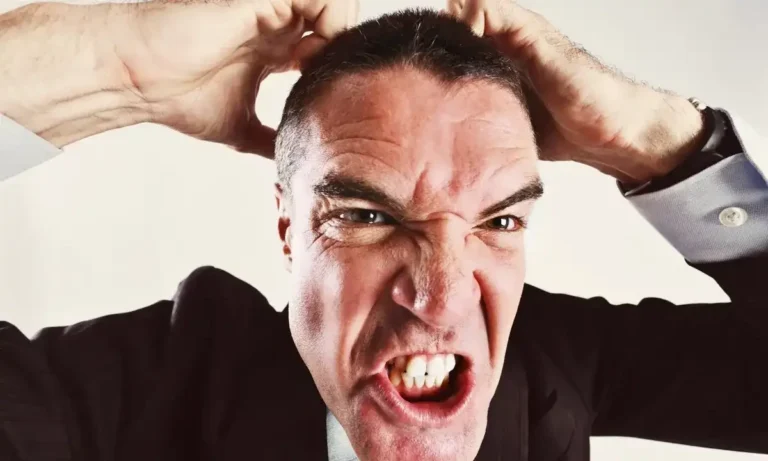
    Do you often get angry over small things or take your frustration out on others?  If yes it may be time to pay attention. Health experts say frequent anger can affect both your mind and your body. Many people feel better after expressing their anger but they may not realize the damage it can cause. Experts say uncontrolled anger is linked to several health problems including heart disease digestive issues and poor sleep. Anger is a normal human emotion. In some situations it can motivate people to solve problems make better decisions and bring positive changes. However when anger becomes frequent or difficult to control it can harm both you and the people around you. Research suggests that intense anger can temporarily narrow blood vessels and affect how cells work increasing the risk of damage. It may also raise the chances of serious health problems such as heart attacks and strokes. •How to control anger Health experts recommend a few simple habits that can help you manage your emotions. •Stay physically active . •Regular exercise •improves sleep •reduces stress and •helps control emotions. If you feel your anger rising take a short break and step away from the situation until you feel calmer. Talk to someone you trust about your feelings instead of keeping everything inside. Practice yoga or relaxation exercises as they can improve both mental and physical well being. Learning to manage anger is not only good for your relationships it can also protect your long-term health.

  • Stay safe this monsoon

    The monsoon season brings cool weather fresh air and beautiful rainfall making it a favorite time of the year for many people. However it also comes with several risks. In Pakistan especially in cities like Karachi heavy rain can cause water to collect on roads making travel dangerous and increasing the risk of accidents. Experts say that following a few simple safety tips can help prevent serious incidents during the rainy season. One of the biggest dangers during rain is electricity. Never touch fallen power lines or electrical equipment with bare hands.  Parents should also teach children to stay away from broken or exposed electric wires. It is also a good idea to unplug electrical appliances that are not in use during heavy rain. Drivers should avoid parking vehicles under power poles or overhead electric wires as strong winds and heavy rain can damage them and create dangerous situations. People walking outdoors should be careful as well. Whenever possible use dry sidewalks and avoid walking through standing water. Flooded roads may hide open drains or fallen electric wires making them extremely dangerous. If you need to go outside while it is raining, carry an umbrella or wear a raincoat to stay dry and reduce the risk of catching seasonal illnesses. Health experts also recommend keeping a basic first aid kit at home so that minor injuries or emergencies can be treated quickly until medical help is available. Rainwater that remains stagnant for several days can become a breeding ground for mosquitoes increasing the risk of diseases such as dengue malaria and skin infections. To stay safe make sure rainwater does not collect around your home or in  nearby streets. Experts say that taking these simple precautions can help protect lives and allow people to enjoy the beauty of the monsoon season more safely.

  • Spot the hidden person

    The internet is full of amazing optical illusions that can trick your eyes and this image is one of them. At first glance it looks like an old building but there is actually a person hidden in the picture. Finding them is much harder than it seems. Optical illusions use colors patterns  and backgrounds to hide objects or create images that confuse the brain. Solving these puzzles can improve observation skills boost focus and encourage creative thinking. hink you have sharp eyes? Take a close look at the image and try to find the hidden person. Even though the person is right in front of you they are very difficult to notice because they blend perfectly into the background. The hidden figure has been carefully painted to match the color and texture of the wall making them almost invisible. This fascinating illusion was created by German artist Jörg Düsterwald, who is known for combining body painting photography and real world surroundings to create eye catching artwork. According to the artist the project brings together body painting the environment and photography to create a single complete image. If you still can’t find the hidden person look closely at the area just below the roof above the doorway. That’s where the camouflaged figure is hiding as shown in the solution image.

  • Remembering Maryam Mirzakhani

    When Maryam Mirzakhani approached complex mathematical problems, she did not rush to find immediate solutions. Instead, she unrolled large sheets of paper across her floor, sat down with markers, and drew intricate shapes, loops, and abstract surfaces. A ritual so visual that her young daughter described her rigorous research simply as painting. Behind those quiet, methodical sketches was one of the most brilliant mathematical minds of her generation. A scholar whose work reshaped our understanding of spatial geometry and dynamic systems forever. Born and raised in Tehran, Iran, Mirzakhani’s early childhood ambitions centered on literature rather than numbers. She devoured books and dreamed of writing novels. However, during her high school years, her focus shifted dramatically as she discovered the creative, puzzle-like nature of advanced mathematics. Her extraordinary talent surfaced on the world stage when she represented Iran at the International Mathematical Olympiad, winning gold medals in back-to-back years at ages 17 and 18, including a flawless top score in her second appearance. After completing her undergraduate studies at Sharif University of Technology in Tehran, Mirzakhani moved to the United States to pursue graduate research. At Harvard University, under the mentorship of Fields Medalist Curtis McMullen, she tackled complex problems in theoretical geometry that had baffled researchers for decades. She earned her PhD at age 27, producing a doctoral dissertation so groundbreaking that it yielded multiple papers published in top-tier mathematical journals. Her career progressed rapidly, leading to a full professorship at Stanford University by the age of 31. Mirzakhani’s work specialized in theoretical areas such as hyperbolic geometry, Riemann surfaces, and moduli spaces. She’s expert in abstract concepts that involve understanding the geometry and dynamic possibilities of complex curved surfaces. While her research was firmly rooted in pure mathematics, it held profound implications for theoretical physics, quantum field theory and cryptography. In 2014, at the age of 37, Mirzakhani achieved a historical milestone. She was awarded the Fields Medal, officially known as the International Medal for Outstanding Discoveries in Mathematics. Widely regarded as the equivalent of the Nobel Prize for mathematics, the honor is presented only once every four years to exceptional scholars under 40. Mirzakhani became both the first woman and the first Iranian ever to receive the award since its establishment in 1936. Despite national and international acclaim, Mirzakhani remained famously modest. She often referred to herself as a slow mathematician. She emphasized that true insight comes from patience, resilience, and a willingness to feel lost before finding a breakthrough. To her, mathematics was not about fast calculations, but about deep, enduring understanding. Tragically, her life was cut short. Diagnosed with breast cancer in 2013, she continued her scholarly pursuits while fighting the disease. By 2016, the cancer had spread to her liver and bones. On July 14, 2017, Mirzakhani passed away at Stanford Hospital at the age of 40. Her passing sparked widespread tributes across the globe, with academic institutions, world leaders, and fellow scientists celebrating her contributions. Today, her legacy endures as a testament to human curiosity. Her life is an enduring inspiration for women pursuing careers in science and mathematics worldwide.    

  • Smartwatch data may trigger anxiety

    Smartwatches have become popular health devices that can track heart rate sleep stress levels physical activity and recovery. While these features can help people understand their health better experts warn that relying too much on the numbers may lead to unnecessary anxiety. According to health experts the problem is not the smartwatch itself. The real issue begins when people trust the watch’s readings more than how they actually feel or the advice of a doctor. Nargiza Neumann Zander, founder of X Technology says health data is useful when it helps people make better choices. However it can become harmful if daily scores start controlling a person’s mood or decisions. One common sign of this is checking the smartwatch immediately after waking up instead of paying attention to how the body feels. Experts say people who naturally worry a lot try to be perfect or want to control everything are more likely to depend too much on smartwatch data.  A poor sleep score or low recovery rating may make someone think they are seriously ill even when there is no real medical problem. They also explain that smartwatch readings are based on algorithms and estimates not complete medical examinations. A low recovery score does not always mean a person is unhealthy because the human body gives many signals that wearable devices cannot fully measure. Constantly checking health data can also change people’s behavior. Normal changes such as temporary tiredness less sleep or a small increase in heart rate may be seen as signs of illness. As a result some people may skip exercise delay important tasks or believe they are not fit enough even though they are healthy. Heart specialists stress that smartwatches can increase health awareness but they should never replace professional medical advice. The devices can provide helpful information about heart rate sleep and activity but every reading should be understood in the context of a person’s overall health. Experts also note that movement poor sensor contact dehydration stress caffeine and environmental conditions can affect smartwatch readings. While a smartwatch may point to a possible issue only a qualified doctor can make a diagnosis after reviewing a patient’s medical history performing an examination and ordering any necessary tests. Health experts recommend focusing on long term improvements such as regular exercise better sleep and healthy daily habits instead of worrying about small day to day changes in smartwatch scores. People with conditions like high blood pressure diabetes or heart disease may benefit from monitoring certain health measures under a doctor’s guidance. They conclude that good health is not about getting the perfect smartwatch score every day. It is about maintaining long term physical and mental well being

Leave a Reply

Your email address will not be published. Required fields are marked *