freedom right must

Freedom: The Right We Must Protect

Hani Rasheed

Through the pages of your esteemed newspaper, I wish to highlight the importance of freedom in our society. Freedom is not a luxury or a favour; it is a basic right of every human being. People deserve the freedom to express their opinions, choose their future and live with dignity.
Unfortunately, many people still face restrictions, fear and injustice when they raise their voices. When freedom is suppressed, society loses hope and progress comes to a standstill. A nation cannot truly develop if its people are afraid to speak the truth.
The government and society must protect the rights and freedom of citizens. Freedom should be used responsibly, but no one should be silenced through injustice or fear. It is time to understand that protecting freedom means protecting the future of our nation.
I hope your newspaper will highlight this important issue and encourage the authorities to protect the fundamental rights of the people

Similar Posts

  • The relationship between past tradition and present innovation

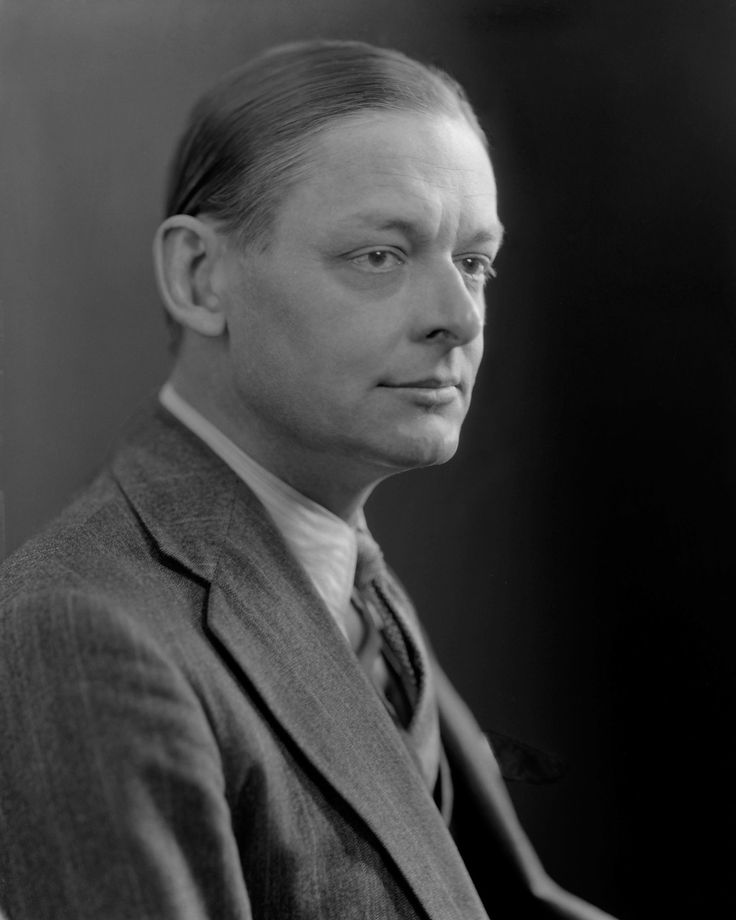
    In T.S. Eliot’s Tradition and the Individual Talent (1919), the relationship between tradition and innovation is conceived as a structural rejection of the Romantic rebels who came a century before. The English Romantics (Wordsworth, Coleridge, Byron, Shelley, and Keats) built an aesthetic identity on iconoclasm, intense individualism and radical rupture. In contrast, Eliot’s Modernist manifesto counters with historical humility, restraint and continuity. The Romantics operated as cultural iconoclasts. They emerged alongside the upheaval of the French Revolution. Poets like Shelley (Mont Blanc, Prometheus Unbound) explicitly rejected established institutional, religious and literary orthodoxies. For the Romantics, literature advances by breaking away from previous generations (especially Neoclassicism). The past is often viewed as a restrictive cage or a set of dead conventions that inhibit free human consciousness. Originality means creating something unprecedented from within the self. Authenticity is an act of poetic rebellion against tradition. In Tradition and the Individual Talent, Eliot argues that attempting to exempt oneself from the past is a delusion. Originality does not mean destroying past structures. In fact, it means acquiring a historical sense through arduous labor. Eliot reframes innovation as an internal readjustment of an existing system. A new poet cannot be rebellious in isolation. The poet’s work only gains aesthetic value when set among the dead poets of Western literature. It’s to see how it reshapes the entire dynamic order. Wordsworth famously defined poetry as the spontaneous overflow of powerful feelings. The Romantic movement centered the poet’s personal ego, subjectivity and unique psychological vision as the ultimate authority of art. The poet was a heroic prophet pouring out their soul. Eliot mounts a direct attack on this subjective expressivism. He famously counters: Poetry is not a turning loose of emotion, but an escape from emotion. It is not the expression of personality, but an escape from personality. To Eliot: The poet is not a heroic rebel, but a receptacle or catalyst (the platinum filament metaphor). The artist’s progress is a continuous extinction of personality and surrender to the literary heritage. Art should be judged as an autonomous, objective entity. It must be completely detached from the biographical life or emotional state of the human being who wrote it. Where the Romantic rebels viewed art as a wild, subjective act of liberation. Where the individual genius stands against society and past history. There and then, T.S. Eliot lowers the ego of the artist. Eliot redefines the individual talent not as a lone rebel storming the doors of literature. Individual talent is as ahistorically conscious craftsman who earns a place in the canon. This can only be by submitting to, learning from, and subtly altering the tradition that came before.  

  • Low magnesium? Don’t ignore these warning signs

    Health experts say magnesium is an essential mineral that helps keep the bones muscles nerves and heart healthy. A lack of magnesium can lead to several physical and mental health problems, so it is important to recognize the early warning signs. According to experts low magnesium levels may affect the nervous system causing anxiety nervousness irritability and mood changes. If these symptoms continue for a long time magnesium deficiency could be one possible reason. Magnesium deficiency can also affect emotions making some people more sensitive to stress or more likely to overreact to small problems. Experts recommend eating beans nuts leafy green vegetables fish and whole grains to help maintain healthy magnesium levels. Feeling tired weak or low on energy even after getting enough sleep may also be a sign of low magnesium.  Doctors suggest getting a blood test to check vitamin and mineral levels if these symptoms continue. Health experts also say that frequent nausea and vomiting can sometimes be linked to magnesium deficiency and should not be ignored. Low magnesium may also cause muscle weakness leg pain cramps muscle tightness or spasms as the mineral is important for normal muscle function.  While magnesium rich foods can help experts advise speaking to a doctor before taking any magnesium supplements.

  • Riyadh, Ankara, Islamabad — and the Empty Chair in New Delhi

    By Rai Saad Ali Three folders, two green and one crimson, changed hands beneath a portrait of Saudi King Salman at Al-Safa Palace in Mecca, the ink still fresh on the pages inside. Erdoğan, Crown Prince Muhammad bin Salman and Shehbaz Sharif held them up for the cameras at the Makkah Al-Mukarramah Summit for Joint Defence on August 7th, 2026. It was a carefully staged image, and the message was unmistakable: three of the Muslim world’s most consequential states, standing together in Islam’s holiest city, making clear that the region’s old security order is no longer one whose terms they are content merely to accept. The Mecca Joint Defence Agreement, signed that day by Türkiye, Saudi Arabia and Pakistan, commits each signatory to treat an armed attack against any one of them as an attack against all three. It builds on the bilateral Strategic Mutual Defence Agreement signed by Islamabad and Riyadh in 2025, but Türkiye’s accession changes the strategic arithmetic considerably. What was previously a two-country understanding, rooted in a decades-old relationship, is now a trilateral framework spanning the eastern Mediterranean, the Gulf and South Asia — and it was signed without so much as a courtesy call to New Delhi. That mutual-defence clause is exactly what has prompted comparisons to NATO’s Article 5, which treats an attack on one member as an attack on all. But the parallel does not hold up well under scrutiny. It would be misleading to oversell this agreement as a “Muslim NATO.” It is not one. The pact names no adversary, creates no joint military command, and does not specify what response would be required if a signatory were attacked. It establishes a framework for defence cooperation and coordination rather than a NATO-style alliance with clearly defined operational commitments, and Saudi officials have stressed that the agreement is defensive in character and not directed against any particular country. That distinction matters. NATO is more than seventy years old and has evolved into a mature institutional and military alliance over generations; the Mecca Agreement is still in its infancy. Over time, it could develop stronger institutions and deeper coordination that bring it closer in character to NATO. For now, that remains a possibility rather than an established trajectory. Yet dismissing the agreement as merely aspirational would be its own mistake. Frameworks matter, especially when they are signed in Mecca rather than in a foreign ministry conference room. The choice of venue was not incidental. It was a statement about whose summit this is, and who now gets to convene the Muslim world’s most powerful states at a moment when Washington’s security guarantees have begun to look less than absolute. That erosion of confidence in Washington is precisely what makes the partnership’s internal logic so coherent: each partner brings something the others lack, and that complementarity is the pact’s real substance. Turkey supplies NATO’s second-largest standing military and an increasingly self-sufficient defence-industrial base — the same industry that in 2023 sold Saudi Arabia drones in what Ankara called its largest defence export deal to date, and which has for years supplied Pakistan with warships and trainer aircraft. Pakistan brings the only nuclear deterrent in the Muslim world and a military establishment with decades of experience training and advising Gulf forces. Saudi Arabia brings the capital and the religious legitimacy that only the custodian of the two holy mosques can offer. What ties these three complementary roles together is a detail that deserves precision rather than a slogan. Pakistan’s air force flies the JF-17 Thunder, co-produced with China. Türkiye, a NATO member since 1952, has simultaneously built its own defence-industrial relationship with Beijing even as it remains formally inside the Western alliance system. That a NATO state, a nuclear-armed South Asian state with deep Chinese defence ties, and the Gulf’s foremost oil power can now sit inside the same mutual-defence framework shows how far the unipolar security order of the post-Cold War decades has already eroded. This is not a Pakistani ambition imposed on the region. It is a regional response to a security vacuum that Washington’s and Tel Aviv’s conduct in West Asia has itself created. The timing explains the substance. The pact was signed more than five months into the US-Israel war on Iran, a conflict that has sent missile and drone fire onto Gulf infrastructure and shipping, with Houthi strikes compounding the sense among Gulf capitals that American deterrence no longer covers them the way it once did. Riyadh, battered directly by this spillover, has drawn the obvious conclusion: a security guarantee is only as good as the willingness of the guarantor to honour it, and Washington’s recent conduct has not inspired confidence on that score. Ankara and Islamabad, for their part, were the two capitals best positioned to answer that call — one with hard power, the other with a record of reliability as a security partner to the Kingdom stretching back decades, long before this agreement made it formal. While Ankara and Islamabad were positioning themselves as reliable partners, New Delhi’s response has been telling in its caution. The Ministry of External Affairs said only that India is “closely following” developments and will “study the implications” — the language of a capital reacting to events it did not shape, rather than one setting the regional agenda. That contrast is the real story here, more than any single clause in the agreement’s text. That caution is not merely rhetorical. The substantive concern for India is not abstract: analysts have already flagged the live question of how a mutual-defence clause would be read if India were to conduct cross-border counter-terror operations against targets inside Pakistan, as it has in the past — even as others note such operations sit in a different legal category from state-on-state aggression. That ambiguity is itself a diplomatic cost to India: a Gulf partner it has spent two decades cultivating on energy, trade and counter-terrorism cooperation has now formally elevated Pakistan to treaty-partner status, indifferent to how

  • |

    Creative expression as survival in times of crisis

    In times of severe military occupation, state violence, and political trauma, art and literature undergo a fundamental transformation. They shift from aesthetic expression to vital tools for survival, record-keeping, and resistance. When conventional channels of news, speech, and movement are heavily restricted or censored, art and literature fulfill critical functions within a society. Documenting Counter-Narratives and Resisting Erasure In occupied zones, official narratives often frame political conflict using terms like normalcy or integration. They sanitize structural violence and human suffering. Kashmiri writers, poets, and essayists use narrative to preserve collective memory against state-enforced amnesia. Through poetry, fiction, and memoirs, literature captures the psychological reality of curfews, enforced disappearances, communication blackouts. It reminds of the loss of autonomy, rendering the lived experience of civilians indelible. Fine arts, illustration, and graphic art record incidents and emotional states that photojournalism or state-approved media often cannot access or transmit.  Processing Collective and Intergenerational Trauma Art creates a necessary intellectual and emotional container for a traumatized populace. Concepts such as unheimlich (the uncanny, or feeling un-homed in one’s own land) or grief over exile and displacement find structural expression through creative metaphors. Poetic forms allow writers to articulate loss, mourning, and fear in ways that transcend direct prose. The work of iconic Kashmiri poets such as the late Agha Shahid Ali, whose poetry continues to resonate. It demonstrates how verse can turn localized grief into a universal cry for human dignity. Artists frequently turn to raw mediums like paint, installation, and physical textiles to project the interiority of living under siege, using symbolic motifs like barren land, barbed wire, cages, or domestic objects disrupted by violence. Evading Censorship Through Metaphor and Allegory When direct political discourse leads to state surveillance, detentions, or legal suppression, creative expression relies on metaphor, symbolism, and myth. Playwrights and novelists weave political critiques into historical, mythological, or surreal settings, allowing themes of oppression, tyranny, and liberation to be discussed safely. On the ground, quick visual mediums like graffiti, posters, and digital art become decentralized tools. The mediums act for mass communication and solidarity, circulating rapidly across networks even during communication rollbacks.  Transcending Boundaries and Building Global Solidarity Art and literature serve onnect the isolated region to the global diaspora and international human rights communities. On memorial dates like August 5 (observed as Youm-e-Istehsal or Black Day by Kashmiris and solidarity groups worldwide), exhibitions, literary readings, poster competitions, and performance art allow communities across the world to bear witness to the ongoing struggle. Art transforms passive sympathy into active political consciousness. It forces the global audiences to confront physical realities of occupation beyond distant headlines. In times of intense crisis, art does not exist as an escape from reality. Rather, it becomes the definitive site where human dignity, historical truth, and resistance are actively preserved.  

  • Viral video highlights risky school route in India

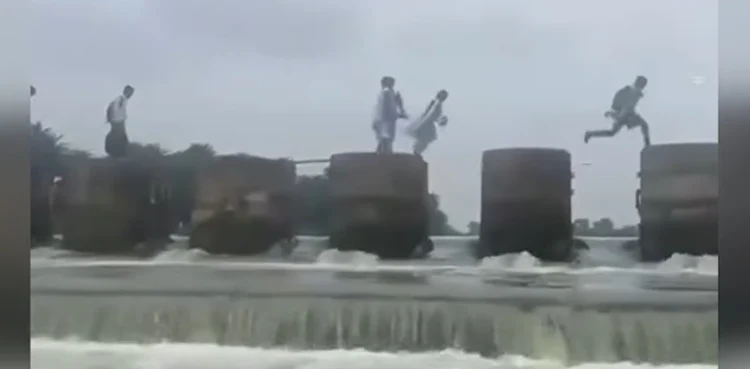
    Millions of children around the world go to school every day but for some simply reaching the classroom can be a dangerous journey. In India a viral video has raised concerns after showing schoolchildren taking a highly risky route to get to school in Madhya Pradesh’s Vidisha district. The students reportedly have to jump across a river embankment to reach their school while strong water flows below. The dangerous journey has shocked people on social media and raised serious questions about the safety of the children. Parents and local residents say there is no safe route for the children to reach school forcing them to take the dangerous path every day. The situation becomes even more risky during the rainy season when the water level and flow increase. Locals have urged the authorities to inspect the area immediately and provide a safe and permanent route for the students instead of waiting for a tragic accident to happen.

  • 6 Foods for better sleep

    If you often stay awake late at night without any reason it is important to know that not getting enough sleep can increase the risk of serious health problems. Poor sleep has been linked to heart disease stroke and other long term illnesses. If you struggle to fall asleep even when you are tired a few simple changes to your diet may help. Some foods contain natural nutrients that support better sleep and may help you fall asleep more easily. •Bananas Bananas are rich in tryptophan an amino acid that helps the body produce melatonin the hormone that controls sleep. They also contain magnesium which helps relax muscles and supports restful sleep. • Warm milk A glass of warm milk before bed is a popular bedtime drink. Milk contains tryptophan which may help the brain produce more melatonin and improve sleep quality. • Honey A spoonful of honey before bedtime may help you sleep better. Honey contains small amounts of tryptophan and its natural sugars may help the body use this amino acid more effectively. • Jalebi Some people believe that eating jalebi before bed can make you sleepy because it raises blood sugar and insulin levels. However there is limited scientific evidence to support this and eating sugary foods at night is generally not recommended as a regular sleep aid. • Cherries Cherries especially tart cherries are a natural source of melatonin. Research suggests that drinking cherry juice may improve sleep quality and help some people sleep longer. • Almonds Almonds are rich in magnesium a mineral that supports healthy sleep and muscle relaxation. Studies suggest that low magnesium levels may contribute to sleep problems. While these foods may support better sleep they are not a cure for chronic insomnia. If you have ongoing sleep problems it is best to speak with a healthcare professional to find the underlying cause.

Leave a Reply

Your email address will not be published. Required fields are marked *